
Body Composition 4 min read
What Is Body Composition? A Beginner’s Guide
-Understanding What Your Body is Made Of- Why the Number on the Scale Isn’t the Whole StoryWhen people think about getting fit, they usually focus on their weight…
Reading about body composition? Find an InBody test centre near you →
-Understanding What Your Body is Made Of-
Why the Number on the Scale Isn’t the Whole Story
When people think about getting fit, they usually focus on their weight first. We’ve all stepped on the scale hoping for a certain number. But here’s the thing: that number doesn’t really tell you much about what’s going on inside your body.
Why is Body Composition Important?
- Body composition is the breakdown of your body into different components. These include water, muscle, bone, and fat. It looks at how much of your body is lean mass, such as muscles, organs, and bones, compared to fat. This is more useful than just knowing your total weight.
- For example, two people may weigh the same. However, their body compositions can be very different. One person may have more muscle, while the other has more fat. Even if their weight is identical, their health levels may not be the same.
- Track fat loss instead of just weight loss
- Maintain or build muscle mass.
- Improve fitness and overall health.
- Set realistic fitness goals
Key Components of Body Composition:
- Body Fat Mass – This includes both essential fat (needed for bodily functions) and stored fat (extra fat your body holds).
- Lean Body Mass – This covers your organs, water, bones, and muscles.
- Skeletal Muscle Mass – Muscles that help in movement and strength.
- Body Water – Water inside and outside your body cells.
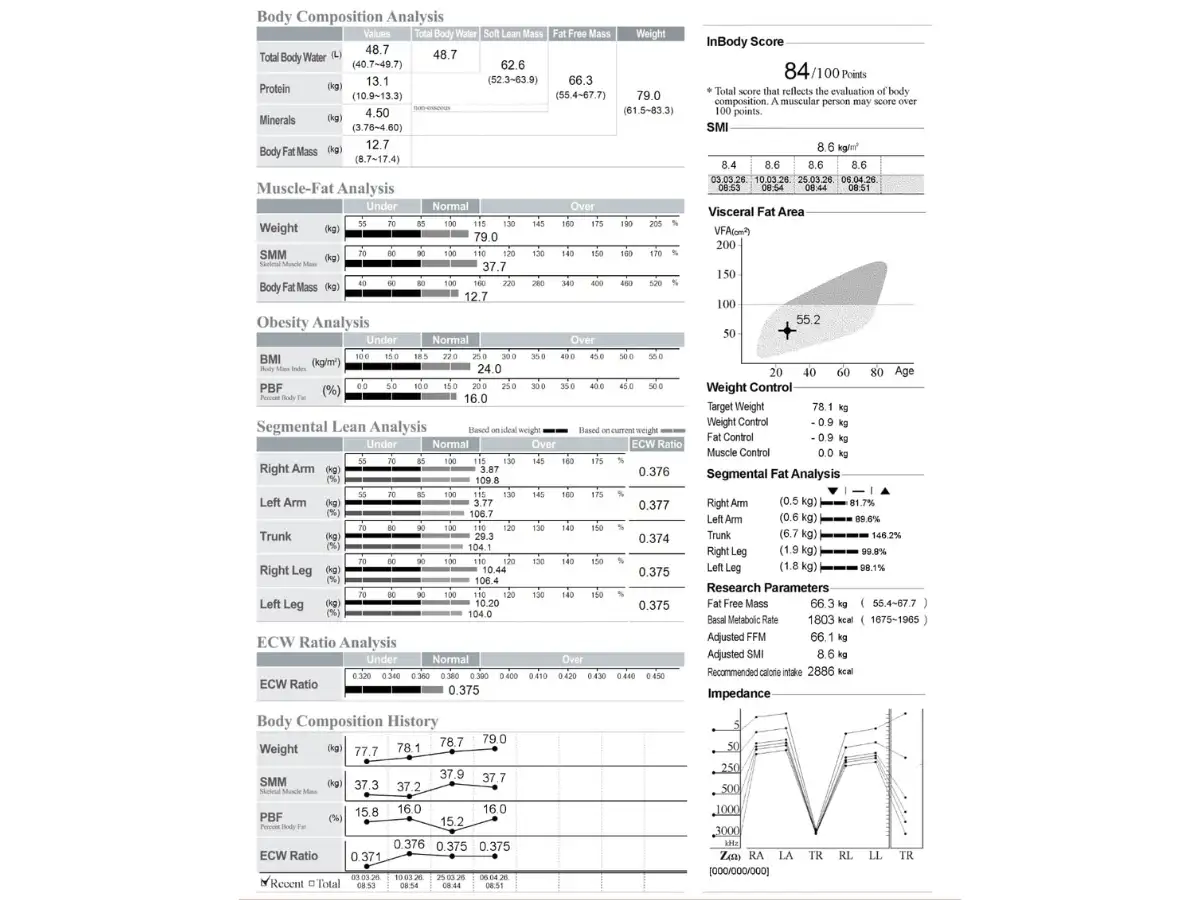
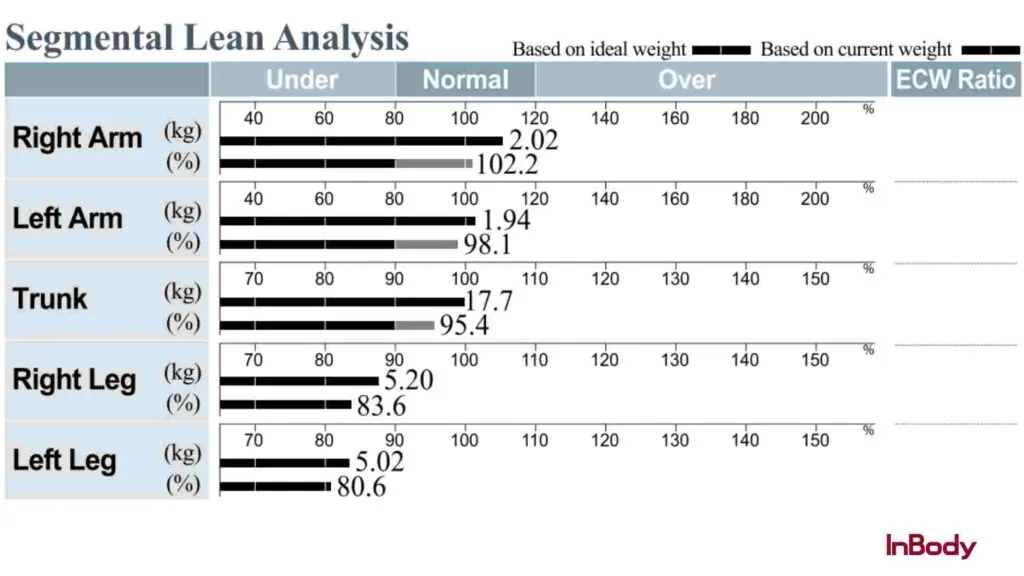
How Can It Be Measured?
Body composition cannot be measured with conventional scales. You can employ sophisticated instruments that provide precise findings, such as the InBody machine. These devices are frequently seen at wellness centres, clinics, and gyms.
Your weight is not a good indicator of your level of fitness or health. You may concentrate on creating a balanced, healthy body by being aware of your body composition. For long-term health, try to shed fat and increase muscle rather than merely weight.
Frequently Asked Questions (FAQs)
Q. Why is Body Composition better than BMI?
BMI (Body Mass Index) only uses height and weight, which often misclassifies muscular individuals as “overweight.” Body composition ignores these generic ratios and looks at the actual tissue in your body, providing a much more precise health assessment.
Q. Can I change my body composition without my weight changing?
Yes. This is often called “Body Recomposition.” By losing fat and gaining an equal amount of muscle simultaneously, your weight stays the same, but your body becomes leaner, firmer, and metabolically healthier.
Q. How often should I track my body composition?
For most people, a scan every 4 to 8 weeks is ideal. This timeframe is long enough to see significant changes in muscle growth and fat loss, which occur much more slowly than daily water weight fluctuations.
Q. How does an InBody scan actually measure these things?
It uses Bioelectrical Impedance Analysis (BIA). A safe, low-level electrical current is sent through the body. Because water, muscle, and fat all conduct electricity differently, the device can calculate the exact volume of each tissue with high precision.
Key Takeaways
-
The Scale’s Fatal Flaw: Body weight is a “blind” metric. It cannot distinguish between muscle, fat, and water. Two people can weigh 80kg, but one may have a high body fat percentage (obesity), while the other is an elite athlete with high muscle mass.
-
The Four Pillars of Composition: Your body is primarily composed of four distinct elements: Fat, Protein (Muscle), Minerals (Bone), and Total Body Water. True health optimisation requires balancing these four, not just “losing weight.”
-
Functional Muscle Mass: Protein and muscle are the “metabolic engines” of the body. Higher muscle mass increases your Basal Metabolic Rate (BMR), meaning you burn more calories at rest and have better physical resilience.
-
The Danger of Visceral Fat: Unlike subcutaneous fat (under the skin), visceral fat surrounds your internal organs. High levels of visceral fat are “biologically active” and increase the risk of chronic conditions like type 2 diabetes and heart disease.
-
Data-Driven Progress: Understanding your body composition allows you to see “invisible” progress. You might not see the scale move, but a scan can reveal you’ve lost 2kg of fat and gained 2kg of muscle, a massive health victory the scale would have missed.


Most trending articles

Body Fat Percentage by Life Stage: 20s, 30s, 40s, 50s, 60+ (India)
Your body fat percentage changes meaningfully across decades — not just because of lifestyle but because of biology. Hormonal shifts, muscle loss with age, metabolic rate decline, and…

Phase Angle: Clinical Reference Guide for Indian Practitioners
Phase angle is one of the most useful — and most under-utilised — body composition metrics in Indian clinical practice. It is a derived signal of cellular health,…

How to Improve Your InBody Score: The 90-Day Playbook
Your last InBody scan gave you a score of 72. You know that is “good” but not great. You want to be at 85 by the end of…