
Hormonal health 7 min read
5 Hormones That Affect Your Body Composition (And How to Balance Them)
You can do everything right, train consistently, eat carefully, sleep enough and still see your body fat creep up, your muscle melt off, and your energy crash. The…
Reading about body composition? Find an InBody test centre near you →
You can do everything right, train consistently, eat carefully, sleep enough and still see your body fat creep up, your muscle melt off, and your energy crash. The usual answer is “you must be doing something wrong.” The honest answer, especially for Indians, is often: your hormones are.
Body composition is downstream of hormones. Five hormones in particular have an outsized influence on whether you build muscle, store fat, hold water, or lose all three. Here are the five, what they do, what disrupts them, and how to bring them back into balance.
1. Insulin is the master fat-storage hormone
Insulin is released by the pancreas every time blood sugar rises. Its job is to shuttle glucose out of the bloodstream and into cells for energy use first, then for storage as glycogen, and finally as fat once muscle and liver stores are full.
Why it matters for body composition:
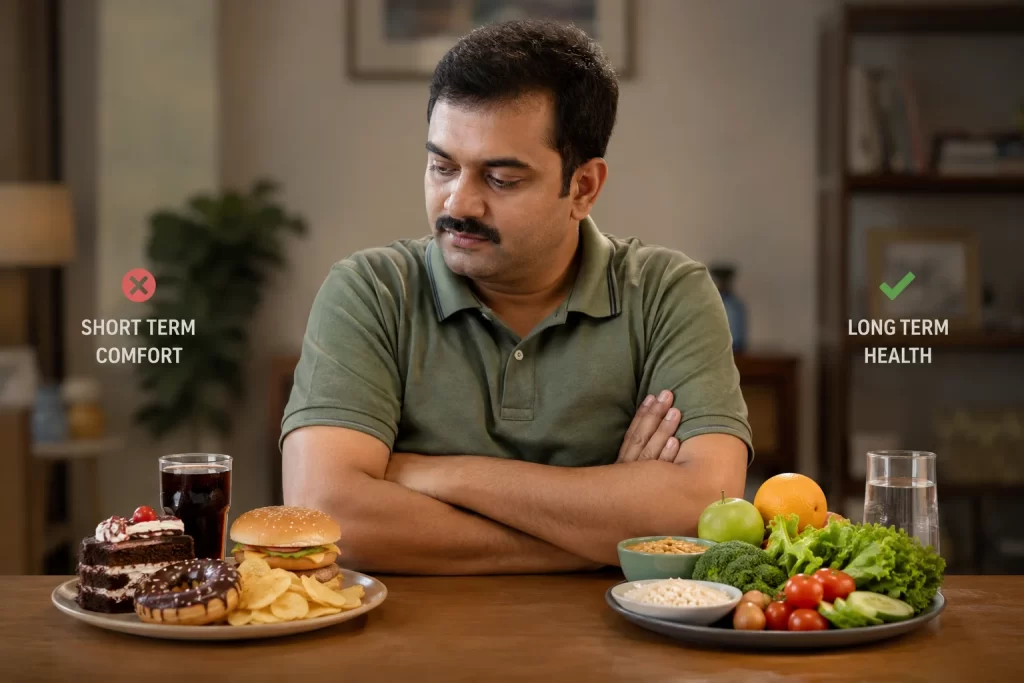
- Chronically high insulin (from high-sugar diets, ultra-processed food, sedentary lifestyle) keeps your body in fat-storage mode and blocks fat burning.
- Indians are particularly insulin-resistant even at “normal” BMI. This is why slim Indian women still develop PCOS and slim Indian men still develop type 2 diabetes.
- Insulin resistance shows up first as visceral fat, the dangerous abdominal fat, long before the bathroom scale notices.
Fix it: Strength training is the single most powerful insulin sensitiser known. Muscle is the largest glucose-disposal site in your body. Combine that with reducing refined carbs and ultra-processed food, and walking 7,000–10,000 steps per day. More on the body-composition-diabetes link.
2. Cortisol, the stress hormone that stores belly fat
Cortisol is your fight-or-flight hormone, released by the adrenal glands in response to stress (physical, emotional, or work-related). In short bursts, it is useful. Chronically elevated, it is a body composition disaster.
Why it matters:
- High cortisol preferentially stores fat in the abdomen, and especially as visceral fat, the metabolically dangerous kind.
- Cortisol breaks down muscle protein. People with chronic stress lose muscle mass even if they train.
- It disrupts sleep, which further raises cortisol the next day, a vicious cycle.
- India’s metro lifestyle (long commutes, irregular meals, overwork, screen exposure late at night) is essentially a cortisol-elevation programme.
Fix it: Prioritise sleep (7–9 hours, dark room, no screens 30 minutes before). Cap caffeine after 2 pm. Add aerobic movement (walking outside, not just treadmill), which lowers cortisol, unlike very intense exercise, which can spike it. Consider yoga or breath work; research consistently shows pranayama reduces salivary cortisol within weeks.

3. Thyroid hormones (T3 and T4) the metabolic rate controllers
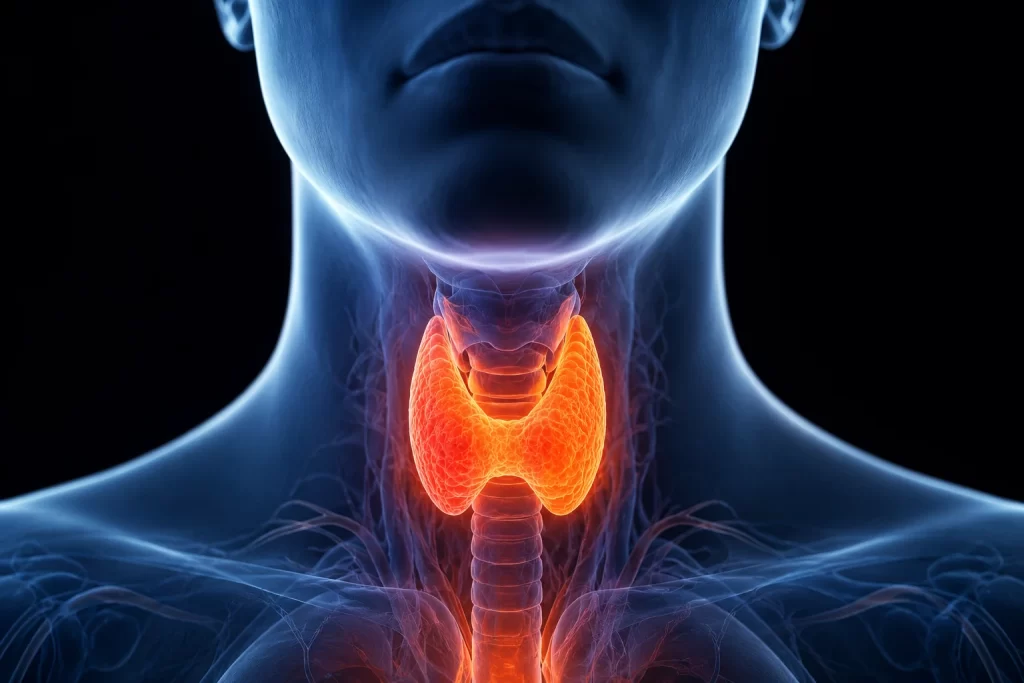
Your thyroid gland produces T4 (mostly inactive) and T3 (the active form), which together set your basal metabolic rate. They control how many calories you burn at rest, directly influencing your metabolic age and body composition.
Why it matters:
- Hypothyroidism is epidemic in India, with estimates putting 1 in 10 adults as affected, with women 3–4× more likely than men. Many are undiagnosed.
- Low thyroid means lower BMR, slower weight loss, stubborn fat retention (especially around the face and lower body), muscle weakness, and chronic fatigue.
- Iodine deficiency, selenium deficiency, autoimmune Hashimoto’s, and post-pregnancy thyroiditis are the most common causes in Indian adults.
Fix it: Get a full thyroid panel (TSH, free T3, free T4, and anti-TPO antibodies) — not just TSH. If diagnosed, work with an endocrinologist; thyroid hormone replacement (levothyroxine) is effective and inexpensive. Even if your thyroid is technically “normal,” ensure iodine intake (iodised salt counts), selenium (Brazil nuts, eggs, seafood), and adequate calories, as chronic under-eating suppresses T3 conversion.
4. Testosterone is not just a “men’s hormone”
Testosterone drives muscle protein synthesis, supports bone density, and influences fat distribution. Men produce it in much larger quantities, but women need it too, in smaller amounts.
Why it matters:
- Male testosterone has dropped sharply globally over the past 30 years; Indian men show some of the lowest average levels (linked to vitamin D deficiency, sedentary work, sleep deprivation, and abdominal obesity).
- Low T in men → lower muscle mass, higher body fat (especially visceral), fatigue, low libido, depression risk, weaker bones.
- Women with low testosterone (often paired with PCOS or post-menopause) struggle to maintain muscle mass even with strong training programmes.
Fix it: Heavy compound resistance training (squats, deadlifts, pull-ups, presses) raises testosterone acutely and chronically. Losing abdominal fat, visceral fat actively converts testosterone into estrogen via the aromatase enzyme. Fix sleep. Fix vitamin D (a huge factor in India, most adults are deficient). Get your levels checked if symptoms persist; clinical low T is treatable but requires medical supervision.

5. Estrogen body shape, fat distribution, and women’s metabolism
Estrogen does far more than control the menstrual cycle. It regulates fat distribution (women’s lower-body fat pattern is largely estrogen-driven), influences insulin sensitivity, supports bone density, and protects cardiovascular health in pre-menopausal women.
Why it matters:
- During reproductive years, estrogen directs fat to the hips, thighs, and buttocks. This is metabolically healthier than visceral fat storage.
- At menopause (typical Indian woman: late 40s), estrogen drops sharply. Fat redistributes from hips to the abdomen, which is why menopause is associated with visceral fat gain even at the same total body weight.
- Estrogen dominance (relative excess vs progesterone) can cause water retention, breast tenderness, and lower-body fat storage. This shows up clearly on an InBody scan as elevated extracellular water (ECW/TBW ratio above 0.39).
Fix it: Strength training is critical at and after menopause, as it preserves the muscle and bone that estrogen used to protect. Cruciferous vegetables (broccoli, cauliflower, cabbage) support healthy estrogen metabolism. Limit alcohol and ultra-processed seed oils. For severe perimenopausal symptoms, hormone replacement therapy with a gynaecologist is a valid option that has been over-feared in India.
How to know if your hormones are sabotaging your body composition
Symptoms point to hormones; numbers confirm them. Look for these warning signs:
- Body fat is going up despite eating less and training more
- Muscle is hard to build, even with consistent resistance training
- You hold stubborn fat in one specific area (belly = cortisol/insulin, hips/thighs = estrogen, all-over puffiness = thyroid)
- You are tired despite adequate sleep
- Your InBody scan shows high visceral fat at a normal body fat percentage
- Your ECW/TBW ratio is above 0.39 (extracellular water imbalance)
If two or more apply, request a hormone panel from your physician. Standard tests: fasting insulin and HbA1c (insulin/blood sugar), morning cortisol or salivary cortisol curve (stress), full thyroid panel including antibodies (thyroid), morning total and free testosterone (testosterone), and for women, estradiol and progesterone at appropriate cycle days.
Frequently asked questions
Q. Can I fix hormone imbalances with diet alone?
For mild imbalances driven by lifestyle (insulin resistance from a sugar-heavy diet, cortisol from poor sleep), yes, within 6–12 weeks of consistent lifestyle change. For clinical hypothyroidism, low testosterone, or post-menopausal estrogen drop, you usually need medical treatment in addition to lifestyle.
Q. Which Indian foods help balance hormones?
Iodised salt, eggs, Brazil nuts, and seafood support the thyroid. Curd, fermented foods, and high-fibre vegetables support insulin sensitivity. Ashwagandha has decent evidence for cortisol reduction and modest testosterone support. Cruciferous vegetables (broccoli, cauliflower) support estrogen metabolism. Avoid: ultra-processed snacks, refined sugar, refined seed oils, and excess alcohol.
Q. Will hormone-balancing supplements work?
Mostly no, the supplement market overpromises. Things with real evidence: vitamin D (because most Indians are deficient), magnesium for sleep, ashwagandha for cortisol, and omega-3 for inflammation. Skip “testosterone boosters,” “thyroid support” stacks, and most adaptogen blends; the evidence is thin to absent.
Q. Can an InBody scan detect hormonal issues?
Not only can blood tests diagnose hormonal conditions. But an InBody scan can flag patterns that *suggest* hormonal disruption: high visceral fat at normal weight (insulin/cortisol), low skeletal muscle index for your age (testosterone or thyroid), elevated ECW/TBW ratio (inflammation, kidney, or thyroid issues). These are signals to dig deeper with appropriate blood work.
Q. How long do hormones take to rebalance after lifestyle changes?
Insulin sensitivity: noticeable improvement within 2–4 weeks of regular exercise and a cleaner diet. Cortisol: 2–6 weeks of consistent sleep and stress management. Thyroid: depends on the cause, autoimmune cases need medical treatment, lifestyle cases (calorie restriction-induced) recover in 4–8 weeks. Testosterone: 8–12 weeks of training plus weight loss. Estrogen: cycle-dependent for premenopausal; menopausal changes are permanent without HRT.
Your hormones leave fingerprints all over your body composition. Visceral fat, muscle distribution, and water balance all show up on an InBody scan. Book a scan to see the patterns, then bring those numbers to your physician for the right blood work.

Most trending articles
PCOS & Body Composition: Why 1 in 5 Indian Women Struggle — And What Actually Works [2026]
PCOS affects 22% of Indian women. Discover why body composition matters more than weight loss, how visceral fat drives symptoms, and the 3 metrics that predict recovery.
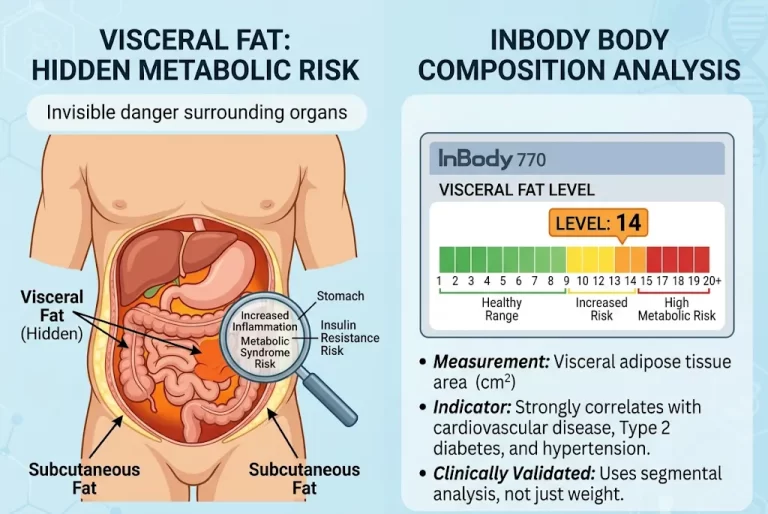
How to Defeat Hidden Visceral Fat: A Biological Strategy That Works
You can be slim, have a normal BMI, and still be silently accumulating dangerous visceral fat because the tissue responsible for burning it is disappearing. Here is the…

Lean PCOS: Symptoms, Causes & Why Slim Women Get It
Uncovering the Hidden Link Between Lean PCOS and Visceral Fat “You look healthy, fit, and slim, but inside, your body could be fighting a hidden battle you can’t…