
Body Composition 7 min read
Understanding Metabolism: What Body Composition Analysis Reveals
The Problem: Weight Doesn’t Tell the Whole Story Weight management conversations typically focus on “calories in versus calories out.” This oversimplified framework misses what actually governs how your…
Reading about body composition? Find an InBody test centre near you →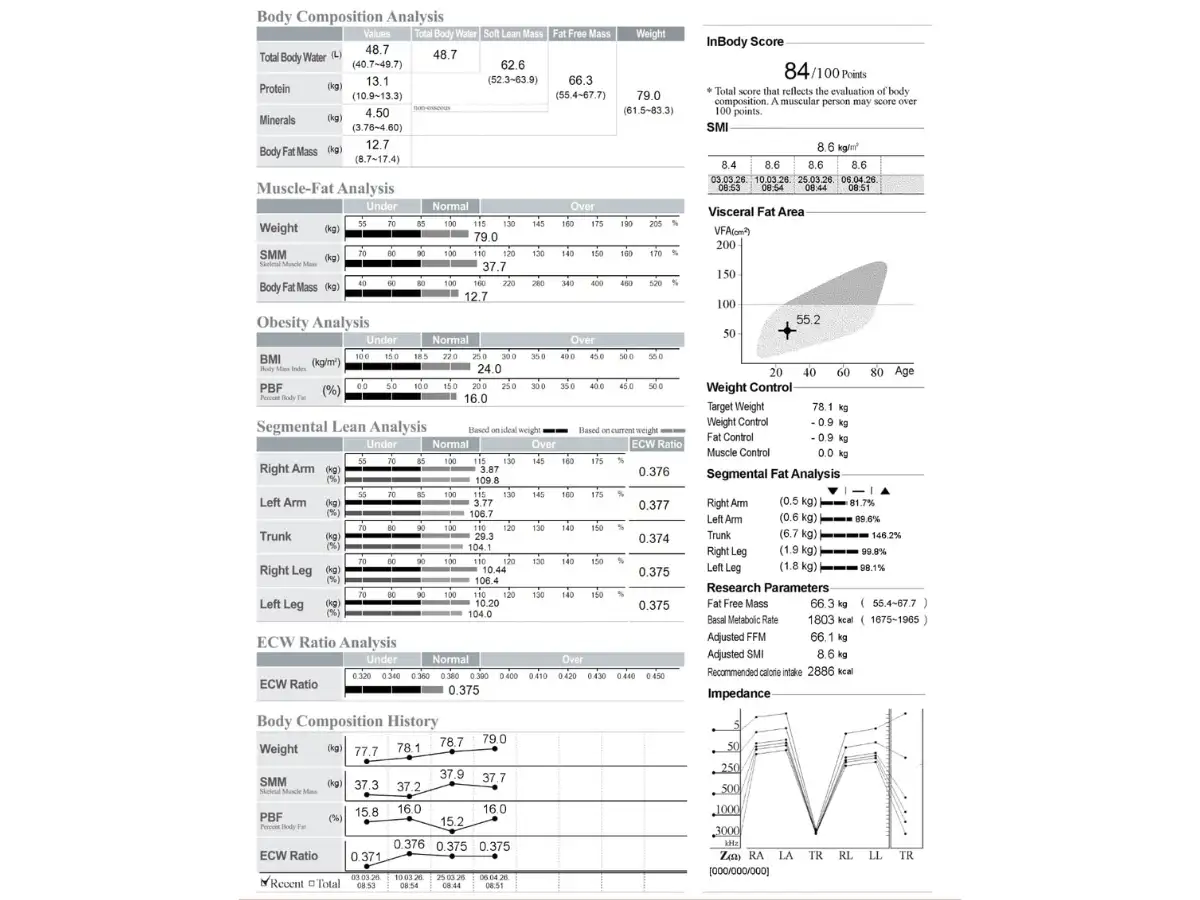
The Problem: Weight Doesn’t Tell the Whole Story
Weight management conversations typically focus on “calories in versus calories out.” This oversimplified framework misses what actually governs how your body stores energy, burns fuel, and adapts over time.
The real driver is metabolism, a complex biological system that can now be measured through body composition analysis using InBody technology. InBody reveals how your metabolic engine functions beneath the surface, not just what you weigh.

Executive Summary
In this article, you’ll learn:
- Why metabolism matters more than simple calorie counting
- How InBody technology measures your true metabolic health
- Which body composition markers predict metabolic problems early
- How to interpret key parameters like BMR, visceral fat, and phase angle
- Why body weight alone misses critical metabolic changes
What Is Metabolism and How BIA Machines Measure It

Metabolism encompasses all biochemical processes keeping your body alive: converting food into energy, maintaining organs and muscle, regulating hormones and temperature, and supporting cellular repair.
Key InBody parameters that reflect metabolic function:
- Basal Metabolic Rate (BMR): Resting energy expenditure
- Fat-Free Mass (FFM): Active metabolic tissue
- Skeletal Muscle Mass (SMM): Primary calorie-burning tissue
- Phase Angle (PhA): Cellular health indicator
These measurements explain how much energy your body requires at rest and how efficiently your tissues function, insight that body weight cannot provide.
Understanding Basal Metabolic Rate (BMR)
Most daily energy expenditure occurs at rest. This baseline requirement is your Basal Metabolic Rate.
InBody estimates BMR primarily from fat-free mass, not total weight. Two people with identical weight can have vastly different BMR values.
Low BMR typically reflects:
- Reduced skeletal muscle mass
- Metabolic adaptation from repeated dieting
- Long-term physical inactivity
- Cellular metabolic slowdown
This explains why metabolism adapts long before visible weight gain, making body composition tracking more informative than weight alone.
Metabolic Flexibility and Early Warning Signs
In metabolic health, your body shifts smoothly between storing and using energy. Poor sleep, chronic stress, inactivity, or repeated calorie restriction reduce this flexibility.
Declining metabolic flexibility appears as:
- Dropping Skeletal Muscle Mass (SMM)
- Rising body fat percentage despite stable weight
- Reduced BMR over time
- Changing segmental lean analysis patterns
These changes emerge before your scale moves, making body composition analysis essential for early detection.
Key Takeaway: Muscle Loss Drives Metabolic Slowdown
When skeletal muscle declines, resting metabolic rate drops and fat storage becomes more efficient. This explains why some people gain fat despite modest food intake; their metabolic engine has downshifted due to muscle loss.
Insulin Resistance Visible Through Body Composition
One of the earliest metabolic disruptions is insulin resistance. As muscle cells become less responsive to insulin, glucose redirects toward fat storage rather than energy production.
Body composition patterns indicating insulin resistance:
- Increasing body fat mass, especially centrally
- Elevated visceral fat level
- Loss of muscle relative to fat
- Decreasing skeletal muscle mass reduced glucose disposal
- Declining leg muscle mass critical since two-thirds of total muscle is in the legs
This pattern indicates metabolic inflexibility, where your body struggles to switch between fuel sources efficiently. InBody’s Segmental Lean Analysis tracks limb muscle changes, particularly legs, which play a crucial role in glucose metabolism.
Visceral Fat: The Hidden Metabolic Risk
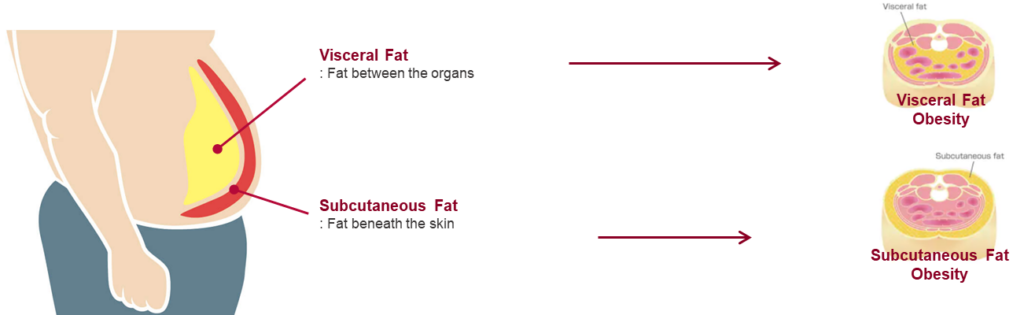
Fat tissue is biologically active. As fat increases around internal organs, it disrupts metabolic signaling throughout your body.
Visceral Fat Level is a critical parameter that standard scales cannot measure. Higher values associate with impaired liver metabolism, poor glucose control, increased cardiovascular risk, and chronic inflammation.
Even “normal” weight individuals may show elevated visceral fat on analysis, revealing hidden metabolic risk that BMI cannot detect.
Skeletal Muscle Mass: Your Metabolic Powerhouse
Skeletal muscle continuously consumes energy, even at rest. Muscle loss drops your resting metabolic rate and makes fat storage more efficient.
Key muscle parameters revealing the muscle-metabolism relationship:
- Skeletal Muscle Mass (SMM) — Total metabolically active muscle
- Segmental Lean Analysis — Muscle distribution across regions
- Muscle-to-Fat Ratio — Balance of metabolic tissues
- Fat-Free Mass (FFM) — Non-fat tissue including muscle
Declining measurements in these areas explain metabolic slowdown despite modest food intake.
Deepen Your Expertise in Body Composition Analysis
Healthcare professionals seeking to master metabolic assessment can gain hands-on training at InBody Academia, an intensive learning experience covering clinical interpretation, metabolic risk identification, and practical application of body composition data. Learn more about the upcoming event.
Phase Angle: Cellular Metabolic Health Indicator
At the cellular level, metabolic health depends on mitochondrial efficiency and cell membrane integrity. Phase Angle reflects this.
What Phase Angle measures:
- Cellular health and membrane function
- Tissue quality and structure
- Metabolic resilience and recovery capacity
- Nutritional status at the cellular level
Lower phase angle values commonly associate with:
- Chronic metabolic inflammation
- Poor recovery capacity
- Reduced metabolic efficiency
- Cellular dysfunction
This parameter provides a cell-level connection to fatigue, low energy expenditure, and impaired metabolic function.
Hydration and Inflammation Markers
Chronic low-grade inflammation often accompanies metabolic dysfunction. Metabolic stress reflects through water distribution parameters:
Key hydration markers:
- Total Body Water (TBW) — Overall hydration status
- Intracellular Water (ICW) — Water inside cells
- Extracellular Water (ECW) — Water outside cells
- ECW/TBW Ratio — Inflammation indicator
An elevated ECW/TBW ratio may indicate inflammation, fluid imbalance, or compromised tissue health factors that further impair metabolic signalling and energy use.
Key Takeaway: Early Detection Through Body Composition
Body composition changes appear before weight gain. Tracking BMR, muscle mass, visceral fat, phase angle, and hydration markers reveals metabolic problems months or years before traditional measures would detect them.
Tracking Metabolic Adaptation Over Time
As metabolic stress persists, your body may reduce energy expenditure beyond what size alone would predict, a phenomenon called adaptive thermogenesis.
Serial body composition assessments reveal adaptation through:
- Falling BMR despite maintained weight
- Muscle loss with simultaneous fat regain
- Slower metabolic recovery and weight plateaus
- Declining phase angle and cellular function
Tracking these trends is essential for understanding why weight regain is common after dieting and why metabolism slows more than expected.
The Complete Metabolic Picture: Beyond Body Weight
Body weight is only the surface outcome of deeper metabolic processes involving energy partitioning, muscle-to-fat balance, visceral fat burden, cellular health, and hydration status.
Why body composition analysis matters:
InBody translates metabolic science into measurable parameters, allowing clinicians to move beyond assumptions into objective insight.
Body composition analysis provides:
- Accurate BMR measurement for personalized nutrition
- Visceral fat assessment for disease risk evaluation
- Muscle mass tracking to prevent metabolic slowdown
- Phase angle monitoring for cellular health
- Water distribution analysis for inflammation detection
This comprehensive metabolic assessment is impossible with standard scales or BMI calculations alone.
Master Body Composition Analysis: InBody Academia Event
January 16, 2026 | Kolkata
For healthcare professionals, clinicians, dietitians, and health practitioners seeking to deepen their understanding of metabolism and body composition science, InBody Academia offers an intensive learning experience.
What You’ll Learn at InBody Academia
Interpret Key Parameters Clinically:
- Understand BMR measurements and metabolic rate variations
- Analyze skeletal muscle mass and segmental lean distribution
- Evaluate visceral fat level and metabolic disease risk
- Interpret phase angle for cellular health assessment
- Assess hydration markers and ECW/TBW ratio
Identify Metabolic Risk Early:
- Recognize metabolic changes before weight gain occurs
- Spot insulin resistance patterns in composition data
- Detect muscle loss and metabolic slowdown
- Identify hidden visceral fat in “normal weight” patients
Apply Data Clinically:
- Translate measurements into effective interventions
- Create personalized nutrition plans based on actual BMR
- Monitor metabolic adaptation during weight management
- Track treatment progress beyond the scale
Why Attend InBody Academia
This evidence-based, hands-on session bridges metabolic theory with real-world diagnostics, empowering professionals to elevate patient care beyond the scale.
Led by experienced practitioners, you’ll gain practical skills in reading complete reports, understanding what each parameter reveals, using data to improve outcomes, and implementing advanced assessment in your practice.
Transform Your Clinical Practice
Learn to use body composition analysis to provide more accurate metabolic assessments, identify problems earlier, create truly personalized treatment plans, track what really matters for metabolic health, and deliver better patient outcomes.
Limited spaces available to ensure quality hands-on learning and individual attention.
Transform how you assess, understand, and manage metabolic health using advanced body composition analysis.About InBody Academia
InBody Academia provides specialized training for healthcare professionals in body composition analysis and metabolic assessment. Our evidence-based programs combine theoretical knowledge with practical application of InBody technology for comprehensive metabolic evaluation.

Find an InBody Scanner Near You
References & Further Reading
- DCGI / CDSCO Approval Tracking: Central Drugs Standard Control Organisation (CDSCO) — Used to verify the generic drug approval registry for 2026.
- ICMR-INDIAB Study (PIB): Prevalence of Diabetes and Prediabetes in India (101 Million Adults)
- The Lancet Diabetes & Endocrinology: Metabolic non-communicable disease health report of India: the ICMR-INDIAB national cross-sectional study
- The STEP 1 Trial (NEJM): Once-Weekly Semaglutide in Adults with Overweight or Obesity — The primary clinical trial demonstrating weight loss efficacy.
- Lean Mass Loss Review (Obesity Reviews): A systematic review of the effect of semaglutide on Lean Mass (Bikou O, et al.)
- Muscle Mass & Metabolic Rate (AJCN): Skeletal muscle mass and distribution in 468 men and women (Janssen I, et al., 2000)
- InBody USA White Paper: Understanding Body Fat & Muscle Categories — Explains why BMI is insufficient and how Direct Segmental Multi-frequency BIA (DSM-BIA) works.
- Healthline – Muscle Loss & Ozempic/Wegovy: What to Know About Muscle Loss While Taking Semaglutide
