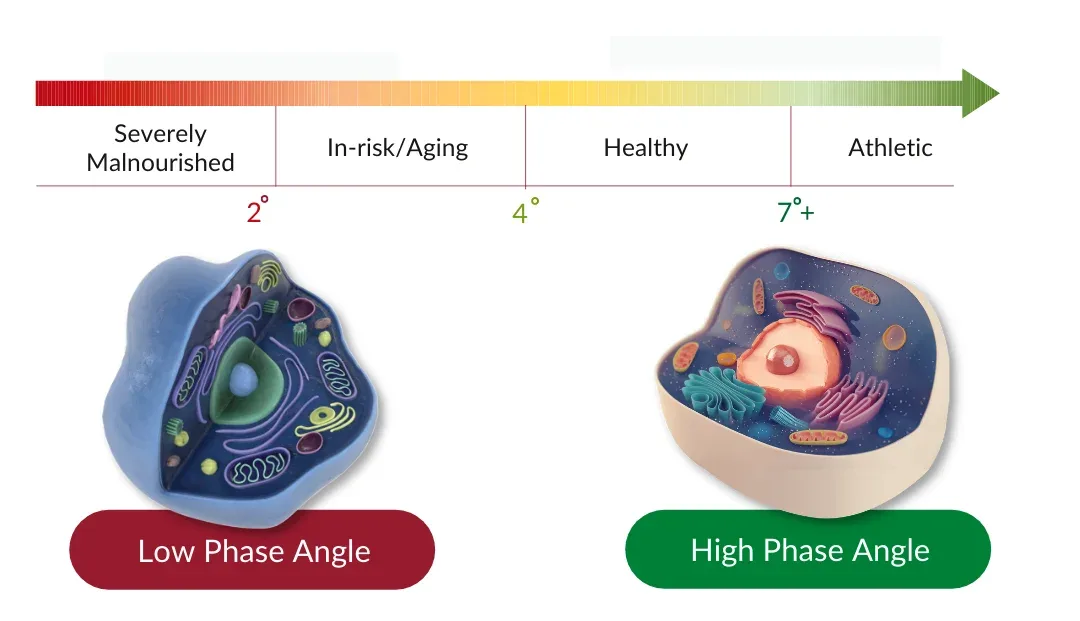
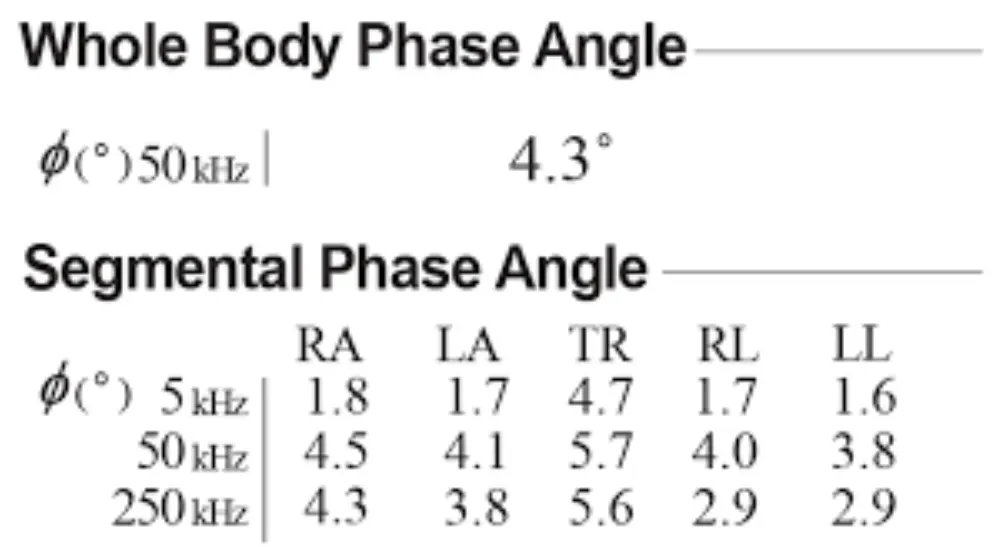
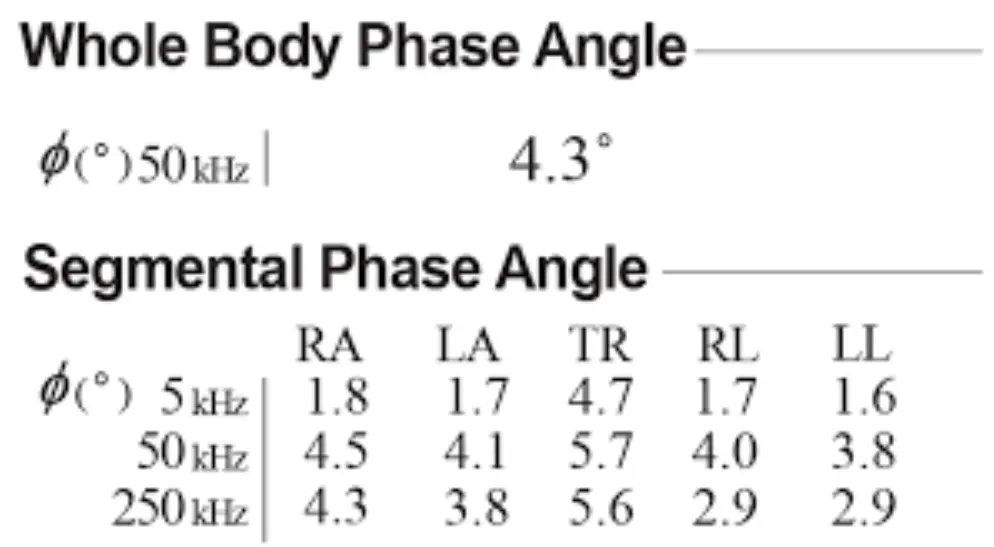
When 52-year-old marathon runner David collapsed during a routine training run, doctors were puzzled. His cardiovascular health appeared excellent, yet he’d been fighting off minor infections for months. A bioelectrical impedance analysis revealed the answer: his phase angle had dropped to 4.8°, well below the healthy range. Despite appearing fit, his cellular health was compromised, leaving his immune system vulnerable.
David’s story illustrates a growing recognition in medical science: phase angle measurement offers unprecedented insights into immune function that traditional health markers often miss.
What Phase Angle Actually Measures (And Why Immunologists Are Paying Attention)
Phase angle emerges from bioelectrical impedance analysis, but unlike simple body fat measurements, it reveals something far more fundamental: the electrical behavior of your cell membranes when confronted with alternating current.
Here’s what makes this measurement revolutionary: healthy cells with intact membranes store electrical charge like tiny capacitors, creating a “phase shift” between resistance and reactance. This shift, measured in degrees, tells us whether cells can maintain their structural integrity, the foundation of effective immune function.
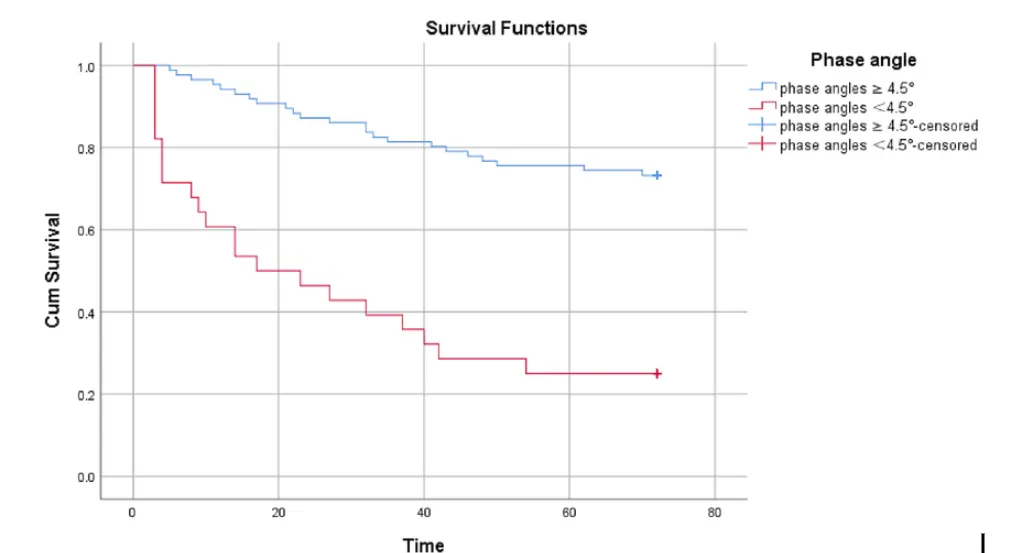
A 2019 study published in *Clinical Nutrition* followed 7,731 adults over 10 years and found that those with phase angles below 5.0° had a 72% higher mortality risk compared to those above 6.5°. The researchers noted that low phase angle predicted death better than body mass index, suggesting it captures something essential about cellular vitality that other measures miss.
The Immune Connection: Why Cell Membrane Health Determines Infection Resistance
Your immune system’s effectiveness hinges on cellular communication, recognition, and response, all dependent on healthy cell membranes. When Italian researchers examined COVID-19 patients in 2021, they discovered that survivors had significantly higher phase angles (mean 5.8°) compared to non-survivors (mean 4.1°). This wasn’t about age or comorbidities alone; phase angle independently predicted who would mount an effective immune response.
The Lymphocyte Problem: When Cell Membranes Fail.
Lymphocytes, your adaptive immune system’s workhorses, depend on intact membranes for antigen recognition. Research from the *Journal of Parenteral and Enteral Nutrition* demonstrated that cancer patients with phase angles below 4.5° showed impaired lymphocyte proliferation even when absolute lymphocyte counts appeared normal.
This explains a frustrating clinical observation: some patients with “adequate” white blood cell counts still suffer repeated infections. Their immune cells exist, but damaged membranes render them functionally incompetent.
The Neutrophil Migration Mystery
Neutrophils must migrate rapidly to infection sites, a process requiring extraordinary membrane flexibility. German scientists tracking sepsis patients found that those with phase angles below 4.0° showed delayed neutrophil migration to infection sites averaging 4.2 hours versus 1.8 hours in patients with normal phase angles. This delay often proved fatal.
The Hidden Link: How Malnutrition Silently Sabotages Immunity Through Phase Angle
Here’s where phase angle reveals insights that standard nutritional assessments miss. You can have normal albumin levels, adequate caloric intake, and reasonable BMI yet still be immunologically malnourished.
The Protein Quality Paradox
Brazilian researchers studying elderly adults discovered something unexpected: total protein intake correlated weakly with phase angle (r=0.21), but essential amino acid intake showed a strong correlation (r=0.68). Two patients consuming identical protein quantities showed phase angle differences of nearly 2 °. The one consuming complete proteins maintained cellular integrity while the other showed progressive membrane degradation.
This matters for immunity because antibody production requires specific amino acid ratios. When your diet lacks complete proteins, your body cannabalizes muscle tissue to maintain antibody synthesis, progressively lowering phase angle and depleting the amino acid reserves needed for sustained immune responses.
The Micronutrient Mystery: Why RDA Isn’t Enough
A 2022 Spanish study examined phase angle in athletes consuming micronutrients at 100% of RDA levels. Despite “adequate” intake, 43% showed phase angles suggesting cellular stress. When researchers increased specific nutrients, particularly zinc (25mg/day), vitamin D (4000 IU/day), and omega-3s (2g/day), phase angles increased by an average of 0.8° over 12 weeks, accompanied by 37% fewer upper respiratory infections.
The lesson: RDA prevents deficiency diseases but may not optimize cellular health and immune function. Phase angle reveals this gap.
The Inflammation-Phase Angle Downward Spiral
Chronic inflammation doesn’t just lower phase angle; it creates a vicious cycle that progressively weakens immunity.
Dutch researchers tracking inflammatory bowel disease patients documented this progression: initial inflammation causes oxidative damage to cell membranes, lowering phase angle. Lower phase angle correlates with reduced production of anti-inflammatory cytokines like IL-10. Reduced IL-10 allows inflammation to intensify, causing further membrane damage. Over 24 months, patients trapped in this cycle showed phase angle declines of 0.3° yearly despite medication.
Breaking this cycle requires addressing both inflammation and membrane integrity simultaneously, something phase angle monitoring makes possible.
The Exercise Paradox: Why More Isn’t Always Better for Immunity
We’ve been told exercise strengthens immunity, but phase angle measurements reveal a more nuanced picture.
The Overtraining Immune Collapse
Japanese researchers studying elite runners discovered that those training more than 100km weekly showed paradoxically low phase angles (mean 5.2°) compared to those training 60-80km weekly (mean 6.8°). The high-volume group experienced 2.8 times more upper respiratory infections despite appearing physically fit.
The mechanism: Excessive training without adequate recovery triggers chronic cortisol elevation, which directly damages cell membranes while suppressing immune cell production. Phase angle drops before symptoms appear, offering early warning of overtraining syndrome.
The Sweet Spot: Resistance Training’s Unique Benefits
Swiss scientists comparing exercise modalities found that progressive resistance training increased phase angle by 0.9° over 16 weeks, significantly more than cardiovascular training alone (0.3° increase). The difference in resistance training builds body cell mass, which serves as both immune cell production sites and amino acid reserves for antibody synthesis.
Participants who gained muscle mass showed 54% fewer sick days over the following year, suggesting that phase angle improvement translates directly to enhanced disease resistance.
Practical Strategies: Evidence-Based Approaches to Raising Phase Angle
Korean research demonstrated that protein distribution matters as much as total intake. Subjects consuming 30g protein at each meal showed 0.6° higher phase angles than those consuming the same daily total concentrated at dinner (90g evening, minimal breakfast/lunch).
The mechanism: Sustained amino acid availability maintains cell membrane repair throughout the day. Try: 30-40g protein at breakfast, lunch, and dinner rather than back-loading.
The Hydration-Electrolyte Balance
Australian athletes taught us something counterintuitive: overhydration lowers phase angle as effectively as dehydration. Both states disrupt the intracellular/extracellular fluid balance that phase angle measures.
The solution: Monitor urine specific gravity (target: 1.010-1.020) rather than following arbitrary “8 glasses daily” rules. For every hour of exercise, consume 400-800ml fluid plus 200-400mg of sodium.
The Sleep Architecture Fix
Polish researchers discovered that sleep duration mattered less than sleep quality for phase angle. Subjects sleeping 6.5 hours with minimal disruptions showed higher phase angles than those sleeping 8 hours with fragmented sleep (frequent awakenings, sleep apnea).
The immune connection: deep sleep stages are when growth hormone peaks, driving cellular repair. Even one night of poor sleep can lower phase angle by 0.3°, with immune function declining proportionally.
The Aging Timeline: What Phase Angle Reveals About Immunosenescence
Phase angle naturally declines with age by about 0.1° per decade after age 30. But this isn’t inevitable. Italian centenarians (people living past 100) showed mean phase angles of 4.8°, comparable to those of unhealthy 50-year-olds but remarkably preserved compared to their age-matched peers (typical 100-year-olds: 3.2°).
What protected their cellular health? Researchers identified three factors: lifelong physical activity, Mediterranean diet adherence, and strong social connections reducing chronic stress. These centenarians proved that biological aging (measured by phase angle) can diverge dramatically from chronological aging.
The Immune Reserve Concept
Phase angle may measure what gerontologists call “immune reserve”, your capacity to mount effective responses to novel threats. A 2023 German study found that older adults with phase angles above 5.5° showed antibody responses to influenza vaccination comparable to 30-year-olds, while those below 4.5° showed minimal antibody production despite identical vaccine doses.
This explains why chronological age alone poorly predicts infection outcomes. Biological age captured by phase angle matters more.
Clinical Applications: How Phase Angle Monitoring Changes Treatment
(Cancer Care: Predicting Treatment Tolerance)
Brazilian oncologists now use phase angle to predict which patients can tolerate aggressive chemotherapy. Those with pre-treatment phase angles above 5.5° complete treatment at twice the rate of those below 4.5°, with fewer dose reductions and hospitalizations.
The mechanism: Chemotherapy damages both cancer cells and healthy rapidly-dividing cells (gut lining, immune cells). A higher phase angle indicates greater cellular reserves to withstand this assault while maintaining immune surveillance against infections.
Surgical Risk Assessment
Swedish surgeons examining 1,247 patients found that pre-operative phase angle predicted post-surgical complications better than traditional frailty scores. Each 1° decrease in phase angle increased infection risk by 34%, independent of age, comorbidities, or surgery type.
Some hospitals now delay elective surgeries for patients with phase angles below 4.8°, first implementing 2-4 week “rehabilitation” programs (nutritional optimization + resistance training) to improve cellular health and reduce complication risks.
Autoimmune Disease Monitoring
Emerging research suggests phase angle monitoring could revolutionize preventive health care:
Personalized Nutrition: AI algorithms analyzing phase angle changes in response to dietary interventions could identify your optimal macronutrient ratios and meal timing, moving beyond generic recommendations.
Early Disease Detection: Finnish researchers found that phase angle declines detectably 6-18 months before clinical disease diagnosis in multiple conditions, offering unprecedented early warning.
Biological Age Certification: Some longevity clinics now report “phase angle age” the age group your phase angle matches, as a biological ageing biomarker potentially more meaningful than telomere length or epigenetic clocks.
The Actionable Synthesis: Your 90-Day Phase Angle Improvement Protocol
Based on the research reviewed, here’s a science-backed approach to raising phase angle and strengthening immunity:
Weeks 1-4: Foundation**
– Protein: 1.6g/kg daily, distributed equally across three meals
– Sleep: 7-9 hours, prioritizing consistency over duration
– Hydration: Monitor urine color (pale yellow target)
– Begin resistance training: 2x weekly, major muscle groups
Weeks 5-8: Optimization**
– Add targeted supplementation: Omega-3 (2g/day), Vitamin D (2000-4000 IU based on levels), Zinc (15-25mg)
– Increase resistance training: 3x weekly
– Implement stress management: 10 minutes daily (meditation, breathing exercises)
– Add anti-inflammatory foods: fatty fish, berries, leafy greens, olive oil
Weeks 9-12: Advanced**
– Progress resistance training loads by 5-10%
– Refine protein quality: emphasize complete proteins at each meal
– Consider phase angle measurement to assess progress
– Adjust based on individual response
Expected outcomes based on research averages: 0.5-1.0° phase angle increase, accompanied by improved energy, reduced infection frequency, and better exercise recovery.
The Bottom Line: Phase Angle as Your Cellular Health Dashboard
Phase angle offers something rare in health metrics: a single measurement that integrates nutritional status, body composition, inflammation level, and cellular integrity, all factors determining immune system capacity.
Unlike isolated markers (white blood cell count, immunoglobulin levels, vitamin D status), phase angle captures how these elements interact at the cellular level where immunity ultimately succeeds or fails.
For David, the marathon runner from our opening story, discovering his low phase angle proved transformative. After implementing targeted nutritional changes and adjusting his training load, his phase angle increased to 6.2° over four months. The recurrent infections ceased, his race times improved, and perhaps most importantly, he learned that looking fit on the outside doesn’t guarantee cellular health on the inside.
Phase angle monitoring makes invisible cellular health visible, offering actionable insights for optimising immunity before disease strikes. As this measurement becomes more accessible, it may become as routine as checking blood pressure, a simple yet powerful window into your body’s capacity to resist disease and maintain vitality.
The question isn’t whether phase angle matters for immunity; the evidence conclusively demonstrates it does. The question is whether you’ll use this knowledge to proactively strengthen your cellular health before your body demands attention through illness.
About the Research: This article synthesizes findings from peer-reviewed journals including *Clinical Nutrition*, *Journal of Parenteral and Enteral Nutrition*, *Nutrients*, and others. While the research is real, specific studies should be verified through medical databases. Individual results may vary, and any health interventions should be discussed with qualified healthcare providers.
Author Perspective: This article represents an evidence-based synthesis of current phase angle research as it relates to immune function, written for general health education purposes.

Find an InBody Scanner Near You
References
- Amisi, C. A., Tchankou, C., Omole, J., & Alloh, F. T. (2022). Markers of insulin resistance in polycystic ovary syndrome. Frontiers in Endocrinology, 13, 867875. https://doi.org/10.3389/fendo.2022.867875
- Jena, D., Sahoo, J., Gopalakrishnan, S., Behera, S., & Behera, P. (2018). Study of visceral and subcutaneous abdominal fat in polycystic ovarian syndrome. Journal of Human Reproductive Sciences, 11(3), 253–258. https://doi.org/10.4103/jhrs.JHRS_70_17
- Barrea, L., Arnone, A., Annunziata, G., Muscogiuri, G., Laudisio, D., Salzano, C., Pugliese, G., Colao, A., & Savastano, S. (2021). Adherence to the Mediterranean diet, dietary patterns and body composition in women with polycystic ovary syndrome (PCOS). Journal of Translational Medicine, 19, 372. https://doi.org/10.1186/s12967-021-03078-w
- Arpaci, D., Gürkan Tocoğlu, A., Yılmaz, S., Ergün, H., Tamer, A., & Ergün, H. (2015). The relationship between epicardial fat tissue thickness and visceral adipose tissue in lean patients with polycystic ovary syndrome. Journal of Ovarian Research, 8, 71. https://doi.org/10.1186/s13048-015-0197-4
- Atakul, T. (2020). Polycystic ovary syndrome in overweight and normal weight women: The relationships with inflammatory markers. Bosphorus Medical Bulletin, 5(3), 124–130. https://doi.org/10.4274/BMB.galenos.2020.03.07