
Body Composition 11 min read
Cardiology Explained: Definition, Meaning & What It Covers
Heart problems are becoming more common in India. And it’s not just older people anymore. It now affects people across all age groups. In fact, many cases go…
Reading about body composition? Find an InBody test centre near you →
Heart problems are becoming more common in India. And it’s not just older people anymore. It now affects people across all age groups. In fact, many cases go unnoticed.
That’s because heart issues don’t always show clear signs. There may be no pain or warning. Instead, there are small changes that most people ignore. By the time it’s detected, it’s often already serious.
In many cases, the problem develops silently. There are no obvious symptoms in the beginning. However, when something finally feels wrong, the condition may have already progressed. That’s what makes it so dangerous—people simply don’t see it coming.
People often blame weight or age. While these do play a role, they are not the full story. There’s much more happening beneath the surface.
What truly matters is your body composition. This includes how much fat you carry, how much muscle you have, and where the fat is stored in your body.
For example, someone may look healthy on the outside. However, their internal health markers could tell a different story. And that’s where the real risk lies.
Understanding these details early can make a big difference. It helps in identifying potential risks sooner. As a result, you can take action before small issues turn into serious health problems.
Most people don’t realise that you can look completely normal, even skinny and still have fat building up in dangerous places inside your body.
This is called visceral fat. It’s not the kind you see under your skin. Instead, it wraps around your internal organs, like your liver and heart.
The scary part? You could be totally unaware it’s there. For example, someone might have a flat stomach and still be at serious risk for heart disease.
That’s actually where the term “skinny fat” comes from. It may sound odd, but it describes a real problem. These are people who look lean but have low muscle mass and high internal fat.
Moreover, this kind of fat is far more harmful than the fat you can pinch. It directly affects your internal organs and overall health.
This is where InBody professionals become useful. They show you what your scale cannot. Instead of just measuring weight, they also analyze fat distribution, muscle mass, and body water balance.
As a result, you get a much clearer picture of your actual health—especially when it comes to your heart.
Some risk factors for heart disease are beyond your control. These include your age, gender, family history, and ethnicity. They are a natural part of who you are and cannot be changed.
For example, South Asians often have a higher risk of conditions like high cholesterol and type 2 diabetes. Both of these can put extra strain on the heart. Similarly, women may see their risk increase after menopause.
Even though you can’t control these factors, they act as important warning signs. They tell you to be more aware of your health from an early stage.
If you know you fall into a higher-risk group, it’s wise to start monitoring your health sooner. Don’t rely only on basic checks like blood pressure.
Instead, go a step further. Look at things like body composition. This kind of data gives a clearer picture of what’s happening inside your body, often before serious issues develop.
Another thing that tends to go unnoticed is fluid retention in the body. It sounds harmless, but it can actually be an early warning sign of cardiovascular stress. Often linked to high blood pressure, excess fluid outside the cells (extracellular water) may indicate inflammation or even early signs of circulatory issues. It’s not something most of us feel or see; a machine like InBody can pick it up. The ECW Ratio helps measure how much water is inside vs. outside your cells, and when that balance is off, it’s a subtle but useful clue that something may be going on beneath the surface.
Phase Angle
Assess cellular health to assess surgical risks and outcomes
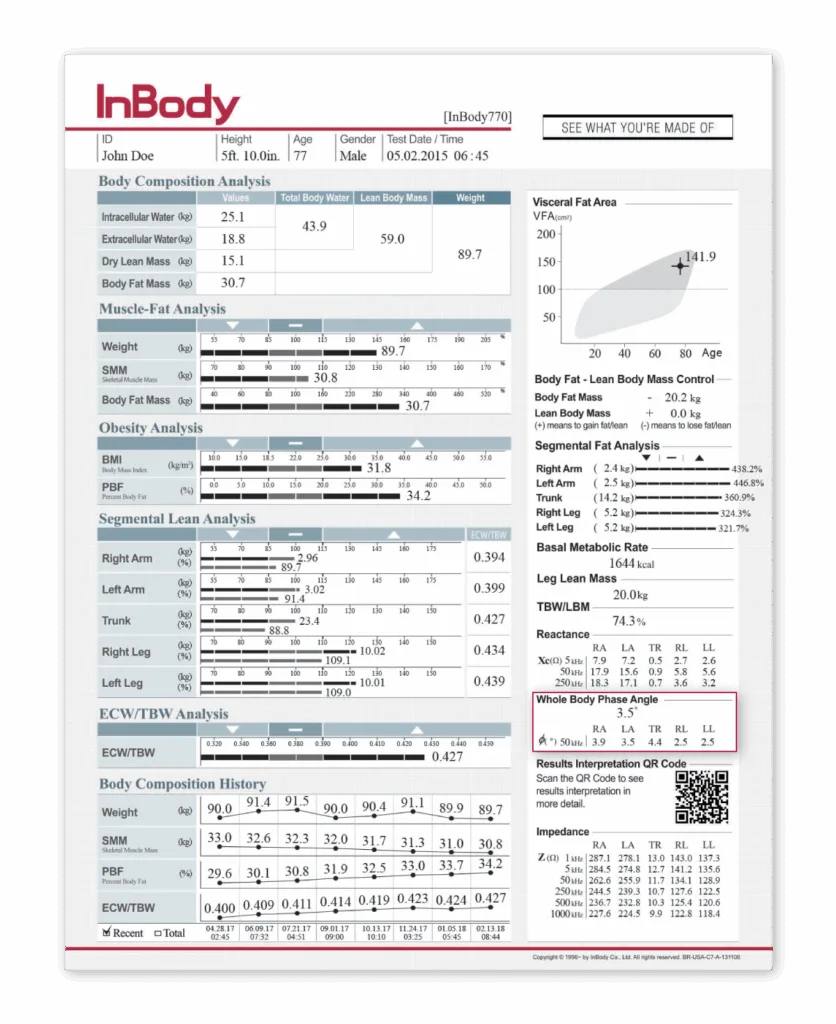
PHASE ANGLE
Phase angle, a measure of how the cells respond to the electrical currents used to measure body composition, reflects cell membrane integrity and has been linked to survival in various oncological populations. When cells are healthy, they are better able to resist these currents utilized by the InBody, resulting in a higher phase angle.
Monitor nutritional status of cardiac patients
Phase angle reflects changes in cellular health that occur before the onset of cardiac cachexia or circulation issues. Monitoring of changes in phase angle is not only used to track patient status but is closely linked to surgical risks and outcomes in cardiac patients.By assessing these outputs over time, a patient’s nutritional status can be monitored as they progress through a rehabilitation program and complications related to interventions or surgeries can potentially be avoided.
Muscle-Fat Analysis
Improve quality of cardiac rehabilitation
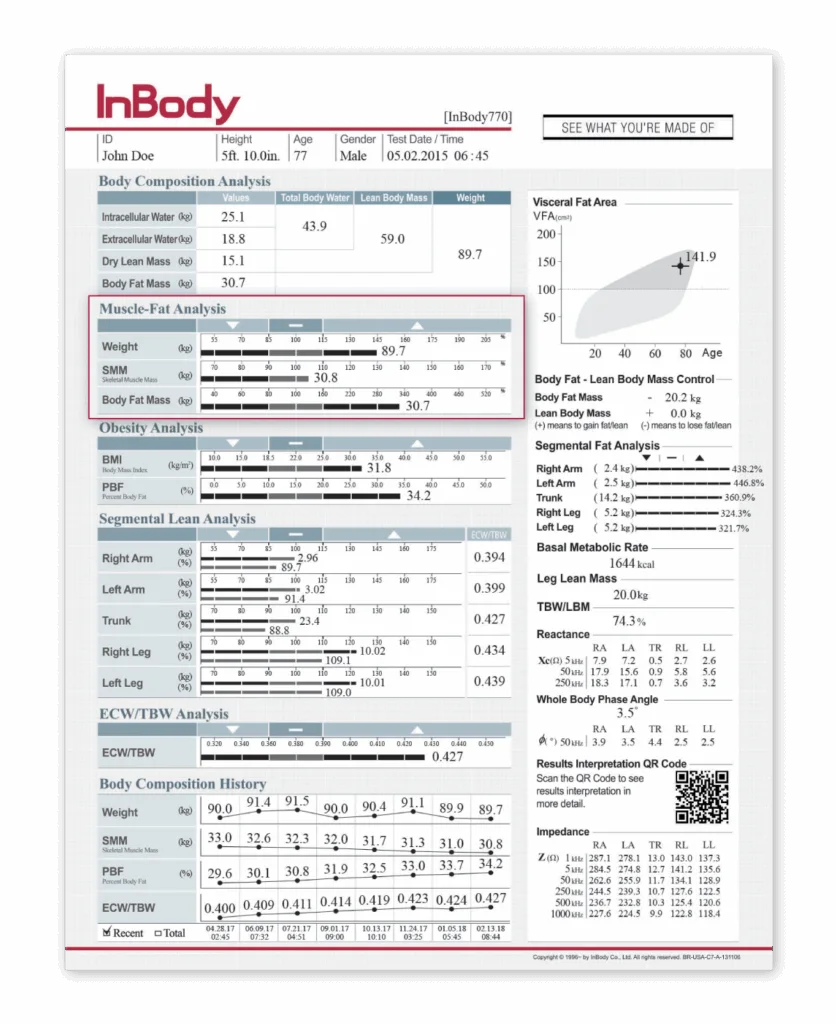
MUSCLE-FAT ANALYSIS
After a cardiac event, patients often undergo rehabilitation, consisting of health education, nutrition counseling, and exercise training to improve cardiovascular health and reduce the risk of recurrence. However, cardiac rehabilitation programs rely on BMI as a marker for change in nutritional status even though it is not an effective method for tracking changes in body composition and health status.
Ability to develop individualized treatment plans
By using InBody, professionals can monitor a patient’s muscle-fat balance to guide nutritional interventions and track progress throughout the rehabilitation program. InBody measures of lean mass and Edema Index can further aid in the assessment of muscle loss that may be masked by increase fluid retention.
Segmental ECW/TBW Water Analysis
Assess fluid balance in each body segment
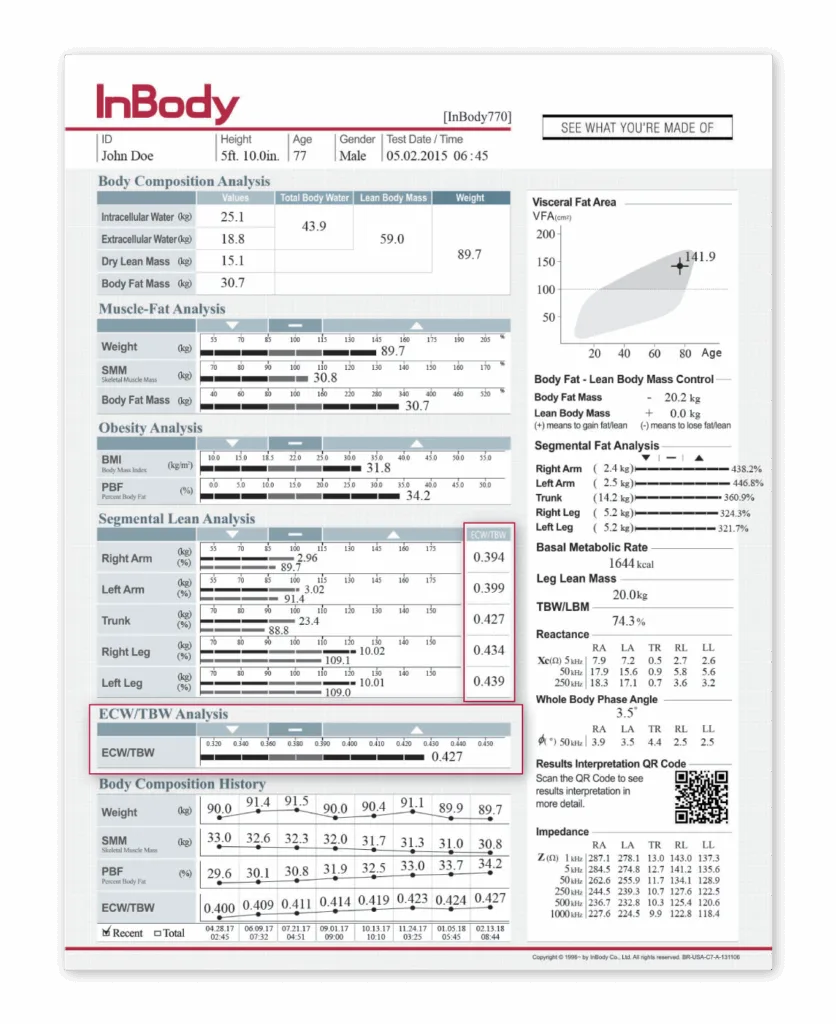
SEGMENTAL ECW/TBW WATER ANALYSIS
InBody provides an Edema Index, the precise measurement of the ratio of extracellular to total body water. Monitoring the Edema Index (ECW/TBW) provides an assessment of fluid accumulation in the extracellular space resulting from compromised cardiovascular function. The Edema Index reflects changes in cardiac and circulatory function, underlying circulation issues, and the effectiveness of diuretics. By using the Edema Index to assess fluid balance, cardiology professionals can develop more effective fluid management strategies to improve patient outcomes.
Diagnose circulation issues
In addition to Whole Body ECW/TBW, Edema Indices specific to each segment of the body (arms, legs, and trunk) indicate where region-specific fluid imbalances may be occurring. The arms and legs can be monitored separately to identify circulation issues in the extremities, and truncal edema, which is often the most difficult to identify, can now be quantified and monitored.
Cholesterol is another common topic when it comes to heart health. Most people connect it directly to diet eat too many fried foods and your cholesterol goes up. While that’s partly true, there’s more to the story. Visceral fat, the fat that builds up around your organs, is often tied to poor cholesterol levels. When this type of fat is high and your muscle mass is low or barely changing, it could mean your body isn’t processing fat efficiently. This situation can raise LDL (the “bad” cholesterol) and lower HDL (the “good” one), leading to plaque in your arteries over time. With InBody, these internal changes can be spotted before symptoms appear or even before a routine test flags them.
Blood sugar is one of those things that quietly affects your heart. However, most people don’t connect the two. You often hear about diabetes and think of it as a separate issue. In reality, they are closely related.
When blood sugar stays high over time, it damages your blood vessels. As a result, they become weaker and more likely to cause problems later on.
What many people don’t realize is the role of muscle in this process. Your muscles help manage glucose. In fact, they pull it in and use it for energy.
However, if your muscle mass is too low—especially in your arms and legs—this process becomes less effective. Consequently, your body struggles to handle sugar properly.
This is where InBody comes in. It measures your Skeletal Muscle Index and Segmental Lean Mass. These indicators show whether your body is well-equipped to manage blood sugar.
So, even if your blood sugar looks normal on paper, low muscle mass may be a warning sign. In other words, it could point to bigger health issues in the future.
Where your fat is stored matters too. Someone might have an average body fat percentage overall, but if most of that fat sits in the belly or around the trunk area, it becomes a much bigger problem. Central obesity is strongly connected to inflammation, insulin resistance, and high blood pressure all things that put stress on the heart. Even if the scale says you’re fine, a body composition scan can show whether your fat is collecting in risky areas. InBody breaks this down by region, helping spot patterns that most people wouldn’t otherwise notice.
Then there’s the issue of movement or the lack of it. Physical inactivity is a quiet but powerful contributor to heart problems. When we don’t move enough, our muscles slowly shrink, fat starts to creep in (especially around the waist), and metabolism begins to slow down. These changes aren’t dramatic at first, so they’re easy to ignore. But over time, they add up. InBody can detect even small shifts in muscle mass, which makes it easier to catch the downward trend early and turn things around with a bit more activity or strength training.
Stress and sleep are another pair that’s often brushed off when it comes to heart health. But both affect hormone levels especially cortisol, the stress hormone. When cortisol is high for too long, the body starts storing more fat, especially around the abdomen. This isn’t just about looks it’s a biological response that can lead to higher blood pressure and more inflammation. And poor sleep only makes it worse. InBody can’t measure stress directly, but rising visceral fat levels and changes in water balance can reflect the impact of stress over time, especially if other habits haven’t changed much.
Let’s not forget about habits like smoking and alcohol use. These have been linked to heart damage for decades, but they also show up in subtle ways inside the body. Smoking weakens blood vessels and raises inflammation, while drinking too much can raise blood pressure and spike triglyceride levels. You won’t see these habits show up on an InBody report by name, but the damage they do over time can appear in other ways higher fat levels, poor water balance, or muscle loss that doesn’t make sense based on diet and activity alone.
The thing about tracking your body composition is that it gives you something real to refer back to. It’s not just a one-time report. Instead, it works like a record of what’s actually changing inside your body.
For example, someone might start walking more, cut back on late-night junk food, or finally get proper sleep. However, these changes don’t always show up immediately on the scale. As a result, it can feel like nothing is happening.
Over a few weeks, or even a couple of months, things begin to shift. For instance, belly fat may reduce, or muscle mass may slowly increase. Meanwhile, the scale might not move much at all.
Because of this, body composition data becomes far more useful than just tracking weight. It shows real progress. In other words, it tells you, “this is working,” even if the results are slow.
Ultimately, this kind of progress is what keeps people motivated and consistent.
Frequently Asked Questions
What is the edema index?
BIA can be used to give determined fluid balance parameters such as edema index (EI), which is calculated as the ratio of extracellular water to total body water.
What is the meaning of cardology?
The study of the heart, its action and diseases.
What is the treatment of cardiology?
Cardiovascular disease treatment may include: Lifestyle changes: Examples include changing your diet, increasing your aerobic activity and quitting smoking or tobacco products (including vaping). Medications: Your healthcare provider may prescribe medications to help manage cardiovascular disease.
What is an InBody test?
InBody scanning technology is designed to accurately measure body composition, including body fat, muscle mass, and water content. It uses a painless, non-invasive electrical current that travels through the body. The current flows freely through body fluids but meets resistance when it encounters fat or bone tissue.
Heart problems don’t usually come out of nowhere. Instead, they build up slowly over time. Most of the time, you don’t even notice anything until some damage has already been done.
A lot of it comes down to a mix of factors. For example, some are things you’re born with, like genetics. On the other hand, others come from everyday habits—how you eat, move, sleep, and even how stressed you are.
That’s why it’s important to catch these changes early and monitor them regularly. While routine health checkups are helpful, they can sometimes miss the smaller warning signs your body gives along the way.
This is where tools like InBody can help. Instead of only looking at your weight, it shows what’s happening inside your body. It measures how much muscle you have, where fat is stored, and how your body holds water.
As a result, more doctors and wellness experts are starting to see its value. In fact, it’s no longer just a fitness tool. Rather, it’s becoming a smart way to detect early warning signs for heart health before they turn into something serious.


Most trending articles

InBody vs DEXA vs Skinfold Calipers: Which Body Composition Test Is Right for You in India?
DEXA scans, InBody BIA, skinfold calipers — three different ways to measure body composition. Accuracy comparisons, cost in India, accessibility, and which method makes sense for your specific goal.

Skinny Fat in India: Why 40% of Normal Weight Indians Have Dangerously High Body Fat
India's hidden obesity epidemic. Skinny fat (TOFI — Thin Outside, Fat Inside) affects millions of normal-weight Indians. How body composition testing reveals what BMI hides — and the exact protocol to fix it.

Healthy Body Composition by Age for Indians: Reference Ranges at 20s, 30s, 40s, 50s+
Body composition reference ranges for Indian men and women by age. Find out if your body fat %, muscle mass, and visceral fat level are healthy for your age and what to do if they're not.