
Fitness 7 min read
How Regular Exercise Prevents Chronic Disease
In this modern era and work culture, we are bound to sit for a long time, and due to that most of us are leading a sedentary lifestyle.…
Reading about body composition? Find an InBody test centre near you →
In this modern era and work culture, we are bound to sit for a long time, and due to that most of us are leading a sedentary lifestyle. Modern lifestyle has shown a decrease in physical activities. Due to these factors, every year many people around the world are diagnosed with chronic disease and it is predicted to increase by 17% in the coming years. Chronic disease is a type of disease that lasts at least one year or more and these diseases are everlasting and cannot be cured permanently.
Let us understand more about chronic disease.

Diseases such as heart disease, diabetes, chronic respiratory diseases, and cancer are the major types of chronic diseases. These are often caused due to genetics, fitness, and socio-cultural factors.
- Heart Disease: Heart disease a condition of the heart in which heart functioning is affected due to various factors like smoking, alcohol, physical inactivity, unhealthy eating, cholesterol, obesity, and hypertension contribute to heart diseases such as Stroke, Coronary Heart Disease, arrhythmia, etc.
- Diabetes: Diabetes is a condition when your pancreas is not able to produce insulin or able to utilize the insulin produced by the pancreas. Diabetes is also considered a condition of excessive sugar content in the blood sugar because the human body is not able to restrict excessive sugar.
- Cancer: Cancer is a health condition in which body cells starts growing at a rapid pace spreading to the neighboring cells. These abnormal tissues spread to the neighboring tissues which eventually form tumors. Regular exercise helps the human body’s immune system stay healthy, which in turn helps lower the risk of developing cancer.
- Chronic respiratory disease: Chronic respiratory disease is a disease that is caused due to improper functioning of the lungs and airway passage. These diseases are caused by numerous factors which include such as smoking, having an occupation that includes smoke, and air pollution.
Benefits of Regular Exercise

Having a daily workout routine is necessary for every individual as it helps in maintaining health and wellness. Regular exercise not only improves physical health but also improves mental health, and cardiovascular health, improves the immune system, and strengthens muscles & bones.
- Cardiovascular Health: Regular physical activities involving aerobic exercises such as walking and cycling help increase the body’s cardiovascular functionality. Cardiovascular exercises not only improve blood circulation but also strengthen the heart, help maintain body weight, maintain blood pressure, and improve heart function.
- Diabetes Management: Exercise has many benefits such as insulin sensitivity improvement, maintaining blood sugar levels, and reducing cardiovascular health. The risk of cardiovascular health is higher among diabetic patients and hence regular physical activity is important to maintain health.
- Weight Management: An individual should take off their weight because having excessive weight can lead to overweight and eventually obesity. A BMI of 25-29.9 is considered overweight and a BMI of 30.0 & above is considered obese. Further obesity is classified into three distinct categories namely class 1 obese, class 2 obese, and class 3 obese. If an individual engages in physical activities, it will lead to various chronic health conditions due to excessive weight. Hence, having a daily fitness routine is important for any individual.
- Cancer Prevention: Cancer is one of the most common chronic diseases in the world. It is caused due to abnormal mutation of body cells. It helps in the regulation of hormones, reduction of inflammation, and improves the immune system.
- Mental Health: Mental conditions such as depression and anxiety can also lead to many chronic diseases such as stroke, Alzheimer’s, high blood pressure, increased heart rate, and many more. To prevent and overcome these diseases, an individual should have a fitness routine that should include aerobic exercise, strength training, yoga, hiking, etc.
Getting Started with Exercise
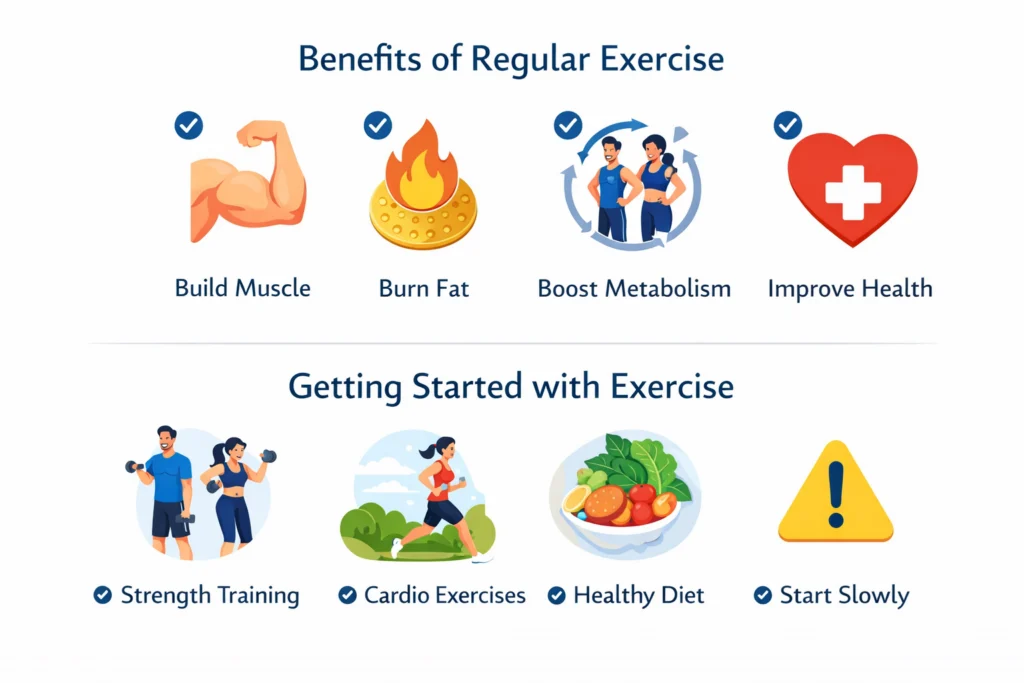
Initial days of exercise can be quite demotivating especially if you are a complete beginner. It is essential to have a regular exercise routine daily. There are a few steps that an individual should follow to maintain consistency. Some of them are listed below.
- Setting a goal: One should not overcommit on their initial days of fitness routine. Setting up small goals will work efficiently to achieve the goal.
- Choose fitness activities: A person should be wise when choosing exercise. Fitness activities like walking, jogging, cycling, dancing, and strength training are some of the most effective and important exercises that should be present in every fitness routine.
- Schedule: Choose a suitable time for your exercise, whether it is morning, afternoon, or evening.
Regular exercise is necessary in our daily routine as it helps prevent chronic diseases such as diabetes, cancer, heart disease, and obesity. Without physical activity, an individual’s body functioning depletes making them physically and mentally unhealthy. Exercise activities such as walking, jogging, cycling, playing outdoor sports, and weight training are some of the best forms of fitness activities that help keep the body fit and healthy.
Frequently Asked Questions
Q. Is “moderate” exercise enough to prevent chronic disease?
Yes. Global health guidelines suggest at least 150 minutes of moderate-intensity aerobic activity per week. This is enough to lower the risk of heart disease and diabetes significantly, provided it is consistent.
Q. Can exercise reverse a chronic disease I already have?
In many cases, yes. For conditions like hypertension, fatty liver disease, and early-stage Type 2 Diabetes, a structured exercise and nutrition plan can lead to clinical “remission” or significantly reduce the need for medication.
Q. Does weight training count toward disease prevention?
Absolutely. Strength training is vital for preventing Sarcopenia (age-related muscle loss) and Osteoporosis. It also improves resting metabolic rate, which helps prevent the obesity that often leads to other chronic illnesses.
Q. How does exercise impact my mental health in relation to chronic disease?
There is a “bi-directional” link. Chronic physical illness often leads to depression/anxiety, and vice versa. Exercise releases endorphins and reduces cortisol, breaking the stress cycle that often worsens physical disease.
Q. How does an InBody scan help in a disease-prevention routine?
A scale can’t tell the difference between “healthy” weight and “dangerous” weight. An InBody scan measures Visceral Fat (the fat around your organs), which is the most accurate predictor of chronic diseases like heart disease and diabetes.

Key Takeaways
- Metabolic Defense System: Regular exercise improves insulin sensitivity and glucose metabolism. By keeping blood sugar levels stable, it acts as the primary defense against Type 2 Diabetes and metabolic syndrome.
- Cardiovascular Resilience: Physical activity strengthens the heart muscle and improves arterial elasticity. This lowers blood pressure and significantly reduces the risk of stroke and coronary artery disease.
- The Inflammation Neutralizer: Chronic, low-grade inflammation is a root cause of many diseases (including cancer). Exercise releases “myokines” from the muscles, which have potent anti-inflammatory effects throughout the entire body.
- Skeletal Muscle as an Organ: Muscle is more than just for movement; it is an active endocrine organ. Maintaining muscle mass through resistance training helps regulate hormones and supports a healthy immune system as you age.
- The Precision Requirement: General “activity” is good, but the blog emphasizes that intensity and consistency matter. Using data-driven tracking ensures you are meeting the physiological thresholds necessary to actually trigger disease-prevention benefits.

Find an InBody Scanner Near You
References & Further Reading
- PMC 2021. Association of Body Composition with T2DM: InBody 770 retrospective chart review, n=2,404. PMC8122668.
- Scientific Reports 2019. Body Composition using DEXA and T2DM: Systematic Review and Meta-Analysis — VFM odds ratios. Nature.
- Signal Transduction and Targeted Therapy 2025. Molecular signatures of skeletal muscle insulin resistance in T2DM. Nature 2025;10:320.
- World Journal of Diabetes 2024. Body composition and metabolic syndrome in T1DM — VFI, skeletal muscle mass, and insulin resistance. WJD 2024;15(1):81–91.
- PMC 2025. BMI and glycaemic control in T2DM — cross-sectional study, n=200, HbA1c correlation. PMC11853989.
- InBody BWA. Diabetes Application — clinical use of InBody for T2DM screening and management. inbodybwa.com.
- Kalra S et al. Indian Consensus on Sarcopenia including T2DM sarcopenic obesity. Int J Gen Med. 2025;18:1731–1745.
- Reviews in Endocrine and Metabolic Disorders 2025. Skeletal muscle atrophy and dysfunction in obesity and T2DM — myocellular mechanisms. Springer Nature.
