
Body Composition 4 min read
InBody Score Explained: What a Good Score Is and How to Improve It
Every InBody body composition test ends with a single number: your InBody Score. But what does this number actually mean, and how should you use it? This guide…
Reading about body composition? Find an InBody test centre near you →
Every InBody body composition test ends with a single number: your InBody Score. But what does this number actually mean, and how should you use it?
This guide explains exactly what the InBody Score measures, what a good score looks like, and how to use it to track your progress over time.
What Is the InBody Score?
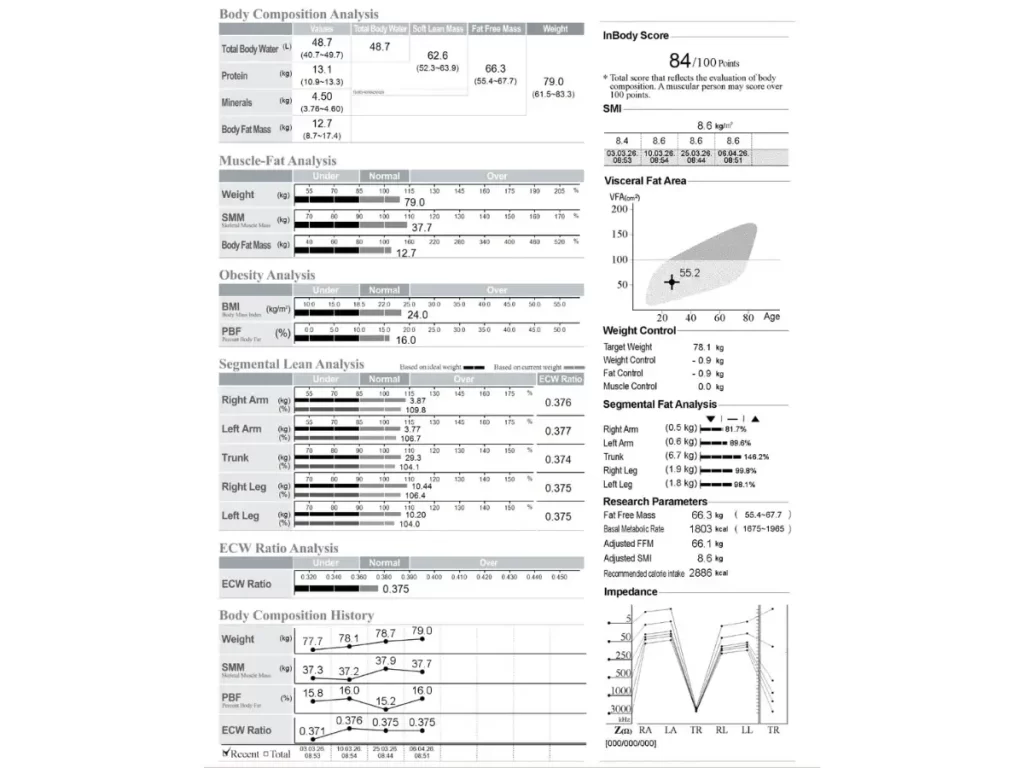
The InBody Score is a single number between 0 and 100 that summarises your overall body composition health. It is calculated from your skeletal muscle mass and body fat mass, compared against a standard appropriate for your body weight.
A higher score means you have more muscle and less fat relative to your body weight. A lower score means the opposite.
It is not a fitness score or a health grade. It is a body composition index, a single number that captures the fat-to-muscle ratio of your body in a way that is easy to track over time.
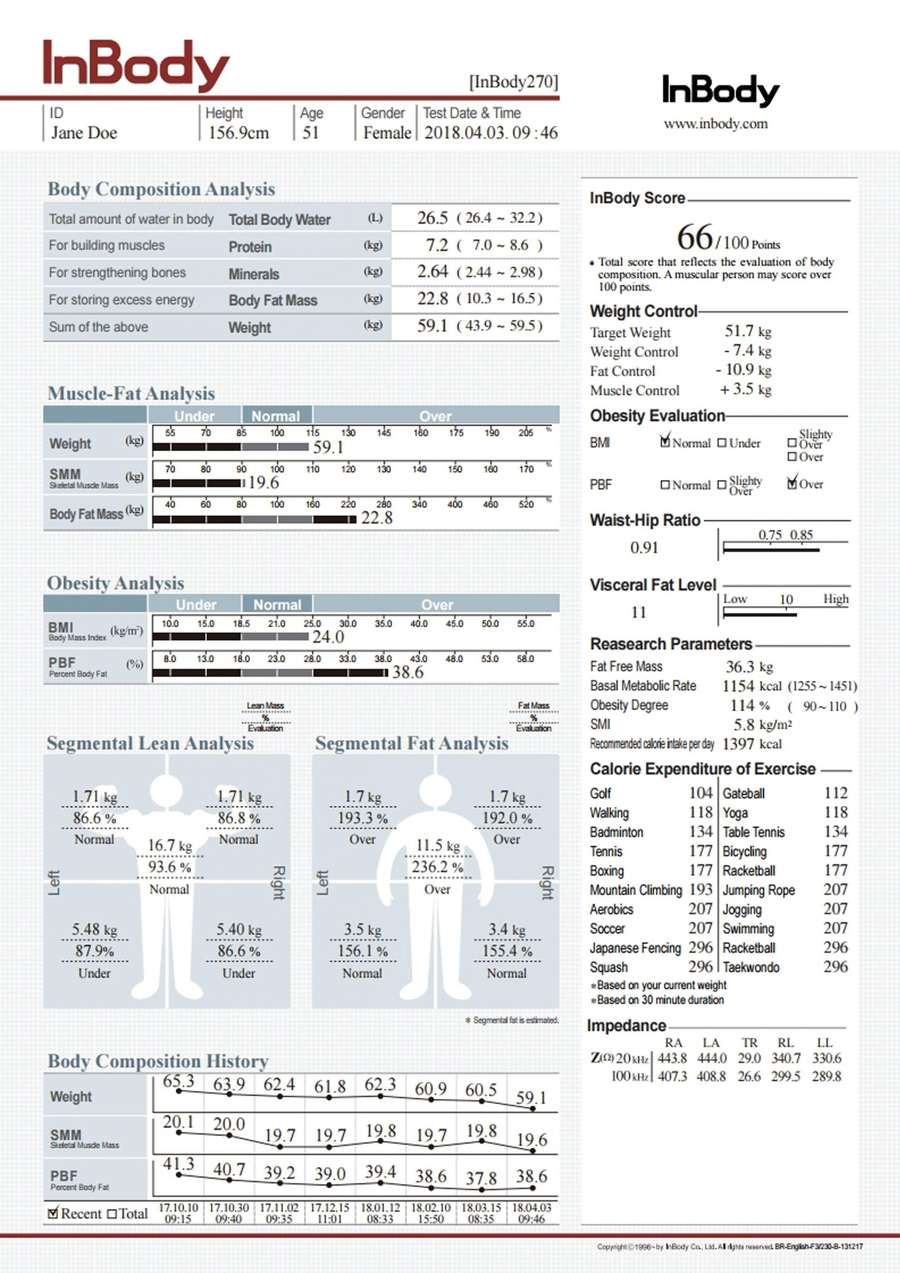
What Is a Good InBody Score?
The InBody Score ranges from 0 to 100. Here is how to read your score:
| Score Range | What It Means |
|---|---|
| 80 – 100 | Excellent high muscle mass, low body fat |
| 70 – 79 | Good above-average body composition |
| 60 – 69 | Average room for improvement in muscle or fat |
| 50 – 59 | Below average is considered a targeted programme |
| Below 50 | Needs attention: consult a health professional |
Most active adults score between 65 and 80. Elite athletes and very muscular individuals can score above 90. The score is most useful as a trend indicator, watching it improve over weeks and months as you exercise and adjust your diet.
How Is the InBody Score Calculated?

The InBody Score is derived from two primary measurements:
- Skeletal Muscle Mass (SMM): The actual amount of muscle in your arms, trunk, and legs
- Percent Body Fat (PBF): The proportion of your body weight that is fat
The score compares these two values against a standard reference based on your height and weight. If your muscle mass is above standard and your body fat is below standard, your score will be high. If the opposite, your score will be lower.
The exact formula is proprietary to InBody. What matters is that the score accurately reflects the relationship between your muscle and fat and that it responds predictably to changes in diet and exercise.
How to Improve Your InBody Score

Since the InBody Score is based on muscle mass and body fat, there are two main ways to improve it:
1. Increase Skeletal Muscle Mass
Resistance training (weight lifting, bodyweight exercises, resistance bands) is the most effective way to build skeletal muscle mass. Aim for progressive overload, gradually increasing the weight or reps over time. Pair this with adequate protein intake (1.6–2.2 grams per kilogram of body weight per day).
2. Reduce Body Fat Percentage
A sustained calorie deficit from a combination of diet and exercise will reduce body fat. InBody tracks your fat mass and muscle mass separately, so you can confirm you are losing fat (not muscle) during your programme. This is one of the most valuable uses of InBody testing: monitoring that your fat is going down while your muscle is being preserved or growing.
Why Track InBody Score Over Time?

Body weight on a scale tells you nothing about what is changing in your body. You could lose 3kg but if that weight is muscle rather than fat, your health has actually deteriorated.
The InBody Score solves this problem. By testing regularly (every 4–8 weeks under consistent conditions), you get an objective record of whether your body composition is actually improving, not just whether the scale is going down.
Many hospitals, gyms, and corporate wellness programmes use the InBody Score as the primary metric for tracking participant progress over time, precisely because it is simple, objective, and meaningful.
Ready to find out your InBody Score? Find an InBody test centre near you in India.

Frequently Asked Questions
What is a good InBody Score?
InBody Scores typically range from 70-90 for an average healthy adult, with scores above 90 indicating a favorable muscle-to-fat ratio; scores are calculated from your weight, skeletal muscle mass, and body fat mass relative to standard ranges.
Can InBody Score be improved?
Yes — building muscle through resistance training and reducing excess body fat both raise your InBody Score, since it's directly calculated from your body composition rather than total weight alone.
Is InBody Score the same as BMI?
No — BMI only uses height and weight, while InBody Score factors in your actual muscle and fat composition, making it a more accurate reflection of body health for people with different body types.
