
Fitness 12 min read
Stop Muscle Wasting: How InBody Ensures Healthy Progress on Semaglutide
Semaglutide is working. Your weight is falling. But is your muscle safe? This is the question your scale cannot answer, and the one InBody body composition monitoring was…
Reading about body composition? Find an InBody test centre near you →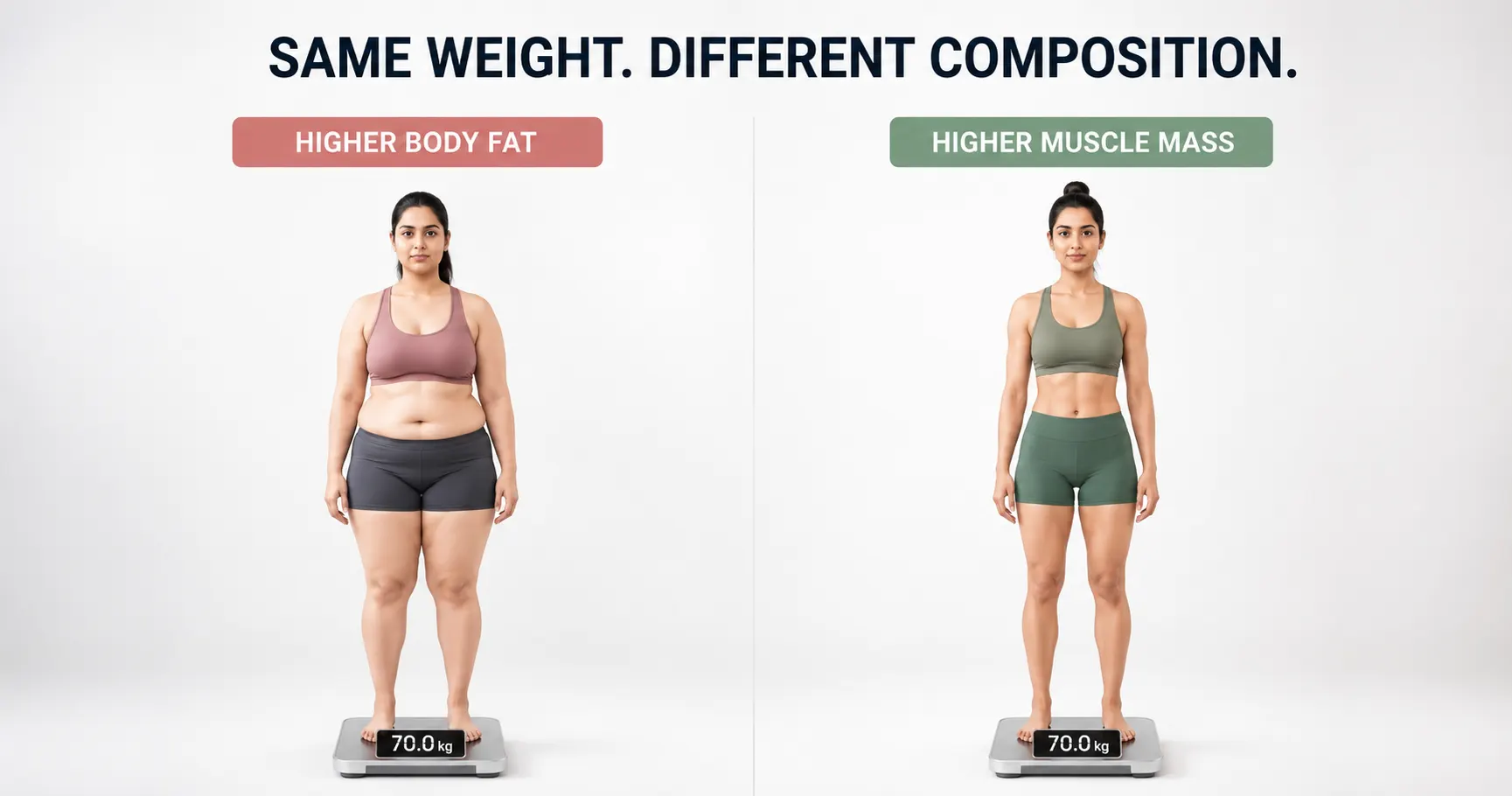
Semaglutide is working. Your weight is falling. But is your muscle safe? This is the question your scale cannot answer, and the one InBody body composition monitoring was built to solve.
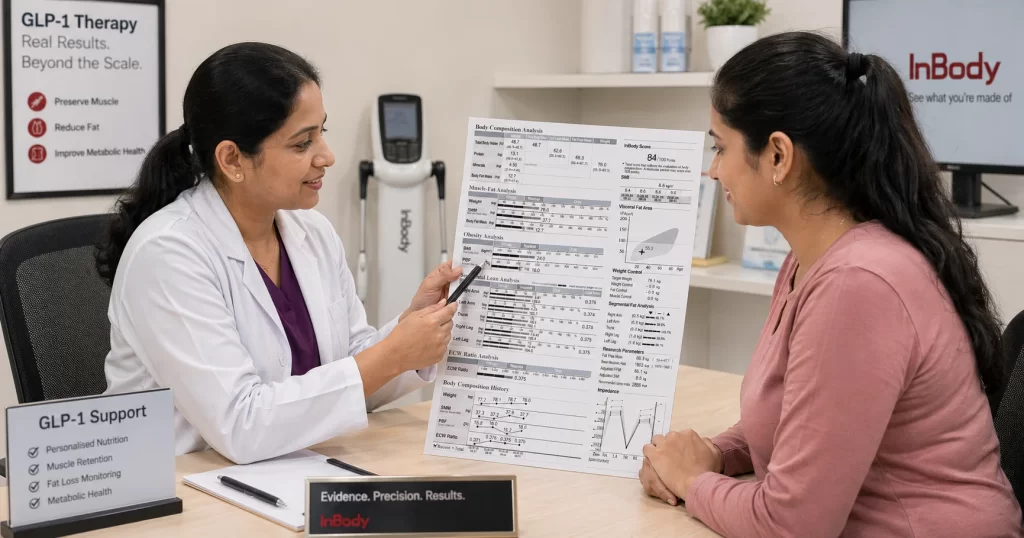
Quick recap of why this matters on semaglutide
Semaglutide, available in India as Obeda (Dr Reddy’s Laboratories, launched March 2026) and as Ozempic, is a GLP-1 receptor agonist that suppresses appetite, slows gastric emptying, and drives significant weight loss. Phase III clinical data show 12–15% mean body weight reduction over 68 weeks in patients with type 2 diabetes and obesity.
That is a clinically meaningful result. But the mechanism that produces its powerful appetite suppression, creating a large caloric deficit, is the same mechanism that puts muscle mass at risk. Large caloric deficits, especially without adequate protein or resistance training, drive lean mass loss alongside fat loss.
Semaglutide has no muscle-protection mechanism.
The drug creates a caloric deficit through appetite suppression. It has no direct anabolic effect on muscle tissue. Without concurrent resistance training and adequate protein, the deficit that drives fat loss will also drive lean mass loss silently, invisibly, until it becomes clinically significant. InBody monitoring is the only tool that catches this before consequences accumulate.
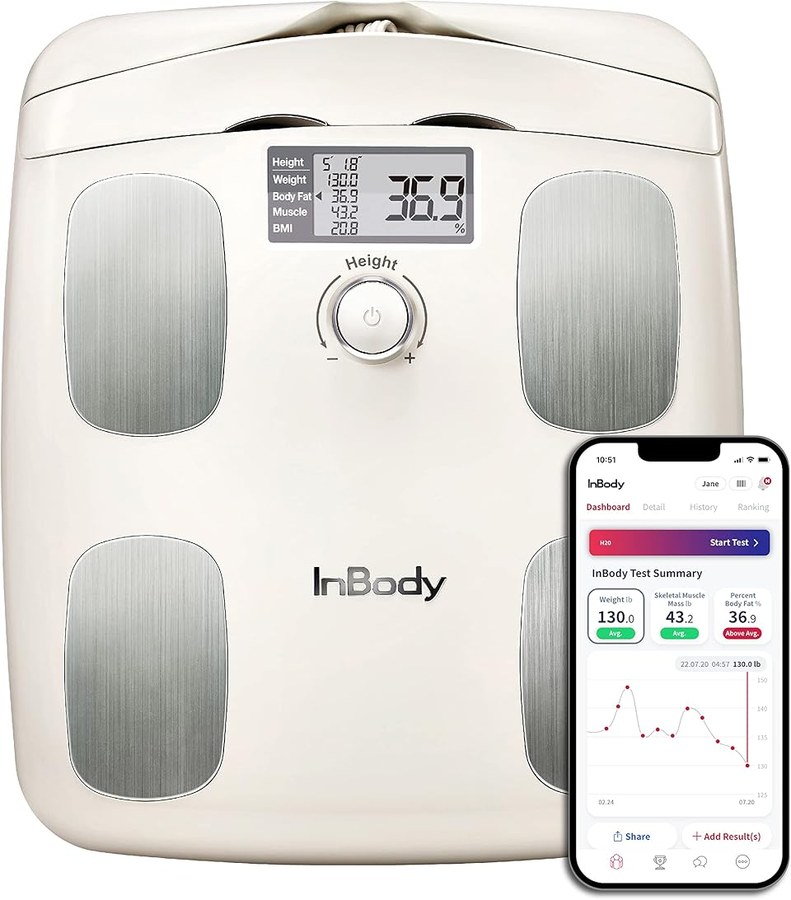
The 6 InBody parameters that matter on GLP-1 therapy
Not every number on an InBody result sheet needs the same attention during GLP-1 therapy. These six parameters form the core monitoring panel. Each tells you something different, and together they give a complete, actionable picture.
- Skeletal Muscle Mass (SMM): The primary muscle preservation indicator. Any decline in SMM during semaglutide therapy signals that the intervention needs adjustment immediately.
- Body Fat Mass (BFM) confirms actual fat is being lost. BFM should be falling. If weight falls but BFM is stable, water or muscle, not fat, is driving the scale change.
- Visceral Fat Level (VFL): The highest-value metabolic outcome of GLP-1 therapy. VFL should be falling progressively. Stagnant VFL despite weight loss may indicate fat is being lost from the wrong compartments.
- Phase Angle: Cellular membrane integrity. A falling phase angle during semaglutide therapy indicates muscle cell deterioration, an early warning sign before SMM decline is measurable.
- Basal Metabolic Rate (BMR): Tracks metabolic adaptation. A falling BMR during GLP-1 therapy confirms lean mass is being lost. Stable or maintained BMR is evidence that muscle is being preserved.
- ECW/TBW Ratio: Extracellular to total body water ratio. An elevated or rising ratio during therapy indicates inflammation or tissue stress, a signal that cellular health is under strain.
The Key Monitoring Principle:
“On semaglutide, the scale confirms weight is falling. InBody confirms what is falling. Only when you know both numbers are moving in the right direction can you say the therapy is truly succeeding.”
What the numbers mean: clinical thresholds and action triggers
Knowing which parameters to track is only useful if you know what changes require action. The following thresholds are evidence-informed guidance for clinicians monitoring patients on GLP-1 therapy.
| InBody Parameter | Reassuring Signal | Action Threshold | Intervention |
|---|---|---|---|
| Skeletal Muscle Mass (SMM) | Stable or increasing | Any decline >0.5 kg between scans | Increase protein target + prescribe resistance training immediately |
| Body Fat Mass (BFM) | Falling progressively | Weight falling but BFM stable | Check hydration + assess if muscle is driving scale reduction |
| Visceral Fat Level (VFL) | Falling by ≥1 level per scan | Stable after 12 weeks of therapy | Review caloric composition increase dietary quality, reduce refined carbohydrates |
| Phase Angle | Stable or improving | Decline of >0.3° between scans | Urgent review protein, consider resistance training, assess for inflammatory condition and also had Nutrition intervention |
| Basal Metabolic Rate (BMR) | Stable (within 50–100 kcal of baseline) | Decline >150 kcal from baseline | Lean mass loss is significant revise programme, potentially slow weight loss rate |
| ECW/TBW Ratio | Normal range (0.360–0.390) | Rising above 0.400 | Investigate for inflammation or fluid imbalance may indicate tissue stress |
The 5-step InBody monitoring protocol for GLP-1 therapy
This is the complete clinical protocol for integrating InBody body composition monitoring into a semaglutide (Obeda/Ozempic) treatment programme from the first dose to the 6-month outcome review.
1. Before First Dose:
Baseline InBody Scan: Establish Your Starting Map. Conduct a full InBody scan before the patient takes their first dose of semaglutide. Record SMM, BFM, VFL, BMR, Phase Angle, and ECW/TBW ratio. This is your reference point for everything that follows. Without a baseline, you cannot confirm whether subsequent changes are due to the therapy or pre-existing trends.
Set patient-specific targets for SMM preservation and VFL reduction based on actual baseline values not population averages.
2. Weeks 4–6 Dose Escalation Phase
Early Check Catch Muscle Loss Before It Compounds: Semaglutide is titrated up over the first 4–8 weeks. This is when appetite suppression is intensifying, and the caloric deficit is growing rapidly. An early InBody scan at 4–6 weeks identifies whether disproportionate lean mass loss is already occurring before it compounds over months of therapy. This is the most clinically important intervention window.
If SMM has declined by >0.5 kg or phase angle has dropped: increase protein target to 1.6–2.0 g/kg immediately and prescribe resistance training before the next dose escalation.
3. Months 2–6 : Active Therapy
Monthly Monitoring: Track Quality, Not Just Quantity. Monthly InBody scans during active therapy track the quality of weight loss in real time. At each scan, compare the ratio of fat lost to muscle lost. The clinical target is a fat-to-lean-loss ratio of at least 3:1, meaning at least 75% of total weight lost should be fat mass, not lean tissue. If the ratio falls below this, the programme must be adjusted.
Reassure patients whose scale has stalled but whose InBody shows falling BFM visceral fat, which is often lost before subcutaneous fat, and the scale doesn’t reflect this accurately.
4. Ongoing All Active Therapy Phases
Protein Optimisation Use FFM, Not Body Weight: Protein targets calculated from total body weight are inaccurate in overweight patients; they overestimate needs because they include fat mass, which does not require protein for maintenance. InBody’s fat-free mass (FFM) data allows precise, individualised protein targets. On semaglutide, appetite suppression makes adequate protein intake harder to achieve, which is exactly when it matters most.
Target formula: 1.4–2.0 g × FFM (kg). For a patient with FFM of 45 kg, this means 63–90 g protein daily distributed across 3–4 meals for optimal muscle protein synthesis.
5. Month 6 Outcome Review
Comprehensive Review Assess, Decide, Plan: Compare the 6-month InBody report to baseline across all six parameters. Calculate net changes in fat mass, lean mass, visceral fat level, BMR, and phase angle. This data informs three key decisions: whether to continue semaglutide at the current dose, taper and maintain, or adjust the programme before moving forward. Without this data, the decision is based on scale weight alone, and an incomplete and often misleading picture.
Target outcomes at 6 months: BFM reduced by ≥3–5 kg, SMM stable or improved, VFL reduced by ≥2 levels, BMR within 100 kcal of baseline, Phase Angle stable or improved.
The three muscle-protection interventions that work alongside semaglutide
InBody monitoring tells you what is happening. These three interventions determine what happens next. None of them is optional when prescribing GLP-1 therapy; they are part of the standard of care.
- Adequate protein 1.4 to 2.0 g per kg of fat-free mass daily
Semaglutide suppresses appetite powerfully. As caloric intake falls, protein intake often falls with it precisely when the body’s demand for dietary protein to maintain muscle increases. Use InBody’s FFM data to set precise protein targets. Counsel patients explicitly, even when not hungry, that protein intake is non-negotiable. Distribute across 3–4 meals. Consider protein supplementation if dietary protein targets cannot be met consistently. - Progressive resistance training, minimum 3 sessions per week. Resistance exercise is the anabolic stimulus that tells the body to preserve muscle despite a caloric deficit. Without it, semaglutide’s appetite suppression creates the exact conditions for accelerated lean mass loss. Target all major muscle groups with progressive overload, increasing weight or repetitions gradually over time. Even low-intensity programmes significantly reduce lean mass loss compared to no resistance training. This is the single most effective non-dietary intervention for muscle preservation.
- InBody monitors every 4–6 weeks, the feedback loop that makes the other two work.
Protein and resistance training preserve muscle. InBody monitoring confirms they are working and identifies early if they are not. Without this feedback loop, clinicians and patients are flying blind. A patient who achieves protein targets and completes their training sessions but still shows SMM decline on InBody needs their programme reviewed. A patient whose InBody shows stable SMM and falling BFM has objective confirmation that their effort is working, the most powerful motivational tool in any weight management programme.
How to communicate InBody results to GLP-1 patients
Data is only valuable if patients understand it. These are the key messages that translate InBody results into actionable, motivating guidance for patients on semaglutide therapy.
- When the scale stalls but InBody shows progress: “Your scale hasn’t moved this month, but your InBody shows you’ve lost 1.2 kg of fat, and your muscle mass is exactly where it was. That is a genuinely good result. The goal of this programme is fat loss, not weight loss. You are achieving exactly that.”
- When scale shows loss but InBody shows muscle declining: “The scale shows you’ve lost 2 kg this month. But your InBody shows that 0.8 kg of that was muscle, not fat. That is not what we want. Your body is losing its metabolic engine. We need to increase your protein intake and add resistance training before your next dose otherwise this therapy is working against your long-term metabolic health.”
- When everything is going right, the motivating result: “Six months in, you have lost 6.5 kg of fat, your visceral fat has dropped from level 12 to level 8, and your muscle mass has actually increased slightly. Your metabolism is intact. This is exactly what successful GLP-1 therapy with the right support looks like.”
What success looks like in InBody targets at 6 months

These are the evidence-informed target outcomes for a patient on semaglutide therapy with appropriate protein intake, resistance training, and monthly InBody monitoring.
| InBody Parameter | Baseline (Typical) | Target at 6 Months | Indicates |
|---|---|---|---|
| Skeletal Muscle Mass | Patient-specific baseline | Stable or +0.5 kg | Muscle fully preserved optimal outcome |
| Body Fat Mass | Patient-specific baseline | Reduced by ≥3–6 kg | Quality fat loss confirmed |
| Visceral Fat Level | Typically 10–14 in eligible patients | Reduced by ≥2 levels | Metabolic risk reduction confirmed |
| BMR | Patient-specific baseline | Within 100 kcal of baseline | Metabolic rate protected no adaptive suppression |
| Phase Angle | Patient-specific baseline | Stable or improved | Cellular health maintained throughout therapy |
| ECW/TBW Ratio | 0.360–0.390 normal range | Stable within normal range | No systemic inflammation or fluid stress from therapy |
Frequently asked questions
Q. How often should InBody scans be done on semaglutide therapy?
At minimum: A baseline scan before the first dose, a check at 4–6 weeks during dose escalation, then monthly scans during active therapy, and a comprehensive 6-month outcome review comparing all parameters to baseline. For older patients, those with existing sarcopenia, or those on aggressive caloric restriction, more frequent monitoring (every 3–4 weeks) is advisable during the dose escalation phase.
Q. What if a patient is losing muscle despite adequate protein and resistance training?
If InBody shows continued SMM decline despite protein targets being met and resistance training prescribed, consider three possibilities: (1) the caloric deficit may be too aggressive consider slowing the rate of weight loss by reducing the deficit; (2) protein timing may be suboptimal ensure intake is spread across 3–4 meals not concentrated in one or two; (3) an underlying inflammatory or catabolic condition may be contributing review for thyroid dysfunction, chronic inflammation markers, or medication interactions.
Q. Can InBody replace DEXA scans for GLP-1 monitoring?
InBody BIA is not equivalent to DEXA in absolute accuracy, but it is validated for tracking longitudinal changes, which is exactly what GLP-1 monitoring requires. The clinical question is not “what is the absolute body fat percentage?” but “is muscle being preserved and fat being lost over time?” For this purpose, serial InBody scans under consistent conditions are clinically appropriate, significantly more practical than DEXA, and far more accessible for routine outpatient use across India.
Q. Is phase angle a reliable marker to track on semaglutide?
Yes, the phase angle reflects cellular membrane integrity and is sensitive to early changes in muscle cell health before overall SMM decline becomes measurable. A falling phase angle during GLP-1 therapy is an early warning sign that should prompt immediate review of protein intake and exercise prescription. It is particularly valuable for identifying cellular-level deterioration in older patients where absolute SMM changes may be small but clinically significant.
Q. What does a “good” InBody result look like at 3 months on semaglutide?
An ideal 3-month InBody result on semaglutide with appropriate support shows: body fat mass reduced by 2–4 kg, skeletal muscle mass stable or minimally changed (within 0.3 kg of baseline), visceral fat level reduced by at least 1 level, BMR within 75–100 kcal of baseline, and phase angle stable or improved. If all of these are met, the programme is working correctly. If any parameter is outside these ranges, an intervention review is warranted before the 6-month mark.
Key takeaways
- Semaglutide needs a body composition partner: The drug drives weight loss through appetite suppression. It has no direct muscle-protective mechanism. Without InBody monitoring, protein optimisation, and resistance training, lean mass loss on GLP-1 therapy is likely and clinically significant.
- Six InBody parameters form the GLP-1 monitoring panel: SMM, BFM, VFL, Phase Angle, BMR, and ECW/TBW ratio together provide a complete picture of whether semaglutide therapy is producing quality fat loss or causing hidden metabolic harm.
- Week 4–6 is the most critical monitoring window: As semaglutide doses escalate and appetite suppression intensifies, early lean mass loss can establish a downward trajectory that compounds over months. An InBody check at 4–6 weeks catches this early, the most impactful intervention point in the entire treatment course.
- Protein targets should use FFM, not total body weight. InBody’s fat-free mass data enables precise protein prescriptions. Using FFM rather than total weight avoids overestimating needs in overweight patients and ensures the protein target is calibrated to actual lean tissue, the tissue that needs protecting.
- InBody data motivates patient adherence. Patients whose scale stalls but whose InBody confirms fat is still being lost are far more likely to continue their programme. Body composition data transforms patient conversations from frustration to understanding a clinical benefit that extends far beyond the numbers themselves.
Semaglutide & Muscle Loss: What GLP-1 Drugs Do to Your Body
Haven’t read Part 1 yet? It covers why GLP-1 drugs put muscle at risk, what the STEP trial data shows on lean mass changes, and why the scale alone cannot detect this problem.Read Part 1: Semaglutide & Muscle Loss →
Integrate InBody into your GLP-1 programme today
Medical Disclaimer: This article is for informational and educational purposes only and is intended for healthcare professionals. It does not constitute medical advice, diagnosis, or treatment recommendations. All clinical decisions regarding semaglutide therapy and monitoring protocols should be made by qualified healthcare providers based on individual patient assessment. InBody results should be interpreted in conjunction with a full clinical evaluation. Semaglutide (Obeda) is a prescription medication.

Find an InBody Scanner Near You
References & further reading
- Wilding JPH, et al. — Once-Weekly Semaglutide in Adults with Overweight or Obesity. NEJM, 2021;384:989–1002.
- Bikou O, et al. — Lean Mass Changes in GLP-1 Receptor Agonist Therapy. Obesity Reviews, 2023.
- Cava E, et al. — Preserving Healthy Muscle during Weight Loss. Advances in Nutrition, 2017;8(3):511–519.
- Stokes T, et al. — Recent Perspectives on Dietary Protein for Muscle Hypertrophy. Nutrients, 2018;10(2):180.
- Dr Reddy’s Laboratories — Obeda (Semaglutide) Launch Press Release. March 2026.
- Kalra S, et al. — Indian Consensus on Sarcopenia including T2DM Sarcopenic Obesity. Int J Gen Med. 2025;18:1731–1745.
- ICMR-INDIAB Study — Diabetes Prevalence in India (101 million adults).
- InBody — Body Composition Analysis in Metabolic Disease Management. Clinical White Paper, 2024.
