
Body Composition 10 min read
India’s Childhood Obesity Crisis: Causes & How Parents Can Help
On 4 March 2026, the World Obesity Federation delivered a number that should alarm every pediatrician, endocrinologist, and public health professional in India. The World Obesity Atlas 2026…
Reading about body composition? Find an InBody test centre near you →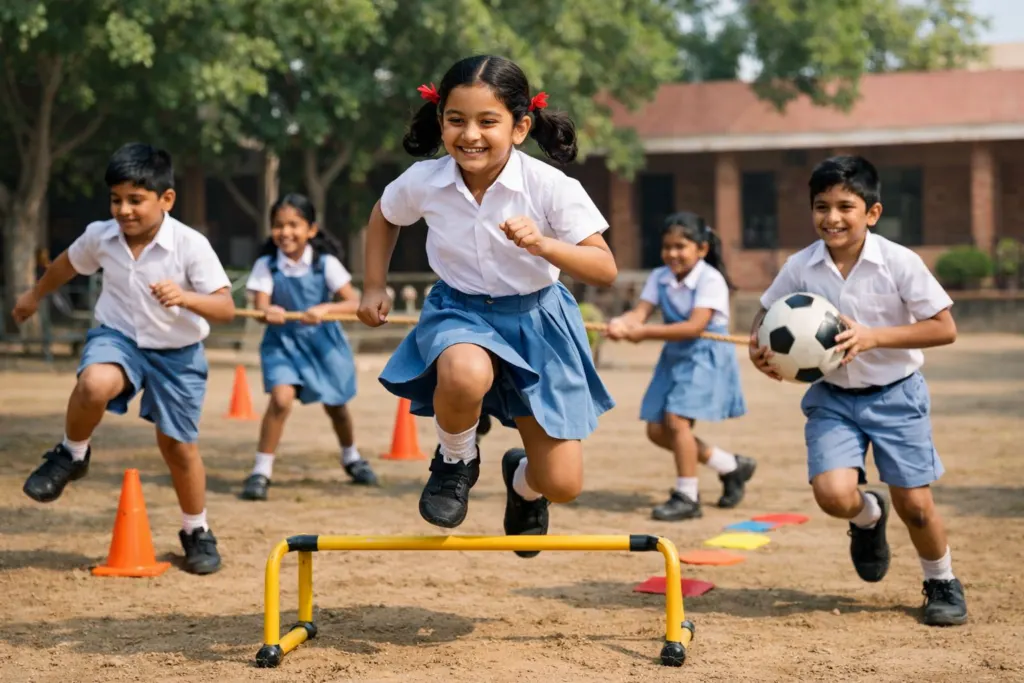
On 4 March 2026, the World Obesity Federation delivered a number that should alarm every pediatrician, endocrinologist, and public health professional in India. The World Obesity Atlas 2026 confirmed that India now ranks second in the world behind only China for the number of children living with overweight or obesity. That number is 41 million children aged 5 to 19. And it is growing at 5% every single year.
This is not a future problem. These children are in your clinics today. They are presenting with borderline fasting glucose at age 11, elevated liver enzymes at age 13, and blood pressure readings that belong in cardiology, not a school health check. Understanding the causes is the first step. Acting on them is what will actually stop it. This article covers both 7 dangerous causes and 7 evidence-based solutions.
- 41M Indian children (5–19) overweight or obese in 2025 (World Obesity Atlas 2026)
- #2India’s global rank behind China (62M), ahead of USA (27M)
- 5%Annual growth rate is one of the fastest globally
- 56MProjected overweight/obese children by 2040 if trends continue
The Scale of India’s Childhood Obesity Crisis
The World Obesity Atlas 2026 puts the numbers in stark terms. India has 14.92 million children aged 5–9 and 26.40 million adolescents aged 10–19 living with overweight or obesity. India ranks first within the entire WHO South-East Asia Region and second globally. The country has missed the 2025 global target and is off track to meet the revised 2030 target.
A 5% annual growth rate means these numbers compound rapidly. By 2040, 20 million Indian children will live with obesity, and 56 million will be overweight or obese, with a corresponding surge in the associated disease burden.
| Condition of Children | Affected (2025) | Projected (2040) | Change |
|---|---|---|---|
| Overweight / Obese | 41 million | 56 million | +37% |
| Obesity (alone) | 14 million | 20 million | +43% |
| BMI-related Hypertension | 2.99 million | 4.21 million | +41% |
| Hyperglycaemia | 1.39 million | 1.91 million | +37% |
| High Triglycerides | 4.39 million | 6.07 million | +38% |
| MASLD (Fatty Liver) | 8.39 million | 11.88 million | +42% |
1. Ultra-Processed Food: The 33% Annual Problem
India’s dietary landscape has changed faster than its health system can respond. Ultra-processed food consumption grew from USD 900 million in 2006 to USD 37.9 billion in 2019 an annual growth rate of over 33%. Between 2011 and 2021, retail UPF sales grew at a CAGR of 13.7%. These foods are calorie-dense, nutrient-poor, and engineered for overconsumption.
Children aged 6–15 are the primary target. More than 75% of adolescents in UNICEF’s U-Report poll reported seeing advertisements for sugary drinks, fast food, or snacks in the week before the survey, mostly on social media. Digital food marketing shapes food preferences before clinicians even have a chance to intervene.
Clinical Implication:
Screen for UPF consumption at every pediatric visit, not just weight. A child consuming packaged snacks and sweetened beverages daily may present with visceral fat accumulation and insulin resistance at a completely normal BMI. Body composition analysis detects this risk before it appears on the scale or growth chart.
2. Physical Inactivity: 74% of Adolescents Fall Short
The World Obesity Atlas 2026 reports that 74% of Indian adolescents aged 11–17 do not meet the WHO minimum of 60 minutes of moderate-to-vigorous physical activity per day. Academic pressure, screen time, lack of safe outdoor spaces, and cultural norms all contribute.
Physical inactivity during childhood impairs insulin sensitivity, skeletal muscle mass development, and basal metabolic rate. It accelerates the thin-fat phenotype, high body fat with low muscle mass, that is already prevalent in Indian children at normal BMI values.
Key Insight
Indian children display higher body fat percentage at lower BMI values than Western counterparts. The 2015 IAP BMI charts with lower cut-offs of 23 kg/m² (overweight) and 25 kg/m² (obese) equivalents must be used over the CDC or WHO international standards for all Indian pediatric patients.
3. Suboptimal Breastfeeding and Early Nutrition
The World Obesity Atlas 2026 reports that 32.6% of Indian infants aged 1–5 months experience suboptimal breastfeeding. Exclusive breastfeeding for six months programs leptin sensitivity, adiponectin levels, and gut microbiome composition in ways that protect against excess adiposity throughout childhood.
Complementary feeding practices further compound the problem. Early introduction of high-sugar, low-fibre weaning foods creates an adipogenic environment from the first year of life. India’s CNNS 2016–18 showed overweight prevalence rising sharply across higher wealth quintiles, confirming this is a food environment problem, not a poverty problem.
- Children weaned on refined cereal-based foods show 23% higher visceral fat accumulation by age 5 in South Asian cohort studies
- Maternal gestational weight gain above recommendations independently predicts childhood overweight
- Regular sugary beverage consumption in children aged 6–10 is a documented contributor to rising obesity risk in India
4. Maternal Metabolic Health and Intergenerational Risk
The World Obesity Atlas 2026 reports that 13.4% of Indian women of reproductive age have high BMI, and 4.2% live with type 2 diabetes. Both are proven independent predictors of childhood obesity. GDM with a prevalence of 10–14.3% across Indian states exposes the fetus to chronic hyperglycaemia, programming insulin resistance that manifests as excess adiposity in early childhood.
Clinical Pearl
Screen children of mothers with T2DM, GDM history, or BMI above 23 kg/m² for metabolic risk markers fasting insulin, HOMA-IR, and waist-to-height ratio from age 6 onwards, regardless of the child’s current BMI.
5. The Double Burden: Undernutrition Meets Overnutrition
UNICEF’s Child Nutrition Global Report 2025 confirmed that globally, for the first time, the number of obese school-age children has surpassed the number of underweight children. India exemplifies this double burden; both crises exist simultaneously, sometimes within the same family.
Programs designed to address undernutrition, ICDS, and PM-POSHAN now operate in an environment where supplementary caloric provisions may accelerate overnutrition in certain subpopulations. Adapting these programs to deliver nutritional quality, not just caloric quantity, is one of the most urgent gaps in Indian public health today.
6. Obesogenic School Food Environments
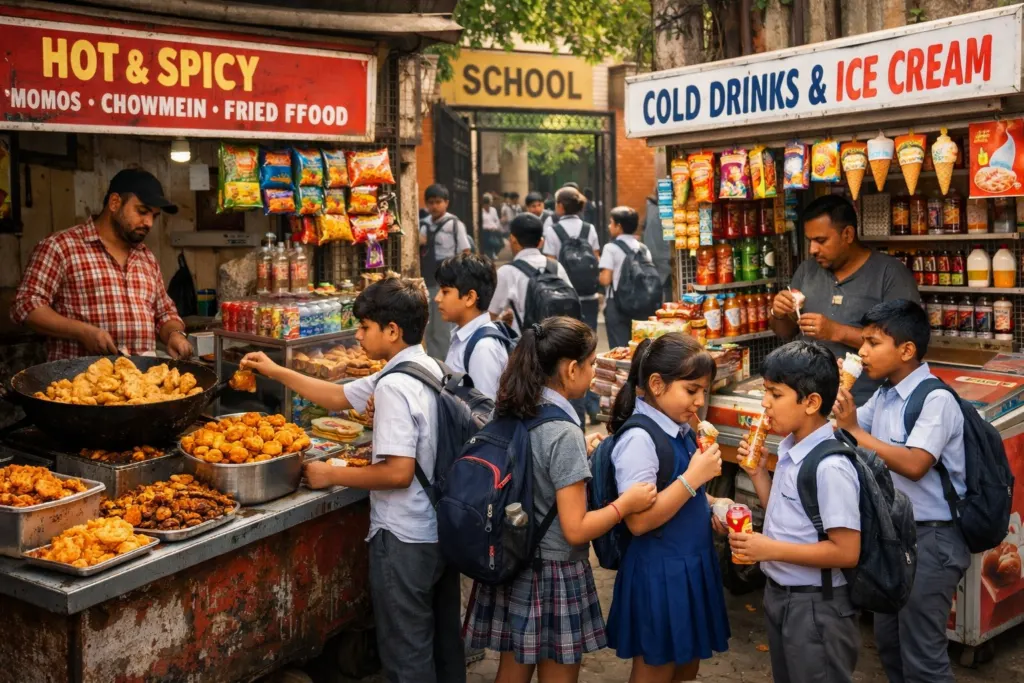
Only 35.5% of school-age children in India receive school meals through PM-POSHAN. Meanwhile, ultra-processed snack vendors and sugary beverage stalls cluster within 50 meters of most urban school gates. A 2023 Indian meta-analysis of 186,901 children aged 3–18 found an obesity prevalence of 8.4%, suggesting the 41 million figure may be an undercount. Only 6 Indian states had any school food policy regulation in place as of 2024.
7. A Healthcare System Not Yet Screening for Pediatric Obesity
Systematic BMI screening, waist circumference measurement, and metabolic risk stratification at well-child visits are not yet standard. Pediatric obesity is frequently reframed by caregivers and sometimes clinicians as prosperity rather than a medical condition requiring intervention.
The World Obesity Atlas 2026 explicitly states that India is off track in achieving the 2030 global target. The 2024 Indian Journal of Endocrinology and Metabolism meta-analysis confirmed that T2DM, MASLD, hypertension, and dyslipidemia are now being detected in Indian children aged 8–15 in urban settings with increasing frequency.
The Diagnostic Gap
BMI systematically underestimates obesity in Indian children. The thin-fat phenotype means a child at BMI 19 kg/m² may carry clinically dangerous visceral fat and early insulin resistance invisible on a growth chart. InBody body composition analysis detects this in under 60 seconds and should be integrated into pediatric metabolic screening workflows for high-risk children starting at age 6.
7 Evidence-Based Solutions: How to Actually Stop It
Every cause above has a corresponding, clinically validated solution. These seven interventions have the strongest evidence base for reversing India’s childhood obesity trajectory.
Solution 1: Tax Sugar-Sweetened Beverages
A 20% SSB tax produces a 20–30% consumption reduction in multiple country trials. The World Obesity Federation and PHFI are actively advocating for this in India. Revenue can fund school nutrition programs.
Solution 2: Front-of-Pack Nutrition Labelling
Warning labels on HFSS packaged foods reduce purchases at the population level. FSSAI’s proposed HFSS labelling framework needs accelerated implementation across all categories targeting children.
Solution 3: Restrict Digital Food Marketing to Children
75% of Indian adolescents see ads for sugary drinks or fast food weekly, mostly on social media. Restricting HFSS digital marketing to under-18s is a high-impact, low-cost policy with proven global precedent.
Solution 4: Reform School Nutrition Standards
Expand PM-POSHAN with nutritionally complete meals. Regulate the school food environment and restrict vendor access within 200 meters of school gates. Mandate 60 minutes of physical activity per school day.
Solution 5: Promote Exclusive Breastfeeding
Exclusive breastfeeding for 6 months is one of the highest-impact interventions for reducing childhood obesity risk. Lactation support, workplace policies, and community health worker training are the delivery mechanisms that scale.
Solution 6: Early Metabolic Screening in Primary Care
Integrate body composition screening alongside BMI at well-child visits from age 6 for high-risk children. Screen for HOMA-IR, fasting glucose, and waist-to-height ratio. InBody BIA delivers this in 60 seconds.
Solution 7: Family-Based Lifestyle Intervention Before Age 12
Structured lifestyle modification before puberty, dietary counselling, supervised physical activity, and family behavioural support achieve a 2–4% body fat reduction in 6 months and attenuate HOMA-IR progression. The earlier the intervention, the greater the impact.
Why BMI Alone Will Not Solve This And What Clinicians Need Instead
BMI was developed in the 1830s as a population statistics tool. It cannot distinguish fat from muscle, cannot detect visceral fat, and has no ethnic correction for Indian children who develop metabolic disease at BMI levels international guidelines call healthy.
InBody bioelectrical impedance analysis provides visceral fat level, body fat percentage, and skeletal muscle mass data in under 60 seconds at 98.4% accuracy compared to DEXA. Using it alongside IAP 2015 BMI charts closes the diagnostic gap that BMI alone leaves wide open.
Real Case: What Body Composition Screening Found That BMI Missed
A 13-year-old girl in Chennai presented at a routine school health check with a BMI of 20.8 normal on both CDC and IAP charts. Her parents had no concerns. She was mildly fatigued with irregular periods, attributed to academic stress.
Her InBody scan revealed a Visceral Fat Level of 10 (high-risk threshold), Body Fat Percentage of 32.1% (obese by IAP composition standards for adolescent girls), and Skeletal Muscle Mass 1.6 kg below population norm. Her fasting insulin was subsequently elevated. She was diagnosed with early-stage insulin resistance and began a structured intervention immediately. At her 12-week follow-up
- ↓2 units: Visceral Fat Level reduced
- +1.3 kg Skeletal Muscle Mass gained
- ↓3.4%Body Fat Percentage reduced
- Normal fasting insulin at 12 weeks
Her BMI changed by 0.4 units. Without InBody data, there would have been no diagnostic trigger and no evidence that the intervention was working. Body composition data changed both the diagnosis and the outcome.
Frequently Asked Questions
As of 2025, the World Obesity Atlas 2026 estimates approximately 41 million Indian children aged 5–19 are living with overweight or obesity, including 14 million classified as obese. India ranks second globally after China (62 million) and first within the WHO South-East Asia Region.
The seven primary causes are: ultra-processed food consumption growing at 33% annually, physical inactivity (74% of adolescents fall below WHO guidelines), suboptimal breastfeeding (32.6% of infants aged 1–5 months), maternal metabolic health, the double burden of malnutrition, obesogenic school food environments, and gaps in pediatric metabolic screening.
Indian children display higher body fat percentage at lower BMI values — the thin-fat phenotype. Standard CDC or WHO international cut-offs systematically underestimate obesity prevalence. The IAP 2015 BMI charts with lower cut-offs must always be used. InBody body composition analysis detects visceral fat accumulation and skeletal muscle deficit that BMI misses entirely.
The World Obesity Atlas 2026 projects that by 2040, 56 million Indian children will be overweight or obese, including 20 million with obesity. Hypertension cases will rise to 4.21 million, hyperglycaemia to 1.91 million, high triglycerides to 6.07 million, and MASLD (fatty liver) to 11.88 million.
Seven evidence-based solutions: SSB taxation, front-of-pack nutrition labelling, restrictions on digital food marketing to children, school nutrition standards reform, exclusive breastfeeding promotion, early metabolic screening using InBody body composition analysis from age 6, and family-based lifestyle intervention before age 12.
Key Takeaways
- India has 41 million children living with overweight or obesity, the world’s second highest growing at 5% annually, with no sign of slowing.
- The 7 causes UPF consumption, inactivity, early nutrition, maternal health, double burden, school food environment, and healthcare gaps operate as an interconnected system, not in isolation.
- BMI systematically underestimates childhood obesity in India. IAP 2015 charts must be used, never CDC or WHO international standards, for all Indian pediatric patients.
- 7 solutions with the strongest evidence base include SSB taxation, front-of-pack labelling, digital marketing restrictions, school nutrition reform, breastfeeding promotion, early metabolic screening using InBody body composition analysis, and family intervention before age 12.
- InBody detects visceral fat level, body fat percentage, and skeletal muscle deficit in under 60 seconds, which the clinical data BMI cannot provide.
- Without decisive action, 56 million Indian children will be overweight or obese by 2040, driving a wave of pediatric-onset T2DM, cardiovascular disease, and fatty liver disease, which no health system is equipped to absorb.
InBody body composition analysers are used across pediatric endocrinology clinics, hospitals, and wellness centres in India. Detect childhood obesity risk beyond what BMI can see in under 60 seconds.
References & Further Reading
- World Obesity Federation. World Obesity Atlas 2026. Released 4 March 2026.
- UNICEF India. Overweight and obesity are rising across all ages. September 2025.
- UNICEF. Child Nutrition Global Report 2025.
- Indian Journal of Endocrinology and Metabolism. Tackling the Rising Tide: Childhood Obesity in India. 2024. PMC11189283.
- Sethi et al. Prevalence of overweight/obesity in India: CNNS 2016–18. Pediatric Obesity. 2024.
- Indian Academy of Paediatrics. IAP BMI Charts for Indian Children. 2015.
- ICMR-NIN. Report on Diet and Disease Burden in India. 2024.
- WHO Expert Consultation. Appropriate BMI for Asian populations. The Lancet. 2004.


Most trending articles

InBody vs DEXA vs Skinfold Calipers: Which Body Composition Test Is Right for You in India?
DEXA scans, InBody BIA, skinfold calipers — three different ways to measure body composition. Accuracy comparisons, cost in India, accessibility, and which method makes sense for your specific goal.
Skinny Fat in India: Why 40% of Normal Weight Indians Have Dangerously High Body Fat
India's hidden obesity epidemic. Skinny fat (TOFI — Thin Outside, Fat Inside) affects millions of normal-weight Indians. How body composition testing reveals what BMI hides — and the exact protocol to fix it.

Healthy Body Composition by Age for Indians: Reference Ranges at 20s, 30s, 40s, 50s+
Body composition reference ranges for Indian men and women by age. Find out if your body fat %, muscle mass, and visceral fat level are healthy for your age and what to do if they're not.