Maintaining the right balance of water inside and outside our cells is vital for every aspect of health, from energy levels and muscle performance to blood pressure and kidney function. But did you know that one of the essential regulators of this balance is sodium?
Let’s understand how sodium interacts with our body’s water compartments. The InBody helps visualise this balance with unmatched precision.
Understanding Body Water Balance
To understand sodium’s effect, we first need to look at how water is structured within the human body.
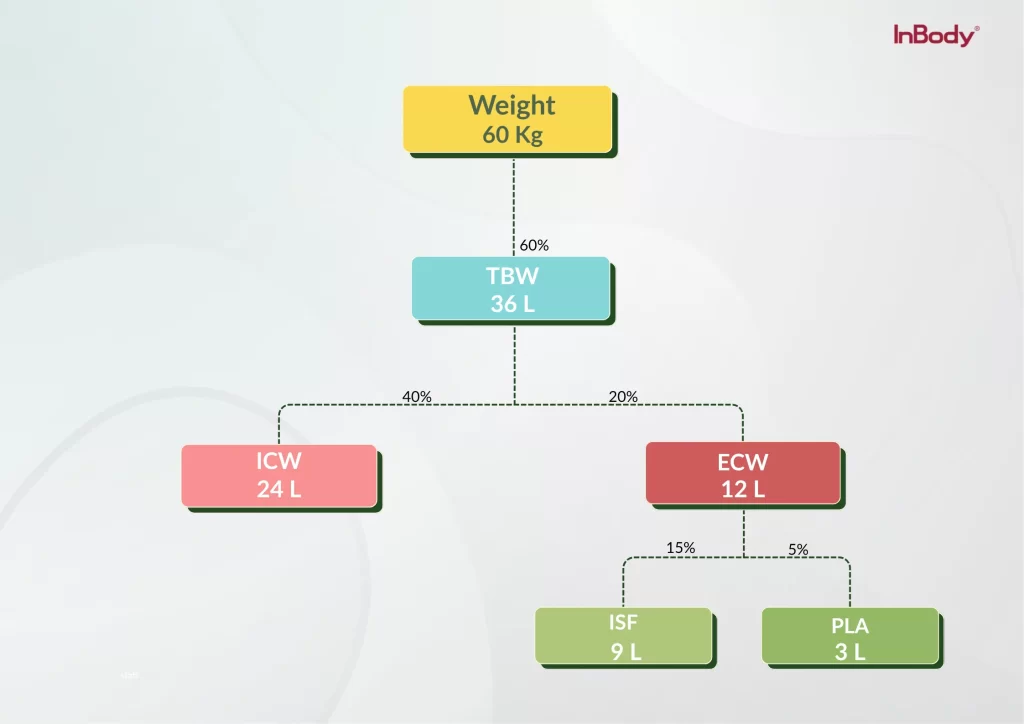
Our body’s total water content is divided mainly into two compartments:
– Intracellular Water (ICW): the water inside the cells, which supports metabolism, nutrient transport, and muscle function.
– Extracellular Water (ECW): the water outside the cells, found in interstitial water, plasma and lymph, maintaining circulation and waste removal.
ECW Ratio – The ECW Ratio (ECW/TBW) indicates how much is your Extra Cellular Water in compare to the total body water. A normal value is generally 0.380. When this ratio increases more than 0.390, it reflects imbalance of water level in the body.
In a healthy adult, ICW makes up about 62% of total body water, while ECW accounts for 38%. Any significant shift in this ratio can signal water imbalance, inflammation, or disease.
The Role of Sodium in Water Regulation
• Detect sarcopenia and cachexia early.
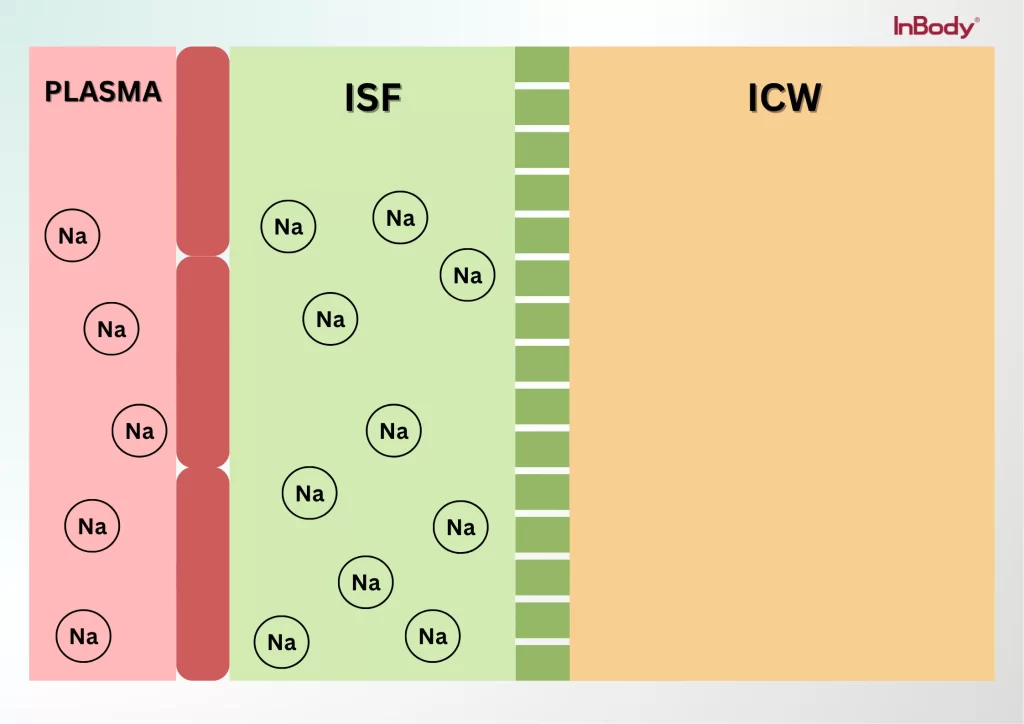
Sodium is the main positively charged ion (cation) found outside the cells. It is mostly present in extracellular water (ECW) and cannot easily cross the cell membrane.
Because of this, sodium moves between plasma and interstitial fluid. It helps regulate how water is distributed in the body through osmotic pressure.
In simple terms, sodium controls how water moves and balances within the body. It manages the flow of water between the inside of cells (intracellular water or ICW) and the outside (ECW).
When you consume more salt, sodium levels in the blood increase. As a result, water is pulled out of the cells into the bloodstream to maintain balance. This raises blood volume and can increase blood pressure.
On the other hand, reducing salt intake lowers sodium levels. This decreases the osmotic pull, allowing the kidneys to remove excess water through urine. As a result, blood volume and blood pressure go down.
In short, sodium acts as the body’s water regulator. It plays a key role in hydration as well as cardiovascular health.
To keep things stable, your body uses hormones like aldosterone, which tells the kidneys to hold onto sodium and water, and antidiuretic hormone (ADH), which reduces water loss by making urine more concentrated. Together, these hormones make quick adjustments so your body maintains the right balance of salt, water, and blood pressure.
High Sodium Intake and Its Effects
Of course, occasional salty meals aren’t harmful, but regularly consuming too much sodium can gradually lead to deeper health issues. Chronic high sodium intake disrupts the body’s water balance by pulling excess water into the extracellular water (ECW), increasing the ECW ratio (extracellular water ÷ total body water). This shift means that more water is being retained outside the cells, a sign of water imbalance, swelling, or early water retention.
Over time, this imbalance affects more than just hydration. The additional extracellular volume forces the heart to work harder to circulate the increased water load, raising blood pressure and straining the cardiovascular system. Meanwhile, the kidneys are under continuous pressure to remove the excess sodium, which can gradually weaken their ability to regulate water and electrolyte balance. This ongoing stress contributes to long-term risks such as hypertension, kidney disease, and cardiovascular disorders. Studies even suggest that sustained sodium overload can alter how cells manage hydration, potentially impairing metabolism and muscle efficiency, underscoring the importance of maintaining balanced sodium intake for both cellular and overall health.
Maintaining Optimal Sodium and Water Balance
Here are a few practical steps to keep your sodium-water relationship in harmony
- Limit processed and packaged foods
- Stay hydrated
- Include potassium-rich foods
- Exercise Regularly
- Regularly Monitoring your body water
To maintain healthy body water balance and overall wellness, limit processed and packaged foods as they’re often high in sodium, which can cause water retention and imbalance. Stay hydrated by drinking enough water throughout the day to support proper water distribution. Include potassium-rich foods like bananas, spinach, and avocados to help counter sodium’s effects and regulate water levels. Exercise regularly to promote circulation and natural water balance, and monitor your ECW/TBW ratio using advanced tools like the InBody970S to detect any early signs of dehydration or imbalance.

Final Thoughts
Sodium plays a crucial role in maintaining the body’s water distribution, ensuring that water is properly balanced between cells and the spaces surrounding them. However, when sodium intake consistently exceeds the body’s needs, it can disrupt this equilibrium, causing water retention, swelling, and even increasing the risk of hypertension and cardiovascular issues over time.
By monitoring your body’s water composition with advanced tools like InBody machines, you can gain deeper insights into how sodium influences your hydration levels and overall health. These measurements reveal not just how much water your body holds, but where it’s stored inside or outside your cells, helping you make more informed dietary and lifestyle choices.
A balanced sodium intake, combined with accurate body composition analysis, forms the foundation for staying truly hydrated from the inside out, supporting optimal cellular function, metabolism, and long-term wellness.
Frequently Asked Questions
How much sodium should an average adult consume daily?
The WHO recommends less than 2,000 mg (5 grams of salt) per day to maintain healthy water balance and reduce the risk of hypertension.
What foods are high in sodium?
Processed foods, canned soups, sauces, chips, pickles, and restaurant meals often contain high sodium levels that can easily exceed daily limits.
How does InBody help monitor sodium-related water imbalance?
InBody devices provide segmental water analysis that identifies if excess water is stored outside cells, helping detect early fluid imbalance or inflammation
What are the signs of water imbalance in the body?
Swelling in hands or feet, sudden weight changes, fatigue, or dehydration symptoms can signal improper sodium-water balance.
References
- Buckley, J. D., Fortier, C., & Gong, Y. (2016). Increased salt consumption induces body water conservation and hormonal changes in men: The Mars105/Mars520 studies. The American Journal of Physiology – Regulatory, Integrative and Comparative Physiology, 310(10), R1044-R1052. Retrieved from https://www.ncbi.nlm.nih.gov/articles/PMC5409798/ PMC
- Medscape. (n.d.). Water and Sodium Balance. In Merck Manual Professional Version. Retrieved from https://www.merckmanuals.com/en-ca/professional/endocrine-and-metabolic-disorders/fluid-metabolism/water-and-sodium-balance Merck Manuals
- Lumen Learning. (n.d.). Water Balance. In Anatomy & Physiology II. Retrieved from https://courses.lumenlearning.com/suny-ap2/chapter/water-balance/ Lumen Learning
- Cleveland Clinic. (n.d.). Electrolytes: Types, Purpose & Normal Levels. Retrieved from https://my.clevelandclinic.org/health/diagnostics/21790-electrolytes