
Body Composition 7 min read
Phase Angle Explained: What a Good Phase Angle Is and Why It Matters
Phase angle is one of the most powerful metrics on your InBody result sheet, but many people don’t understand what it means. This guide explains what phase angle…
Reading about body composition? Find an InBody test centre near you →
Phase angle is one of the most powerful metrics on your InBody result sheet, but many people don’t understand what it means. This guide explains what phase angle measures, what a good phase angle looks like for Indian adults, and why clinicians use it as a marker of cellular health.
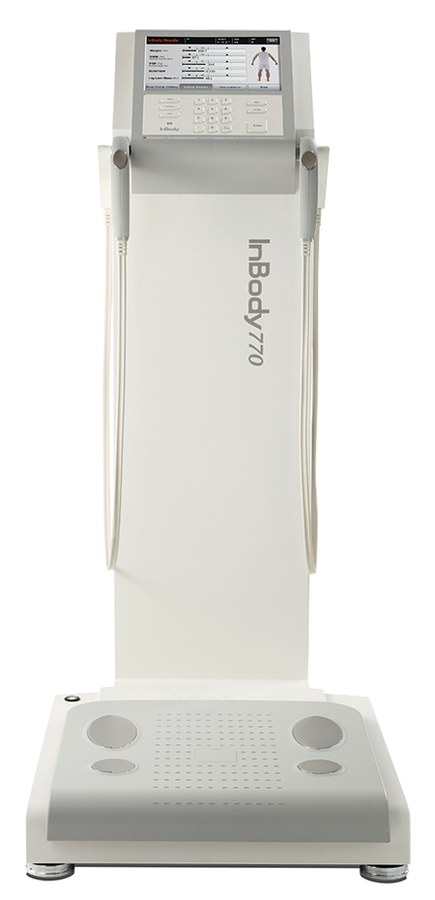
What Is Phase Angle?
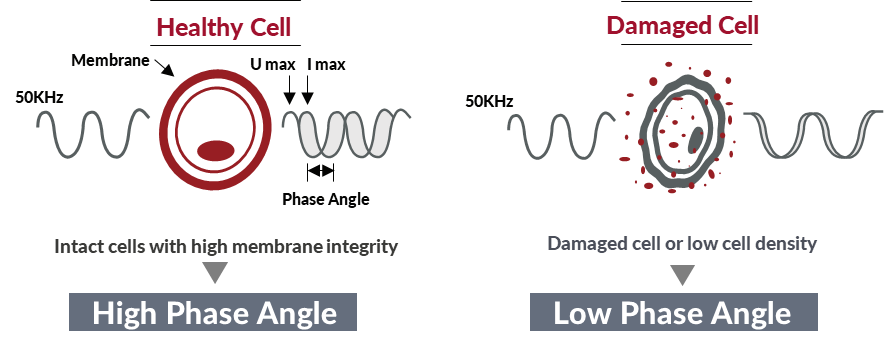
Phase angle is a measurement derived from Bioelectrical Impedance Analysis (BIA). When InBody sends a small electrical signal through your body, two things happen: the signal is slowed down (resistance), and it is shifted in timing (reactance).
Phase angle is calculated from the ratio of reactance to resistance. It reflects the integrity and health of your cell membranes. Healthy, well-functioning cells have higher capacitance (they store more electrical charge), which produces a higher phase angle.
In simple terms, a higher phase angle means healthier cells. A lower phase angle means compromised cellular health, often seen in malnutrition, illness, or sarcopenia.
What Is a Normal Phase Angle?
Phase angle varies by age, sex, and health status. General reference ranges:
| Category | Men | Women |
|---|---|---|
| Excellent | Above 7° | Above 6° |
| Good | 5.5° – 7° | 5° – 6° |
| Average | 4.5° – 5.5° | 4° – 5° |
| Below average | Below 4.5° | Below 4° |
Elite athletes typically score 7–9°. Healthy active adults score 5.5–7°. Patients with severe illness, malnutrition, or advanced sarcopenia often score below 4°.
Important: Phase angle decreases with age. A phase angle of 5° is excellent for a 70-year-old but only average for a 30-year-old. Always interpret phase angle in the context of age and sex.
Phase angle is fundamentally a measure of how well your cell membranes are functioning. Each cell in your body is surrounded by a phospholipid bilayer, a thin, selective membrane that controls what enters and exits the cell. When this membrane is intact and healthy:
- The cell maintains the correct balance of intracellular water (ICW) and electrolytes inside
- The membrane acts as a capacitor, temporarily storing electrical charge when the BIA signal passes through
- This capacitance shifts the timing of the electrical signal, creating a measurable phase angle
- Higher capacitance (healthy membranes) = greater time-shift = higher phase angle
When cells are damaged, inflamed, malnourished, or dying, their membranes lose integrity. Water leaks out of cells into the extracellular space (raising ECW/TBW ratio), capacitance falls, and the phase angle drops. This is why phase angle is sometimes called the most sensitive single-value indicator of cellular health available from a body composition scan.
Why Is Phase Angle Clinically Important?
Phase angle has been validated as a prognostic marker in numerous clinical conditions:
- Oncology: A lower phase angle before and during cancer treatment predicts worse outcomes. Many oncology departments now track phase angle as part of nutritional assessment.
- Sarcopenia: Phase angle declines with muscle loss. It is a sensitive early marker of sarcopenia, often falling before muscle mass itself drops below diagnostic thresholds.
- Malnutrition: Phase angle reflects the quality of body cell mass, not just quantity. A malnourished patient may have preserved weight but a declining phase angle.
- Dialysis/Nephrology: Phase angle is used to assess fluid overload and nutrition status in dialysis patients, where standard body composition measures are confounded by abnormal fluid distribution.
- Post-surgical recovery: Phase angle improvement after surgery correlates with recovery quality and reduced complication risk.
Why low phase angle is a clinical red flag
A phase angle below 4° is widely recognised in clinical nutrition and critical care literature as a marker of poor prognosis and significant metabolic compromise. Research across multiple disease states has established clear links between low phase angle and adverse outcomes.
1. Malnutrition and undernutrition
Phase angle falls significantly in protein-energy malnutrition. As protein stores are depleted, cell membrane synthesis decreases, structural integrity is compromised, and water shifts from intracellular to extracellular compartments, all of which reduce phase angle. This makes it a sensitive early marker of nutritional deterioration, often before visible weight loss occurs.
2. Sarcopenia and muscle wasting
Skeletal muscle cells are large, well-hydrated, and have high capacitance. As muscle mass declines with age or inactivity (sarcopenia), phase angle drops proportionally. This is why phase angle is increasingly used in sarcopenia screening; a falling phase angle in an older adult often precedes measurable loss of skeletal muscle mass on the InBody result sheet.
3. Chronic diseases: Cancer, Kidney Disease, heart failure
In oncology, nephrology, and cardiology, low phase angle is strongly associated with poor prognosis. Studies in cancer patients show that a phase angle below the population median at diagnosis is associated with significantly lower survival rates. Nephrologists use phase angle to assess hydration status and fluid overload in dialysis patients, where ECW:ICW imbalance is clinically critical.
4. Chronic inflammation and systemic illness
Systemic inflammation, whether from autoimmune disease, chronic infection, or obesity-related metabolic syndrome, disrupts cell membrane function. Inflammatory cytokines alter membrane permeability, causing cellular water to shift outward and the phase angle to fall. An elevated ECW/TBW ratio on InBody, alongside a low phase angle, is a particularly concerning combination.
5. Post-surgical and critical care recovery
Phase angle drops acutely after major surgery and during critical illness. Serial phase angle monitoring in ICU patients has been shown to predict recovery trajectory. Patients whose phase angle begins rising during hospitalisation tend to have better outcomes than those whose phase angle remains flat or continues to fall. This makes it a valuable tool for nutritional support decisions in clinical settings.
Phase angle is an early warning; it changes before the scale does
One of the most clinically important properties of phase angle is that it changes before body weight or even skeletal muscle mass measurements show significant shifts. A patient can be losing cellular health, developing malnutrition, or beginning to accumulate excess extracellular fluid weeks before it becomes visible on conventional assessments. This makes phase angle a uniquely valuable early-detection parameter in preventive care settings.
How to Improve Your Phase Angle

Phase angle improves with the same interventions that build lean mass and reduce inflammation:
- Resistance training builds skeletal muscle mass and improves cell membrane integrity.
- Adequate protein intake, especially essential amino acids, for cell membrane synthesis
- Proper hydration is essential for accurate phase angle measurement and for cellular function
- Omega-3 fatty acids incorporated into cell membranes improve membrane fluidity and function
- Reducing chronic inflammation degrades cell membranes; an anti-inflammatory diet and lifestyle choices support a higher phase angle
Phase Angle vs InBody Score: What Is the Difference?
The InBody Score is a summary of your body composition (muscle vs fat ratio). Phase angle is a measure of cellular health and cell membrane integrity.
They often move together, and building muscle improves both, but they can diverge. An obese patient with high body fat but good nutrition may have a decent phase angle despite a low InBody Score. A cancer patient losing muscle rapidly may see phase angle fall faster than InBody Score changes.
Phase angle is the most sensitive early marker of cellular deterioration or improvement. It is particularly valuable in clinical and research settings where detecting subtle changes matters.
Key takeaways
- Phase angle measures cell membrane health, not body fat or muscle alone. It is calculated from the ratio of reactance to resistance in the BIA signal. A higher phase angle indicates healthier, more intact cell membranes with better intracellular water retention and cellular capacitance.
- A good phase angle for healthy Indian adults is 5–7°. Men typically score higher than women. Athletes may reach 7–9°. Values below 4° require clinical review regardless of age. Always interpret phase angle relative to age- and sex-matched references, not a single universal standard.
- Phase angle falls before other markers show a change. It is one of the earliest indicators of malnutrition, sarcopenia, or systemic illness, often changing weeks before body weight or skeletal muscle mass shift measurably. This gives clinicians a critical early intervention window.
- Phase angle improves with resistance training, adequate protein, and inflammation reduction. It is an actionable, modifiable marker, not just a passive indicator. Serial InBody scans every 4–6 weeks confirm whether interventions are producing cellular-level improvement.
- Phase angle is available on InBody 570, 770S, and 970S modelsWith the 2025 S Series launch, it is now accessible across more clinical settings than ever. The 970S provides age-specific comparison graphs and longitudinal trend tracking for the most detailed clinical monitoring.
Want to know your phase angle? Find an InBody test centre near you in India or compare InBody models that measure phase angle.

Frequently Asked Questions
What is phase angle?
Phase angle is a value derived from bioelectrical impedance analysis that reflects cell membrane health and integrity — higher phase angle generally indicates better cellular health, nutritional status, and physical function.
What is considered a normal phase angle?
Normal phase angle varies by age and sex, but generally ranges from about 5-7 degrees in healthy adults, with values declining naturally with age and rising with better muscle mass and hydration status.
Why do oncologists and nephrologists track phase angle?
Phase angle has been shown in clinical research to correlate with prognosis in cancer and kidney disease patients, making it a useful, non-invasive marker for monitoring nutritional status and disease progression alongside other clinical measures.

Most trending articles
BCA Test Full Form and Meaning: What It Actually Measures
BCA stands for Body Composition Analysis. What the test measures, how it differs from BMI and DEXA, and why it matters more for Indian bodies.
Corporate Wellness Body Composition Screening in India
BMI-based screening misses the risk in Indian workforces entirely. How to run body composition screening at scale, handle privacy, and use the aggregate data.
Body Composition Testing ROI for Indian Gyms: The Real Case
Members quit because the scale stops moving. Where the return actually comes from, the 5 operational failures that kill it, and how to measure it honestly.