
Body Composition 12 min read
Fat Loss vs. Weight Loss: The Critical Difference You Need to Know
Your weight went down. But did you lose fat or muscle? The answer changes everything about your metabolic health, and your scale has absolutely no idea which one…
Reading about body composition? Find an InBody test centre near you →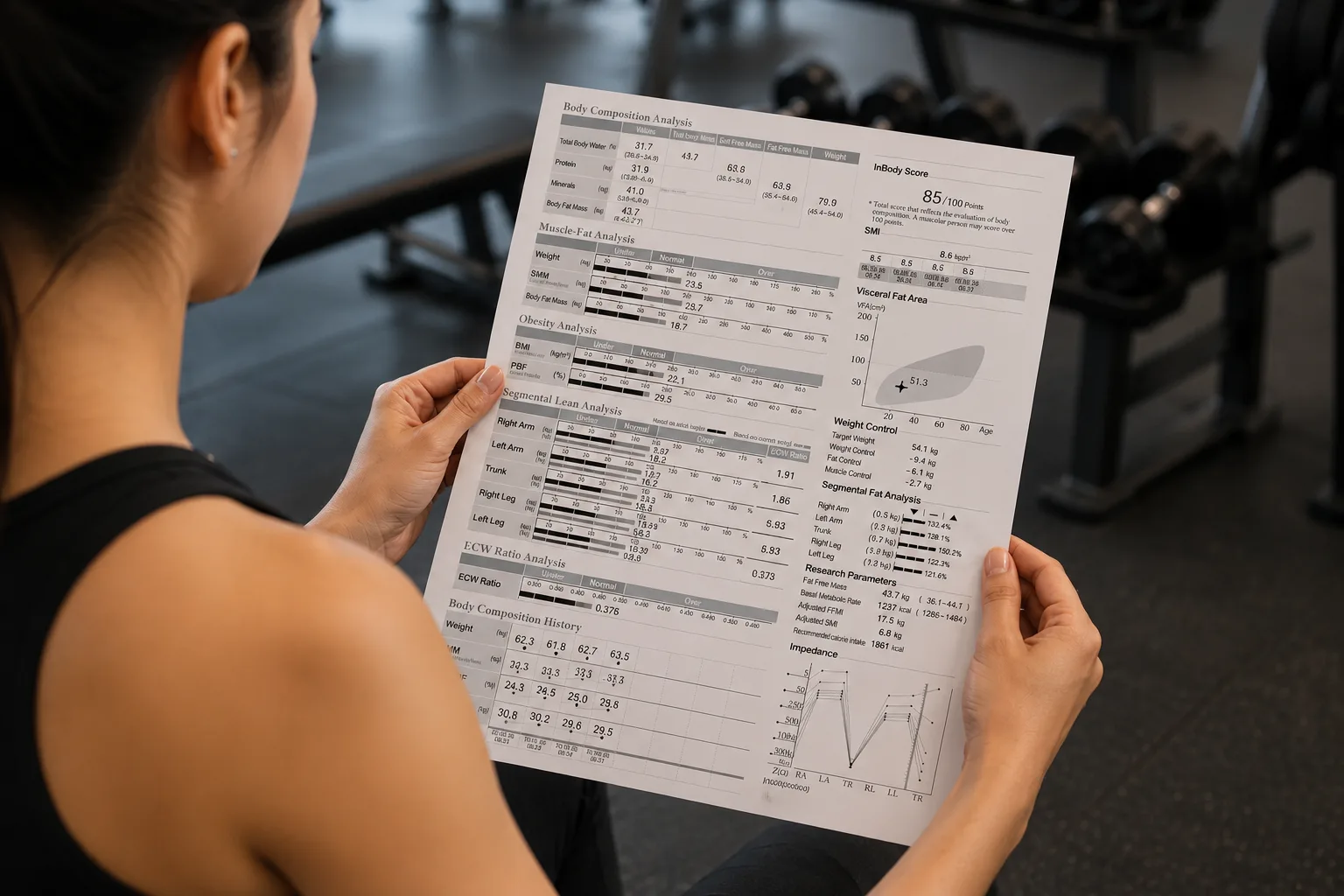
Your weight went down. But did you lose fat or muscle? The answer changes everything about your metabolic health, and your scale has absolutely no idea which one happened.
You step on the scale. The number is down by 3 kilograms. You feel proud. But here is the question no one asks and the one that matters most: Was that 3 kg of fat, or muscle? Losing fat and losing muscle look identical on a scale, yet they produce opposite effects on your health, your metabolism, and your long-term well-being.
Why fat loss and muscle loss look identical on a scale
A weighing scale measures one thing: the total gravitational force your body exerts. It cannot distinguish between the types of tissue making up that mass. A kilogram of fat and a kilogram of muscle weigh the same.
This means that when your scale shows a 3 kg reduction, it is telling you that something was lost, but it has no idea what was lost. You could have lost 3 kg of pure fat, or you could have lost 3 kg of pure muscle. Or you could have lost 1.5 kg of each. The number on the display is identical in every case.
The Core Problem
“Losing weight and losing fat are not the same thing. The scale measures the first. Only body composition analysis can confirm the second, and the difference determines whether your health is actually improving.”
| 25–40% Of weight lost on crash diets may be lean muscle, not fat | 0kg Difference visible on the scale between fat loss and muscle loss | 3× More calories burned per kg by muscle tissue at rest compared to fat tissue |
Fat loss vs muscle loss: what is actually different?
Fat and muscle are biologically distinct tissues with entirely different roles in your body. Losing one versus the other has profoundly different consequences for your health.
When You Lose Fat
- Resting metabolic rate stays stable or improves.
- Insulin sensitivity improves.
- Visceral fat around organs reduces.
- Cardiovascular risk markers improve.
- Inflammation markers decrease.
- Physical function stays the same or gets better.
- This is the goal of any weight management programme.
When You Lose Muscle
- Resting metabolic rate drops body burns fewer calories.
- Glucose disposal worsens insulin resistance increases.
- Strength and physical function decline.
- Fat regain becomes faster and easier.
- Risk of sarcopenia and frailty increases.
- Recovery from illness slows.
- This is a metabolic setback, not a health improvement.
Muscle loss is not just a cosmetic problem:
Skeletal muscle is your body’s primary site of glucose disposal. When you lose muscle, you lose your most important tool for managing blood sugar. This is why muscle loss, especially in patients with prediabetes or type 2 diabetes, accelerates insulin resistance and increases long-term metabolic risk significantly.
What actually causes muscle loss during weight loss?
Muscle loss during weight management is not inevitable, but it is common when the approach is poorly designed. Understanding the causes helps clinicians and patients prevent it.
- Aggressive caloric restriction: When the caloric deficit is too large, particularly below 1,200 kcal/day for women or 1,500 kcal/day for men, the body enters a catabolic state and begins breaking down muscle protein for energy alongside fat stores. The more severe the restriction, the higher the proportion of weight lost from lean tissue.
- Insufficient protein intake: Protein provides the amino acid building blocks needed for muscle protein synthesis. When protein intake is too low during a caloric deficit, the body cannot maintain muscle tissue. This is one of the most common causes of disproportionate muscle loss in Indian patients following traditional low-calorie diets.
- Absence of resistance training: Resistance exercise is the primary anabolic signal that tells your body to preserve and build muscle. Without it, even adequate protein intake may not prevent muscle loss during a significant caloric deficit. Cardio alone does not provide this anabolic stimulus.
- Rapid weight loss programmes: The faster the weight is lost, the higher the proportion coming from lean tissue. Research consistently shows that gradual weight loss of 0.5–1 kg per week preserves significantly more muscle than aggressive, rapid weight loss programmes targeting 2+ kg per week.
- GLP-1 and weight loss medication without monitoring: Newer anti-obesity medications like semaglutide (Ozempic, Obeda) can cause significant total weight loss, but a meaningful proportion can come from lean mass, especially without concurrent resistance training and adequate protein intake. Body composition monitoring is essential during pharmacotherapy.
Four real-world scenarios with the same scale result, very different outcomes
These scenarios illustrate why the number on the scale is an incomplete and often misleading measure of progress.
Patient A lost 5 kg, all fat (Ideal Outcome)
Lost 5 kg of body fat. Skeletal muscle mass unchanged. Visceral fat reduced by 3 levels. BMR stable. Insulin sensitivity improved. Scale shows −5 kg. InBody confirms quality fat loss.
Patient B has lost 5 kg, mostly muscle (Poor Outcome)
Lost 3 kg of muscle and 2 kg of fat. The scale also shows −5 kg. But BMR dropped, insulin resistance worsened, and the risk of fat regain is now higher. Invisible on the scale, only InBody reveals it.
Patient C’s scale is unchanged, body improved (Recomposition)
Lost 2 kg of fat and gained 2 kg of muscle simultaneously. Scale shows 0 change. Patient believes nothing worked. InBody shows dramatic body composition improvement as a success story; the scale hid completely.
Patient D’s weight is stable, composition worsening (Hidden Risk)
Weight unchanged for 6 months. But InBody reveals slow muscle loss and gradual fat gain over time, classic early sarcopenic obesity. Scale gave complete false reassurance. Only serial InBody scans caught the trend.
Why patients abandon effective programmes
Patient C above is doing everything right, losing fat, building muscle, yet their scale shows zero progress for weeks. Without InBody data to show the real improvement, most patients conclude the programme is failing and stop. Body composition monitoring is not just clinical; it is the motivational anchor that keeps patients compliant.
The InBody parameters that distinguish fat loss from muscle loss
An InBody scan takes under 60 seconds and provides the four measurements that together answer the fat loss vs muscle loss question definitively.
- Skeletal Muscle Mass (SMM): Has muscle been preserved or lost? The most direct indicator of whether weight loss is quality fat loss or damaging lean tissue loss.
- Body Fat Mass (BFM): How much fat was actually lost? Confirms whether the scale reduction reflects genuine fat reduction or a mixture of tissue losses.
- Basal Metabolic Rate (BMR): Has metabolism slowed? A falling BMR during weight loss indicates lean mass is being lost, a warning sign that the approach needs adjustment.
- Phase Angle: Is cellular health being maintained? Declining phase angle during weight loss indicates muscle cell deterioration, a marker that should trigger immediate intervention.
The muscle-fat ratio is the most useful clinical number
Beyond individual parameters, the muscle-to-fat ratio is the single most useful metric for tracking the quality of weight loss over time. When this ratio improves, the muscle stays stable or rises, and fat decreases. The intervention is working correctly. When it worsens muscle falls alongside fat, the approach must be adjusted regardless of what the scale shows.
Warning signs that you are losing muscle, not fat
These are the clinical and physical signs that indicate a weight loss programme may be producing lean mass loss rather than quality fat loss.
| Warning Sign | What It Indicates | What to Do |
|---|---|---|
| Rapid weight loss (>1 kg/week) | High likelihood of lean mass loss alongside fat | Slow the rate of loss, target 0.5–1 kg/week |
| Increasing fatigue and weakness | Muscle being catabolised for energy | Increase protein intake + add resistance training |
| Weight loss but no change in appearance | Muscle and fat being lost simultaneously | Body composition scan to confirm and adjust |
| BMR declining on serial InBody scans | Direct evidence of lean mass loss | Revise caloric restriction may be too aggressive. |
| Falling phase angle on InBody | Cellular deterioration, muscle quality declining | Protein optimisation + resistance training urgently |
| Plateau followed by rapid fat regain | Metabolic adaptation from prior muscle loss | Body recomposition protocol rebuilds muscle first |
| Reduced grip strength or physical function | Functional sarcopenia developing | Resistance training + protein + clinical review |
How to protect muscle while losing fat: the evidence-based protocol

Protecting muscle during fat loss requires three simultaneous interventions. None of them is optional; all three work together.
- Adequate protein intake 1.4 to 2.0 g/kg of ideal body weight per day: This is the single most important dietary intervention for muscle preservation. Protein provides amino acids for muscle protein synthesis and increases satiety, making it easier to maintain the caloric deficit without compromising lean mass. Spread intake across 3–4 meals for optimal muscle protein synthesis throughout the day.
- Progressive resistance training, minimum 3 sessions per week: Resistance exercise provides the anabolic stimulus that signals your body to maintain muscle tissue even in a caloric deficit. Targeting all major muscle groups with progressive overload, gradually increasing weight or repetitions over time, is essential. This is non-negotiable for quality fat loss.
- Moderate, sustainable caloric deficit, not aggressive restriction: Target a deficit of 300–500 kcal/day for gradual fat loss of 0.5–1 kg per week. More aggressive deficits produce faster scale results but significantly higher lean mass losses. The goal is fat loss, not simply weight loss, and the rate of loss matters enormously for achieving that goal.
- Monitor body composition, not just body weight: InBody scans at baseline and every 4–6 weeks throughout the programme provide the only objective data confirming whether fat is being lost and muscle is being preserved. If the data shows muscle loss occurring, the protocol must be adjusted before clinical consequences accumulate. The scale cannot provide this feedback loop.
The Indian protein gap
Studies show that the average Indian diet provides approximately 0.6–0.8 g/kg of protein daily, well below the 1.4–2.0 g/kg needed to preserve muscle during weight loss. This protein gap is one of the primary drivers of lean mass loss in Indian weight management patients, and it must be addressed directly through dietary counselling and targeted supplementation where appropriate.
How InBody monitoring changes clinical outcomes
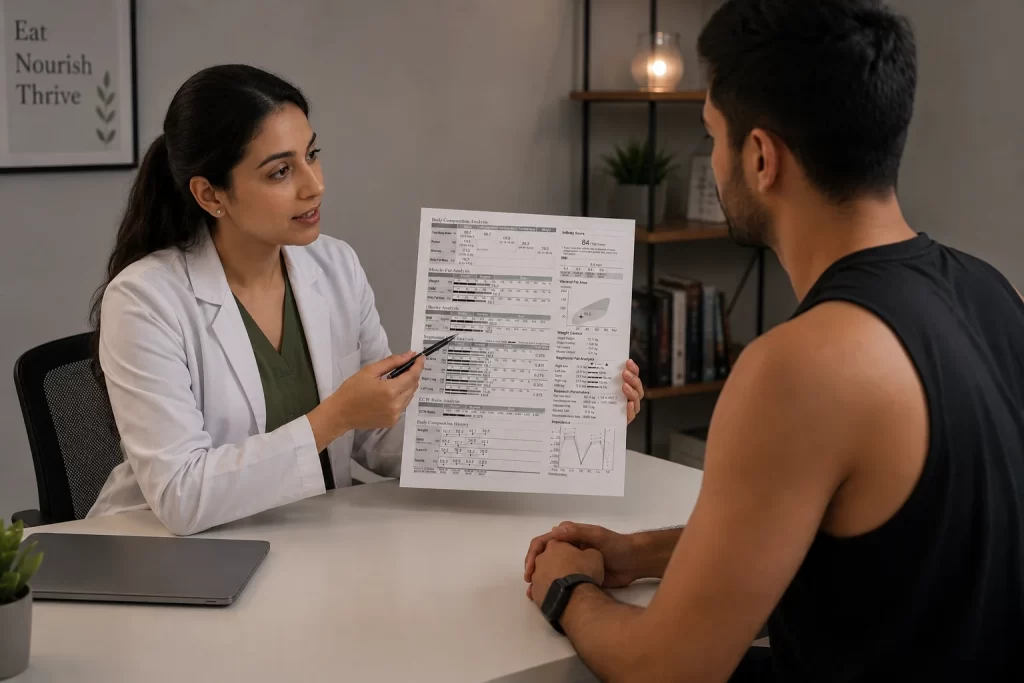
For clinicians managing weight loss patients, the difference between monitoring weight and monitoring body composition is the difference between knowing that something changed and knowing what changed and whether the change is beneficial or harmful.
For Diabetes & Metabolic Clinics
Patients on GLP-1 therapies, low-calorie diets, or bariatric preparation programmes all carry lean mass loss risk. InBody monitoring allows early identification of disproportionate muscle loss, enabling protein and exercise interventions before metabolic consequences accumulate. Without this data, muscle loss is invisible until it is functionally significant.
For Nutrition & Wellness Clinics
Body composition data transforms the patient conversation from “you’ve lost 3 kg” to “you’ve lost 3.5 kg of fat and gained 0.5 kg of muscle, here is exactly what your intervention achieved.” This specificity builds patient trust, improves adherence, and produces better long-term outcomes.
Frequently asked questions
Q. How can I tell if I am losing fat or muscle without a body composition scan?
Without body composition analysis, it is very difficult to know for certain. Some indirect signs of muscle loss include increasing weakness or fatigue, rapid weight loss (more than 1 kg per week), reduced physical performance, and a scale number that drops quickly despite maintaining calorie intake. However, these signs are unreliable; the only accurate way to distinguish fat loss from muscle loss is through body composition analysis, such as an InBody scan.
Q. Is it possible to lose fat and gain muscle at the same time?
Yes, this is called body recomposition. It is most achievable for beginners to resistance training, individuals returning after a break, and those in a moderate caloric deficit with high protein intake. During recomposition, the scale may not change at all for weeks while body composition is dramatically improving. This is why InBody monitoring is essential; without it, patients in recomposition appear to be making no progress and often abandon an effective programme.
Q. Does cardio cause muscle loss?
Moderate cardio alone does not typically cause significant muscle loss when protein intake is adequate. However, excessive steady-state cardio combined with insufficient caloric intake and low protein can trigger muscle catabolism. The greater risk is that cardio without resistance training does nothing to build or maintain muscle, meaning the muscle-to-fat ratio may remain unfavourable even as total weight decreases.
Q. How does InBody measure whether I am losing fat or muscle?
InBody uses Bioelectrical Impedance Analysis to separately measure skeletal muscle mass, body fat mass, and body fat percentage. By comparing these values across scans taken at baseline, 4–6 weeks, and 3–6 months, clinicians can directly track whether fat mass is decreasing, whether muscle mass is stable or increasing, and whether the programme is achieving quality fat loss or mixed tissue loss.
Q. How much protein do I need to prevent muscle loss during a diet?
Current evidence supports 1.4–2.0 g of protein per kg of ideal body weight per day to preserve muscle mass during a caloric deficit. For a 70 kg individual, this is approximately 98–140 g of protein daily. This should be distributed across 3–4 meals to optimise muscle protein synthesis. Patients on GLP-1 medications or aggressive caloric restriction may need the higher end of this range.
Key takeaways
- The scale is blind to tissue type: Fat loss and muscle loss look identical on a weighing scale. A 3 kg reduction tells you that weight was lost, but nothing about what kind of weight. Only body composition analysis answers that question.
- Muscle loss is a metabolic setback: Losing muscle lowers BMR, worsens insulin sensitivity, accelerates fat regain, and reduces physical function. It is not a side effect of weight loss; it is a failure of the weight loss approach.
- Three interventions prevent muscle loss: Adequate protein (1.4–2.0 g/kg/day), progressive resistance training (3+ sessions/week), and moderate caloric restriction (0.5–1 kg/week loss) together protect lean mass during fat loss.
- Body recomposition is invisible on a scale: Patients simultaneously losing fat and gaining muscle may see no scale change for weeks. Without InBody data showing the real improvement, they abandon effective programmes, a major clinical failure that monitoring prevents.
- InBody makes the invisible visible: Serial InBody scans at baseline, 4–6 weeks, and 3–6 months provide the objective data needed to confirm quality fat loss, catch muscle loss early, and adjust interventions before metabolic harm accumulates.
Start monitoring what your patients are really losing
InBody body composition analysis gives clinicians the precise data to distinguish fat loss from muscle loss at every stage of a patient’s weight management journey. No scale can do this.

Find an InBody Scanner Near You
Medical Disclaimer: This article is for informational and educational purposes only. It does not constitute medical advice, diagnosis, or treatment recommendations. All clinical decisions regarding patient management should be made by qualified healthcare providers based on individual assessment. InBody results should be interpreted in conjunction with full clinical evaluation.
References & further reading
- Cava E, et al. — Preserving Healthy Muscle during Weight Loss. Advances in Nutrition, 2017;8(3):511–519.
- Stokes T, et al. — Recent Perspectives Regarding the Role of Dietary Protein for the Promotion of Muscle Hypertrophy. Nutrients, 2018;10(2):180.
- Wilding JPH, et al. — Once-Weekly Semaglutide in Adults with Overweight or Obesity. NEJM, 2021;384:989–1002.
- Bikou O, et al. — Lean Mass Changes in GLP-1 Receptor Agonist Therapy. Obesity Reviews, 2023.
- Kalra S, et al. — Indian Consensus on Sarcopenia including T2DM Sarcopenic Obesity. Int J Gen Med. 2025;18:1731–1745.
- Yajnik CS, Yudkin JS — The Y-Y Paradox: The Thin-Fat Indian. Lancet, 2004;363(9403):163.
- InBody — Body Composition Analysis in Metabolic Disease Management. Clinical White Paper, 2024.

Most trending articles

InBody vs DEXA vs Skinfold Calipers: Which Body Composition Test Is Right for You in India?
DEXA scans, InBody BIA, skinfold calipers — three different ways to measure body composition. Accuracy comparisons, cost in India, accessibility, and which method makes sense for your specific goal.

Skinny Fat in India: Why 40% of Normal Weight Indians Have Dangerously High Body Fat
India's hidden obesity epidemic. Skinny fat (TOFI — Thin Outside, Fat Inside) affects millions of normal-weight Indians. How body composition testing reveals what BMI hides — and the exact protocol to fix it.

Healthy Body Composition by Age for Indians: Reference Ranges at 20s, 30s, 40s, 50s+
Body composition reference ranges for Indian men and women by age. Find out if your body fat %, muscle mass, and visceral fat level are healthy for your age and what to do if they're not.