
Body Composition 7 min read
InBody vs DEXA Scan vs Caliper: Which Body Fat Test Is Right for You in India?
Compare InBody, DEXA scan, and caliper tests for body fat measurement. Accuracy, cost in India, availability, and which gives you the most actionable data for your goals.
Reading about body composition? Find an InBody test centre near you →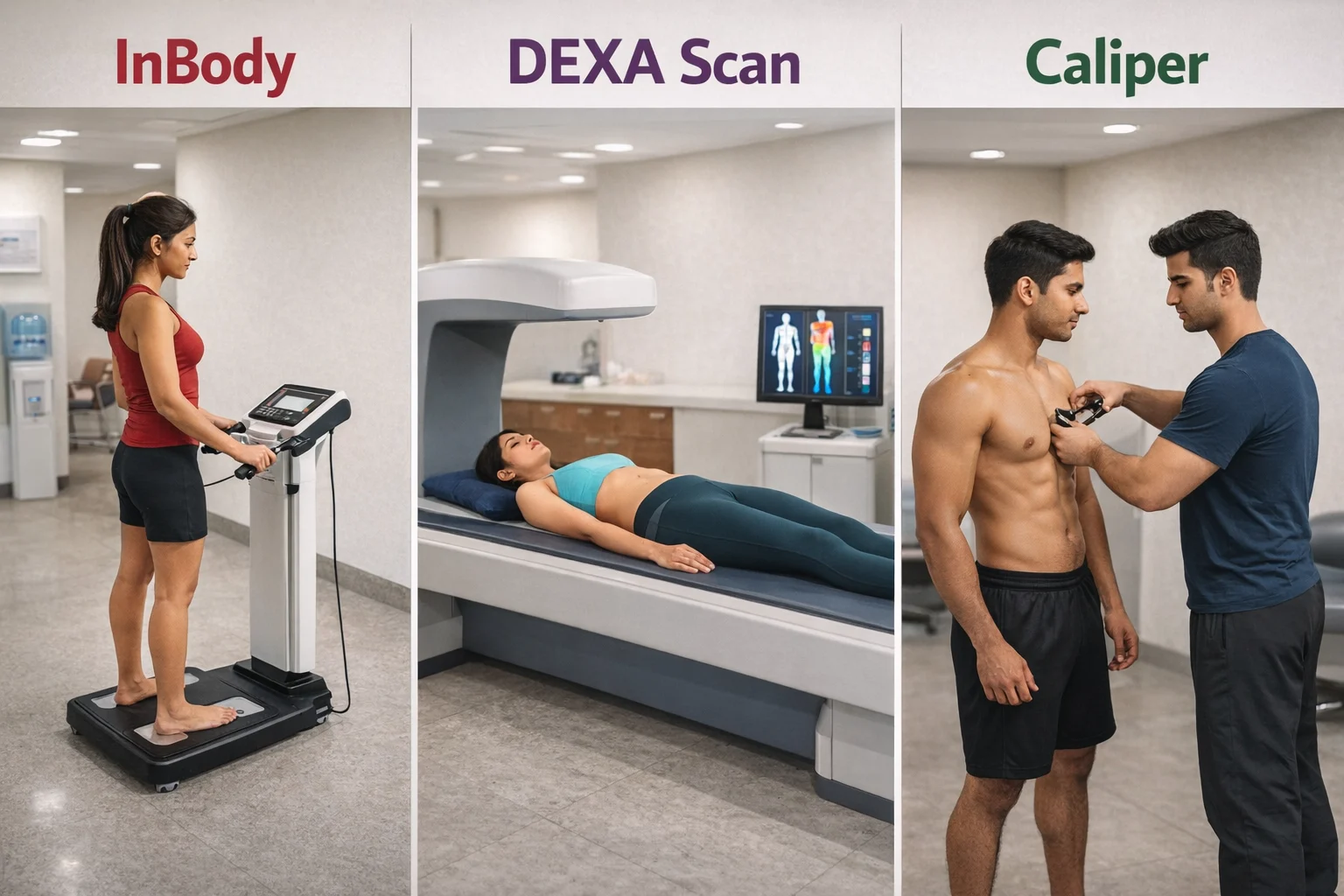
Everyone Has an Opinion on the “Best” Body Fat Test. Most of Them Are Wrong.
Walk into a gym in Bangalore and you’ll get four different answers. Your nutritionist swears by calipers. Your doctor says BMI is fine. The wellness center downstairs has a body fat scale that gave you 18% last Tuesday and 24% this morning. And somewhere in the back of your mind, you’ve heard that DEXA scans are the “gold standard.” All of this is partially true and mostly misleading. The right test depends on what you’re actually trying to measure, what you’re going to do with the data, and what’s realistically available to you in India. Here is an honest, no-fluff breakdown of every major body composition method — what each one actually measures, how accurate it is, what it costs in India, and who it’s actually useful for.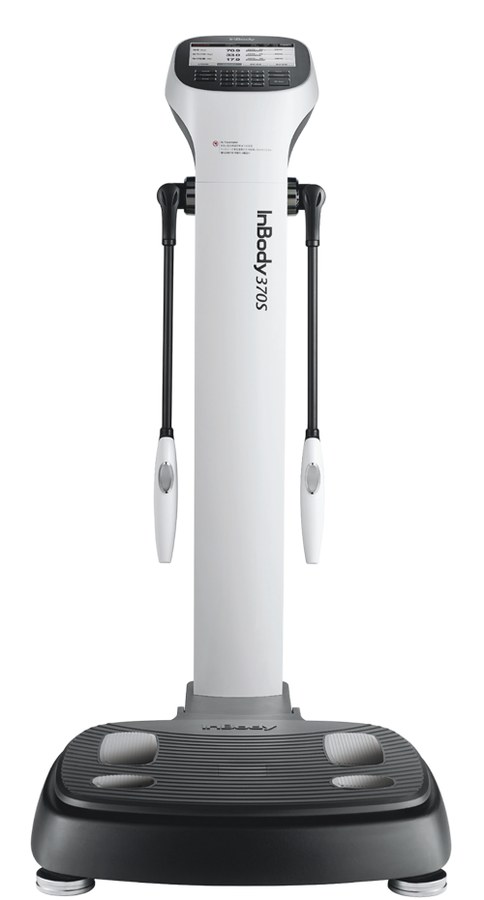
Method 1: The Weighing Scale
The humble weighing scale is the most widely used body composition tool in India. It is also the most misleading when used as a proxy for health or fitness progress. Body weight is a sum: muscle + fat + bone + water + organ mass. Lose 2kg of muscle through crash dieting and gain 2kg of fat? The scale says you’re exactly the same. Build 3kg of muscle through consistent training and lose 3kg of fat? The scale doesn’t move, and you might feel like you’ve failed. Verdict: Useful for tracking gross weight trends over time. Completely useless for understanding body composition. Do not make health decisions based on body weight alone. Cost in India: ₹500–₹3,000 for a home scale | Accuracy for body fat: N/A — it cannot measure body fatMethod 2: BMI (Body Mass Index)
BMI was developed in the 1830s by a Belgian mathematician — not a doctor — as a population-level statistical tool. It has no idea whether your weight is muscle or fat. The problems with BMI are especially severe for Indians:- A bodybuilder with 8% body fat may have a BMI of 29 — “overweight” by BMI standards
- A 55kg Indian woman with 34% body fat has a BMI of 22 — perfectly “normal”
- The WHO’s universal BMI cutoffs were calibrated on European populations; Indian guidelines now recommend the obesity cutoff at BMI ≥23, not ≥25, because Indians carry more fat at lower BMI
Method 3: Skin Calipers (Skinfold Measurement)
Skin calipers have been used in clinical and sports settings since the 1950s. A trained technician pinches the skin at standardized sites and uses skinfold thickness to estimate total body fat percentage. At their best, calipers are a reasonable low-cost tool for tracking subcutaneous fat trends in highly trained hands. In practice, there are significant limitations:- Technician-dependent: Inter-tester variability of 3–5% is common
- Subcutaneous only: Calipers measure the fat you can pinch — not visceral fat. For the “thin fat Indian” pattern, calipers will significantly underestimate metabolic risk
- Equation bias: Most standard prediction equations were developed on European populations
Method 4: Consumer BIA Scales (Home Body Fat Scales)
Consumer body fat scales use bioelectrical impedance analysis (BIA). The principle is sound. The execution in consumer devices has serious limitations.- Single-frequency: Cannot accurately distinguish intracellular from extracellular water
- Partial body path: Foot-to-foot scales send current only through the lower body and extrapolate the rest
- Hydration sensitive: Drink 500ml of water and your body fat reading can shift 1–2% within the hour
- Population equation mismatch: Factory-programmed equations are calibrated on specific populations — often not South Asian
Method 5: InBody (Medical-Grade Multi-Frequency BIA)
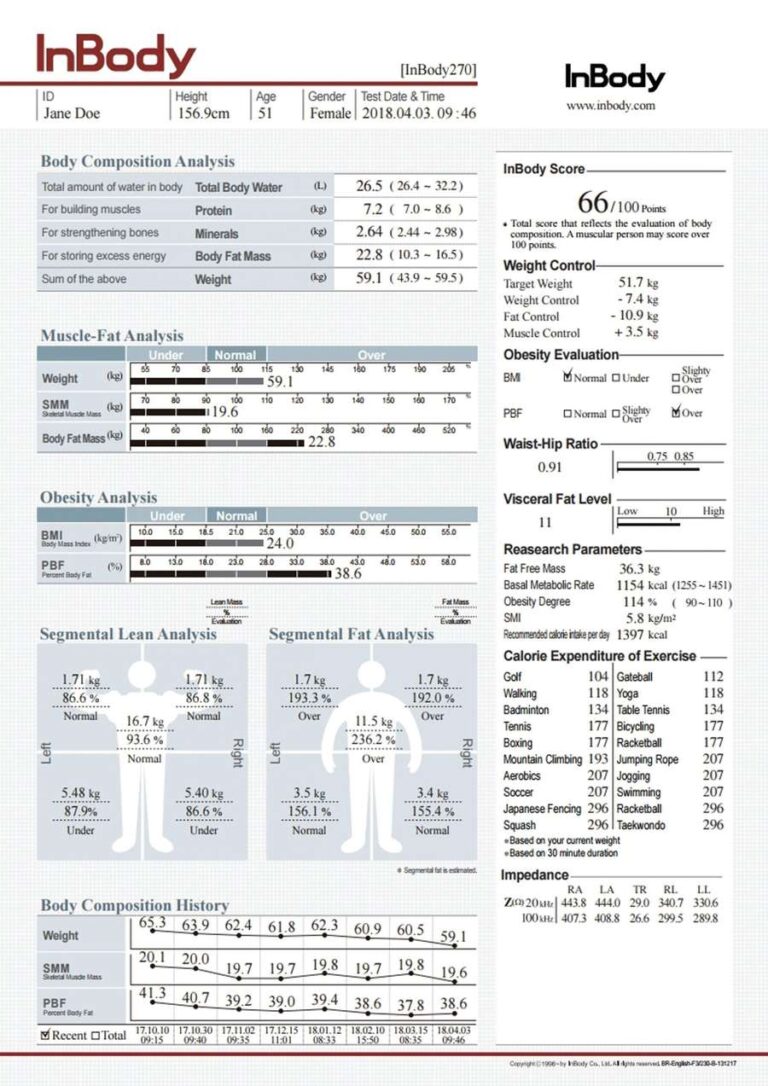
InBody devices are a fundamentally different category from consumer BIA scales. InBody uses multi-frequency BIA — typically 3 frequencies (5 kHz, 50 kHz, 250 kHz) — across 8 contact points (both hands, both feet). This allows the device to separately analyze each body segment: right arm, left arm, trunk, right leg, left leg. Key clinical advantages:- No radiation: Unlike DEXA, safe to use repeatedly — monthly or even weekly for clinical monitoring
- 60-second test: Fully clothed, no fasting, no preparation required
- Segmental analysis: Identifies asymmetries — rehabilitation after injury, muscle imbalances in athletes
- Visceral fat area: InBody calculates a visceral fat area score validated against CT-measured visceral fat (correlation r > 0.85 in published research)
- Phase angle: A cellular health marker used in clinical nutrition, oncology, and dialysis monitoring
- Clinically validated: Over 2,000 peer-reviewed publications reference InBody data
Method 6: DEXA Scan
DEXA is genuinely the gold standard — specifically for bone mineral density measurement, where it has no clinical equal. For body composition, DEXA is highly accurate and is used as the reference standard in most body composition research. DEXA limitations in the Indian context:- Radiation exposure: Low — comparable to a transatlantic flight — but present. Not ideal for monthly monitoring
- Cost: ₹3,000–₹8,000 per scan depending on the center and city
- Availability: Concentrated in metro hospitals; not accessible in Tier 2 and Tier 3 cities
- Time: 15–30 minutes for a full body scan vs. 60 seconds for InBody
The Honest Comparison: At a Glance
| Method | Measures Fat? | Visceral Fat? | Accuracy | Cost (India) |
|---|---|---|---|---|
| Weighing Scale | No | No | N/A | ₹500–₹3,000 |
| BMI | No | No | Poor | Free |
| Skin Calipers | Subcutaneous only | No | Moderate | ₹200–₹800 |
| Consumer BIA Scale | Estimate | Estimate | Moderate | ₹3k–₹15k device |
| InBody (Medical BIA) | Yes — segmental | Yes | High | ₹300–₹800/test |
| DEXA Scan | Yes | Estimated | Very High | ₹3,000–₹8,000 |
Which Test Should You Actually Get?
- Checking bone density (osteoporosis, post-menopausal): Get a DEXA scan — irreplaceable for this.
- Understanding your body composition baseline as an Indian adult: Get an InBody test — fat mass, muscle mass by segment, visceral fat score, body water.
- Tracking fat loss or muscle gain over a training program: InBody every 8–12 weeks. No radiation concern with repeated testing.
- Quick home check between clinic visits: A consumer BIA scale under consistent conditions gives directional data. Do not treat absolute numbers as clinical truth.
Find Out What’s Actually Inside
If you have never had a proper body composition test, you are making health and fitness decisions based on the number on your scale and a BMI formula invented 200 years ago. That’s not a strategy. That’s guessing. An InBody test at a center near you gives you a complete body composition report in 60 seconds: fat mass, muscle mass, visceral fat, body water balance, segmental breakdown. No needles. No radiation. No fasting required. Find an InBody center near you → Know what’s inside. Then decide what to do about it.Frequently Asked Questions
Which is more accurate, InBody, DEXA, or calipers?
DEXA scans are considered the clinical gold standard for body fat accuracy, InBody's bioelectrical impedance technology is a close, highly reproducible second and far more accessible, while skinfold calipers are the least accurate since results vary heavily by the technician's skill.
How much does each test cost in India?
Skinfold calipers are the cheapest (often free with a trainer), InBody tests typically cost ₹500-1500 per session at clinics and gyms, and DEXA scans are the most expensive at ₹2000-5000, usually only available at larger hospitals or diagnostic centers.
Which test should I choose for tracking progress?
For regular progress tracking, InBody is the practical choice — it's fast, affordable, repeatable, and widely available across Indian cities, while DEXA is better reserved for periodic clinical-grade checkups.

Most trending articles
वज़न बढ़ाने के लिए क्या खाएं? सही डाइट प्लान (सिर्फ ज़्यादा खाना नहीं)
सिर्फ ज़्यादा खाने से मांसपेशी नहीं बनती, चर्बी बढ़ सकती है। सही कैलोरी सरप्लस, प्रोटीन और डाइट प्लान जो वज़न को सही तरीके से बढ़ाए — पूरी जानकारी हिंदी में।
भारत में प्रोटीन कितना ज़रूरी है? असली आंकड़े और सही फॉर्मूला
IMRB के एक सर्वे में लगभग 73% भारतीय आहार प्रोटीन-कम पाए गए। सही प्रोटीन टारगेट कैसे निकालें और किन फूड्स से पूरा करें — पूरी जानकारी हिंदी में।
Metabolic Age क्या होती है? आपकी उम्र से ज़्यादा है या कम?
आपकी असली उम्र 34 है पर शरीर 50 साल जैसा व्यवहार कर सकता है। Metabolic age क्या है, मांसपेशी घटने के जोखिम क्या हैं और इसे कैसे घटाएं — पूरी जानकारी।