
Body Composition 9 min read
Healthy Body Composition by Age for Indians: Reference Ranges at 20s, 30s, 40s, 50s+
Body composition reference ranges for Indian men and women by age. Find out if your body fat %, muscle mass, and visceral fat level are healthy for your age and what to do if they're not.
Reading about body composition? Find an InBody test centre near you →
The Numbers on Your InBody Report Mean Different Things Depending on Your Age
A 22-year-old with 24% body fat and a 48-year-old with 24% body fat are in very different situations. The 22-year-old is at the high end of healthy for their age group and should be actively reducing. The 48-year-old is within a normal, age-appropriate range — especially if their muscle mass is well-preserved and their visceral fat is low.
Context matters enormously in body composition. Yet most body composition guides use a single set of ranges regardless of age, giving people a distorted picture of where they actually stand.
This guide presents age-specific reference ranges for body fat percentage, skeletal muscle mass, and visceral fat level — calibrated for Indian adults, not Western populations.
Why India-Specific Ranges Matter
Standard Western body composition references are not directly applicable to Indians for several well-documented reasons:
The South Asian Body Composition Paradox
Multiple studies — including landmark research published in The Lancet, Diabetes Care, and the Journal of the American College of Cardiology — consistently find that South Asians accumulate significantly more visceral fat and body fat at lower BMI values compared to Europeans. At the same BMI, an Indian adult typically has:
- 3–5% higher body fat percentage than a European counterpart
- Higher visceral fat relative to total fat mass
- Lower skeletal muscle mass relative to body weight
This means the WHO BMI cutoffs (overweight at 25+, obese at 30+) underestimate health risk in Indians. The revised Indian guidelines use 23+ as the overweight threshold and 27.5+ as the obesity threshold. Body composition testing provides a more precise picture than BMI alone.
Why Age-Specific Ranges Are Necessary
Body composition changes predictably across life stages:
- Muscle mass peaks in the late 20s to early 30s and declines from the mid-30s onward
- Body fat percentage naturally increases with age even at stable body weight
- Visceral fat increases more sharply in women after menopause (typically mid-40s for Indian women)
- The health risk threshold for each marker shifts with age — slightly higher fat percentage is normal and expected at 55 compared to 25
Using ranges calibrated only for young adults causes older adults to misread their results — either falsely alarmed or falsely reassured.
Reference Ranges: Indian Men by Age Group
| Age Group | Healthy Body Fat % | Target SMM | Visceral Fat Level | Key Priority |
|---|---|---|---|---|
| 20s | 15–22% | >25 kg | <7 | Build muscle; establish baseline |
| 30s | 17–24% | Maintain 26–34 kg | <8 | Prevent creep; maintain muscle |
| 40s | 18–26% | Maintain 25–33 kg | <9 | Strength training non-negotiable |
| 50s+ | 20–28% | Preserve >24 kg | <9 | Muscle preservation = quality of life |
Reference Ranges: Indian Women by Age Group
| Age Group | Healthy Body Fat % | Target SMM | Visceral Fat Level | Key Priority |
|---|---|---|---|---|
| 20s | 20–28% | >18 kg | <7 | Build functional muscle base |
| 30s | 22–30% | Maintain 18–23 kg | <8 | Hormonal changes begin; track trends |
| 40s | 24–32% | Maintain 17–22 kg | <8 | Perimenopause shifts fat distribution |
| 50s+ | 25–35% | Preserve >16 kg | <9 | Visceral fat climbs; intervene early |
Note on these ranges: These are adapted from published Indian body composition studies, the Asian Working Group for Sarcopenia criteria, and InBody reference population data for South Asian adults. Individual variation exists — ethnicity within India, activity history, and genetic factors affect where you sit within these ranges. These are guidelines, not absolute cutoffs.
What Happens Decade by Decade
Your 20s: The Foundation Years
The 20s are the decade of opportunity. This is when muscle mass is at its lifetime peak, metabolism is at its highest, hormonal support for muscle building is strongest, and the body responds fastest to training and dietary changes.
Yet most Indians in their 20s are building the habits that will define their body composition at 45 and 55 — and most of those habits are poor:
- Long hours building careers, minimal physical activity
- Irregular meals, high-calorie low-protein food (biryani, fried snacks, processed foods)
- Stress eating, irregular sleep during career-building years
- No baseline body composition measurement — no awareness of what “good” looks like
The 20s opportunity: Build your skeletal muscle mass base now. The muscle you build in your 20s serves as a buffer against sarcopenia in your 40s and 50s. Starting strength training at 22 vs. 42 produces dramatically different 60-year-old bodies.
Red flags in your 20s: Body fat above 22% (men) or 28% (women), VFL above 7, or SMM already below the lower reference range — these indicate an early body composition problem that will compound with age.
Your 30s: The Critical Transition
The 30s are when body composition begins to shift — often without the individual noticing. The scale may stay the same, but what is happening inside changes:
- Muscle mass begins declining from age 30–35 at approximately 0.5–1% per year without resistance training
- Basal metabolic rate drops as muscle is lost — the same diet that maintained weight at 25 now causes gradual weight gain at 35
- Visceral fat begins accumulating, particularly with sedentary desk work and stress
- For women: perimenopause can begin as early as the mid-30s, with estrogen fluctuations beginning to shift fat distribution toward the abdomen
The most dangerous phenomenon of the 30s is weight-stable body composition deterioration: the scale holds at 72kg, but skeletal muscle mass has dropped 2kg and body fat has increased 2kg. You feel the same. You weigh the same. But your body composition is worsening — and your metabolic risk is rising.
The 30s imperative: Start resistance training if you have not. This is the decade where the habit makes the biggest lifetime difference. Also the decade to get your first proper body composition baseline — before the decline becomes significant.
Your 40s: Strength Training Becomes Non-Negotiable
In the 40s, the rate of muscle loss accelerates slightly and the hormonal environment becomes less supportive of muscle building. For men, testosterone begins declining. For women, perimenopause produces significant hormonal shifts — estrogen decline is associated with:
- Accelerated visceral fat accumulation — particularly around the abdomen
- Faster muscle loss
- Redistribution of fat from peripheral (hips, thighs) to central (abdomen) locations
- Decreased bone density (relevant for exercise selection — impact and resistance loading become especially important)
The 40s are also when lifestyle diseases that have been silently building begin to surface: pre-diabetes, hypertension, fatty liver, joint pain from excess visceral fat inflammation.
The 40s imperative: Resistance training is not optional — it is the primary tool for counteracting hormonal-driven muscle loss and visceral fat gain. 3 resistance sessions per week is the minimum. Protein intake of 1.6g/kg becomes critical. Monitoring visceral fat level every 6 months matters.
Your 50s and Beyond: Muscle Preservation Equals Quality of Life
By the 50s, the consequences of decades of body composition choices become visible. Those who have maintained muscle mass through strength training and adequate protein have measurably better:
- Functional independence (ability to perform daily tasks without assistance)
- Metabolic health (better insulin sensitivity, lower diabetes risk)
- Cardiovascular outcomes (lower visceral fat = lower arterial inflammation)
- Bone density (strength training preserves bone alongside muscle)
- Mental health and cognitive function (exercise-muscle relationship has direct neurological benefits)
For women, the post-menopausal decade sees the sharpest climb in visceral fat. Without active intervention — specifically resistance training combined with protein adequacy — visceral fat levels that were 5–6 in the 40s can climb to 10–12 in the 50s.
The 50s+ imperative: Every kilogram of skeletal muscle mass preserved is a direct investment in functional quality of life. The goal is not aesthetics — it is the ability to live independently, move without pain, and maintain metabolic health into the 70s and 80s.
The Universal Rules (That Become More Urgent With Age)
Across every age group and gender, the same fundamental principles govern body composition. They do not change with age. They become more urgent:
Resistance Training
The single most powerful intervention for body composition at every age. 3–4 sessions per week, with progressive overload (gradually increasing challenge), using compound movements that recruit multiple muscle groups.
Protein Adequacy
1.2–2g of protein per kilogram of body weight daily. Distribute across 3–4 meals with at least 25g per meal for maximum muscle protein synthesis. This requirement does not decrease with age — it actually increases slightly for older adults to compensate for reduced muscle protein synthesis efficiency.
Sleep Quality
7–9 hours of quality sleep per night is when growth hormone release peaks, muscle repair occurs, and cortisol (the muscle-degrading stress hormone) is suppressed. Poor sleep is an underappreciated driver of both visceral fat gain and muscle loss.
Red Flags at Any Age
Regardless of your age or gender, these are the warning signs that require immediate action:
- Visceral Fat Level 10 or above: This is a health risk threshold, not a cosmetic issue. At VFL 10+, the risk of metabolic disease, cardiovascular events, and inflammatory conditions rises significantly. Lifestyle intervention is urgent
- Body fat percentage above the upper range for your age group: Especially concerning if combined with low muscle mass — the “skinny fat” phenotype that is particularly prevalent among Indians and carries higher metabolic risk than the scale suggests
- SMM declining year on year: If serial InBody tests show your Skeletal Muscle Mass decreasing, this is not normal aging to accept — it is sarcopenia in progress, and it is reversible with the right intervention at any age
- ECW/TBW ratio above 0.380: Indicates chronic inflammation or fluid retention — warrants investigation, especially if persistent across multiple tests
Find Out Exactly Where You Stand
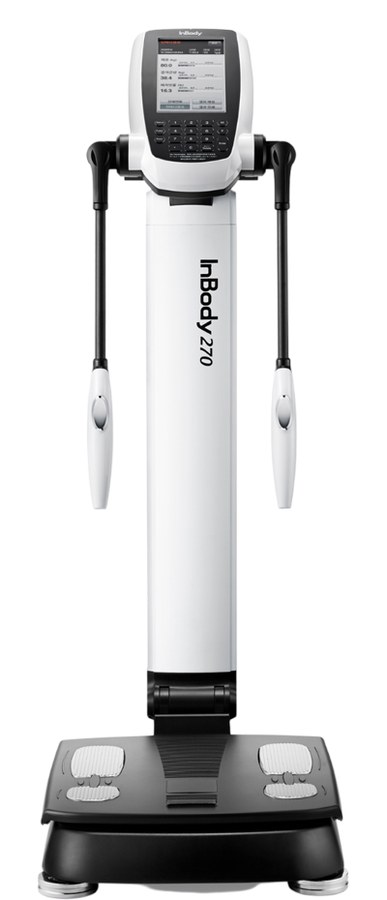
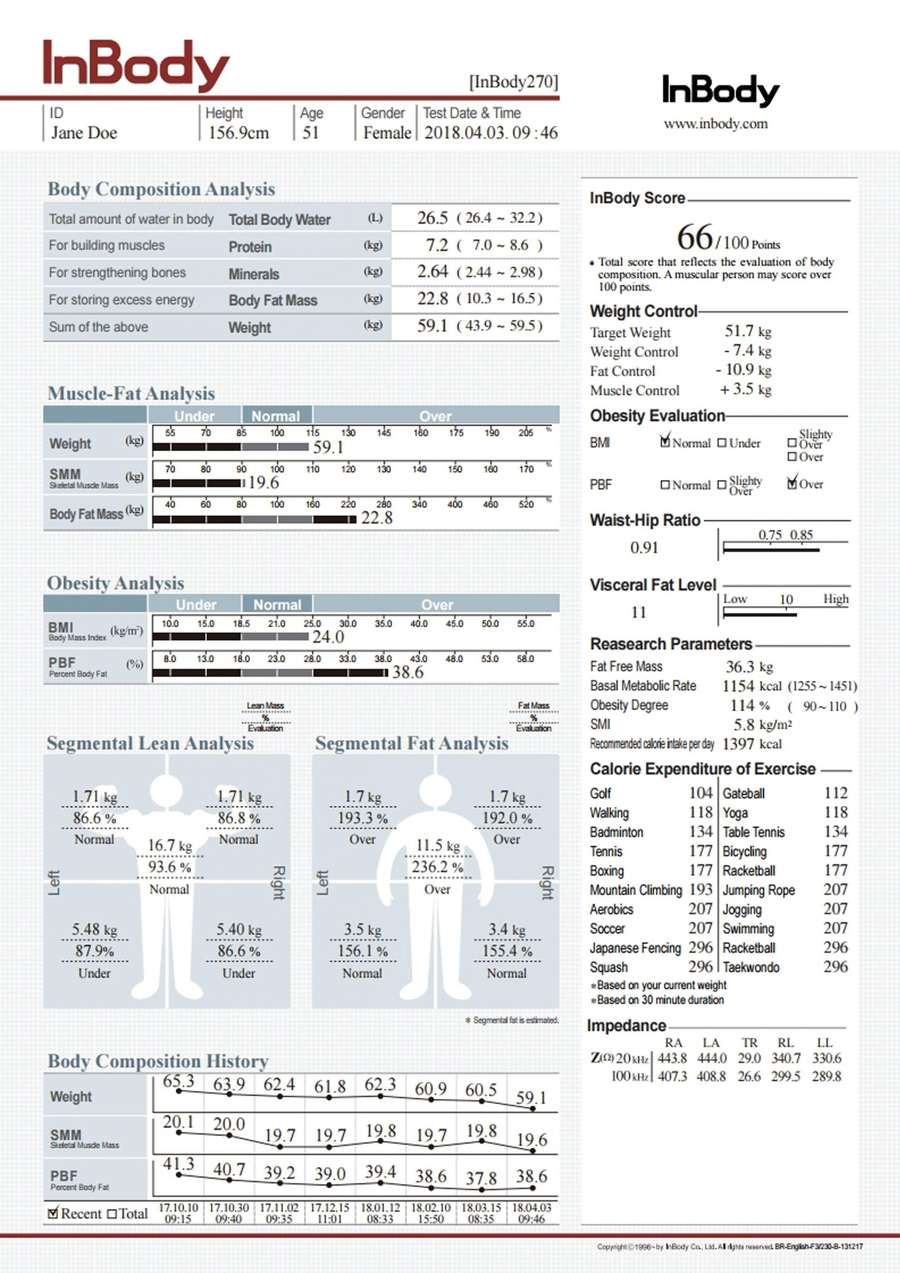
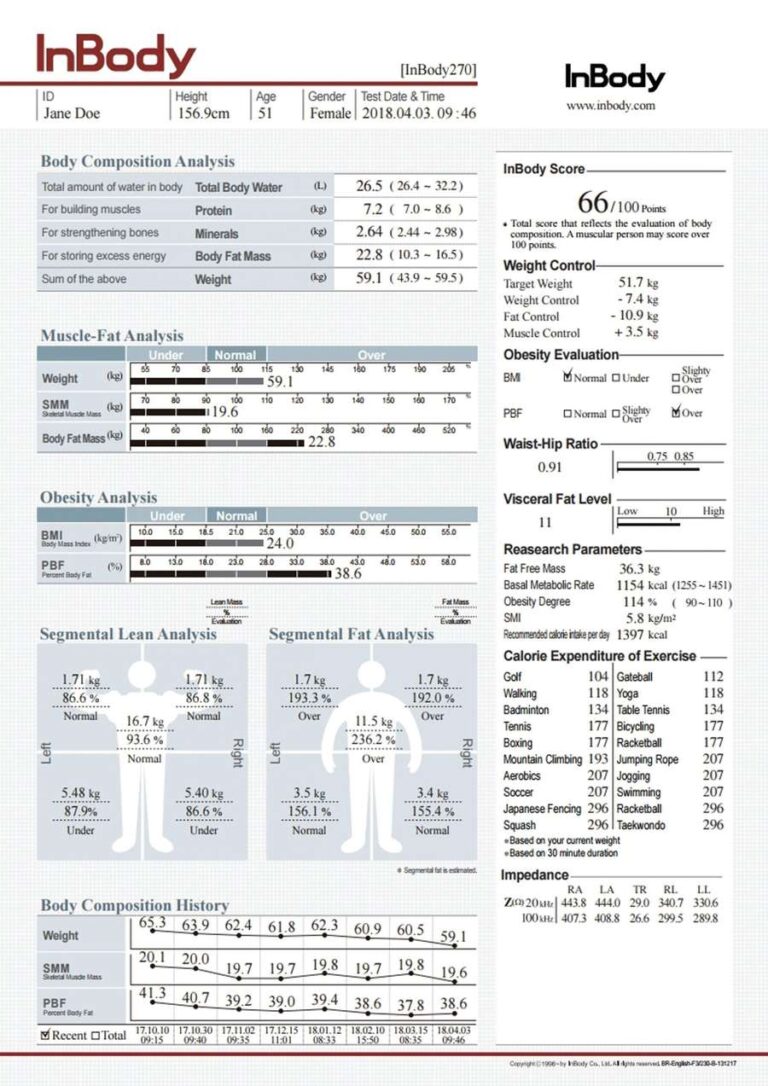
Knowing the reference ranges is only useful if you know your actual numbers. Body composition assessment with InBody gives you your precise Skeletal Muscle Mass, Body Fat Percentage, Visceral Fat Level, BMR, and segmental analysis — the complete picture that age-appropriate reference ranges actually mean something against.
A single InBody test takes under 3 minutes. Done every 6–8 weeks during an active programme, it becomes your body composition tracking tool across the decades.
Find Your Nearest InBody Test Centre
Over 1,800 InBody-equipped centres across India — in hospitals, gyms, clinics, and wellness centres. Walk in and know your numbers at any age.
Related Reads
- “Sarcopenia in India: Why Indians Lose Muscle 30% Faster After 35 (And How to Stop It)”
- “How to Read Your InBody Report: Every Number Explained Simply”
- “Visceral Fat Normal Range India: The Number That Predicts Disease Before Symptoms”
Frequently Asked Questions
What body fat percentage is healthy in your 30s vs 50s?
Healthy body fat ranges rise slightly with age due to natural muscle loss — roughly 14-20% for men and 21-28% for women in their 30s, moving to 16-22% and 24-31% respectively by the 50s, with visceral fat levels needing closer monitoring after 40.
Should muscle mass targets change with age?
Yes — because sarcopenia naturally reduces muscle mass after 35-40, maintaining muscle becomes an active goal requiring resistance training rather than something that happens automatically as it might in your 20s.
How often should I recheck my body composition as I age?
Every 3-6 months is a reasonable cadence after 40, since visceral fat and muscle mass can shift meaningfully within that window and catching adverse trends early makes intervention easier.

Most trending articles

वज़न बढ़ाने के लिए क्या खाएं? सही डाइट प्लान (सिर्फ ज़्यादा खाना नहीं)
सिर्फ ज़्यादा खाने से मांसपेशी नहीं बनती, चर्बी बढ़ सकती है। सही कैलोरी सरप्लस, प्रोटीन और डाइट प्लान जो वज़न को सही तरीके से बढ़ाए — पूरी जानकारी हिंदी में।
भारत में प्रोटीन कितना ज़रूरी है? असली आंकड़े और सही फॉर्मूला
IMRB के एक सर्वे में लगभग 73% भारतीय आहार प्रोटीन-कम पाए गए। सही प्रोटीन टारगेट कैसे निकालें और किन फूड्स से पूरा करें — पूरी जानकारी हिंदी में।
Metabolic Age क्या होती है? आपकी उम्र से ज़्यादा है या कम?
आपकी असली उम्र 34 है पर शरीर 50 साल जैसा व्यवहार कर सकता है। Metabolic age क्या है, मांसपेशी घटने के जोखिम क्या हैं और इसे कैसे घटाएं — पूरी जानकारी।