
Body Composition 8 min read
Visceral Fat vs Subcutaneous Fat: Why Indians Are Disproportionately at Risk
Indians accumulate dangerous visceral fat even at normal weight. Understand the difference, why your ethnic background puts you at risk, and how to accurately measure and reduce it.
Reading about body composition? Find an InBody test centre near you →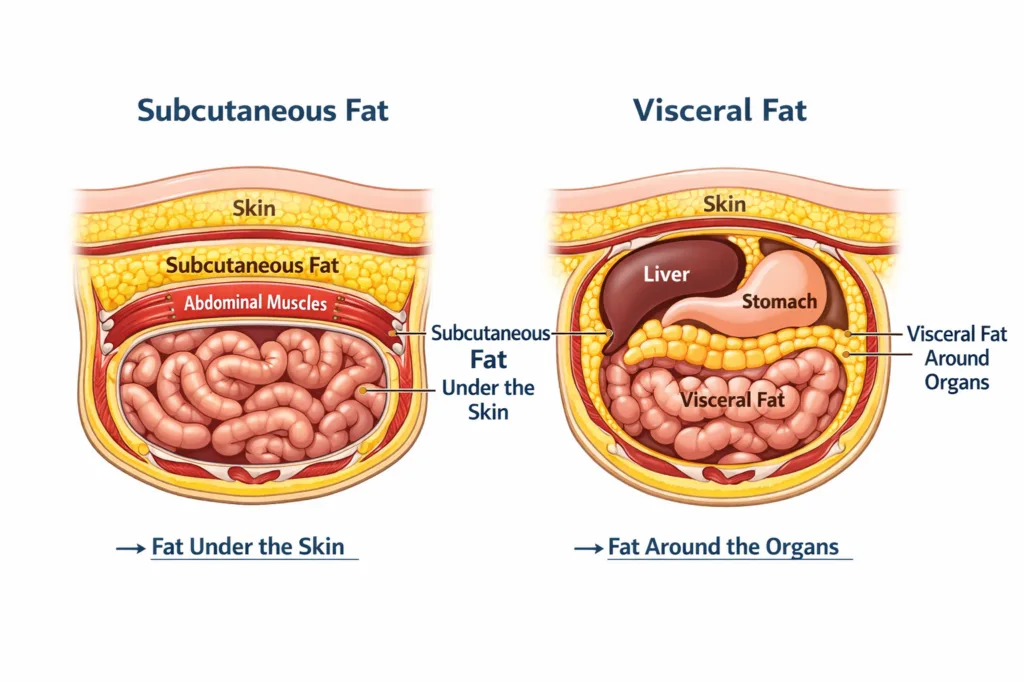
Two Types of Fat. One Is Quietly Killing You.
Most Indians think fat is fat. You can see it, pinch it, and you know roughly where it lives. But that’s not how fat actually works — and this misunderstanding is one reason India has become the diabetes capital of the world.
There are two distinct types of body fat, and they behave completely differently in your body. One is mostly cosmetic. The other is metabolically active, inflammatory, and directly linked to heart disease, type 2 diabetes, and fatty liver disease. And here’s the uncomfortable part: Indians carry the dangerous kind at levels that are alarming even when body weight looks completely normal.
This is not a scare story. It’s biology — and once you understand it, you can do something about it.
What Is Subcutaneous Fat?
Subcutaneous fat is the fat stored just beneath your skin. It’s what you can pinch on your arms, thighs, belly, and hips. It’s the fat that causes clothes to fit differently and shows up in the mirror.
Subcutaneous fat is not harmless — excess amounts are still associated with health risk — but it is metabolically quieter. It serves some useful functions: insulation, energy reserve, cushioning. For most people, subcutaneous fat accumulation is gradual and visible, which at least gives you a warning signal.
The problems with subcutaneous fat are:
- It makes you feel self-conscious
- In very large quantities, it contributes to hormonal disruption and cardiovascular strain
- It’s stubborn to lose — especially in the hips and thighs
But subcutaneous fat is not the fat that kills you quietly. That’s visceral fat.
What Is Visceral Fat?
Visceral fat is stored deep inside the abdominal cavity, surrounding your internal organs — your liver, pancreas, intestines, and heart. You cannot see it. You cannot pinch it. A person can carry dangerous levels of visceral fat and look completely normal — even slim — in a photograph.
This is what makes visceral fat so treacherous.
Unlike subcutaneous fat, visceral fat is metabolically active. It functions almost like an endocrine organ — releasing inflammatory cytokines, free fatty acids, and hormones directly into the portal circulation that feeds your liver. The consequences are systemic:
- Insulin resistance: Visceral fat directly impairs how your cells respond to insulin, driving pre-diabetes and type 2 diabetes
- Cardiovascular disease: It raises triglycerides, lowers HDL cholesterol, and raises blood pressure — the classic metabolic syndrome triad
- Non-alcoholic fatty liver disease (NAFLD): Free fatty acids from visceral fat flood the liver, causing fat accumulation in liver cells
- Chronic inflammation: Visceral fat releases interleukin-6 and TNF-alpha — inflammatory markers associated with cancer, cognitive decline, and autoimmune conditions
- Hormonal disruption: In women, high visceral fat is associated with PCOS, irregular cycles, and estrogen imbalance
High visceral fat with a normal body weight is not a contradiction. In Indians, it is an epidemic.
Why Indians Are at Disproportionate Risk
This is where the data gets uncomfortable — and where ethnicity becomes a medical variable, not a social one.
Research consistently shows that South Asians accumulate visceral fat at significantly higher rates than Europeans at the same BMI. A landmark study published in The Lancet and supported by research from AIIMS, CMC Vellore, and the Madras Diabetes Research Foundation found that Indians have 5 to 9 percentage points more visceral fat than Europeans at the same BMI.
Let that land. A 5’7″ Indian man weighing 72kg with a BMI of 25 — technically “normal” — may carry the same visceral fat load as a European man who is clinically overweight by BMI standards.
Why does this happen? Several mechanisms are at play:
Genetic Predisposition to Central Fat Storage
South Asians have a genetic tendency to deposit fat centrally — around the abdomen and organs — rather than peripherally in limbs. This is driven by gene variants affecting adipogenesis, lipid metabolism, and cortisol response. The ICMR-INDIAB study, one of the largest diabetes prevalence surveys ever conducted in India, found that central obesity (measured by waist circumference) was a stronger predictor of diabetes in Indians than overall BMI.
Lower Lean Muscle Mass as a Baseline
Indians, on average, have lower skeletal muscle mass compared to Europeans at the same weight. Muscle is the primary site of glucose disposal after meals. Less muscle means less capacity to clear blood sugar, which increases the metabolic burden on the pancreas and accelerates insulin resistance — even in people who appear thin.
Diet Pattern: High Refined Carbohydrate Load
The traditional Indian diet — high in white rice, refined wheat (maida), sugar, and starchy vegetables — drives repeated insulin spikes throughout the day. Chronically elevated insulin is a primary driver of visceral fat deposition. This isn’t an argument against Indian food. It’s an argument for understanding how food composition interacts with Indian metabolic genetics.
The Urban Sedentary Shift
Rapid urbanization has shifted millions of Indians from physically active livelihoods to desk-based work, long commutes, and minimal resistance exercise. The combination of low muscle mass and low physical activity creates the perfect metabolic storm for visceral fat accumulation.
The “Thin Fat Indian” — A Real Clinical Pattern
Dr. Anoop Misra, one of India’s leading metabolic disease researchers and Chairman of Fortis-C-DOC, coined the term “thin fat Indian” to describe patients who appear normal or even slim by Western standards but carry excess visceral fat and have metabolic profiles of people who are obese.
The clinical picture looks like this:
- BMI: 22–24 (normal range)
- Weight: Appears healthy
- Waist circumference: Borderline, easily missed on visual inspection
- Body fat percentage: 28–35% (obese range when measured)
- Visceral fat rating: Elevated
- Fasting insulin: Elevated
- HbA1c: Pre-diabetic range (5.7–6.4%)
This patient walks into a general physician’s office, gets a BMI check, and is told they are healthy. They are not. And they won’t know until they either develop diabetes — or get a proper body composition test.
How to Actually Measure Visceral Fat
This is where most advice falls apart. You cannot measure visceral fat with:
- A weighing scale — gives you total mass only, no fat distribution
- BMI — a population-level screening tool, not an individual diagnostic
- A tape measure — waist circumference is a proxy, not a direct measurement
- Skin calipers — measure subcutaneous fat only; completely blind to what’s happening inside
- Visual assessment — the “thin fat” pattern exists precisely because you cannot see visceral fat
The methods that actually measure visceral fat are:
- CT scan or MRI: Gold standard for research, expensive, involves radiation (CT), not routinely available for fat measurement
- DEXA scan: Good for overall body composition and bone density; can estimate visceral fat in the abdominal region
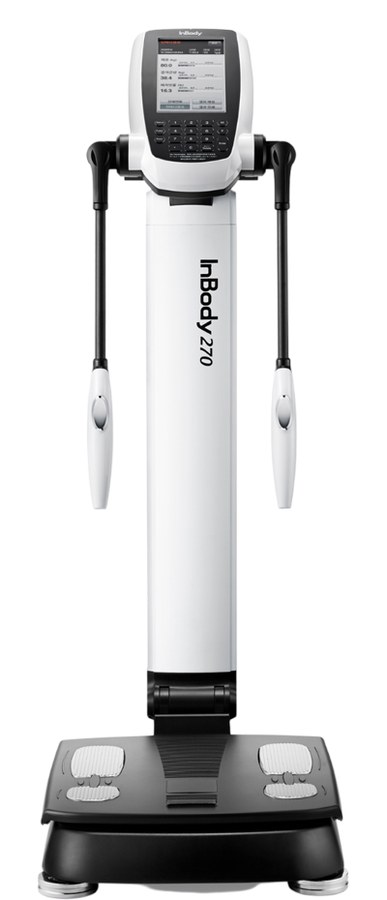
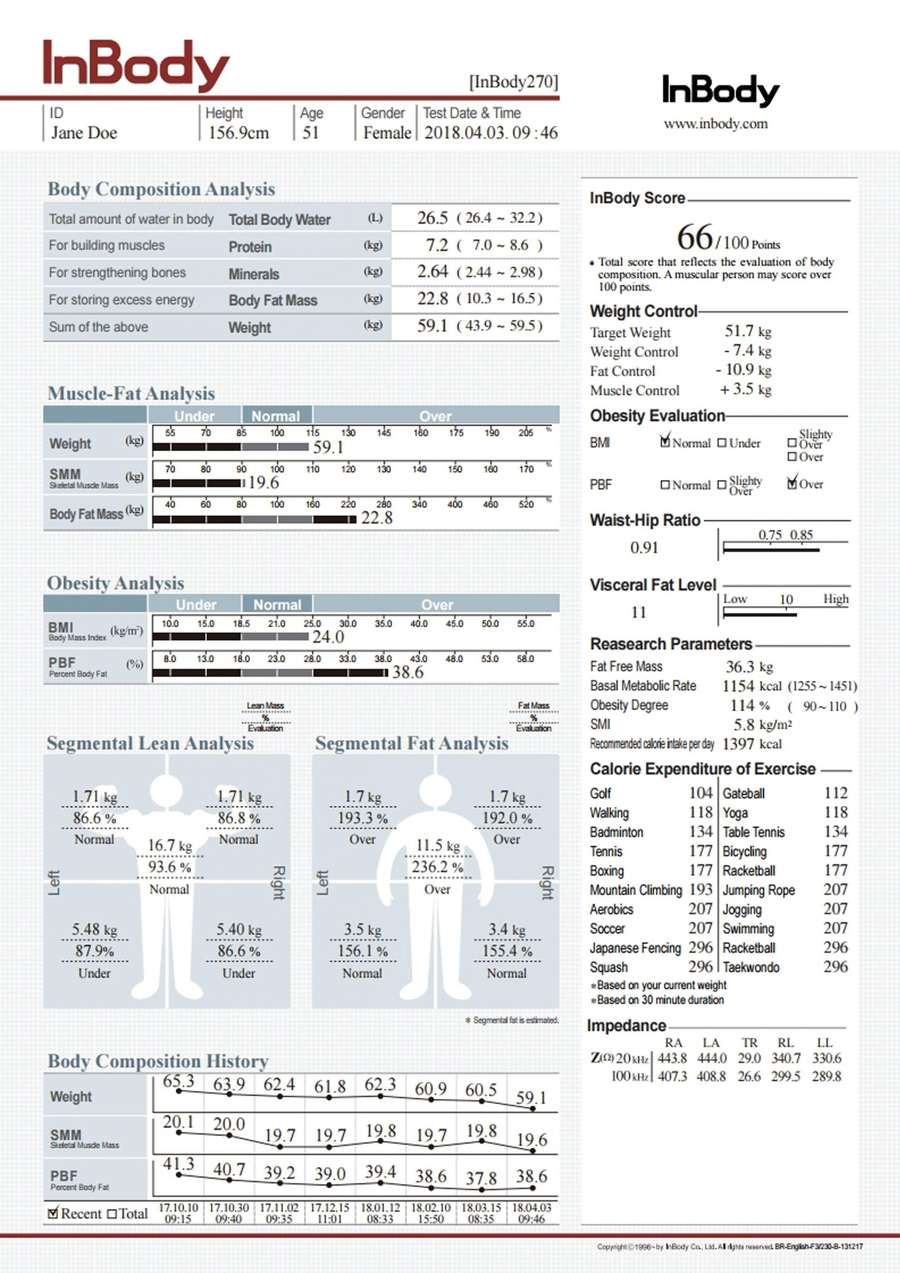
- Medical-grade bioelectrical impedance analysis (BIA): InBody devices use multi-frequency BIA to measure body composition segmentally — including a validated visceral fat area score — in 60 seconds, without radiation
InBody’s Visceral Fat Area (VFA) measurement gives you a direct, validated score. Research comparing InBody VFA against CT-derived visceral fat area shows strong correlation (r > 0.85 in multiple studies). For routine clinical monitoring — tracking whether visceral fat is going up or down in response to lifestyle changes — InBody is the practical gold standard that’s actually available to you.
How to Reduce Visceral Fat: What the Evidence Actually Says
1. Resistance Training — The Most Underused Tool in India
Strength training is the single most effective intervention for reducing visceral fat and increasing muscle mass simultaneously. A meta-analysis in Obesity Reviews found that resistance training reduced visceral fat by an average of 10–15% over 12–16 weeks even without significant weight change. Muscle mass gains increase resting metabolic rate and dramatically improve insulin sensitivity.
2. Reduce Refined Carbohydrate Load
Replace white rice with millets, reduce maida-based foods, and space carbohydrate intake across meals. These changes reduce the insulin spikes that drive visceral fat deposition.
3. Increase Dietary Protein
Most Indian diets are chronically protein-deficient, particularly for vegetarians. Target 1.2–1.6g of protein per kilogram of body weight. Higher protein intake supports muscle retention during calorie deficit and improves body composition outcomes.
4. Prioritise Sleep
Chronic sleep deprivation elevates cortisol and ghrelin, both of which drive visceral fat storage. Research shows that sleeping less than 6 hours per night is independently associated with central adiposity — even controlling for diet and exercise.
5. Manage Chronic Stress
Cortisol, the primary stress hormone, directly promotes visceral fat deposition. Structured stress management — even 10 minutes of daily mindfulness — measurably lowers cortisol over 8 weeks.
Get Your Visceral Fat Measured
You cannot manage what you do not measure. If you are Indian, of normal weight, and have never had a body composition test, you are making health decisions with no data. That is a risk you do not need to take.
An InBody test at a clinic or wellness center near you gives you your visceral fat score, body fat percentage, muscle mass by segment, and a full metabolic baseline — in 60 seconds, without needles, radiation, or fasting.
Find an InBody center near you →
Know your numbers. Then fix them.
Frequently Asked Questions
What's the difference between visceral and subcutaneous fat?
Subcutaneous fat sits just under the skin and is largely cosmetic. Visceral fat wraps around internal organs like the liver and intestines, releases inflammatory compounds directly into the bloodstream, and is strongly linked to diabetes, heart disease, and fatty liver — even in people who look slim.
Why are Indians more prone to visceral fat?
Indians tend to store fat centrally around the abdomen rather than the hips and thighs, a genetic and metabolic tendency sometimes called the "Asian Indian phenotype." This means two people at the same BMI can have very different visceral fat levels, with Indians typically carrying more.
How can I measure my visceral fat level accurately?
A bathroom scale or BMI cannot measure visceral fat. Bioelectrical impedance devices like InBody, or a DEXA/CT scan, give an actual visceral fat area or level score, letting you track whether your reduction efforts are working over time.

Most trending articles
BCA Test Full Form and Meaning: What It Actually Measures
BCA stands for Body Composition Analysis. What the test measures, how it differs from BMI and DEXA, and why it matters more for Indian bodies.
Corporate Wellness Body Composition Screening in India
BMI-based screening misses the risk in Indian workforces entirely. How to run body composition screening at scale, handle privacy, and use the aggregate data.
Body Composition Testing ROI for Indian Gyms: The Real Case
Members quit because the scale stops moving. Where the return actually comes from, the 5 operational failures that kill it, and how to measure it honestly.