
Health 8 min read
Metabolic Disorders in India — Catching Them Early
1 in 3 Indians has at least one component of metabolic syndrome — most don't know. Here is what BMI misses, what body composition catches, and what early detection unlocks.
Reading about body composition? Find an InBody test centre near you →
Roughly 1 in 3 Indian adults has at least one component of metabolic syndrome — abdominal obesity, high triglycerides, low HDL, hypertension, or impaired glucose tolerance (ICMR-INDIAB 2023). Most of them do not know it. Standard health checkups in India test blood sugar and lipid panels, but rarely include the one measurement that ties them all together: body composition. Understanding the early signals of metabolic disorders — and what to measure beyond BMI — is the single highest-leverage thing an Indian adult can do for long-term health.
Why 1 in 3 Indians has a metabolic disorder they don’t know about
Metabolic syndrome is not a single disease. It is a cluster of five conditions, three or more of which together define the syndrome (NCEP-ATP III criteria, ICMR-adapted thresholds for Indians):
- Waist circumference: men >90 cm, women >80 cm (Asia-Pacific cut-offs)
- Triglycerides ≥150 mg/dL
- HDL cholesterol <40 mg/dL (men) or <50 mg/dL (women)
- Blood pressure ≥130/85 mmHg
- Fasting glucose ≥100 mg/dL or impaired glucose tolerance
By the time three of these are present, you have metabolic syndrome and a 2× lifetime risk of cardiovascular disease and 5× risk of type 2 diabetes. By the time only one is present, you are already on the trajectory — and that is the moment to act, before the cluster forms.
Most Indian adults under 40 have not had any of these things measured in the last 5 years. Most over 40 have had lipid and glucose tested, but not waist circumference. And almost none have had body composition measured, which is the upstream signal that predicts which of these will appear first.
Key Takeaways
- 1 in 3 Indian adults has at least one metabolic syndrome component; most don’t know.
- The “thin-fat” Indian phenotype = normal BMI with high visceral fat — invisible to scales and BMI alone.
- Visceral fat is the upstream driver; lipids, glucose, and BP are downstream results.
- ICMR uses Asia-specific cut-offs (BMI 23/25, waist 90/80 cm) — Western thresholds underdiagnose Indians.
- Early detection (one cluster component) is much more reversible than late detection (three).
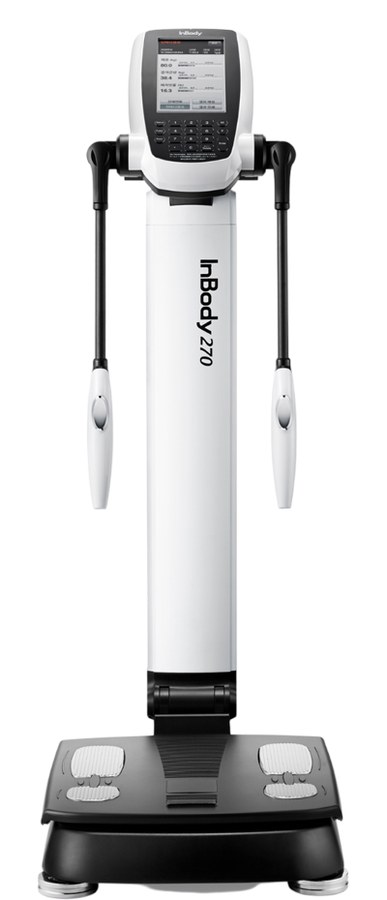
The thin-fat phenotype — looking healthy while not being healthy
The “thin-fat Indian” describes an adult who has a normal BMI (under 25) but an elevated body fat percentage and high visceral fat. This phenotype is so common in South Asia that it has its own published literature in the Lancet, Diabetologia, and the Journal of the Association of Physicians of India. Drivers include:
- Lower muscle mass at every BMI compared to Caucasians (genetic + dietary protein gap)
- Higher visceral fat at every BMI — the “Asian fat distribution” pattern
- 3–4× higher rate of non-alcoholic fatty liver disease (NAFLD) at normal BMI
- Earlier insulin resistance — by 5–10 years vs Caucasian populations
The practical implication: a 30-year-old Indian software engineer with a BMI of 22 may have visceral fat at level 12, body fat at 26%, and impaired glucose tolerance — none of which shows on the scale, all of which shows on a body composition scan. Catching this at 30 is reversible. Catching the same person at 50 with type 2 diabetes + NAFLD + hypertension is much harder.
The 5 metabolic disorders most missed in routine Indian checkups
Beyond the metabolic syndrome cluster itself, five specific metabolic disorders are systematically underdiagnosed in routine Indian health screening:
- Non-alcoholic fatty liver disease (NAFLD / MAFLD). Now affects 25–35% of urban Indian adults. Usually silent until the late stage. Requires ultrasound or FibroScan; routine checkups skip it.
- Pre-diabetes / impaired glucose tolerance. 1 in 6 Indian adults. Fasting glucose is normal, but HbA1c is 5.7–6.4. Routine checkups often miss this if they only test fasting glucose.
- Sarcopenic obesity. Low muscle + high fat at normal-ish BMI. Rarely measured in routine checkups. The combination has a higher cardiovascular risk than either alone.
- Subclinical hypothyroidism. TSH slightly elevated (5–10 mIU/L), T4 normal. Often dismissed, causes weight gain, fatigue, and fertility issues. Common in Indian women 25–45.
- Vitamin D deficiency-driven metabolic dysfunction. 70%+ of Indian adults are Vitamin D deficient. Deficiency is associated with insulin resistance, muscle weakness, and lipid abnormalities — all of which improve with correction.
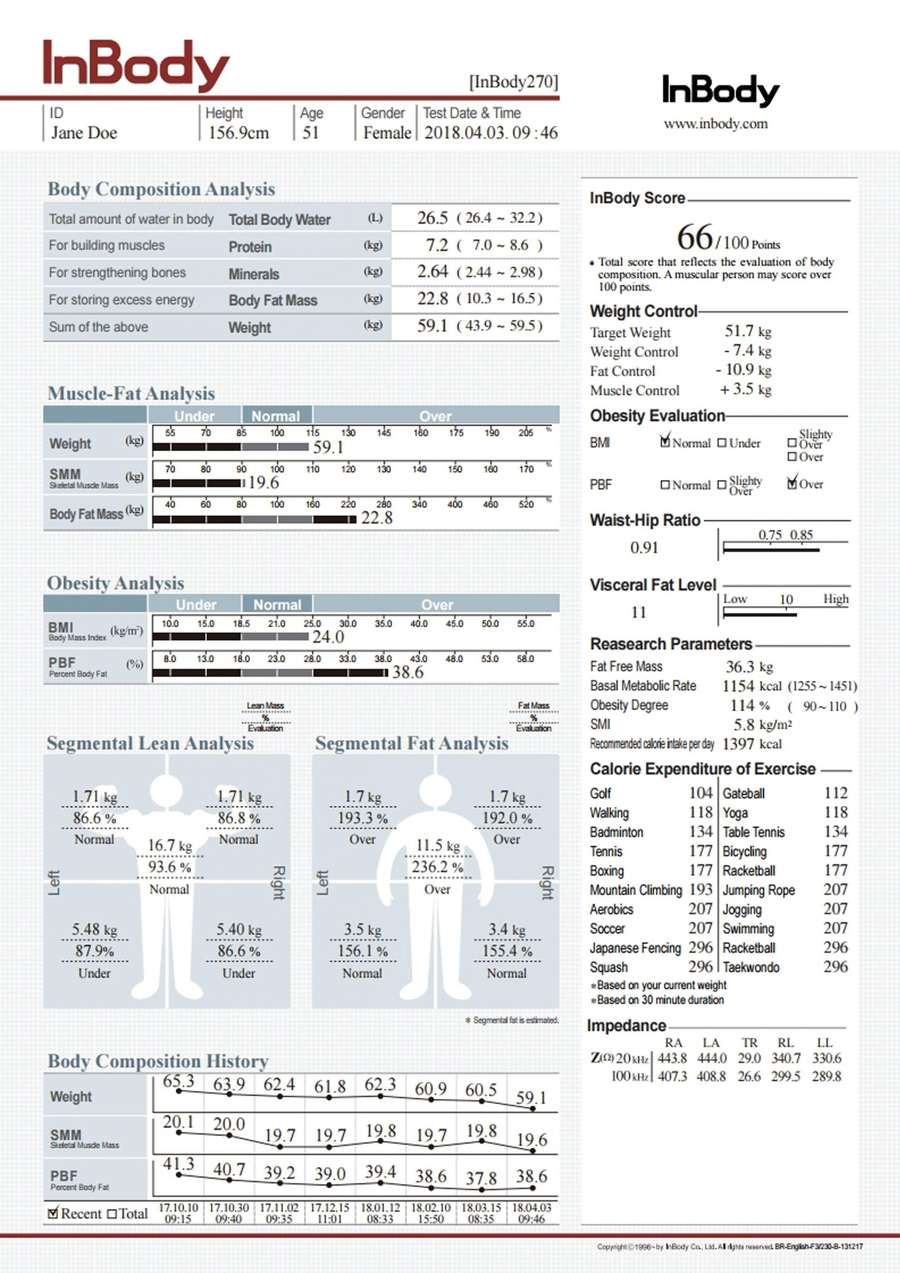
Body composition vs blood markers — what each catches
Blood tests are essential. They are not sufficient. Each tool catches different things:
| What you want to know: Best | t tool |
|---|---|
| Average blood sugar over 3 months | HbA1c blood test |
| Lipid status | Lipid panel |
| Liver inflammation | ALT/AST blood test + ultrasound |
| Visceral fat (upstream driver) | Body composition scan |
| Sarcopenia/muscle mass | Body composition scan |
| Hydration status | Body composition scan (ECW/TBW) |
| Cell-membrane integrity/inflammation | Body composition scan (phase angle) |
Most Indian health checkups capture only the top three rows. The bottom four — the body composition ones — are what tell you why the blood markers will trend the way they will over the next 5 years. Find your nearest InBody test centre.
ICMR thresholds — why Western cut-offs underdiagnose Indians
The Indian Council of Medical Research uses lower thresholds for many metabolic markers than the WHO global standards, because South Asian risk profiles cross into “danger” at lower numbers. The ones every Indian adult should know:
- BMI: overweight ≥23 (not 25), obese ≥25 (not 30)
- Waist circumference: men ≥90 cm (not 102), women ≥80 cm (not 88)
- Body fat percentage (Asian thresholds): men >22%, women >30% counts as overfat
- Fasting blood sugar: normal <100, pre-diabetic 100–125, diabetic ≥126 mg/dL
- HbA1c: normal <5.7, pre-diabetic 5.7–6.4, diabetic ≥6.5%
- Vitamin D: deficient <20, insufficient 20–30, sufficient >30 ng/mL
An Indian adult with BMI 24, waist 92 cm, body fat 28%, HbA1c 5.9, Vit D 18 ng/mL is “perfectly healthy” by Western standards. By Indian standards, they have three metabolic disorder components and are in the early stages of metabolic syndrome. Same body. Different interpretation. The Indian one is right.
A typical case (illustrative)
Illustrative example — composite based on typical patient profiles.
A 32-year-old software engineer in Bangalore. BMI 22.5. Looks slim. His company’s annual health check flags borderline triglycerides and fasting glucose. He runs three times a week. On the standard scale, nothing looks wrong. On an InBody scan, his visceral fat is at level 12, and his skeletal muscle index is below the 50th percentile for his age. He has the thin-fat phenotype and early metabolic syndrome that nothing in his routine checkup would have flagged at this stage. Two years of progressive strength training (3× per week, 35 minutes) and a protein-corrected Indian diet (extra 30 g protein per day, dal-paneer-egg-soya rotation, less white rice, no biscuits with chai) later: visceral fat down to 7, muscle index above the 60th percentile, lipids normalised without medication, fasting glucose 88 mg/dL. The scale weight has barely changed. Everything else has. Without the scan at 32, he would likely have been a type 2 diabetic by 42.
What early detection unlocks
Indian medicine excels at treating metabolic disorders late (cardiology, endocrinology, hepatology are world-class). What it underinvests in is catching them early — when they are reversible through lifestyle alone, before medication is needed. Early detection unlocks:
- Reversibility. Pre-diabetes can be reversed in 12–18 months. Type 2 diabetes can be reversed in some patients, but with much more effort.
- Lower medication burden. Catching dyslipidaemia early can mean a 6-month lifestyle trial before statins. Catching it late means lifelong medication.
- Family screening. Metabolic disorders cluster in families. One person diagnosed = a reason to screen siblings, parents, spouses, and children.
- Insurance and life decisions. Pre-diagnosis status preserves insurance options that disappear post-diagnosis.
The right cadence for an Indian adult over 30: annual body composition scan + standard blood panel. Total time: 30 minutes. Total cost: under ₹2,000 at most diagnostic chains. Highest-leverage preventive-health spend of the year. See also: Metabolic syndrome in India — causes, diagnosis, reverse and What is metabolic age and how to lower it.
Catch what your annual checkup misses.
A body composition scan takes 15 seconds and catches the upstream metabolic signals — visceral fat, muscle mass, phase angle — that routine blood work alone cannot.
Frequently asked questions
Q. What is the difference between metabolic syndrome and metabolic disorders?
“Metabolic syndrome” is a specific diagnostic cluster — three or more of waist, triglycerides, HDL, BP and fasting glucose abnormalities together. “Metabolic disorders” is the umbrella that includes the syndrome plus its component conditions individually (NAFLD, pre-diabetes, dyslipidaemia, sarcopenic obesity, etc.). You can have one disorder without having the full syndrome.
Q. Can I have a metabolic disorder if my BMI is normal?
Yes — very commonly in India. The “thin-fat” phenotype means high visceral fat and low muscle mass at a normal BMI. About 25–30% of Indian adults under 40 with a BMI under 25 have at least one metabolic syndrome component. BMI alone is not enough to screen Indian adults for metabolic risk.
Q. How often should I get screened for metabolic disorders?
Annual body composition scan + standard blood panel (lipids, fasting glucose, HbA1c, Vit D, TSH) is the minimum cadence for any Indian adult over 30. If you have a family history of diabetes, heart disease, or PCOD, every 6 months. If you already have one cluster component, every 4 months.
Q. Are metabolic disorders reversible in Indians?
Yes — early-stage disorders are highly reversible with 6–18 months of body composition correction (resistance training + protein-corrected Indian diet + Vit D correction). Late-stage disorders are less reversible but still improvable. The reversibility window closes faster in Indians than in Western populations due to earlier complication onset, so catching them early matters more.
Q. What is the role of Vitamin D in metabolic disorders?
Vitamin D deficiency (70%+ of Indian adults) is linked to insulin resistance, muscle weakness, dyslipidaemia, and impaired calcium metabolism. Correction (under medical supervision: 60,000 IU weekly for 8 weeks, then maintenance) often improves metabolic markers and muscle-building response. Get tested before supplementing; do not megadose without labs.
Q. Should I see an endocrinologist or my GP for metabolic disorders?
Start with your GP if you have one cluster component. Escalate to an endocrinologist if you have full metabolic syndrome (3+ components), pre-diabetes that is not improving with lifestyle, or are pre-diabetic + planning pregnancy. A registered dietitian and a strength-trained physiotherapist are usually more impactful for the lifestyle side than a specialist alone.
