
Fitness 11 min read
Fitness After 60: The Body Composition Guide for India’s Growing Senior Population
India will have 300 million seniors by 2050. The biggest threat isn't disease — it's muscle loss. Body composition testing after 60 reveals the exact protocol to stay strong, independent, and healthy well into old age.
Reading about body composition? Find an InBody test centre near you →
The Health Threat That Indian Seniors — and Their Doctors — Are Not Measuring
Ask a doctor what the biggest health risks are for Indian adults above 60, and the answer is almost always: heart disease, diabetes, blood pressure. These are real concerns, and managing them matters. But there is a quieter, more fundamental threat that drives the severity of all these conditions and that virtually no standard medical check-up in India measures: the progressive loss of skeletal muscle mass.
Muscle is not just about physical appearance or athletic performance. Muscle is the primary site of glucose disposal in the body, meaning that low muscle mass directly worsens diabetes management. Muscle produces metabolic hormones that protect cardiovascular health. Muscle provides the structural support that prevents falls — the leading cause of injury-related hospitalisation and death in Indian adults above 65. Muscle enables independence — the ability to get up from the floor, climb stairs, carry groceries, live on your own terms at 75 or 80.
And in India’s rapidly ageing population, muscle mass is declining at a rate that current healthcare systems are not equipped to detect or address.
India’s Senior Population: Scale and Trajectory
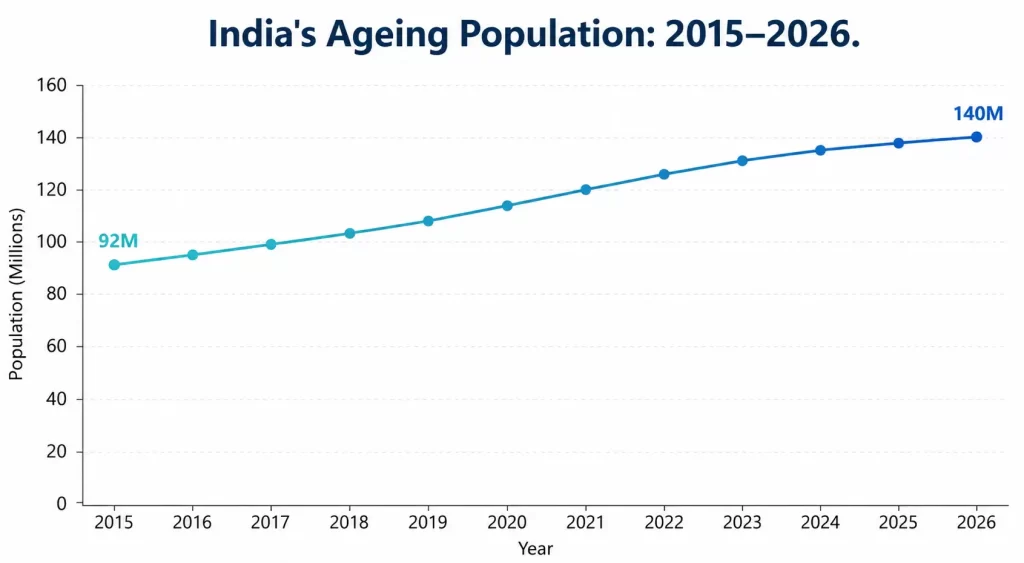
India has approximately 140 million people above the age of 60 today. By 2050, that number is projected to reach 300 million — more than the current total population of the United States. India’s old-age dependency ratio (the ratio of elderly individuals to working-age adults) is rising sharply, driven by falling birth rates and improving life expectancy.
The health system implications are enormous. But so are the individual implications for families navigating what it means to support ageing parents and grandparents while also planning for their own longevity. Understanding body composition — particularly muscle mass and visceral fat — is arguably the most actionable health investment a person above 60 can make.
What Happens to Body Composition After 60
Body composition changes dramatically with age, and the changes accelerate after 60. Without active intervention, adults lose approximately 3-8% of skeletal muscle mass per decade after 30, with the rate accelerating to 10-15% per decade after 70. In the absence of physical training and adequate protein intake, this decline is relentless.
At the same time, fat mass — particularly visceral fat — tends to increase with age even when body weight remains stable. This shift in body composition (less muscle, more fat) is why a 70-year-old who weighs the same as they did at 45 is not necessarily in the same metabolic condition. The composition of that weight has changed profoundly, and the standard medical check-up that looks at weight, BP, sugar, and cholesterol cannot see this change.
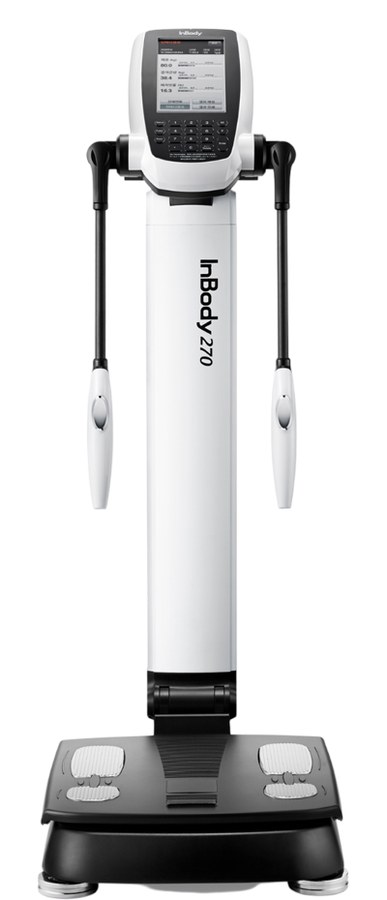
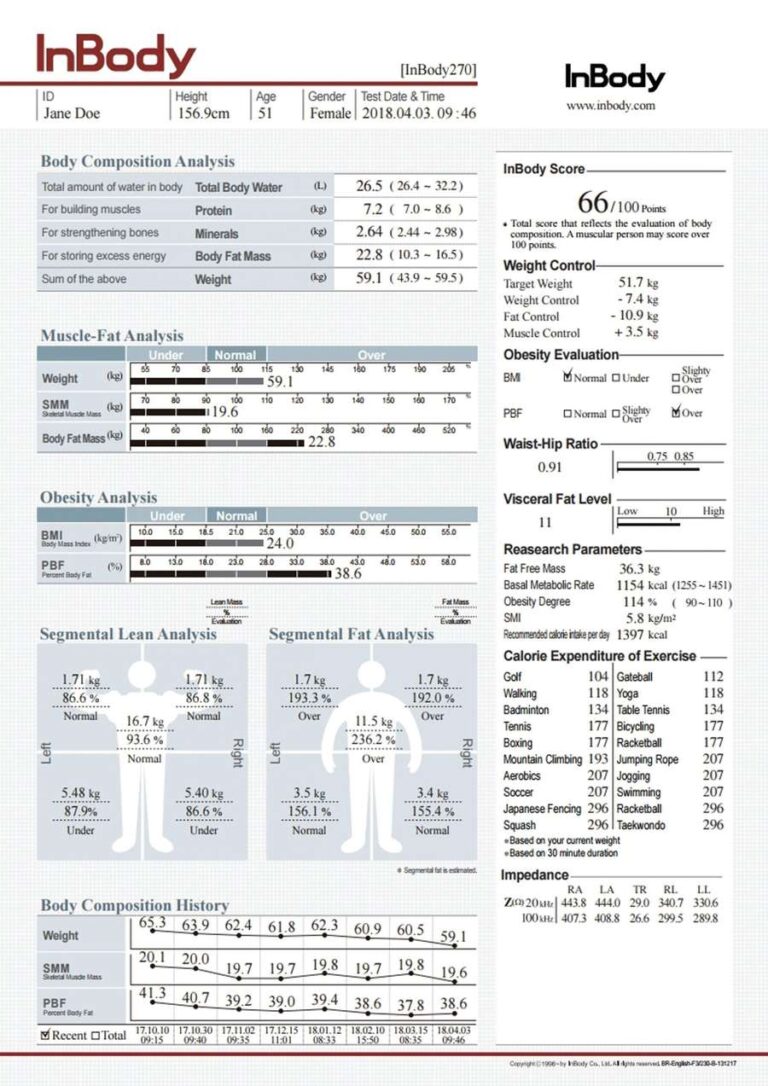
On an InBody result sheet for a 65-year-old Indian adult, the critical metrics to watch are:
- SMM (Skeletal Muscle Mass): Is it above the normal range for age and height? Is it declining between tests?
- PBF (Percent Body Fat): Is body fat creeping above the age-specific upper limit?
- VFA (Visceral Fat Area): Is visceral fat above 100 cm² — the clinical risk threshold?
- ECW/TBW Ratio: Is it elevated above 0.380? In elderly individuals, elevated ECW/TBW is a strong predictor of poor functional status and is associated with increased hospitalisation risk
- InBody Score: The composite score reveals whether muscle-to-fat balance is trending in the right direction over time
Sarcopenia: The Muscle Loss Condition India Is Not Diagnosing
Sarcopenia — clinically significant age-related muscle loss — is formally defined by the Asian Working Group for Sarcopenia (AWGS), whose criteria are most relevant for Indian populations. The AWGS 2019 criteria define probable sarcopenia based on low muscle strength (measured by grip strength), and confirmed sarcopenia when accompanied by low muscle mass (measured by body composition analysis, including BIA methods like InBody) and/or low physical performance.
Studies in Indian elderly populations have found sarcopenia prevalence rates of 18-30% in community-dwelling adults above 60, with rates rising to 40-50% in those above 75. These numbers likely underestimate the true burden because most Indian hospitals and clinics do not screen for sarcopenia using validated body composition methods. The diagnosis is missed, the muscle loss goes unaddressed, and patients present later with fall injuries, functional decline, and metabolic deterioration that could have been prevented.
A 2022 study from AIIMS Bhopal found that sarcopenic older adults had a 3.5-fold higher risk of falls, a 2.8-fold higher risk of fractures, and significantly worse outcomes after hospitalisation compared to age-matched non-sarcopenic adults. This is not a niche clinical concern — it is a major driver of healthcare burden in Indian geriatric populations.
The Fall Risk: India’s Most Preventable Elderly Health Crisis
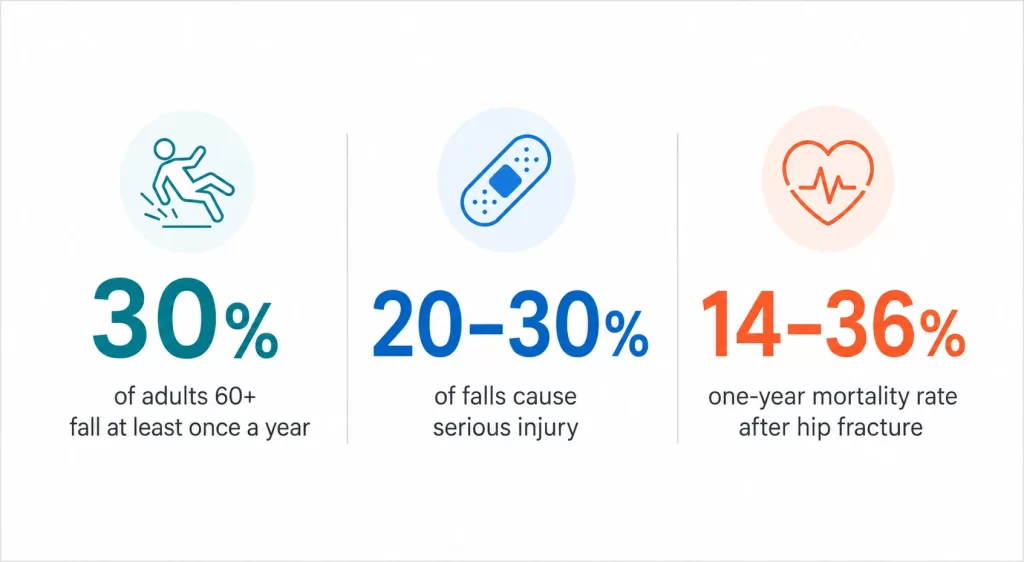
Falls are the leading cause of injury-related death in Indian adults above 65. An estimated 30% of people above 65 fall at least once each year. Among those who fall, 20-30% sustain serious injuries — hip fractures, head trauma, fractures of the wrist and spine. Hip fracture in an Indian senior, given the challenges of geriatric surgical care and rehabilitation infrastructure in most cities, carries a one-year mortality rate of 14-36%.
The body composition connection is direct and well-established. Low skeletal muscle mass in the legs (detectable on InBody’s segmental analysis as below-normal muscle mass in the lower limbs) predicts fall risk with high sensitivity. Elderly individuals with adequate lower limb muscle mass have better balance, faster protective reflexes, and greater ability to recover from a stumble before it becomes a fall. Building and maintaining lower body SMM is, quite literally, a life-extending strategy for Indian seniors.
Exercise After 60: What the Evidence Actually Shows
The Myth That Seniors Cannot Build Muscle
One of the most pervasive and damaging misconceptions about elderly fitness is that muscle building is not possible after a certain age. The evidence is unambiguous in showing this is false. A landmark study published in the Journal of the American Medical Association found that adults aged 65-80 following progressive resistance training for 10 weeks increased skeletal muscle mass by an average of 4.8% and strength by 12-15%. Studies have demonstrated meaningful muscle gain in adults in their 80s and even early 90s with appropriate training protocols.
The muscle-building machinery does not stop working with age — it becomes less efficient, requiring more stimulus (particularly protein and resistance training) to produce the same response. But the response is absolutely possible at any age.
Resistance Training: The Non-Negotiable Intervention
For adults above 60, resistance training is not optional if maintaining muscle mass, metabolic health, and functional independence is a goal. Current evidence-based recommendations for older adults include:
- Resistance training 2-3 times per week, targeting all major muscle groups
- Progressive overload — gradually increasing resistance as strength improves
- Focus on functional movements: squats, seated rises, step-ups, pushing, pulling, carrying
- Joint-friendly adaptations: machines or supported exercises for those with arthritis or joint pain
- Recovery time between sessions extended to 48-72 hours compared to younger adults
For Indian seniors unfamiliar with resistance training, starting with bodyweight exercises and gradually adding resistance with resistance bands (widely available at low cost in India) is a safe and effective entry point. Supervision from a qualified physiotherapist or trained personal trainer experienced with older adults is recommended for those with existing health conditions.
The Protein Challenge for Indian Seniors
Protein is the nutritional substrate for muscle maintenance and growth, and older adults need significantly more than younger people to achieve the same muscle protein synthesis response. Current consensus recommendations from geriatric nutrition bodies suggest that adults above 65 need 1.2-1.6 grams of protein per kilogram of body weight per day — 50-100% more than the Indian average intake.
This is a substantial challenge in the Indian dietary context. Many older Indians, particularly women, consume protein intakes well below 0.8g/kg/day. The reasons are multiple: reduced appetite with age, cultural food habits that centre meals on carbohydrates (rice, roti) with small protein portions, misconceptions about high protein causing kidney damage (which applies only to those with existing kidney disease), and limited awareness of the specific protein needs of older adults.
For Indian seniors, practical high-protein food strategies include: eggs (one of the most affordable, complete protein sources), paneer, chicken and fish, dal consumed in larger portions than typical, and high-quality protein supplementation where dietary protein remains inadequate. Protein distribution matters as well — spreading intake across three meals rather than concentrating it at dinner produces better muscle protein synthesis.
The ECW/TBW Ratio in Elderly: A Functional Status Marker
Among all InBody metrics, the ECW/TBW (Extracellular Water to Total Body Water) ratio deserves special attention in elderly populations. Normal values fall below 0.380. In healthy young adults, values typically range from 0.36-0.38. In elderly individuals — particularly those with chronic disease, malnutrition, or declining functional status — ECW/TBW tends to rise, reflecting a shift of fluid from intracellular to extracellular compartments.
Multiple studies in geriatric populations have found that ECW/TBW above 0.400 in older adults is associated with: higher all-cause mortality, increased hospitalisation risk, poorer post-surgical outcomes, and reduced functional independence. Monitoring ECW/TBW over time in seniors provides a sensitive indicator of their physiological reserve that is simply not available from standard medical tests.
Indian Family Dynamics: Supporting the Seniors in Your Family
Indian family culture creates both opportunities and challenges for senior health. The multi-generational household — still more common in India than in Western countries — means that adult children and grandchildren are often closely involved in the daily lives of elderly family members. This proximity is a tremendous resource for supporting body composition improvement in seniors.
Family members can support senior health by:
- Including protein-rich foods in family meals (rather than preparing separate “elder-friendly” meals that are often low-protein)
- Accompanying elderly family members to the gym, yoga class, or morning walk — social engagement with exercise dramatically improves adherence
- Organising family InBody assessments together, normalising health tracking across generations
- Managing the logistics of regular health appointments, including body composition monitoring
At the same time, family dynamics can sometimes work against senior health. Well-meaning family members may discourage elderly relatives from exercise out of excessive protectiveness (“you’ll hurt yourself”), or provide high-carbohydrate, low-protein comfort foods that inadvertently accelerate muscle loss. Educating the whole family about the importance of muscle mass for senior health — not just rest and caloric intake — is as important as the individual programme itself.
A Practical Home Programme for Indian Seniors (No Equipment Required)
For seniors who are not yet ready for gym-based training, a home programme using bodyweight provides an excellent starting point:
- Chair squats: Stand up from a chair and sit back down slowly, 10-15 repetitions, 2 sets — builds the quad and glute strength that protects against falls
- Wall push-ups: Hands on the wall, lean in and push away — upper body strength without floor-level difficulty
- Standing calf raises: Rise onto toes holding a wall or chair back — improves ankle stability and lower leg strength
- Step practice: Using a stable step or curb, step up and down repeatedly — functional strength training that directly mimics the movement pattern most associated with fall prevention
- Seated leg extensions: Lift each leg straight out from a seated position, hold for 2 seconds — quad activation without joint stress
Performed 3-4 times per week with consistent protein intake, this programme can produce measurable SMM changes on an InBody test within 8-12 weeks.
The Independence Metric: What Body Composition Predicts at 80
Research on predictors of functional independence in the elderly consistently identifies body composition — specifically, the ratio of skeletal muscle mass to body weight — as one of the strongest predictors of whether an individual remains independently functional at 80 and beyond. Grip strength (which correlates closely with total SMM) predicts not just functional status but all-cause mortality with remarkable precision in geriatric populations.
In practical terms: the muscle mass and body composition you build and maintain in your 60s is an investment in your independence in your 80s. Every quarter you allow muscle mass to decline without intervention is a quarter closer to the threshold where everyday activities — rising from the floor, managing stairs, living without full-time assistance — become dependent on others rather than within your own power.
The InBody test protocol for seniors — measuring SMM, PBF, VFA, ECW/TBW, and InBody Score every 3-4 months — creates the data trail that shows whether interventions are working and allows timely adjustments before decline becomes clinically significant.
Take Control of Healthy Ageing — Starting With the Right Data
India’s senior population deserves a healthcare system that sees beyond weight, blood pressure, and blood sugar. Measuring Skeletal Muscle Mass, Visceral Fat Area, Percent Body Fat, and ECW/TBW ratio gives elderly individuals and their families the data needed to pursue genuinely targeted interventions — not guesswork, not generic advice, but personalised, trackable health management.
InBody test centres are available across India, including in the Tier 2 cities where much of India’s growing senior population lives. A test takes under five minutes and produces immediately actionable results. Find an InBody test centre near you and take the first step toward evidence-based healthy ageing — for yourself, or for the person in your family who deserves to live their later decades with strength, independence, and vitality.
Frequently Asked Questions
What's the biggest health threat for Indian seniors?
Muscle loss (sarcopenia), not disease, is often the biggest threat — it directly determines whether someone stays independent, mobile, and able to recover from falls or illness in their senior years.
How many seniors will India have by 2050?
Population projections estimate India will have around 300 million seniors by 2050, making age-related muscle and body composition management an increasingly urgent public health priority.
Is resistance training safe for people over 60?
Yes, when appropriately scaled — resistance training is one of the most effective interventions for preserving muscle mass, bone density, and functional independence in older adults, and is recommended by geriatric health guidelines.

Most trending articles
वज़न बढ़ाने के लिए क्या खाएं? सही डाइट प्लान (सिर्फ ज़्यादा खाना नहीं)
सिर्फ ज़्यादा खाने से मांसपेशी नहीं बनती, चर्बी बढ़ सकती है। सही कैलोरी सरप्लस, प्रोटीन और डाइट प्लान जो वज़न को सही तरीके से बढ़ाए — पूरी जानकारी हिंदी में।
भारत में प्रोटीन कितना ज़रूरी है? असली आंकड़े और सही फॉर्मूला
IMRB के एक सर्वे में लगभग 73% भारतीय आहार प्रोटीन-कम पाए गए। सही प्रोटीन टारगेट कैसे निकालें और किन फूड्स से पूरा करें — पूरी जानकारी हिंदी में।
Weight Loss या Fat Loss: असली फर्क क्या है?
वज़न घटना और चर्बी घटना एक चीज़ नहीं है। तेज़ी से वज़न घटाने पर मांसपेशी क्यों चली जाती है, और असली फर्क कैसे पता करें — हिंदी में पूरी जानकारी।