
Body Composition 7 min read
BMI vs Body Composition: Why Most Indian Health Checks Are Getting It Wrong [2026 Data]
Your BMI says you're healthy. Your body composition might disagree. Why Indian doctors are switching to body composition testing — and what your numbers actually mean for you.
Reading about body composition? Find an InBody test centre near you →![BMI vs Body Composition: Why Most Indian Health Checks Are Getting It Wrong [2026 Data]](https://www.inbody.in/blog/wp-content/uploads/2019/06/hhlijtajkabjwvkgxib9.webp)
The BMI Lie You’ve Been Told
Your doctor: “Your BMI is 28. You’re overweight. Lose weight.”
You: Look in mirror. You have visible abs. You deadlift 120kg. You feel strong.
Cognitive dissonance.
This happens to millions of Indians because BMI is fundamentally flawed.
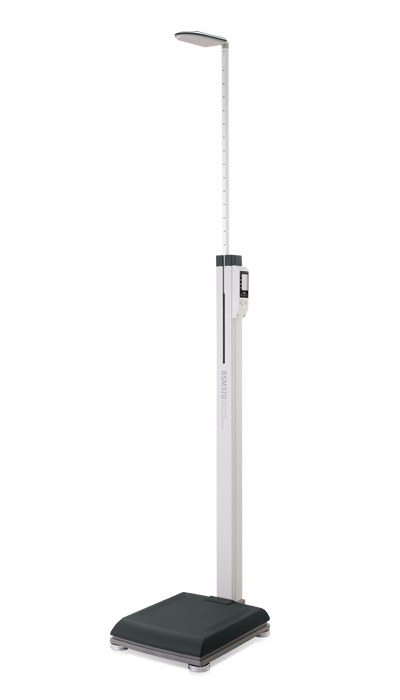
BMI = weight / (height)²
That’s it. It doesn’t know if you’re 70kg of muscle or 70kg of fat. It doesn’t account for bone density, muscle mass, age, or ethnicity. It was invented in 1832 by a Belgian statistician studying population-level data—not individual health.
Yet it remains the standard in Indian healthcare.
Why BMI Fails Indians Specifically
Indian Body Type Patterns
Research shows Indians have:
- Higher visceral fat at lower BMI (tendency to store fat around organs, not subcutaneously)
- Lower muscle mass genetically (shorter stature, different frame size)
- Different bone density (relevant to weight distribution)
Result: An Indian with BMI 28 might have 25% body fat (healthy), while an Indian with BMI 24 might have 35% body fat (unhealthy).
Real Examples
Person A: 75kg, 170cm
- BMI: 25.9 (OVERWEIGHT by BMI standards)
- Body fat: 18%
- Lean muscle: 62kg
- Verdict: BMI says “lose weight.” Body composition says “you’re fit.”
Person B: 72kg, 170cm
- BMI: 24.9 (NORMAL by BMI standards)
- Body fat: 32%
- Lean muscle: 49kg
- Verdict: BMI says “you’re fine.” Body composition says “you need to strength train and lose fat.”
The scale and BMI put these two people in opposite categories. Body composition reveals the truth.
What Body Composition Actually Measures
The Four Components That Matter
- Body Fat %: Stored energy in fat tissue
- Lean Muscle Mass: Muscle, bones, organs, water—everything that’s not fat
- Bone Density: Structural integrity (important for aging women)
- Body Water: Hydration status, metabolic health indicator
Why Each Matters for Health
Body Fat %:
- <18% for men: At risk of hormonal disruption (too low)
- 18-25% for men: Healthy, athletic range
- 25-30% for men: Healthy, still fit
30% for men: Increased disease risk (diabetes, heart disease)
<20% for women: At risk of hormonal disruption (too low)
- 20-30% for women: Healthy, athletic range
- 30-35% for women: Healthy, still fit
35% for women: Increased disease risk
Lean Muscle Mass:
- More muscle = higher metabolism (you burn more calories at rest)
- More muscle = better insulin sensitivity (less diabetes risk)
- More muscle = stronger bones (less osteoporosis risk as you age)
- More muscle = lower visceral fat (even at same weight)
Bone Density:
- Important for women (osteoporosis risk post-menopause)
- Related to strength training and calcium intake
- Critical for longevity and quality of life
Body Water:
- <45% indicates possible dehydration
- 45-60% is typical for healthy adults
- Used to estimate lean mass accuracy
The Visceral Fat Problem (Indian Specific)
What’s Visceral Fat?
Fat stored around organs (liver, pancreas, intestines). Unlike subcutaneous fat (under the skin), visceral fat:
- Produces inflammatory hormones (cytokines, IL-6, TNF-alpha)
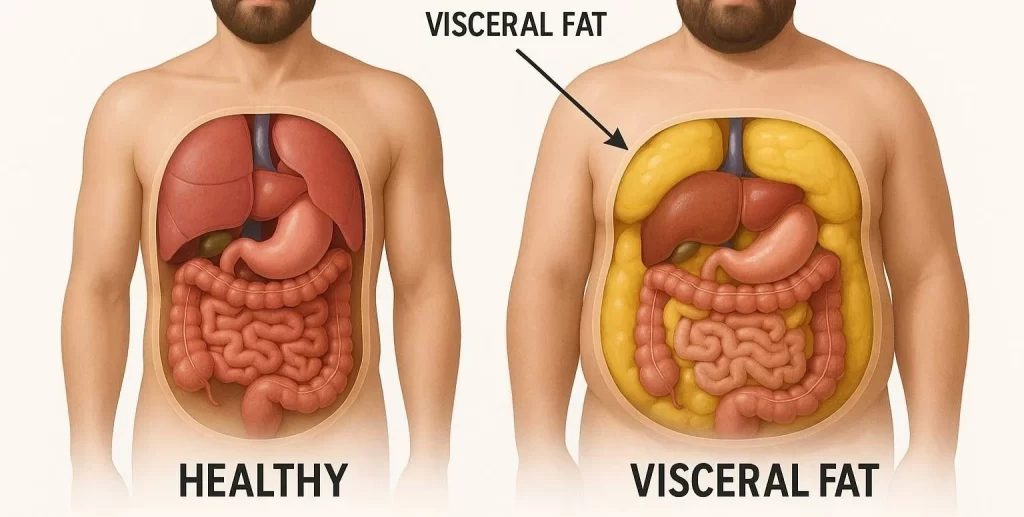
- Drives insulin resistance (increases diabetes risk)
- Increases heart disease risk (independent of BMI)
- Is invisible on the scale (you can lose 5kg visceral fat and scale barely moves)
Why Indians Accumulate Visceral Fat
- Genetic predisposition (Asian populations store visceral fat preferentially)
- Refined carb diet (white rice, maida, sugar)
- Oil-heavy cooking (ghee, refined oils in excess)
- Sedentary lifestyle (desk jobs, car culture)
Result: You can have a “normal” BMI and still have dangerous visceral fat levels.
The Solution
Visceral fat is reduced by:
- Strength training (most effective)
- Moderate calorie deficit (don’t crash diet)
- High protein intake (preserves muscle while losing fat)
- Lower refined carbs (especially after sedentary periods)
BMI reduction alone doesn’t target visceral fat. Body composition tracking does.
Real Health Metrics (Beyond BMI)
What Doctors Should Check Instead
1. Body Composition (via InBody or DEXA)
- Body fat %, lean mass, visceral fat %
- Tells you if weight changes are muscle or fat
2. Waist Circumference
- Men: <102cm is healthy
- Women: <88cm is healthy
- Better single-number indicator of visceral fat than BMI
3. Fasting Insulin
- <10 mIU/L is ideal
15 indicates significant insulin resistance
- Predicts diabetes risk better than weight
4. Resting Heart Rate
- Lower resting heart rate = better cardiovascular fitness
- Independent of BMI (fit people have low RHR; obese athletes can too)
5. Blood Pressure
- <120/80 is healthy
- Affected by body composition, not just weight
- A 70kg person with 25% body fat can have high BP (poor fitness)
6. Cholesterol Profile
- LDL, HDL, triglycerides
- Related to body composition + diet quality
- More predictive of heart disease than BMI
The Body Composition Assessment Method (InBody)
What InBody Measures
Using bioelectrical impedance analysis (BIA):
- Total body fat % (down to 0.1%)
- Lean muscle mass (total and by segment)
- Segmental lean mass (arms, legs, trunk individually)
- Visceral fat area (in cm²)
- Body water %
- Bone mineral content
- Basal metabolic rate (calories you burn at rest)
Why This Matters for Indians
Standard fitness advice (“lose 10kg”) doesn’t account for:
- Where you’re storing fat (visceral vs subcutaneous)
- How much muscle you’re losing (vs fat)
- Your specific metabolic needs (BMR varies 200+ calories between people same weight/height)
Body composition tells you all this in 15 minutes.
Why Your Doctor Still Uses BMI
Healthcare systems use BMI because:
- It’s free (just height + weight)
- It’s standardized (same for everyone)
- Insurance uses it (billing categories)
But it’s wrong for individual health assessment.
Progressive clinics in India are starting to track body composition (especially in corporate wellness). Your gym should absolutely be doing it.
Action Plan: Stop BMI, Start Body Composition
This Week
- Ignore your BMI (if it’s “normal” but you feel unhealthy, you might have high visceral fat)
- Measure your waist (more accurate than BMI)
- Book an InBody test (get your baseline)
- Track one weakness (e.g., if high body fat but normal BMI: you need strength training, not just weight loss)
Next Month
- Get re-tested (shows if your efforts are working)
- Share your body composition with your doctor (help them understand fitness beyond BMI)
- Adjust diet/training based on metrics (not just scale weight)
The Truth About Your Health
Your BMI might say you’re fine. Your body composition might reveal you’re at risk.
Or vice versa: BMI might say you’re overweight, but your body composition shows you’re fit.
The scale lies. Body composition tells the truth.
Find Your Nearest InBody Test Centre
Stop using BMI. Start using data. Get your body composition measured and understand your actual health status.
Related Reads
- “Visceral Fat: The Dangerous Kind That Scales Don’t Show”
- “Why the Scale is the Worst Way to Track Fitness”
- “Body Composition 101: What You’re Actually Made Of”
Frequently Asked Questions
What is a healthy BMI for Indians vs Western populations?
The World Health Organization recommends lower BMI cut-offs for South Asians: overweight begins at 23 (not 25) and obesity at 27.5 (not 30). This is because Indians accumulate harmful visceral fat at lower body weights than Western populations, increasing cardiometabolic disease risk even at a “normal” Western BMI.
Why is BMI less accurate for South Asians than other ethnicities?
South Asians tend to carry a higher proportion of body fat and visceral fat at any given BMI compared to White Europeans. Genetic predisposition, lower average muscle mass, and shorter stature mean BMI systematically underestimates metabolic disease risk in Indians — a phenomenon well-documented in peer-reviewed research on Asian body composition.
What body fat percentage is considered normal for Indian adults?
For Indian men, a healthy body fat range is approximately 18–25%; above 30% is high risk. For Indian women, 25–32% is healthy; above 35% indicates elevated disease risk. These thresholds are slightly lower than generic Western guidelines because Indians develop insulin resistance and visceral fat complications at lower body fat levels.
Can you be a normal weight by BMI but still have unhealthy body composition?
Yes. This is called “normal-weight obesity” or “skinny fat.” An Indian with BMI 24 may carry 33% body fat and high visceral fat — putting them at elevated risk for diabetes and heart disease — while a person with BMI 27 and 20% body fat may be metabolically healthy. BMI alone cannot distinguish between the two.
What is the most accurate way to measure body fat percentage in India?
DEXA (dual-energy X-ray absorptiometry) is the gold standard but is expensive and available only at specialised centres. InBody bioelectrical impedance analysis (BIA) is the most practical clinical-grade option widely available across India, offering segmental body fat, visceral fat area, and lean mass data in under 15 minutes at hundreds of test centres nationwide.
