
Body Composition 9 min read
Skinny Fat in India: Why 40% of Normal Weight Indians Have Dangerously High Body Fat
India's hidden obesity epidemic. Skinny fat (TOFI — Thin Outside, Fat Inside) affects millions of normal-weight Indians. How body composition testing reveals what BMI hides — and the exact protocol to fix it.
Reading about body composition? Find an InBody test centre near you →
Skinny Fat in India: Why 40% of ‘Normal Weight’ Indians Have Dangerously High Body Fat
You step on a scale. The number looks fine. Your BMI sits comfortably in the “normal” range. Your doctor says there’s nothing to worry about. But if you’re an Indian living in an urban area, there’s a real chance that number is lying to you — concealing a metabolic profile that looks more like obesity than health.
This is the “skinny fat” paradox, and it is arguably the most dangerous health blind spot in modern India. Clinically termed TOFI — Thin Outside, Fat Inside — this condition describes people who carry a disproportionately high percentage of body fat relative to their total body weight, often with very low skeletal muscle mass, but who appear lean or average to casual observation and standard screening tools.
The numbers are staggering. Research published in the Journal of the Association of Physicians of India estimates that approximately 40% of normal-weight urban Indians are metabolically unhealthy, meaning they exhibit insulin resistance, elevated triglycerides, or high blood pressure despite having a BMI below 25. The majority of these individuals have excess body fat — particularly visceral fat — that a scale or BMI calculation cannot detect.
Understanding this phenomenon requires rethinking everything you’ve been told about weight, fat, and health — and it starts with measuring the right things.
The South Asian Paradox: Built Different, Measured Wrong
South Asians, including Indians, have a fundamentally different body composition profile compared to Western populations at the same body weight. This isn’t a diet problem. It isn’t purely a lifestyle problem. It is, at least in part, a genetic reality that decades of BMI-centric medicine has failed to account for.
Here’s what the research consistently shows about Indians compared to age- and BMI-matched Europeans:
- Lower Skeletal Muscle Mass (SMM) — Indians carry significantly less lean muscle for the same body weight
- Higher Percent Body Fat (PBF) — even at normal BMI, fat percentage is substantially elevated
- Greater Visceral Fat accumulation — fat stored around internal organs rather than under the skin
- Smaller waist-to-hip ratios don’t protect them — central adiposity appears at lower weights
A landmark 2011 study in The Lancet found that South Asians develop metabolic complications at much lower body weight thresholds than Western populations. This is why the World Health Organization now recommends lower BMI cutoffs for Asian populations — overweight at 23 instead of 25, obese at 27.5 instead of 30. Even these revised cutoffs, however, miss the skinny fat individual who sits at a BMI of 21 with 32% body fat.
Why Indian Genetics Predispose to the Skinny Fat Phenotype
The genetic dimension of this issue is increasingly well-documented. Indian populations have a higher prevalence of genetic variants associated with:
Lower Baseline Muscle Mass
Several studies have identified lower myosin heavy chain expression and reduced fast-twitch muscle fiber density in South Asian populations, contributing to a lower muscle mass baseline even in active individuals. This means that at any given body weight, a larger proportion of that weight is fat rather than lean tissue.
Preferential Visceral Fat Storage
Indians have a genetic predisposition to store excess energy as visceral fat — the fat that surrounds the liver, pancreas, intestines, and heart — rather than subcutaneous fat. Visceral fat is metabolically active in the worst way: it secretes inflammatory cytokines, drives insulin resistance, and raises cardiovascular risk far more aggressively than the fat you can pinch under your skin.
The “Thrifty Genotype” Hypothesis
One leading theory suggests that centuries of food scarcity on the Indian subcontinent selected for a “thrifty genotype” — a metabolism designed to extract maximum energy from minimal food and store it efficiently. In an era of caloric abundance and sedentary work, this genetic survival advantage becomes a metabolic liability.
Lower Adiponectin Levels
Indian populations consistently show lower levels of adiponectin — a hormone produced by fat cells that paradoxically protects against insulin resistance. Lower adiponectin means visceral fat is more damaging at the same quantity.
Why BMI Misses the Skinny Fat Epidemic
BMI was invented by a Belgian mathematician in the 1830s to categorize population-level data. It was never designed to assess an individual’s health, and it has a fundamental flaw: it measures weight relative to height but has absolutely no way of distinguishing fat from muscle.
Consider two Indian women, both 5’4″ and 58 kg — both with a BMI of 22.3, squarely in the “normal” range:
- Woman A: 22% body fat, Skeletal Muscle Mass of 24 kg, Visceral Fat Area of 65 cm² — healthy
- Woman B: 36% body fat, Skeletal Muscle Mass of 17 kg, Visceral Fat Area of 115 cm² — metabolically obese
Both pass a BMI screen. Only one is actually healthy. Without measuring body composition directly, you cannot tell the difference — and neither can your doctor unless they look beyond the scale.
This is not a theoretical scenario. In a study from AIIMS Delhi, researchers found that a full third of participants classified as “normal weight” by BMI had body fat percentages in the obese range, while simultaneously demonstrating poor skeletal muscle mass. These are the skinny fat individuals hiding in plain sight of a broken measurement system.
The Health Consequences of Being Skinny Fat
The skinny fat phenotype is not a cosmetic issue. It carries serious, measurable health risks that rival or exceed those of conventional obesity:
Cardiovascular Disease
Visceral fat is the primary driver of dyslipidemia in Indians — elevated triglycerides, low HDL cholesterol, and small dense LDL particles that are highly atherogenic. Indians have the highest rate of premature cardiovascular disease globally, and the skinny fat phenotype is a major contributor. A 2019 study in JAMA Cardiology found that normal-weight individuals with high body fat percentage had significantly worse cardiovascular outcomes than conventionally obese individuals with the same absolute fat mass.
Type 2 Diabetes
India has 101 million people with Type 2 diabetes as of 2023. A significant proportion developed the condition at normal or near-normal body weights. Visceral fat directly impairs pancreatic function and liver insulin sensitivity — and you don’t need to be visibly overweight to accumulate dangerous levels of it.
Non-Alcoholic Fatty Liver Disease
High visceral fat correlates directly with hepatic fat accumulation. Many skinny fat Indians are quietly developing NAFLD with no external signs whatsoever.
Sarcopenic Obesity
The combination of low muscle mass and high fat percentage — sarcopenic obesity — is associated with falls, fractures, reduced immune function, poor surgical outcomes, and all-cause mortality. It is increasingly prevalent in Indian adults over 40 who were never “obese” by conventional definition.
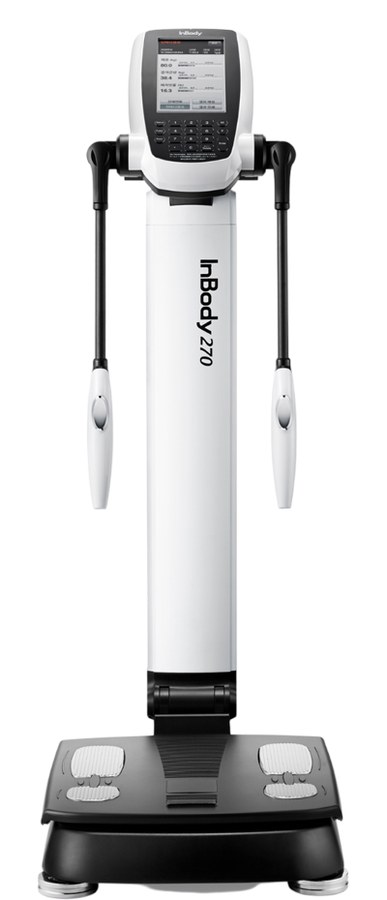
What Does the Skinny Fat Profile Look Like on InBody?
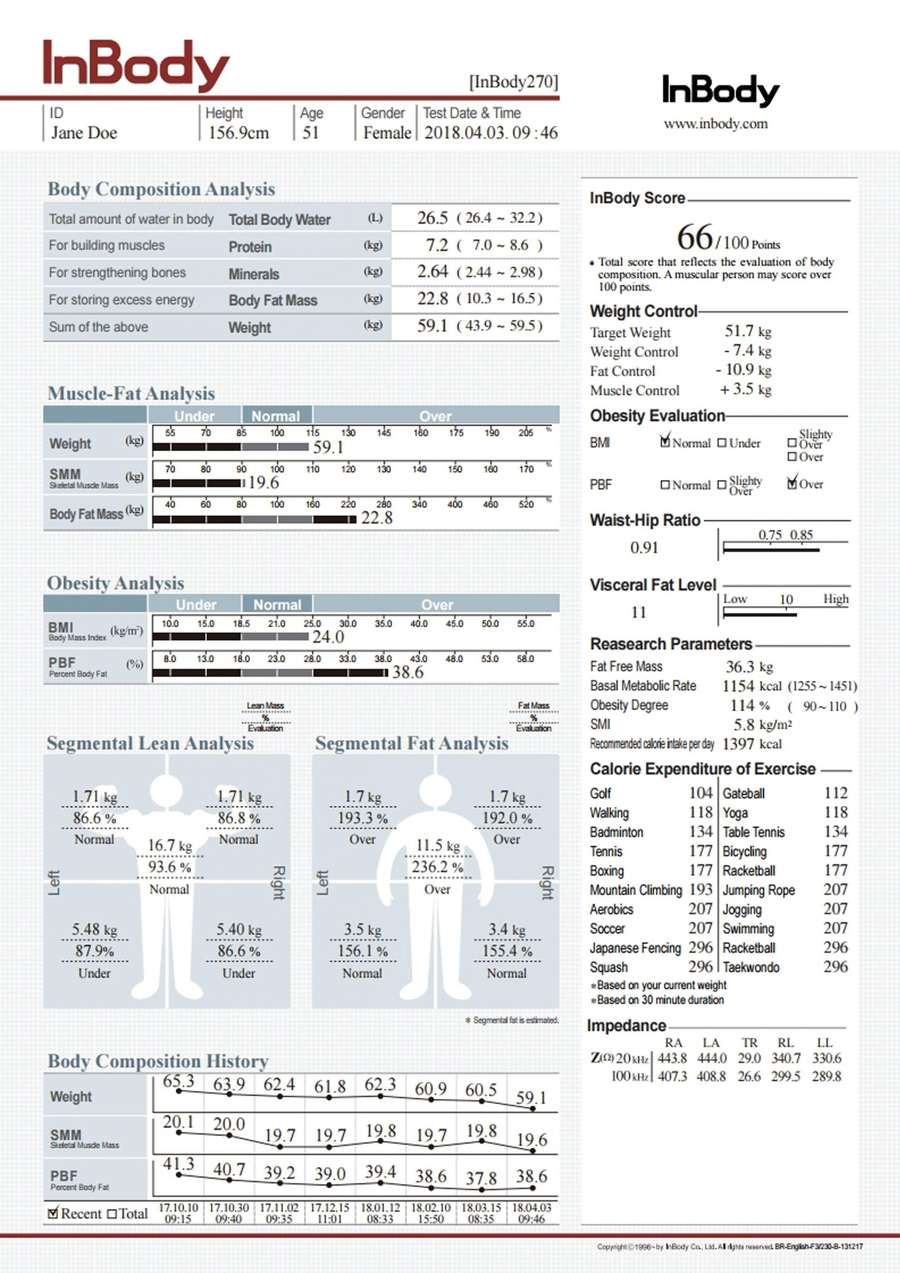
A body composition analysis using InBody gives you numbers that BMI cannot. For a classic skinny fat profile, an InBody report would typically show:
- PBF (Percent Body Fat) above 30% for women, above 25% for men — in the obese range despite normal weight
- SMM (Skeletal Muscle Mass) below the normal range — insufficient muscle to support metabolic health
- VFA (Visceral Fat Area) above 100 cm² — the threshold above which metabolic risk rises sharply
- ECW/TBW ratio slightly elevated — often an early marker of chronic low-grade inflammation
- InBody Score in the 60–70 range despite a “normal” BMI
These numbers tell a story that the scale cannot. A Visceral Fat Area of 120 cm² in a person with a BMI of 22 is a clinical red flag. An SMM of 17 kg in a 35-year-old woman is a warning sign for future sarcopenia. InBody makes the invisible visible.
The Body Recomposition Protocol for Skinny Fat Indians
The good news: the skinny fat phenotype is highly responsive to the right intervention. The goal is not weight loss — it is body recomposition: losing fat while simultaneously building muscle. This requires a different approach than conventional dieting.
Step 1: Prioritize Resistance Training
This is non-negotiable. Cardio alone will not fix the skinny fat problem — it reduces weight but also reduces muscle mass, potentially worsening the SMM/fat ratio. Compound movements (squats, deadlifts, rows, presses) 3–4 times per week stimulate muscle protein synthesis and drive long-term metabolic improvement. Even moderate resistance training has been shown to reduce visceral fat independent of caloric intake.
Step 2: Prioritize Protein — Especially Indian Protein Sources
Indian diets are frequently low in protein, particularly among vegetarians and vegans. Protein is the building block of muscle and the most satiating macronutrient. Aim for 1.6–2.0 grams of protein per kilogram of body weight daily. Excellent Indian sources include paneer, curd, dal, rajma, chickpeas, soy, eggs (for non-vegetarians), and fish. Supplementing with whey or plant-based protein shakes is often necessary to hit targets.
Step 3: Control Refined Carbohydrates
The traditional Indian diet — heavy in refined flour (maida), white rice, sugar, and fried foods — is particularly conducive to visceral fat accumulation. Replacing refined carbs with complex carbohydrates (millets, whole grains, legumes) reduces the insulin spikes that drive fat storage. This doesn’t mean eliminating carbohydrates — it means choosing better ones.
Step 4: Track Progress with Body Composition, Not the Scale
During recomposition, the scale may not move — or it may even go up as muscle is built. This is why tracking only body weight leads to discouragement and abandonment of excellent protocols. Quarterly InBody measurements allow you to see exactly what’s happening: PBF decreasing, SMM increasing, VFA dropping — all the markers that actually matter for health, even when body weight stays stable.
Why This Matters Now: India’s Coming Health Crisis
India is urbanizing at an extraordinary rate. By 2030, over 600 million Indians will live in cities — sedentary jobs, processed food environments, and social norms that don’t prioritize physical activity. The skinny fat epidemic will only accelerate unless health screening evolves beyond BMI.
Several leading Indian health systems — Apollo Hospitals, Fortis, Manipal — have already integrated body composition analysis into preventive health checkups. Corporate wellness programs at major IT firms in Bengaluru and Pune now include InBody testing as a standard offering. The science is clear: measuring what matters changes health outcomes.
If 40% of normal-weight urban Indians are metabolically unhealthy, then population-level BMI screening is missing a public health crisis hiding in plain sight. The answer isn’t a new drug or a new diet trend — it’s better measurement.
Find Out Where You Really Stand
If you’ve been told your weight is normal and assumed that means your body composition is healthy, it’s time to find out the truth. A full InBody body composition analysis takes less than five minutes and gives you your Skeletal Muscle Mass, Percent Body Fat, Visceral Fat Area, ECW/TBW ratio, and InBody Score — everything a BMI cannot tell you.
Skinny fat is not a life sentence. It is a starting point. But you cannot improve what you haven’t measured.
Find your nearest InBody test center across India at inbody.in/locations — available at leading hospitals, fitness centers, and wellness clinics in your city. Book a test, get your numbers, and start making decisions based on data that actually reflects your health.
Frequently Asked Questions
What is skinny fat?
"Skinny fat" describes someone with a normal BMI but a high body fat percentage and low muscle mass — they look slim in clothes but have metabolic risk markers similar to someone clinically overweight.
How is skinny fat diagnosed?
BMI alone cannot detect it. A body composition scan measuring body fat percentage, visceral fat level, and skeletal muscle mass is needed to reveal the discrepancy between apparent weight and actual fat distribution.
How do you fix skinny fat?
Body recomposition — simultaneously building muscle through resistance training while managing fat through diet — is the standard protocol, tracked over 8-12 week intervals with a body composition test.

Most trending articles
BCA Test Full Form and Meaning: What It Actually Measures
BCA stands for Body Composition Analysis. What the test measures, how it differs from BMI and DEXA, and why it matters more for Indian bodies.
Corporate Wellness Body Composition Screening in India
BMI-based screening misses the risk in Indian workforces entirely. How to run body composition screening at scale, handle privacy, and use the aggregate data.
Body Composition Testing ROI for Indian Gyms: The Real Case
Members quit because the scale stops moving. Where the return actually comes from, the 5 operational failures that kill it, and how to measure it honestly.