
Health 15 min read
Gut Microbiome and Body Fat: The India-Specific Connection You Haven’t Heard About
Your gut bacteria determine how much fat you store. Indian gut microbiome studies show distinct patterns linked to obesity risk. How gut health affects body composition — and what body composition testing reveals that gut tests don't.
Reading about body composition? Find an InBody test centre near you →
Your Gut Is Running Your Body Fat — And Most Indians Have No Idea
You eat carefully. You exercise when you can. Yet the stubborn fat around your abdomen refuses to move, your energy remains unpredictable, and your blood sugar numbers hover in uncomfortable territory. The missing variable may not be your calories or your cardio — it may be living inside your intestines right now, all 1.5 kilograms of it.
Over the last five years, a quiet revolution has been reshaping metabolic science. Researchers at institutions from the Council of Scientific and Industrial Research’s Institute of Genomics and Integrative Biology (CSIR-IGIB) in Delhi to the National Institute of Nutrition in Hyderabad are uncovering something that changes how we understand body fat in Indian populations: the trillions of bacteria in your gut are not passive passengers — they are active participants in how your body stores fat, responds to insulin, and builds muscle.
This is not fringe science. This is the frontier, and it has profound implications for why so many Indians carry disproportionate visceral fat at relatively low body weights — a phenomenon that standard BMI-based assessments miss entirely.

What the Gut Microbiome Actually Is
The human gut microbiome is an ecosystem of approximately 38 trillion microorganisms — bacteria, fungi, viruses, and archaea — colonising your gastrointestinal tract. More than 1,000 distinct bacterial species have been identified, though any individual carries roughly 160 species at a time. Combined, these microbes weigh approximately 1.5 kilograms and contain genetic material that outnumbers your own human genome by a factor of roughly 150.
Until recently, microbiologists focused on the microbiome’s role in digestion and immunity. What the last decade of research has revealed — and what the last five years have confirmed with increasing precision — is that the microbiome has an intimate, bidirectional relationship with body composition. The bacteria in your gut influence fat storage, regulate appetite hormones, modulate insulin sensitivity, and directly affect muscle protein synthesis through metabolic signalling pathways that we are only beginning to map.
The India-Specific Microbiome Story
Most microbiome research has been conducted on Western, largely European and North American populations. The India-specific data, now emerging with greater rigour, tells a different and important story.
The IndiGen programme, a landmark genomic initiative led by CSIR-IGIB, while focused primarily on human genomics, has contributed to our understanding of how Indian genetic diversity intersects with microbial ecology. Parallel gut microbiome studies from the same institution have identified that Indian gut microbiomes differ substantially from their Western counterparts — higher diversity in rural populations, a more complex interplay with traditional dietary patterns, and distinct microbial signatures associated with metabolic disease in the urban Indian context.
Research from the National Institute of Nutrition (NIN) in Hyderabad has documented that urban Indians — particularly those transitioning from traditional to processed diets — show marked shifts in microbiome composition that correlate with rising rates of type 2 diabetes, metabolic syndrome, and abdominal obesity. A 2021 study from NIN found that gut dysbiosis (an imbalance in microbial communities) was significantly associated with insulin resistance in Indian adults independent of BMI, suggesting that body weight alone is an inadequate measure of metabolic risk in this population.
This is critical. An Indian individual with a BMI of 24 — technically “normal” — may carry visceral fat levels and inflammatory markers more typically associated with obesity in Western reference populations. The microbiome may be one of the key explanatory mechanisms.
The Firmicutes:Bacteroidetes Ratio — And Why It Matters for Indians
Two bacterial phyla dominate the human gut: Firmicutes and Bacteroidetes. In a metabolically healthy gut, these two groups exist in rough balance. In people with obesity and insulin resistance, the Firmicutes:Bacteroidetes (F:B) ratio is consistently elevated — that is, Firmicutes dominate.
Why does this matter? Firmicutes are highly efficient at extracting calories from food — particularly from complex carbohydrates — and shunting those calories toward fat storage. A gut dominated by Firmicutes literally harvests more energy from the same food than a balanced gut would. Landmark research by Gordon and colleagues at Washington University, subsequently replicated globally, showed that germ-free mice colonised with gut bacteria from obese humans gained significantly more fat than those colonised with bacteria from lean donors — even when eating identical diets.
In Indian populations, the data suggests a troubling trend. Studies from CSIR-IGIB and affiliated institutions have found that urban Indians with metabolic syndrome show elevated F:B ratios comparable to Western obese populations, even when their overall body weight appears moderate. The combination of a high-refined-carbohydrate urban diet and historical genetic adaptations to periods of food scarcity may make the Indian gut particularly susceptible to this Firmicutes-driven fat storage efficiency.
How Indian Dietary Patterns Shape the Microbiome — for Better and Worse

The Traditional Indian Diet: A Microbiome Goldmine
Here is the genuinely good news: traditional Indian food culture contains some of the most powerful probiotic and prebiotic foods on earth. The problem is that many Indians are walking away from these foods precisely as the science is proving how essential they are.
Curd (dahi) is perhaps the most important. Made through the lactic acid fermentation of milk, dahi is rich in live Lactobacillus strains — particularly L. acidophilus and L. bulgaricus. Daily consumption of dahi has been a cornerstone of Indian nutrition for millennia, and research now shows it directly supports a lower F:B ratio and improved intestinal barrier integrity.
Idli and dosa batter, fermented from rice and urad dal, produces a natural probiotic medium. The fermentation process not only increases B-vitamin content and reduces phytates (improving mineral absorption) but delivers beneficial bacterial strains to the gut with every meal. Traditional south Indian breakfast culture — built around these fermented foods — may be one reason some traditional south Indian populations have historically shown lower rates of certain metabolic diseases.
Kanji, fermented rice water consumed particularly in Odisha, Tamil Nadu, and parts of Kerala, is a probiotic drink of remarkable potency. A single glass of traditionally prepared kanji can deliver billions of colony-forming units of beneficial bacteria. It is inexpensive, widely available, and almost entirely absent from urban Indian diets today.
Buttermilk (chaas) and kadhi similarly deliver live cultures. Traditionally prepared pickles — achaar made through salt-based lacto-fermentation rather than the commercially vinegar-preserved versions — are another probiotic source. The commercially produced pickles sold in most supermarkets today are not the same product; the acidification by vinegar prevents live fermentation and delivers none of the microbiome benefits.
Ambali, the fermented rice gruel consumed in parts of coastal India and tribal communities, may be among the most probiotic-dense traditional Indian foods, with some samples containing extraordinary bacterial diversity. It remains almost entirely absent from the urban Indian diet and the nutritional literature.
The Modern Indian Diet: A Microbiome Threat
Against this traditional backdrop, the urban Indian diet transition of the last two decades has been, from a microbiome perspective, something close to a crisis.
Refined carbohydrates — maida (refined wheat flour), polished white rice, white bread, and the vast range of packaged baked goods now ubiquitous in Indian cities — feed Firmicutes preferentially while starving the Bacteroidetes and beneficial species that require dietary fibre. The average urban Indian now consumes well under the 25–38g of fibre recommended daily, with many surveys suggesting intakes closer to 10–15g.
Ultra-processed foods — including instant noodles, packaged namkeen, commercial biscuits, soft drinks, and ready-to-eat meals — contain emulsifiers, preservatives, and artificial additives that have been shown in controlled studies to directly disrupt the intestinal mucosal layer and alter microbial composition within days of consumption.
Perhaps the most significant and underappreciated factor is antibiotic overuse. India is the world’s largest consumer of antibiotics by volume, a distinction confirmed by WHO global antimicrobial resistance data. This is not primarily driven by prescription abuse — though that occurs — but by over-the-counter availability, agricultural use, and a deeply ingrained cultural belief that antibiotics treat viral infections. A single five-day course of broad-spectrum antibiotics can eliminate up to one-third of gut microbial species, with recovery taking months and, in some cases, never fully restoring baseline diversity. Repeated courses — common in India, where respiratory infections are often treated with antibiotics regardless of aetiology — progressively deplete microbiome diversity in ways that compound across a lifetime.
The Leaky Gut Cascade: From Bacteria to Body Fat
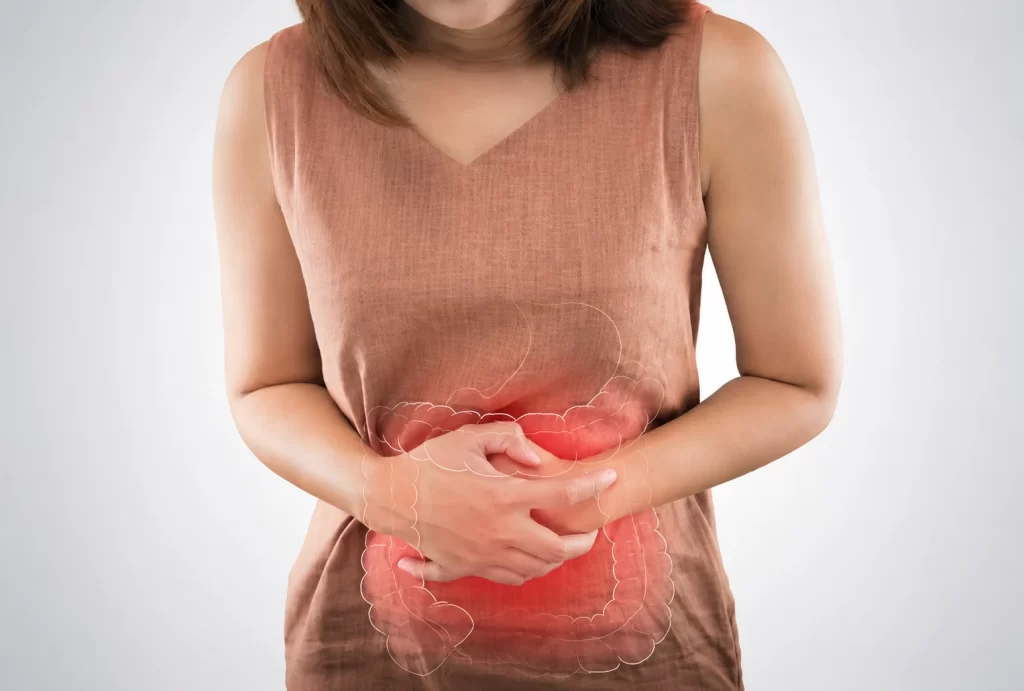
Understanding how gut dysbiosis translates to fat accumulation requires following the mechanistic chain carefully.
A healthy intestinal wall is selectively permeable — it absorbs nutrients while keeping bacterial products contained within the gut lumen. When the microbiome is disrupted, the tight junctions between intestinal epithelial cells loosen. This condition, known as increased intestinal permeability or “leaky gut,” allows bacterial lipopolysaccharides (LPS) — fragments of the outer membrane of gram-negative bacteria — to enter the bloodstream.
LPS is a potent inflammatory trigger. Even sub-toxic levels of circulating LPS activate the innate immune system, producing a state of chronic low-grade inflammation. This is not the acute inflammation of an infection — it produces no fever, no obvious symptoms — but it creates a metabolic environment fundamentally hostile to healthy body composition.
Chronic inflammation drives insulin resistance. Insulin resistance redirects glucose away from muscle cells (where it would be used for energy) and toward adipocytes (fat cells), where it is stored as triglycerides. The body, perceiving glucose it cannot use efficiently, continues to signal hunger — creating the paradox of overeating while simultaneously being metabolically undernourished.
Visceral fat — the fat surrounding abdominal organs — is itself pro-inflammatory, secreting cytokines that further worsen insulin resistance and gut permeability. The result is a self-reinforcing cycle: dysbiosis drives inflammation, inflammation drives visceral fat accumulation, visceral fat drives more inflammation.
What InBody Measurements Reveal About This Cascade
This is where precision body composition analysis becomes clinically valuable in a way that the bathroom scale never can be.
The ECW/TBW ratio (Extracellular Water to Total Body Water ratio) measured by InBody bioelectrical impedance analysis provides an indirect but meaningful signal of systemic inflammation. In a well-hydrated, metabolically healthy body, the ECW/TBW ratio sits between 0.360 and 0.390. When chronic low-grade inflammation is present — including the inflammation driven by gut dysbiosis and circulating LPS — fluid shifts extracellularly, pushing this ratio upward.
A persistently elevated ECW/TBW ratio, in the absence of acute illness or kidney disease, should prompt consideration of systemic inflammatory load — of which gut dysbiosis is an increasingly recognised contributor. It is not a direct measure of microbiome health, but it is a sensitive signal that something in the body’s inflammatory equilibrium is off.
The Visceral Fat Area (VFA) score, another key InBody output, quantifies the abdominal visceral fat depot with a precision that waist circumference measurements cannot match. Research consistently shows that VFA is the body composition parameter most tightly linked to insulin resistance, cardiovascular risk, and — critically — gut microbiome dysbiosis. Improving gut health through dietary intervention has been shown to preferentially reduce VFA even before significant changes occur in overall body weight or BMI.
Skeletal Muscle Mass (SMM) and the InBody Score complete the picture. Gut-derived SCFAs (discussed below) have direct roles in muscle protein synthesis signalling. Improved gut health can measurably improve SMM over months, even in individuals whose caloric intake remains stable — a finding with significant implications for the many Indians who struggle to build or maintain muscle mass despite adequate dietary protein.
Short-Chain Fatty Acids: The Gut’s Gift to Your Metabolism
When dietary fibre reaches the colon, beneficial bacteria ferment it into short-chain fatty acids (SCFAs) — primarily butyrate, propionate, and acetate. These molecules are among the most important metabolic signalling compounds in the human body, and their production is almost entirely dependent on a healthy, diverse gut microbiome fed sufficient fibre.
Butyrate is the primary fuel for colonocytes (the cells lining the colon) and is essential for maintaining the intestinal barrier that prevents LPS from entering the bloodstream. It also directly inhibits inflammatory pathways and has been shown to improve insulin sensitivity in adipose tissue.
Propionate travels to the liver, where it signals satiety hormones and inhibits de novo lipogenesis (the liver’s conversion of excess carbohydrates into fat). Adequate propionate production is one mechanism by which a high-fibre diet reduces fat accumulation without requiring caloric restriction.
Acetate enters systemic circulation and influences appetite regulation through the hypothalamus. Dysbiotic guts produce significantly less of all three SCFAs, creating a metabolic environment where hunger regulation is impaired, fat storage is accelerated, and muscle synthesis is suboptimal.
Evidence-Based Interventions: What Actually Works
Probiotics: Strain Specificity Matters
Not all probiotic supplements are equal, and the marketing claims on most commercially available products exceed the evidence significantly. The strains with the strongest evidence for body composition benefits are Lactobacillus acidophilus (particularly the NCFM strain), Bifidobacterium longum, and Lactobacillus rhamnosus GG. A 2021 meta-analysis in the International Journal of Obesity covering 27 randomised controlled trials found that multi-strain probiotic supplementation produced statistically significant reductions in body weight, BMI, and — most notably — waist circumference, with the greatest effects in individuals with baseline metabolic dysregulation.
However, the most reliable, affordable, and evidence-consistent probiotic source for Indians remains fresh homemade dahi. The live cultures in freshly set curd are more diverse and robust than most commercial probiotic capsules, provided the curd is consumed within 24–48 hours of setting.
Prebiotics: Feed What You Have
Probiotics introduce bacteria; prebiotics feed the beneficial ones already present. The most accessible prebiotic sources for Indians include onion, garlic, banana (particularly slightly underripe), oats, and legumes — all staples of traditional Indian cooking now being displaced by convenience foods.
One India-specific dietary hack with genuine scientific backing: cooked and cooled rice has significantly higher resistant starch content than freshly cooked hot rice. Resistant starch passes undigested to the colon, where it acts as a potent prebiotic. Eating rice at room temperature or as leftover rice — as is common in many Indian homes — may have been conferring metabolic benefits that the science is only now explaining. The effect is meaningful: cooling cooked white rice for 12 hours roughly doubles its resistant starch content.
Reducing Antibiotic Misuse
The microbiome intervention with arguably the greatest population-level impact in India is not a food or supplement — it is stopping unnecessary antibiotic use. This requires both individual and system-level change. For individuals: resist requesting antibiotics for viral upper respiratory infections, complete prescribed courses fully (incomplete courses select for resistant organisms and cause more dysbiosis than complete courses), and ensure that any antibiotic course is followed by 4–6 weeks of deliberate probiotic and high-fibre dietary support to assist microbiome recovery.
The VFA-Gut Axis: Why Gut Health Targets Visceral Fat Specifically
Of all the body fat depots, visceral fat — the fat measured by InBody’s VFA score — is the most metabolically active and the most dangerous. It is also, increasingly, the fat depot most clearly linked to gut microbiome status.
The anatomical relationship is direct: the portal circulation drains the intestines and delivers blood directly to the liver, meaning that anything entering the bloodstream through the gut — including LPS from a leaky gut — reaches the liver in high concentration before being diluted into systemic circulation. The liver’s inflammatory response to portal LPS triggers adipogenesis (fat cell production) in the visceral depot preferentially.
This is likely one reason why improving gut health through dietary intervention consistently shows the most pronounced effects on visceral fat specifically, even when total body weight changes modestly. Several controlled studies have documented VFA reductions of 10–15% over 12 weeks of targeted gut health intervention in individuals with baseline metabolic syndrome, without caloric restriction.
Tracking Progress: What to Measure and When
Gut health improvement is a 3–6 month process, not a 3-week experiment. The microbiome does not transform quickly, and neither does the inflammatory milieu it produces. This means that body composition tracking needs to operate on the right timescale.
An InBody assessment at baseline followed by re-testing at 8–12 week intervals gives the resolution needed to detect meaningful trends. The metrics most sensitive to gut health improvement are, in rough order of responsiveness:
- ECW/TBW ratio — often shows movement within 6–8 weeks of sustained dietary change, as systemic inflammation begins to resolve
- VFA (Visceral Fat Area) — typically shows measurable change by 10–12 weeks, and is often the first fat depot to reduce
- PBF (Percent Body Fat) — changes more slowly, typically 12–20 weeks for statistically meaningful shifts
- SMM (Skeletal Muscle Mass) — may actually increase modestly as SCFA production improves muscle protein synthesis signalling, even without significant changes in training
- InBody Score — the composite metric that integrates muscle, fat, and fluid balance; use this as your summary indicator over the longer arc
The pattern to watch for is a declining ECW/TBW ratio alongside a declining VFA — this combination, even if overall weight is relatively stable, signals that the inflammatory loop is unwinding and that body composition is genuinely improving at the physiological level.
The Metabolic Efficiency Argument: Why Gut Health Can Change Body Composition Without Calorie Counting
One of the most counterintuitive findings in microbiome research is that identical caloric intake can produce meaningfully different fat accumulation depending on microbiome composition. The Firmicutes-dominated dysbiotic gut harvests more energy from food — some research estimates up to 150 additional calories per day extracted from the same diet — than a balanced microbiome. This is not a large number in isolation, but compounded over months and years, it represents the kind of slow, invisible caloric surplus that produces the gradual weight gain many Indians experience despite not obviously overeating.
Restoring microbiome balance does not make calories irrelevant — the basic thermodynamics of energy balance still apply — but it can shift the metabolic playing field in ways that make healthy body composition more achievable without requiring a level of dietary restriction that most people cannot sustain.
Know Your Numbers Before You Intervene
Reading about the gut-body fat connection is a starting point. Acting effectively on it requires knowing where you actually stand — not just your weight, but your visceral fat area, your ECW/TBW ratio, your skeletal muscle mass, and your InBody Score. These numbers tell you whether inflammation is already showing up in your fluid distribution, whether you are losing muscle alongside fat, and whether the interventions you are making are actually moving the needle at the physiological level.
InBody assessments are available at certified testing centres across India. If you want to understand your body composition baseline and track how gut health interventions are changing your VFA, ECW/TBW ratio, and overall InBody Score over the coming months, find an InBody testing centre near you and book an assessment. A single number on a scale has never been less useful than it is now — your gut, your inflammation markers, and your body composition data tell a far more complete story.
The science is clear: your microbiome is not a footnote to your metabolic health — it may be the chapter heading. And for Indians navigating the collision of an ancient dietary culture with a modern processed-food environment, getting this right is not a wellness trend. It is a clinical priority.
Frequently Asked Questions
How does gut bacteria affect body fat?
Certain gut bacteria compositions are more efficient at extracting calories from food and influence inflammation and fat storage hormones, meaning two people eating identically can store fat differently based on their microbiome.
What does Indian-specific gut microbiome research show?
Studies on Indian populations have found distinct bacterial patterns linked to insulin resistance and obesity risk, differing somewhat from Western microbiome research, likely influenced by traditional high-fiber, fermented-food diets versus more processed modern diets.
Can improving gut health change my body composition test results?
Improving gut health through fiber and fermented foods (curd, idli, dosa batter) supports better metabolic function, but changes typically show up gradually in body composition metrics like visceral fat over months, not weeks.

Most trending articles

Hypothyroidism Symptoms in India: Signs Most People Miss
1 in 10 Indian adults has hypothyroidism, and it hides behind ordinary tiredness. The early signs most people blame on stress, age, or a new baby.

वज़न बढ़ाने के लिए क्या खाएं? सही डाइट प्लान (सिर्फ ज़्यादा खाना नहीं)
सिर्फ ज़्यादा खाने से मांसपेशी नहीं बनती, चर्बी बढ़ सकती है। सही कैलोरी सरप्लस, प्रोटीन और डाइट प्लान जो वज़न को सही तरीके से बढ़ाए — पूरी जानकारी हिंदी में।
भारत में प्रोटीन कितना ज़रूरी है? असली आंकड़े और सही फॉर्मूला
IMRB के एक सर्वे में लगभग 73% भारतीय आहार प्रोटीन-कम पाए गए। सही प्रोटीन टारगेट कैसे निकालें और किन फूड्स से पूरा करें — पूरी जानकारी हिंदी में।