
Health 8 min read
Post-Pregnancy Weight Loss in India — Why the Scale Lies
Post-pregnancy weight loss is not about the scale. For Indian mothers, the real story is muscle, fat and water — and rebuilding them in the right order.
Reading about body composition? Find an InBody test centre near you →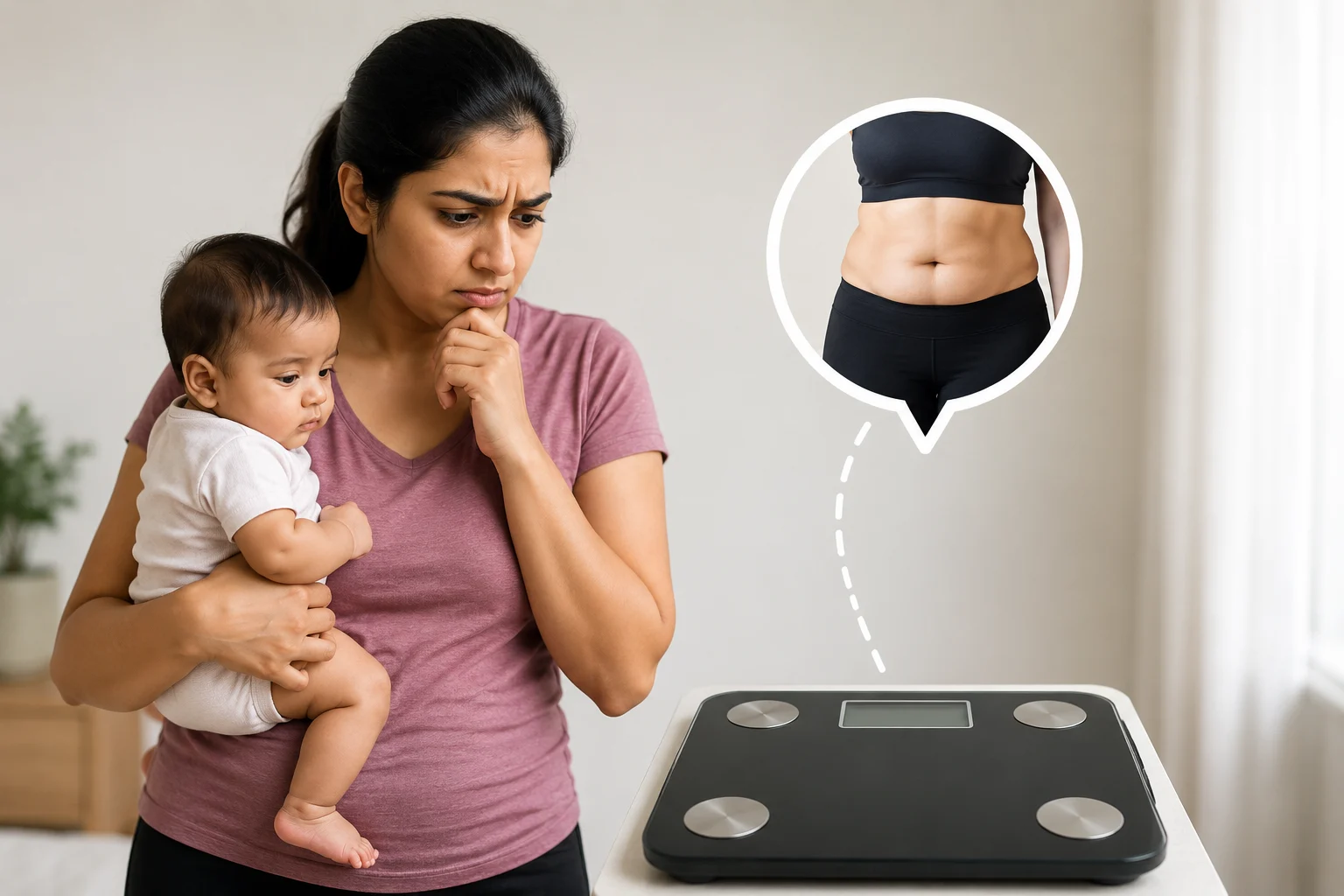
You step on the scale eight months after delivery, and the number has barely moved. The mirror tells a different story. Your jeans don’t fit, but your blouse from college does. Your mother-in-law thinks you should eat more ghee. Your gym friend thinks you should eat less rice. Everybody has a plan. The scale just keeps saying the same thing. The reason post-pregnancy weight loss feels impossible for most Indian women is that the scale is measuring the wrong thing.
Why the scale is lying to you
A bathroom scale shows total body weight in one number. That number is the sum of four very different things: fat, muscle, water, and bone. After a pregnancy, all four change — but not in the same direction.
For an average urban Indian mother, six to nine months after delivery, the typical change versus pre-pregnancy is:
- Muscle: down 2–4 kg (months of sleep deprivation, reduced movement, and breastfeeding catabolism)
- Fat: up 4–6 kg (especially around the abdomen and hips — visceral fat is the most stubborn)
- Water: up 1–2 kg (residual fluid retention, common with breastfeeding hormones and low protein intake)
- Bone: usually unchanged, or down 1–2% in women with calcium/Vitamin D deficiency
Add it up, and the scale shows “+3 to +5 kg.” But that single number is hiding the fact that you have lost muscle and gained fat. The right plan is not to lose 4 kg. The right plan is to lose 5 kg of fat, gain 3 kg of muscle, and normalise the water. Different intervention. Completely different outcome.
Key Takeaways
- Post-pregnancy weight is the sum of 4 things; only knowing the total weight tells you almost nothing useful.
- Most Indian mothers lose 2–4 kg of muscle and gain 4–6 kg of fat in the first year — the scale hides both.
- Lean tissue + visceral fat are the two numbers that matter; track them, not your kg.
- The 40-day confinement (sutika kala) is for healing, not deconditioning — gentle movement is allowed from week 2 and crucial from month 2.
- Breastfeeding burns 400–500 kcal/day, but only if you also have the muscle and protein to support milk synthesis.

What is actually happening in your body, month by month
Here is the timeline most Indian mothers experience but rarely hear about:
Weeks 0–6 (sutika kala): Traditional Indian postpartum care is bed-rest-heavy. Useful for healing C-section / episiotomy wounds. Costly for muscle: by week 6, lean mass is already down 1–2 kg from disuse atrophy alone. This is normal and not yet a problem.
Months 2–4: If you have not started any movement, muscle loss compounds. Breastfeeding pulls 400–500 kcal/day; if your protein intake has not increased proportionally (most Indian post-natal diets are carb-heavy — khichdi, lapsi, halwa, ghee), the body breaks down your muscle for amino acids to support milk production. You are losing weight, but the wrong weight.
Months 5–9: Visceral fat — the dangerous fat around the liver and pancreas — quietly accumulates. The hormonal shift after pregnancy (slow oestrogen recovery, elevated cortisol from sleep loss) preferentially deposits fat here. By month 9, many mothers have visceral fat levels in the “high-risk” band even though their BMI is “normal.”
Months 9–12: Sleep starts improving. Hormones stabilise. This is the inflexion window. Resistance training + adequate Indian-vegetarian-friendly protein in this period rebuilds the muscle that was lost. Get it right, and you are stronger than pre-pregnancy by month 18. Get it wrong, and the muscle never comes back, and the fat compounds for the rest of your reproductive years.
The 3 numbers that matter more than your kg
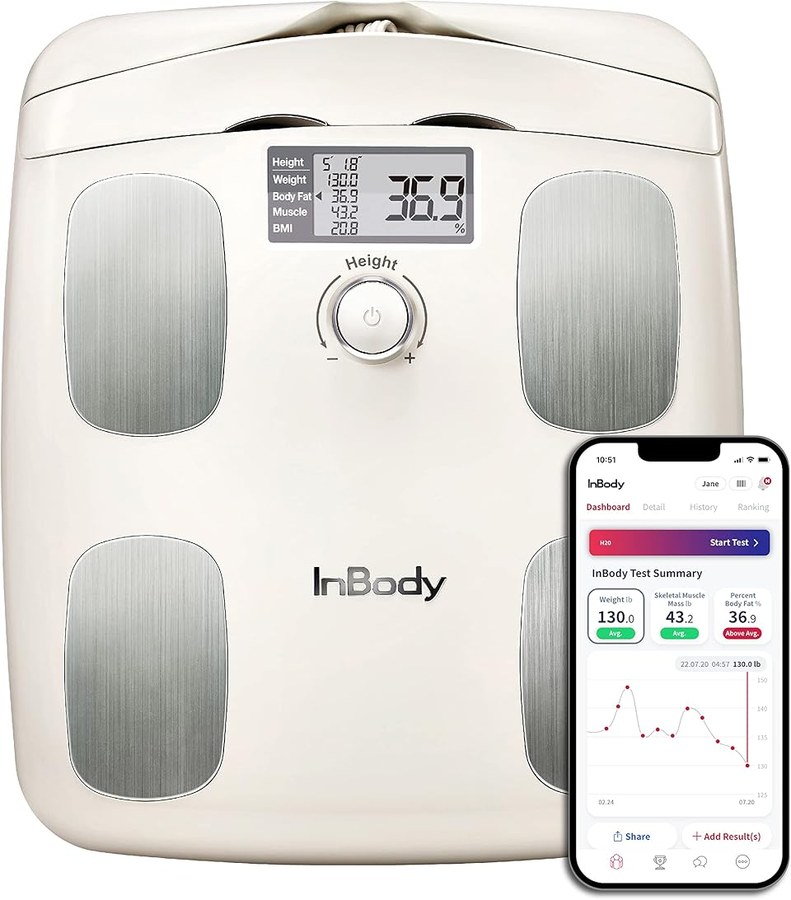
If you have access to an InBody scan, ask the technician for these three specifically:
- Skeletal Muscle Mass (SMM) — in kg. Track this. If it is going up while your weight stays flat, you are winning. If it is going down even as your weight drops, you are losing the wrong thing.
- Visceral Fat Level — a 1–20 score. Target: under level 10. Most Indian post-pregnancy women sit at 11–14 by month 9 if they have not intervened. This is the single most clinically actionable number on the report.
- Phase Angle. A measure of cell-membrane integrity and overall body-cell health. The healthy adult range is 5.5–7.5. Post-pregnancy mothers often sit at 4.8–5.4 — recovery shows up here first, weeks before the scale moves.
None of these three numbers is what your bathroom scale tells you.
Why “lose 5 kg in 30 days” advice fails Indian mothers.

The crash-diet, low-carb, “skip dinner” advice that dominates Indian post-pregnancy WhatsApp groups is biologically the worst possible thing for a breastfeeding mother. Three reasons:
Reason 1. Severe calorie restriction during lactation drops milk supply within 7–10 days. You will see it in your baby’s weight gain curve before you see it in yours.
Reason 2. Low-protein crash diets accelerate the muscle loss you are already experiencing. You will lose weight on the scale, but it will be the lean tissue you need to rebuild.
Reason 3. Cortisol from sleep deprivation + cortisol from severe calorie restriction = double the visceral-fat-deposition signal. You will add visceral fat while losing scale weight. This is the worst body-comp outcome of any intervention.
The right plan is not “lose weight fast.” It is “rebuild muscle first, then drop fat.” That sequence — backwards from what most diets promise — is what works in the data.
A typical case (illustrative)
Illustrative example — composite based on typical patient profiles.
A 34-year-old in Mumbai, eight months post-delivery, exclusively breastfeeding. The scale says she is 4 kg above her pre-pregnancy weight. The mirror tells a different story. Her InBody scan shows she has actually lost 3 kg of muscle (post-pregnancy + sleep-deprivation atrophy) and gained 5 kg of fat plus 2 kg of water retention. Treatment is not “lose 4 kg.” It is “rebuild 3 kg of muscle, lose 5 kg of fat, normalise water.” Three months of body-weight resistance work (twice a week, 25 minutes each), 1.4 g/kg protein from dal–paneer–curd–egg combinations, and 10 minutes of post-lunch walking is enough to shift the trajectory. By month 12, her muscles are back to pre-pregnancy. By month 15, her visceral fat is at level 8 (down from 13). Her scale weight has dropped 6 kg — but the better outcome was the swap.
Where to start this week
If you are between months 2 and 12 postpartum, the four things that move the needle, in order of priority:
- Get one body-composition scan. Either at an InBody-equipped clinic, gym, or wellness centre near you, or with a home InBody Dial if you want to track monthly. Find your nearest InBody test centre.
- Protein first, not portion control. Aim for 1.2–1.4 g protein per kg body weight per day if breastfeeding. For a 65 kg mother, that is ~85 g/day. A vegetarian Indian thali plus a glass of paneer-curd-milk meets it; without effort, most mothers eat 40–50 g and lose muscle.
- Resistance training, twice a week, 25 minutes. Body-weight squats, push-ups against the wall, dumbbell rows, and glute bridges. Not cardio. Not yoga alone. Building back skeletal muscle is a mechanical strength activity.
- Re-scan at 60 days, then 120 days. If muscle mass is rising and visceral fat is falling, you do not need to change anything — even if the scale has barely moved.
The story your scale is telling you is not the story your body is living. Get the right numbers, and the right plan picks itself.
Find your nearest InBody test centre.
A body composition scan takes 15 seconds. It shows you the four things your bathroom scale cannot measure — muscle, fat, water, and visceral fat — so you can stop measuring the wrong thing.
Frequently asked questions
Q. How soon after delivery can I start tracking post-pregnancy weight loss properly?
Around week 6 (after your standard postnatal check), once acute healing is done. A body composition scan at week 6 gives you a true baseline. Wait until month 2–3 before making any active changes; the first six weeks are for healing, not interventions. Most Indian mothers who track from week 6 see the clearest progress map.
Q. Will breastfeeding help me lose weight automatically?
Breastfeeding burns roughly 400–500 calories per day, but only if you have the muscle mass and protein intake to support milk synthesis. If you are protein-deficient (the default for vegetarian Indian post-natal diets), the body breaks down muscle instead — so you lose weight, but you also lose strength. Breastfeeding-only weight loss without resistance work usually shows up as muscle loss on a scan.
Q. Is the 40-day Indian sutika kala confinement bad for muscle?
Not by itself — six weeks of rest is appropriate for wound healing and is the global recommendation too. The problem is when families extend it to three or six months with strict bed rest. Gentle walking from week 2, pelvic floor work from week 3, and light resistance from month 2 is safe for most uncomplicated deliveries (check with your obstetrician for C-section recovery).
Q. Why is my belly still soft and protruding eight months after delivery?
Two likely reasons. First, residual diastasis recti (separation of the abdominal muscles), which needs specific physiotherapy, not crunches. Second, accumulated visceral fat — abdominal deep fat that is hormonally stubborn after pregnancy. Both show on a body composition scan; both have specific fixes that “general weight loss” advice misses.
Q. Should I take whey protein or stick to Indian foods?
Indian foods can get you to 1.2 g/kg/day with effort — paneer, curd, lentils, eggs, milk, soya. Most working mothers cannot meet the target without supplementation, so a 25 g whey or plant-protein scoop once a day is a reasonable addition rather than a replacement. Talk to your obstetrician about supplement safety while breastfeeding.
Q. How long until my pre-pregnancy body is back?
For most Indian mothers who do the right things (protein-corrected diet + 2 sessions/week of resistance work), muscle mass returns to pre-pregnancy by month 12. Fat percentage and visceral fat take longer — usually months 15–18. “Back to pre-pregnancy weight” is the wrong goal; “back to pre-pregnancy body composition” is the right one, and it takes 12–18 months of consistent work.
