
Health 7 min read
7 Lifestyle Diseases Body Composition Testing Predicts Before Your Doctor Does
Diabetes, heart disease, and NAFLD are body composition problems before they become blood test problems. The visceral fat thresholds that predict disease risk for Indians.
Reading about body composition? Find an InBody test centre near you →
India’s Silent Health Crisis (And Why Your Weight Isn’t the Answer)
India is facing a convergence of lifestyle diseases:
- Diabetes: 74 million Indians (highest number globally)
- Hypertension: 210 million Indians (30% of adult population)
- Heart disease: #1 cause of death (25% of all deaths)
- PCOS: Affects 1 in 5 women of reproductive age
- Obesity: 35 million Indians (but many more are metabolically unhealthy at “normal” weight)
Most public health campaigns say the same thing: “Lose weight. Exercise more.”
But this misses the point.
Because you can weigh 62kg with 35% body fat (metabolically unhealthy) and still be at risk for all these diseases. Meanwhile, someone weighing 75kg with 22% body fat might be completely protected.
The enemy is visceral fat. Not weight.
The Disease Triangle: Visceral Fat, Insulin Resistance, Inflammation
The Cascade (What’s Actually Happening in Your Body)
Starting point: Sedentary lifestyle + refined carbs + stress
↓
Result: Insulin resistance (your cells don’t respond well to insulin)
↓
Pancreas compensates: Makes more insulin to get cells to respond
↓
High insulin drives: Visceral fat accumulation (especially in abdomen)
↓
Visceral fat produces: Inflammatory hormones (TNF-alpha, IL-6, CRP)
↓
Inflammation triggers:
- Endothelial dysfunction → high blood pressure
- Beta cell exhaustion → diabetes
- Arterial plaque → heart disease
- Ovarian hormone disruption → PCOS
- Immune dysregulation → autoimmune disease
↓
Result: Disease. Often invisible until it’s critical.
Disease Risk by Body Composition (Not Weight)
Person A: 65kg, 32% Body Fat (BMI 23.8 — “Normal”)
- Visceral fat: HIGH
- Lean muscle: LOW (45kg)
- Insulin sensitivity: POOR
- Risk: Diabetes (high), hypertension (moderate-high), PCOS (if woman)
- Scale weight: Normal
- Actual health: At risk
Person B: 75kg, 20% Body Fat (BMI 27.5 — “Overweight”)
- Visceral fat: LOW
- Lean muscle: HIGH (60kg)
- Insulin sensitivity: EXCELLENT
- Risk: Diabetes (low), hypertension (low), PCOS (low)
- Scale weight: Overweight
- Actual health: Protected
Standard health screening would flag Person A as low-risk and Person B as high-risk. Reality is the opposite.
Disease-Specific Links to Body Composition
Type 2 Diabetes
Root cause: Insulin resistance (visceral fat produces hormones that worsen it)
Body composition markers:
- Visceral fat area >100cm² = 3-5x higher diabetes risk
- Body fat >30% = 2x higher diabetes risk
- Low lean muscle mass = poor glucose clearance
Prevention strategy:
- Reduce visceral fat (strength training + moderate deficit + high protein)
- Build lean muscle (muscle is a glucose sink—more muscle = better glucose uptake)
- Target body composition: Body fat 22-28% for women, 18-25% for men (instead of “lose 10kg”)
Hypertension (High Blood Pressure)
Root cause: Visceral fat inflammation + poor muscle-to-fat ratio
Body composition markers:
- Visceral fat drives endothelial dysfunction (arterial damage)
- Low lean muscle mass = poor cardiovascular fitness
- Excess visceral fat = 2-3x higher hypertension risk even at normal BMI
Prevention strategy:
- Strength training (improves vascular function + reduces visceral fat most effectively)
- Sodium moderation (but only matters if body composition is healthy)
- Target: Waist circumference <94cm for men, <82cm for women
Heart Disease
Root cause: Visceral fat inflammation + atherosclerosis progression
Body composition markers:
- High visceral fat = high inflammatory markers (CRP, IL-6)
- Low lean muscle = poor cardiac fitness
- Visceral fat location specifically increases heart disease risk (unlike subcutaneous fat)
Prevention strategy:
- Build lean muscle (protective against heart disease)
- Reduce visceral fat (the strongest modifiable risk factor)
- Track: Regular body composition testing (every 3 months)
PCOS (Polycystic Ovary Syndrome)
Root cause: Insulin resistance (especially in genetically predisposed women)
Body composition markers:
- Visceral fat drives hyperinsulinemia (high insulin)
- High insulin → ovarian androgens rise → PCOS symptoms
- Most PCOS women have normal BMI but high visceral fat
Prevention strategy:
- Reduce visceral fat (more important than weight loss for PCOS)
- Build muscle (improves insulin sensitivity)
- Moderate carbs (not keto, just lower refined carbs)
- Track: Fasting insulin levels + body composition
How to Assess Your Risk (Before Symptoms Appear)
Body Composition Metrics to Track
Every 3-6 months, get:
- Visceral fat area (target: <100 cm² for both sexes)
- Body fat % (target: women 25-30%, men 20-25%)
- Lean muscle mass (should be >50% of body weight)
- Waist circumference (target: women <82cm, men <94cm)
Why: These predict disease risk better than weight or BMI
Lab Tests to Confirm
Every 6-12 months, check with your doctor:
- Fasting glucose (<100 mg/dL is good)
- Fasting insulin (<10 mIU/L is good)
- HbA1c (<5.7% is good)
- Blood pressure (target <120/80)
- Total cholesterol + HDL + LDL + triglycerides
- High-sensitivity CRP (inflammation marker)
The combination of body composition + labs reveals your true disease risk.
Prevention Strategy: The Body Composition Protocol
Nutrition (to Reduce Visceral Fat)
Macro targets (example: 65kg woman):
- Protein: 100-110g daily (preserves muscle while losing fat)
- Carbs: 140-170g daily (moderate, not low, not high)
- Fat: 50-60g daily (healthy sources)
- Total: 1600-1700 calories (small deficit)
Food quality matters:
- Eliminate: White rice (switch to brown/basmati in moderation), refined sugar, seed oils
- Reduce: Fried foods, excess ghee, refined carbs
- Emphasize: Vegetables (½ plate), lean protein (all meals), whole grains
Training (to Build Lean Muscle + Reduce Visceral Fat)
Why this works: Strength training is the most effective way to reduce visceral fat specifically
Program:
- 3-4× per week: Strength training (squats, deadlifts, rows, presses)
- 2× per week: Moderate cardio (walking, cycling, swimming—not excessive)
- Progressive overload: Add weight or reps weekly
Timeline:
- Months 1-2: Visceral fat -5-10%
- Months 2-4: Visceral fat -10-15% cumulative
- Months 4-6: Further reductions, lean muscle +2-3kg
Lifestyle (to Support Recovery + Reduce Inflammation)
- Sleep 7-9 hours (poor sleep increases visceral fat accumulation)
- Manage stress (chronic stress drives visceral fat + cortisol)
- Walk daily (easy, low-impact, reduces visceral fat)
- Stay hydrated (2.5-3L water per day)
Real Example: 45-Year-Old Woman, Pre-Diabetes
Starting point:
- Weight: 68kg, Height: 162cm, BMI: 25.9 (“overweight”)
- Body fat: 33% (high)
- Visceral fat: 115 cm² (very high)
- Fasting glucose: 118 mg/dL (pre-diabetes)
- Fasting insulin: 18 mIU/L (high insulin resistance)
Protocol: 6-month body recomposition
Nutrition: 1650 cal/day, 105g protein, 160g carbs, 55g fat
Training:
- 3× strength (squats, rows, presses, lunges)
- 2× walking (45 min, moderate pace)
Results after 6 months:
- Weight: 65kg (-3kg)
- Body fat: 28% (-5%)
- Visceral fat: 82cm² (-33cm²!)
- Fasting glucose: 103 mg/dL (approaching normal)
- Fasting insulin: 11 mIU/L (much improved)
- Lean muscle: +2kg
Health trajectory: Pre-diabetes reversed. Disease risk significantly reduced.
Scale weight tells half the story. Body composition tells the real story.
Action Plan This Week
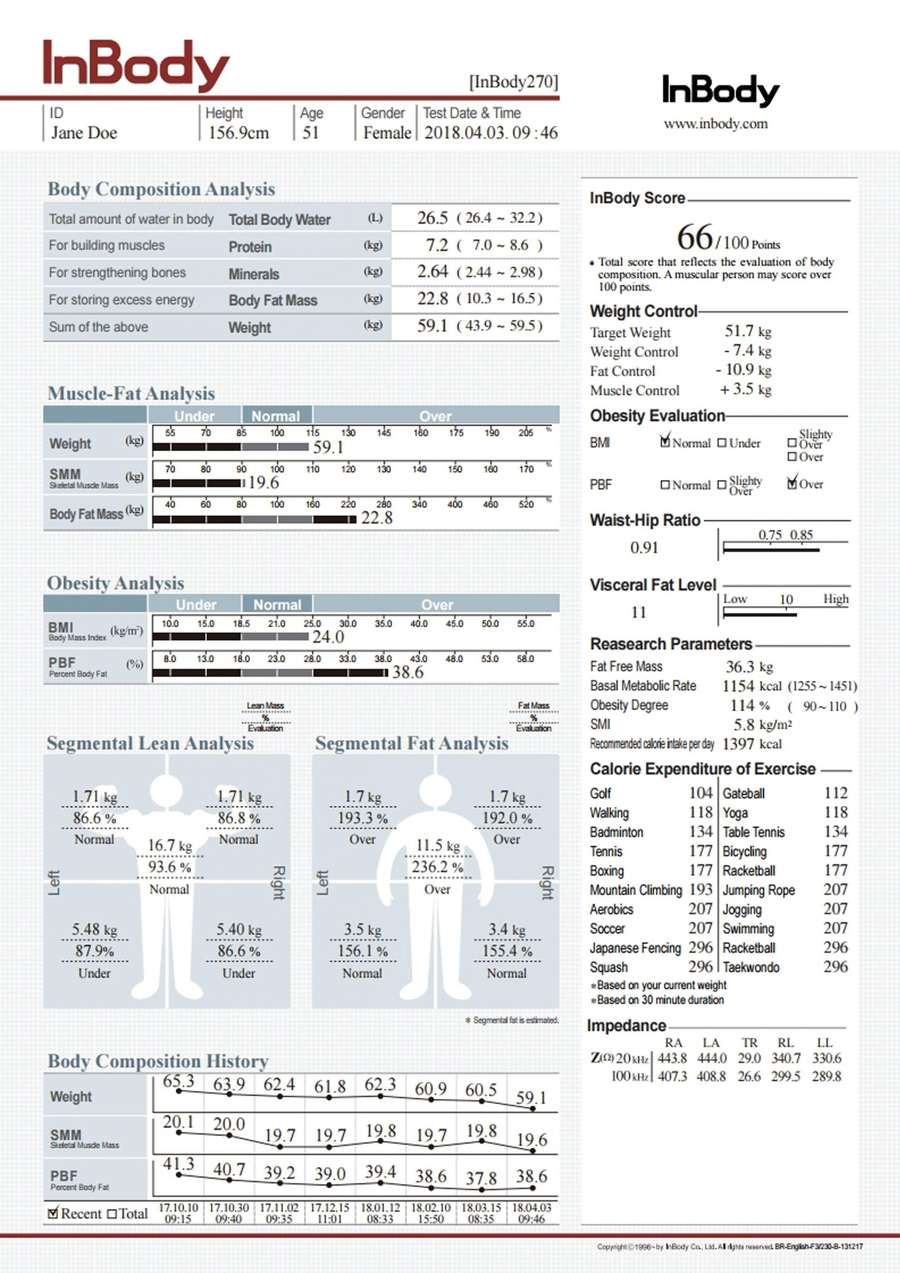
- Book an InBody test — Get your baseline visceral fat, body fat %, lean mass
- Schedule doctor labs — Fasting glucose, insulin, lipids, CRP
- Audit your diet — How much refined carbs, fried food, sugar? (This is driving visceral fat accumulation)
- Start strength training — 3× this week (even bodyweight exercises count)
- Plan your prevention — 6-month goal: reduce visceral fat by 20%, gain 2kg muscle
The Prevention Truth
You can’t see visceral fat. You can’t feel it. But it’s slowly driving disease.
The good news? Body composition change is the most powerful disease prevention tool you have. More powerful than any medication, more effective than “just losing weight.”
An InBody test every 3 months shows you if your prevention strategy is working. Not “I feel better.” Actual data.
Find Your Nearest InBody Test Centre
Disease prevention is measurable. Get your body composition tested and start tracking the metrics that actually predict health.
Related Reads
- “Visceral Fat: The Dangerous Kind No One Talks About”
- “Why the Scale Lies: Body Composition and Disease Risk”
- “PCOS & Body Composition: The Connection”
Frequently Asked Questions
What body composition markers predict type 2 diabetes risk in Indians?
The three strongest predictors are visceral fat area above 100 cm², body fat percentage above 30% in men or 35% in women, and low lean muscle mass (under 50% of body weight). Indians are genetically prone to visceral fat accumulation, so these markers signal elevated diabetes risk even when fasting glucose appears normal and BMI is within range.
How does visceral fat cause heart disease?
Visceral fat is metabolically active tissue that continuously secretes inflammatory hormones — including TNF-alpha, IL-6, and CRP — directly into the portal bloodstream. This drives endothelial dysfunction, arterial plaque formation, and elevated LDL cholesterol. Unlike subcutaneous fat, visceral fat’s proximity to major organs makes it the most dangerous fat type for cardiovascular health.
Can reducing body fat percentage reverse pre-diabetes?
Yes, in many cases. Research shows that reducing visceral fat through strength training and a moderate calorie deficit can significantly improve insulin sensitivity and bring fasting glucose back to normal range. A 5–10% reduction in body fat percentage, combined with gaining 2 kg of lean muscle, can reverse pre-diabetic markers within 3–6 months.
What is a dangerous visceral fat level on an InBody report?
On an InBody report, a visceral fat area above 100 cm² is considered high risk and is associated with a 3–5x greater likelihood of developing type 2 diabetes. Above 150 cm² is very high risk and correlates with elevated cardiovascular inflammation markers. The healthy target for both men and women is below 100 cm².
How often should Indians get a body composition check for disease prevention?
For disease prevention, every 3 months is ideal if you are actively working on improving body composition. If you are already in a healthy range, every 6 months is sufficient. Annual testing is the minimum recommended baseline. More frequent testing helps confirm that lifestyle interventions are reducing visceral fat, not just scale weight.
