
Health 2 min read
The 4 Stages of Obesity: How to Spot Each One Early
Obesity isn’t an on/off switch, it’s a progressive journey that can profoundly impact your health and wellbeing. Understanding the four distinct stages can motivate you to take control…
Reading about body composition? Find an InBody test centre near you →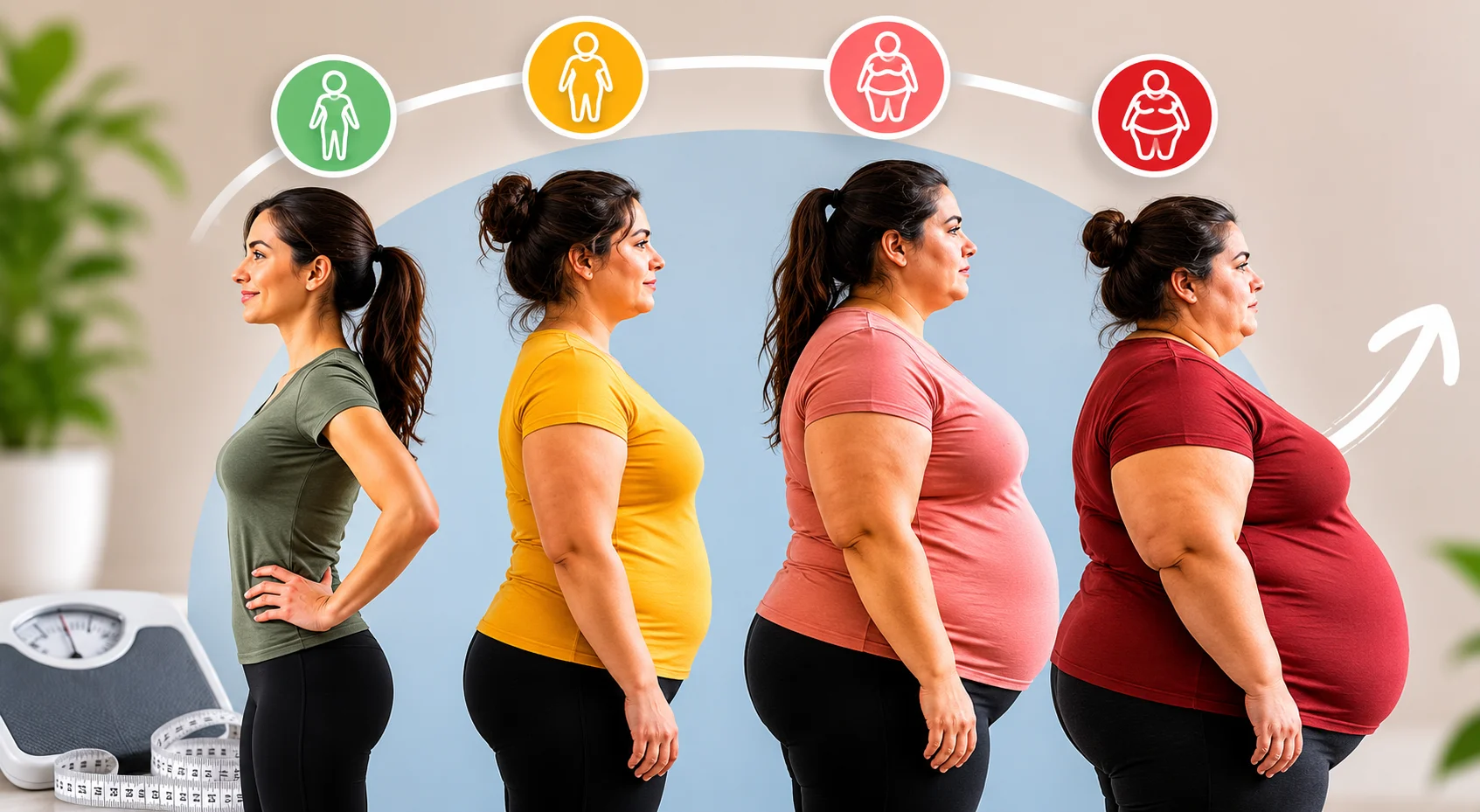
Obesity isn’t an on/off switch, it’s a progressive journey that can profoundly impact your health and wellbeing. Understanding the four distinct stages can motivate you to take control before bigger problems emerge. Let’s break it down:
Stage 1 – Overweight BMI 25-29.9
While not obese yet, your weight is higher than recommended for your height. You may notice some strain on your body, like increased sweating, joint pain, or feeling out of breath during activities. This is a wake-up call to make lifestyle changes before progressing further.
Stage 2 – Class I Obesity BMI 30-34.9
You’ve officially crossed into obesity territory. Health issues like high blood pressure, high cholesterol, and Type 2 diabetes become more likely at this stage. Don’t ignore the signs – making changes now is key to avoiding more serious complications down the road.
Stage 3 – Class II Obesity BMI 35-39.9
As you gain more weight, the health risks exponentially increase. You’re at higher risk for heart disease, stroke, sleep apnea, osteoarthritis, and some cancers. Quality of life is often diminished as daily activities like walking become more difficult. It’s time to get serious about weight loss.
Stage 4 – Class III Obesity BMI 40+
This is the highest level where health can be severely impacted. Many people at this stage have obesity-related conditions like high blood pressure, diabetes, joint problems, fatty liver disease, and breathing issues. Discussing medical interventions like weight loss surgery may be warranted at this point.
The great news? Even small amounts of weight loss at any stage can vastly improve your health. Start making changes today like increasing physical activity, eating a balanced diet, getting enough sleep, and managing stress. It’s never too late to get off this progressive path.

Find an InBody Scanner Near You
References
- Amisi, C. A., Tchankou, C., Omole, J., & Alloh, F. T. (2022). Markers of insulin resistance in polycystic ovary syndrome. Frontiers in Endocrinology, 13, 867875.
- Jena, D., Sahoo, J., Gopalakrishnan, S., Behera, S., & Behera, P. (2018). Study of visceral and subcutaneous abdominal fat in polycystic ovarian syndrome. Journal of Human Reproductive Sciences, 11(3), 253–258.
- Barrea, L., Arnone, A., Annunziata, G., Muscogiuri, G., Laudisio, D., Salzano, C., Pugliese, G., Colao, A., & Savastano, S. (2021). Adherence to the Mediterranean diet, dietary patterns and body composition in women with polycystic ovary syndrome (PCOS). Journal of Translational Medicine, 19, 372.
- Arpaci, D., Gürkan Tocoğlu, A., Yılmaz, S., Ergün, H., Tamer, A., & Ergün, H. (2015). The relationship between epicardial fat tissue thickness and visceral adipose tissue in lean patients with polycystic ovary syndrome. Journal of Ovarian Research, 8, 71.
- Atakul, T. (2020). Polycystic ovary syndrome in overweight and normal weight women: The relationships with inflammatory markers. Bosphorus Medical Bulletin, 5(3), 124–130.

Most trending articles

Fitness After 60: The Body Composition Guide for India’s Growing Senior Population
India will have 300 million seniors by 2050. The biggest threat isn't disease — it's muscle loss. Body composition testing after 60 reveals the exact protocol to stay strong, independent, and healthy well into old age.
High Cholesterol in India: Why Statins Aren’t Enough If You Don’t Address Body Composition
25–30% of urban Indians have dyslipidemia. Statins reduce LDL but don't fix the visceral fat that drives it. How body composition is the missing piece in India's cholesterol management strategy.

India’s Childhood Obesity Epidemic: Why Your Child’s Weight Is Lying to You
India has 14.4 million obese children — the world's second highest. BMI misclassifies 40% of Indian children. Body composition testing is transforming how paediatricians identify and manage childhood obesity in India.