
Body Composition 10 min read
InBody Dial H20 vs H30: Which Home Body Composition Scale Should You Buy? [2026 Comparison]
InBody Dial H20 vs H30 compared: price, Wi-Fi vs Bluetooth, Triple-Frequency BIA, and which extra metrics you actually get. The 2026 India buying guide.
Reading about body composition? Find an InBody test centre near you →![InBody Dial H20 vs H30: Which Home Body Composition Scale Should You Buy? [2026 Comparison]](https://www.inbody.in/blog/wp-content/uploads/2025/07/Dial-H20-and-Dial-H30.webp)
InBody Dial H20 vs H30: Which One Should Actually Come Home With You?
You’ve narrowed it down to two boxes on shop.inbody.in — the InBody Dial H20 and the InBody Dial H30 — and now you’re stuck on the part nobody tells you upfront: is the price jump from the H20 to the H30 actually buying you something you’ll use, or just a bigger number on the box? Both scales carry the InBody name, both promise the same core promise — real body composition data instead of a single weight number — and from a product photo alone they’re nearly impossible to tell apart.
They are not the same device, though. The gap between InBody Dial H20 vs H30 comes down to five concrete things: how the device measures you, how it talks to your phone, how many numbers it hands back, what the screen looks like, and what you pay. We pulled every spec directly from InBody’s own India product listings to settle it — no guessing, no rounding up.
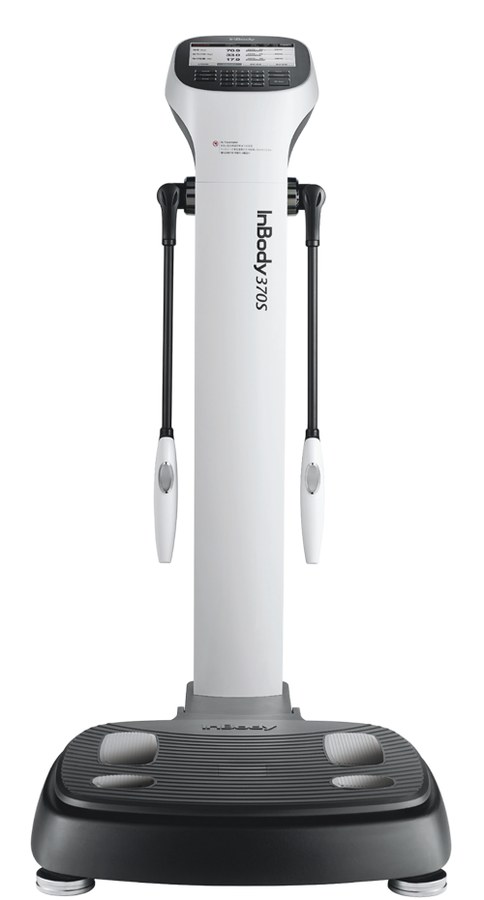
Quick Answer: The 5 Differences That Actually Matter
| What you’re comparing | InBody Dial H20 | InBody Dial H30 |
|---|---|---|
| Measurement technology | 8-point tactile electrodes, single-frequency BIA | 8-point tactile electrodes, Triple-Frequency BIA |
| Syncing to the app | Bluetooth — phone needs to be nearby during the test | Built-in Wi-Fi — syncs automatically, no phone proximity needed |
| Who you are, on the scale | Select your profile in the app before testing | Auto user recognition — step on, it identifies you (up to 20 users) |
| What you get in the app | Weight, Skeletal Muscle Mass, Percent Body Fat, Body Fat Mass, BMR, BMI, InBody Score | Everything the H20 shows, plus Waist-Hip Ratio, Body Balance (left/right, upper/lower), Soft Lean Mass and Body Type Coordinate |
| Price (Aug 2026, shop.inbody.in) | ₹22,999 (MRP ₹28,000) | ₹41,999 (MRP ₹53,000) |
If you just want an honest weekly number for weight, muscle and fat with zero fuss, that’s the H20’s whole job description. If you want the scale to recognise you automatically, sync without touching your phone, and hand you segmental and balance data you’d normally only get from a trainer or clinic, that’s what the extra ₹19,000 on the H30 is buying. The rest of this guide breaks down exactly why, spec by spec.
Spec-by-Spec: InBody Dial H20 vs H30
Measurement Technology: Same Electrodes, Different Frequency Depth
Both devices use InBody’s 8-point tactile electrode system — you place your palms and thumbs on the handset and your feet on the base, and the device runs a Bioelectrical Impedance Analysis (BIA) through all four limbs and your trunk simultaneously. That part is identical, and it’s the same fundamental approach InBody uses in its professional clinic devices, just packaged for a bathroom scale.
Where they diverge is frequency. The H20 measures at a single frequency — accurate for tracking basic trends in weight, muscle and fat over time, but it takes one “snapshot” of how electrical current moves through your tissue. The H30 uses Triple-Frequency BIA (5kHz, 50kHz, 200kHz), confirmed on its own product listing and consistent across InBody’s US store and InBody’s own India blog. Running three frequencies lets the device read low-frequency current (which mostly passes around cells, through extracellular fluid) separately from high-frequency current (which penetrates cell membranes) — giving a more detailed picture of fluid distribution and, by extension, more granular segmental and balance data. In practice, that’s the underlying reason the H30 can output the extra metrics listed below and the H20 can’t.
Connectivity: Bluetooth-and-Nearby-Phone vs Built-In Wi-Fi
This is the difference you’ll actually feel every single morning. The H20’s listing confirms results “sync automatically to the InBody App,” but independent testing and InBody’s own comparison content are consistent that this happens over Bluetooth — meaning your phone needs to be within range when you step off the scale for the reading to log. It’s a minor friction, but if you test first thing in the morning and your phone is charging in another room, you’ll notice it.
The H30’s own product page states plainly that results are “automatically synced to the InBody App without requiring phone proximity” — it has built-in Wi-Fi (the “Wi” in its product code, H30NWi, isn’t a coincidence). Step on, get your reading, walk away — the data shows up in the app on its own.
Auto User Recognition: One Less Step If You Share the Scale
The H30’s listing highlights “Step On, Start Measuring. No Manual Input Necessary!” — it recognises up to 20 different users automatically based on their measurement pattern, so a household or shared space doesn’t need to fumble with profile selection before every test. The H20’s page makes no such claim; you select your profile in the app first, the way most consumer smart scales work. If you’re the only person using the scale, this barely matters. If four people in your house are all tracking their own numbers, it’s a genuinely useful convenience.
What Each App Actually Shows You
The InBody Dial H20’s own listing confirms seven output metrics in the app: Weight, Skeletal Muscle Mass, Percent Body Fat, Body Fat Mass, Basal Metabolic Rate, Body Mass Index, and InBody Score. That’s a genuinely complete basic body composition picture — miles ahead of a scale that only gives you weight and a rough BMI guess.
The H30 builds on that same foundation and adds four metrics that InBody’s own India blog specifically calls out as the H30’s advantage: Waist-Hip Ratio (a fat-distribution marker useful for cardiometabolic risk), Body Balance Evaluation (whether one side of your body — left/right, upper/lower — is carrying more muscle or working harder than the other), Soft Lean Mass (your non-muscular lean tissue, a more granular slice of the muscle number), and Body Type Coordinate (where you sit on a muscle-to-fat balance chart, at a glance). None of these are available on the H20 — they require the triple-frequency measurement described above.
Display, Design and Durability
The H30 has a backlit display, which is easier to read in a dim bathroom before your morning coffee, and carries an IP21 splash resistance rating. The H20’s listing does not mention a backlit screen or a water-resistance rating — it’s a standard LCD readout, reliable for home use but not built for damp environments. Both devices weigh a similar amount and sit in the same footprint as a normal bathroom scale — this isn’t a size or portability decision, it’s purely about the screen and the coating.
Price and What’s Included
As of August 2026, shop.inbody.in lists the H20 at ₹22,999 (against an MRP of ₹28,000) and the H30 at ₹41,999 (against an MRP of ₹53,000) — the H30 currently runs close to double the H20’s price. Both devices ship with a free 1-year product warranty and free shipping. Prices and promotions on shop.inbody.in do change, so treat these as an August 2026 snapshot and check the current listing before you check out.
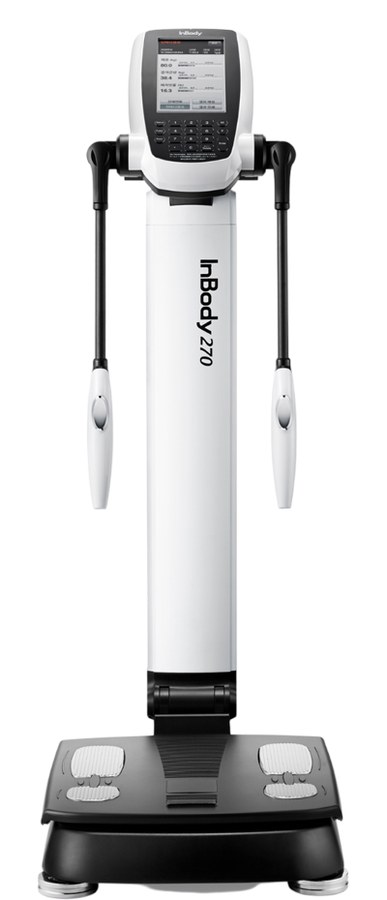
Who Should Buy the InBody Dial H20
- You want one reliable, no-fuss number for weight, muscle mass and body fat trending over months — not a data deep-dive
- You’re the only person using the scale, so auto-recognition isn’t solving a real problem for you
- You’re happy to keep your phone nearby for the 8 seconds a test takes
- You want InBody-grade measurement without spending InBody Dial H30 money
Who Should Buy the InBody Dial H30
- You’re training seriously — for fat loss, muscle gain, or a specific event — and want segmental data (left/right, upper/lower balance) that a basic scale simply cannot produce
- Multiple people in your household will use the same scale and you don’t want everyone manually switching profiles
- You want your data to sync itself even on days your phone stays in another room
- You track waist-hip ratio or lean-mass-versus-fat-mass composition as part of a broader health or cardiometabolic risk picture
- You test in a bathroom where splashes are likely and want the added durability
How Does a Home Dial Compare to an In-Clinic InBody Test?
It’s worth being upfront about what neither the H20 nor the H30 is trying to be: a replacement for a professional InBody test at a clinic, hospital or gym. InBody’s clinic-grade devices (like the InBody 970S or InBody 580) use more measurement points, more frequencies, and print a full result sheet that includes segmental lean analysis, Visceral Fat Area in cm², and the ECW/TBW ratio — a fluid-health marker used clinically to flag inflammation or hydration issues. Neither home Dial device produces that level of clinical detail.
What the Dial series is genuinely good at is frequent, at-home trend tracking between clinic visits — stepping on every morning or few days and watching muscle and fat move over weeks, without a trip to a centre each time. A sensible approach for most serious trackers is to establish a baseline with a full InBody test at a clinic, then use a Dial device at home to monitor the trend in between visits. If you want to understand exactly what a full clinical result sheet includes and how it differs from home devices, our comparison of InBody, DEXA and skinfold calipers breaks that down in detail.
Frequently Asked Questions
What’s the main difference between InBody Dial H20 and H30?
The H30 uses Triple-Frequency BIA (versus the H20’s single frequency), connects over built-in Wi-Fi instead of Bluetooth, auto-recognises up to 20 users, and adds four extra metrics — Waist-Hip Ratio, Body Balance, Soft Lean Mass and Body Type Coordinate — that the H20’s single-frequency measurement can’t produce. The H20 covers the core basics: weight, muscle mass, body fat and BMI.
Is the InBody Dial H30 worth the extra money over the H20?
It depends on whether you’ll use the extra data. If you’re training seriously, sharing the scale with your household, or want segmental and balance metrics, the H30’s roughly ₹19,000 premium buys real functionality. If you just want a reliable weekly weight-and-fat trend, the H20 delivers the same core InBody measurement technology for meaningfully less.
Does the InBody Dial H20 need my phone nearby to work?
Yes — the H20 syncs to the InBody App over Bluetooth, so your phone needs to be within range when you step off the scale for the result to log automatically. The H30 has built-in Wi-Fi and syncs on its own without your phone nearby.
Can the InBody Dial H20 or H30 replace a clinic InBody test?
No. Both are home tracking devices, not clinical diagnostic tools. A professional InBody test at a clinic or gym uses more measurement points and frequencies and reports additional clinical metrics like Visceral Fat Area and ECW/TBW ratio that neither home Dial device measures. Use a Dial device to track trends between periodic clinic tests, not as a substitute for one.
Do both the H20 and H30 work with the same InBody App?
Yes. Both devices sync their results into the same InBody App, so you can view your history and track trends over time regardless of which model you own. The difference is in how many metrics populate your results screen and how the data gets there — Bluetooth for the H20, automatic Wi-Fi for the H30.
How many people can use one InBody Dial scale at home?
The H30 supports automatic recognition for up to 20 users, identifying who’s stepped on without any manual selection. The H20’s listing doesn’t advertise auto-recognition, so multiple users can still track separately, but each person selects their own profile in the app before testing.
What’s included with the InBody Dial H20 and H30 purchase?
Both currently ship with a free 1-year product warranty and free shipping from shop.inbody.in. The H20’s listing also specifies a 14-day hassle-free returns window. Since promotions and inclusions can change, check the current listing for each model before ordering.
Ready to decide? View the current price, stock and full listing for the InBody Dial H20 on shop.inbody.in, or for the InBody Dial H30 on shop.inbody.in. And if you want to see how home tracking fits alongside a full clinical result sheet, read our breakdown of InBody vs DEXA vs skinfold calipers to understand what a professional test adds on top of what either Dial device gives you at home.

Most trending articles
वज़न बढ़ाने के लिए क्या खाएं? सही डाइट प्लान (सिर्फ ज़्यादा खाना नहीं)
सिर्फ ज़्यादा खाने से मांसपेशी नहीं बनती, चर्बी बढ़ सकती है। सही कैलोरी सरप्लस, प्रोटीन और डाइट प्लान जो वज़न को सही तरीके से बढ़ाए — पूरी जानकारी हिंदी में।
भारत में प्रोटीन कितना ज़रूरी है? असली आंकड़े और सही फॉर्मूला
IMRB के एक सर्वे में लगभग 73% भारतीय आहार प्रोटीन-कम पाए गए। सही प्रोटीन टारगेट कैसे निकालें और किन फूड्स से पूरा करें — पूरी जानकारी हिंदी में।
Metabolic Age क्या होती है? आपकी उम्र से ज़्यादा है या कम?
आपकी असली उम्र 34 है पर शरीर 50 साल जैसा व्यवहार कर सकता है। Metabolic age क्या है, मांसपेशी घटने के जोखिम क्या हैं और इसे कैसे घटाएं — पूरी जानकारी।