
Health 8 min read
If You’re Doing Everything Right But Not Losing Weight (India)
5 AM walks, no chai sugar, dinner skipped — and the scale won't move. The reason is your body composition, not your effort. Here is what to measure instead.
Reading about body composition? Find an InBody test centre near you →
If you are walking every morning, eating “moderately,” skipping sugar in your chai, and the scale has not moved in three months, this article is for you. The standard Indian weight-loss advice — “eat less, walk more” works for some people and not for most. Understanding why most Indians fail at weight loss despite genuine effort comes down to a single shift: stop measuring weight, start measuring body composition. The two numbers tell completely different stories about your body.
The 5 AM walker who can’t lose weight
Every Indian metro has them. The 4:45 AM alarm, the white sneakers, the 60-minute brisk walk through the park or society compound. Five days a week. Six. Sometimes seven. After three months, the weight has not moved. After six months, the weight has not moved. After a year, frustration is winning over discipline.
Here is what is biologically happening:
- A 60-minute brisk walk burns roughly 250–350 kcal for a 70 kg adult.
- Your body adapts to this within 4–6 weeks — the same walk burns fewer calories than it did at week 1 (metabolic adaptation).
- The walk does not build skeletal muscle. Muscle mass is what raises your resting metabolic rate (~70% of daily calorie burn).
- So after 6 weeks of walking, your daily burn is roughly back to baseline — and if you have lost any muscle (likely, with crash dieting), your baseline is actually lower than when you started.
This is why walking is excellent for cardiovascular health, mood, sleep, and stress, and is mediocre to weak for sustained weight loss. The Indian conviction that walking should produce weight loss is one of the most expensive cultural beliefs in the country, measured in years of wasted effort.
Key Takeaways
- Walking is great for health, mediocre for weight loss — the body adapts within 6 weeks.
- Muscle mass drives 70% of daily calorie burn; less muscle = lower metabolism, harder weight loss.
- The “thin-fat” Indian phenotype = normal BMI with high body fat + low muscle, missed by the scale.
- “Calories in, calories out” is technically true but mechanistically incomplete — the body adjusts both sides.
- Tracking body composition (muscle, fat, visceral fat) changes the goal from “lose weight” to “swap fat for muscle.”
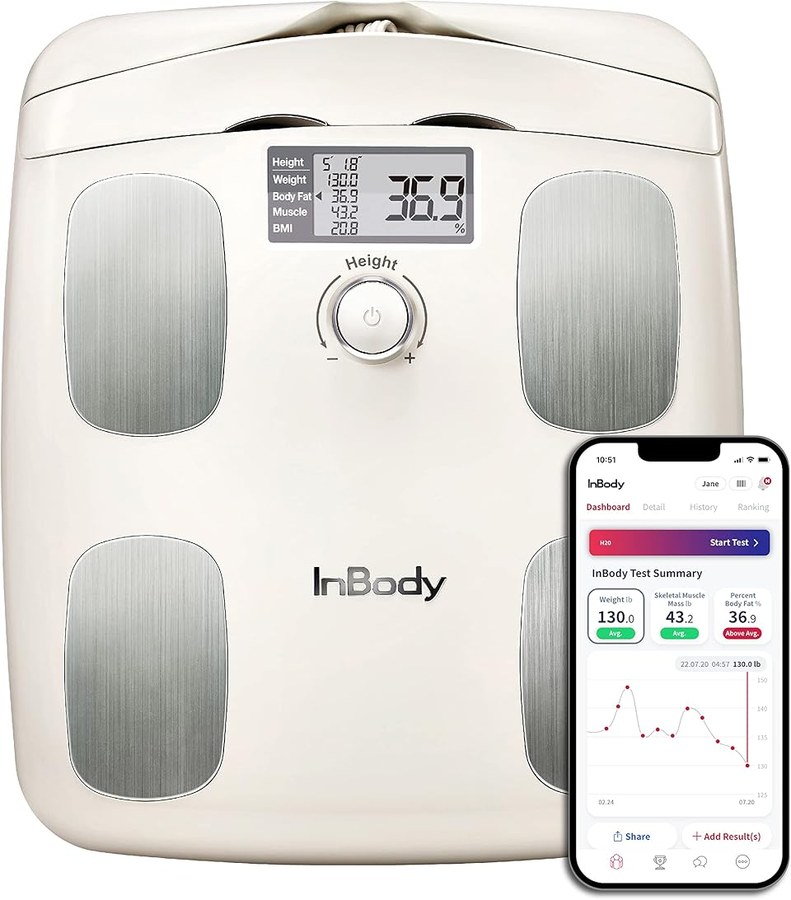
What your scale is actually measuring (and missing)
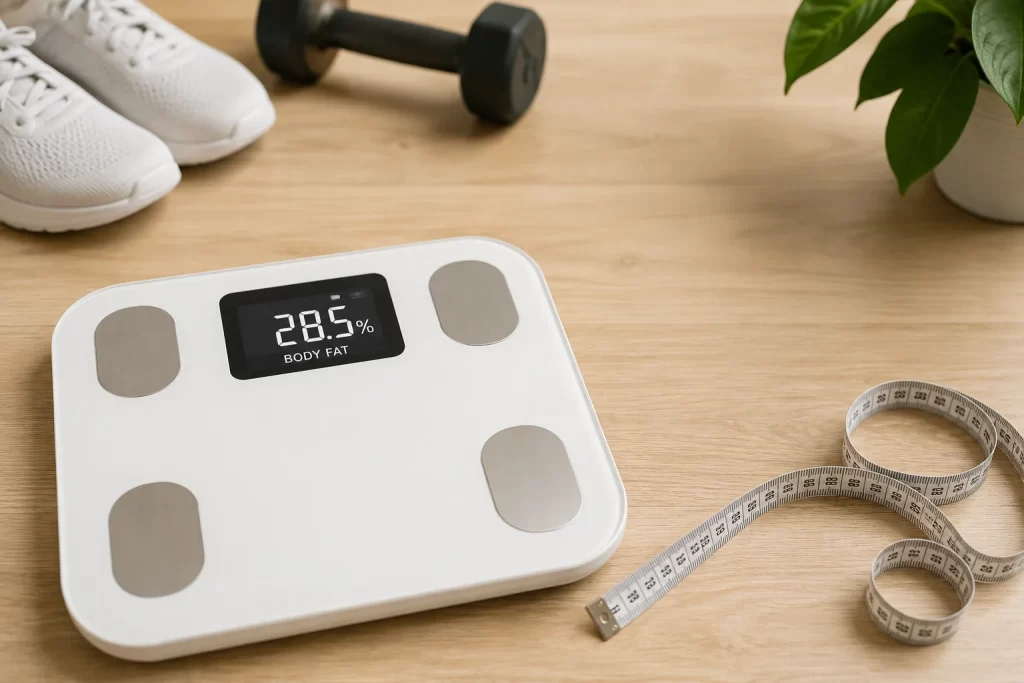
A bathroom scale measures total body weight in one number. That number is the sum of four very different tissues: fat, muscle, water, and bone. Two scenarios that look identical on the scale and are wildly different in reality:
Scenario A: You lost 4 kg in three months. 3 kg of it was muscle (from crash dieting + walking-only), 1 kg was fat. Your metabolism is now lower than when you started. You will regain the weight within 6 months — and as fat, not muscle. This is the textbook “yo-yo diet” trajectory.
Scenario B: You gained 1 kg in three months. 3 kg of it was muscle (from resistance training + adequate protein), and you lost 2 kg of fat. Your metabolism is now higher. You will continue to lose fat for the next 6–12 months even as your weight stays flat. This is what good body composition change looks like.
The scale tells you A is winning, and B is losing. The mirror — and a body composition scan — tells you the opposite.
The Indian carb-heavy diet problem

The average urban Indian gets 60–70% of daily calories from carbohydrates — rice, roti, dal-rice, paratha, idli, dosa, biryani. This is not bad by itself. It becomes a problem in three specific situations:
1. Protein gap. The same diet typically delivers 10–12% of calories from protein — well under the 20–25% needed to maintain muscle on a weight-loss plan. Most Indian dieters lose muscle alongside fat because they are protein-deficient relative to need.
2. Refined carb dominance. White rice, maida-based rotis, sugar in chai, biscuits with tea — these spike blood sugar and insulin. Chronic high insulin promotes fat storage, especially visceral fat. The same number of calories from whole grains has a meaningfully different metabolic effect.
3. Evening-heavy eating. Indian dinner is often the largest meal — biryani, sabji-roti, paratha, mithai. Insulin sensitivity is lower in the evening; the same calories at 9 PM deposit more fat than the same calories at 1 PM.
None of these problems is solved by “eat less.” They are solved by restructuring what and when you eat.
Why “calories in, calories out” misleads Indians
The thermodynamic statement is technically correct: a calorie deficit causes weight loss. The problem is that the human body is not a passive calorimeter. When you reduce calories in, the body reduces calories out:
- Resting metabolic rate drops by 10–20% after sustained calorie restriction
- Non-exercise activity (fidgeting, posture, small movements) drops further
- Hunger hormones (ghrelin) rise; satiety hormones (leptin) fall
- Sleep quality often worsens; cortisol rises; visceral fat preferentially accumulates
The result: a 500 kcal/day “deficit” on paper becomes a 150–200 kcal/day deficit in practice, and the lost weight is disproportionately muscle. This is why most calorie-restricted weight-loss plans plateau at 4–6 weeks and start regaining at 3–4 months.
The fix: stop optimising for calorie deficit, start optimising for body composition change. The mechanism is the goal — muscle mass and visceral fat — not the proxy (weight).
The 4 body composition targets that beat scale weight.
- Skeletal Muscle Mass (kg). Should go up over 6–12 months. Even +1.5 kg meaningfully changes metabolism.
- Visceral Fat Level (1–20). Target under 10. The single most clinically actionable number for Indian adults.
- Body Fat Percentage (Asian-adjusted). Men under 22%, women under 30%. Many “normal weight” Indians are above these — the thin-fat phenotype.
- Waist-to-hip ratio. Free at home with a tape measure. Men: under 0.90. Women: under 0.85. Predicts cardiovascular risk better than BMI in Indian populations.
A typical case (illustrative)
Illustrative example — composite based on typical patient profiles.
A 51-year-old in Delhi. CEO of a mid-sized company. Walks daily, eats “moderately well,” and the weight has been stable for years. His belt size has crept up two notches over three years. InBody scan: total body fat 24% (acceptable on most scales), visceral fat level 14 (high-risk band), skeletal muscle index just above the sarcopenia threshold for his age. Recommendation is not weight loss — it is muscle-building plus visceral-fat-targeted training. Plan: two resistance sessions per week (45 minutes with a trainer), drop one daily refined-carb portion (white rice or biscuits), add 25 g protein per day. Six months later: visceral fat at level 9, muscle up 2.1 kg, waist down 2 notches. Total body weight: up 1 kg. The scale showed a loss; the body composition showed a complete turnaround. He had to look at both numbers to understand what was happening.
What 90 days of the right intervention look like
For a typical urban Indian adult with plateaued weight loss:
Weeks 1–4. Baseline scan. Add 25–30 g of protein per day. Start two resistance sessions per week with a trainer. Continue your walk. Drop sugar in chai/coffee. The scale will probably not move; muscle is building (slow), and water is fluctuating. Phase angle improves first — this is your early signal.
Weeks 5–8. Visceral fat starts dropping. Strength improves (you can do more reps). Energy improves. Sleep improves. Clothes start fitting better even if the scale shows little change. Re-scan if you have access — confirm muscle is going up.
Weeks 9–12. Fat percentage drops 1–2 percentage points. Muscle up 1–2 kg. Visceral fat down 2–3 levels. Scale may be flat, down 1–2 kg, or up 0.5 kg, and all of those are fine. The numbers that matter have moved.
This trajectory works in the average Indian adult and does not require crash dieting, intermittent fasting, expensive supplements, or 10 km daily runs. It requires re-targeting the goal away from a number that is misleading you. Read more: Body fat percentage chart for Indian men and women by age and Visceral fat — normal range, risks, how to measure (India).
Stop measuring the wrong thing.
A 15-second InBody scan shows what your bathroom scale cannot — muscle, fat, water, visceral fat. The right numbers reveal the right plan.
Frequently asked questions
Q. Why am I not losing weight despite walking 10,000 steps a day?
10,000 steps burns ~300–400 kcal. The body adapts within 6 weeks; your daily walk-burn drops as your body becomes more efficient at walking. Without resistance training, you do not build the muscle that raises resting metabolism. Walking is excellent for health but mediocre for sustained weight loss — most Indian walkers plateau at 4–8 weeks.
Q. Is intermittent fasting good for Indian weight loss?
Mixed evidence. IF can work if it leads to a sustainable calorie reduction without protein under-consumption. The Indian risk: 16:8 windows that compress eating into one heavy carb meal end up muscle-losing rather than fat-losing. If you do IF, ensure your eating window contains 1.2 g/kg protein and resistance training is in place — otherwise you will lose muscle along with fat.
Q. What is the best Indian diet for weight loss?
The one with adequate protein (1.0–1.4 g/kg/day), restricted refined carbs (less white rice, less maida, less sugar), normal portion sizes, and earlier dinner timing. Specific names matter less than these principles. A registered Indian dietitian can build this in 30 minutes around your kitchen, region, and preferences.
Q. I lost 5 kg quickly on a crash diet, but gained it back — what went wrong?
Most of that 5 kg was muscle and water, not fat. Lost muscle means lower metabolism. When you returned to normal eating, the body — now with a lower baseline burn — stored the extra calories as fat. This is the textbook yo-yo cycle. The fix is to never crash diet; build muscle alongside fat loss, slowly.
Q. Do supplements actually help with weight loss?
Most don’t. Whey/plant protein supplements help if you cannot otherwise hit your protein target — yes. Caffeine has a small acute metabolic effect — yes. Vitamin D correction, if deficient, can improve muscle building — yes. “Fat burner” pills, “detox tea,” and most herbal claims — no, in well-controlled trials. Save the money; spend it on a clinic-grade scan and a good trainer.
Q. How often should I get a body composition scan during weight loss?
Every 6–8 weeks during active intervention. Too often (weekly), and you pick up noise — water, glycogen, and recent meals. Too rarely (yearly), and you cannot adjust your plan in time. 6–8 weeks is the right interval to see real change and pivot if needed.
