
Body Composition 9 min read
Why the Weighing Scale Confuses You (and What to Track Instead)
Measure & Understand your Body’s composition; it might be telling a different story. Losing weight is hard. It involves spending time at the gym, stopping yourself from eating…
Reading about body composition? Find an InBody test centre near you →
Measure & Understand your Body’s composition; it might be telling a different story.
Losing weight is hard. It involves spending time at the gym, stopping yourself from eating your favourite food, and saying “no” to things that make you happy in general and “yes” to things that don’t.
If you’re like most people, you want to see results that justify your hard work. And that result, more often than not, has to do with seeing that number on the scale go steadily down. So you weigh yourself. Even though you know you shouldn’t, you weigh yourself every day because you need a reason to keep going.
Everything is fine until the unthinkable happens: the scale stops going down. Or, after one “cheat day” you find yourself 2 or 3 kg heavier and you think, “Oh no! Everything I’ve done for the past 2 weeks is for nothing!” Repeat this a few times and before you know it, you’ve given up on working out and you’ve dumped your diet.
Sounds familiar?
The truth is, you were probably doing a good job before you quit. You probably just got discouraged because you did what no one should ever do: you weighed yourself too much and read too much into it.
Every day is too much. Even every few days is too much. Here are 4 reasons why your scale can mislead you and make you feel discouraged.
First and foremost…
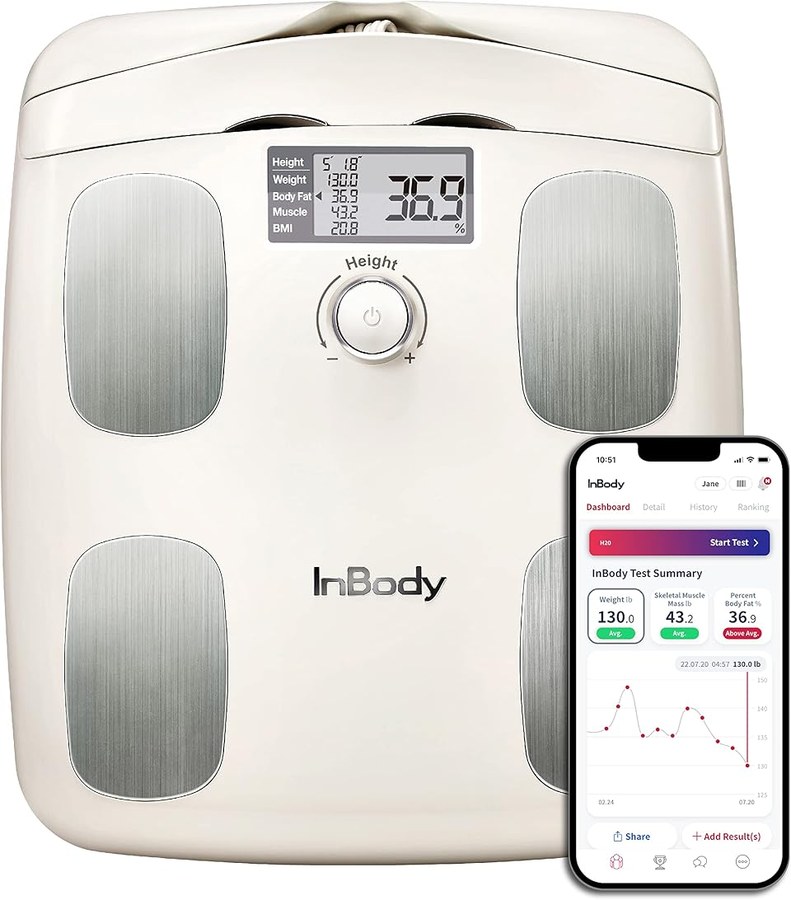
1. You’re confusing “weight loss” with “fat loss”

It’s a safe bet to assume that when people want to lose weight, what they really mean is that they want to lose fat. The problem is, many people use the words “weight loss” and “fat loss” interchangeably, which are two separate concepts.
Losing overall weight isn’t hard – you’ll drop a few pounds if you sit in a sauna for a while. Fat loss is harder to achieve, depends on several factors, and it takes more time than you think to truly lose it. Here are a couple of key points about fat loss to consider:
- When you lose weight, you lose more than just fat.
Muscle and water are two other components that make up your weight, and when you lose weight, you can lose some of each. How much of each you lose depends on factors such as how much fat you have to lose when you start, your age, and how active you are. A commonly cited rule of thumb is that roughly one-quarter of the weight lost through dieting is fat-free mass (muscle and water included), although the share varies and the rule is only a rough guide.[1]
- You can drop weight but dropping actual fat takes time– more time than you think.
Many people set fat loss goals for themselves that are unreasonable. The truth is, fat loss is slow: the CDC describes a gradual, steady pace of about 1 to 2 pounds (roughly 0.5 to 1 kilogram) of weight loss a week as the sustainable rate.[2]
Don’t expect to lose too much in a week, because even if you do, that weight is not going to be all fat. Losing muscle is not good for your health, and you will want to preserve it as much as you can.
But what about the people who do claim to lose 10 pounds in a week? There are reasons for this, beginning with…
2. Your glycogen levels are changing, which can cause large weight swings in either direction

Glycogen is a short-term energy source that your body taps into when it needs immediate energy. Although it is produced from many different types of foods, foods rich in carbohydrates, like bread, are the main dietary route to refilling your glycogen stores. It’s a very good energy source, so much so that this is the major reason why marathon runners have “pasta parties” the day or two before the race: it’s to fuel up on glycogen! You might also know this by another term, carb-loading.[3]
In terms of your weight, however, glycogen has a very interesting attribute: it is stored together with water, roughly 3 to 4 grams of water for each gram of glycogen.[4] You always knew that diet played a big role in both fat and weight loss, but once you understand the role glycogen and water play with each other, a lot of things will make sense to you. For example:
- This is why people lose weight on carb-restricting diets like the Atkins diet
The Atkins diet and other diets similar to it (ketogenic, low-carb, etc.) revolve around one major concept: restricting carbohydrates, and by extension, glycogen. Once your glycogen levels become depleted, there is less water for the glycogen to bond to. This is why many people who go on ketogenic-style diets appear to lose a lot of weight very quickly: much of the initial weight loss can be water.[4]
- This is why people believe they’ve “gained it all back” after cheating on their diet
Here’s a common situation that everyone has probably experienced at least once: after going on a strict diet for a couple of weeks and being careful with everything that you eat, you treat yourself to a weekend where you eat whatever you want because you feel like rewarding yourself.
On Monday, you stand on the scale, and you’re several pounds heavier. You despair, you become frustrated, and you feel like all your hard work was wasted. Good news: you probably didn’t undo your hard work! Water bound to glycogen can be fooling you.
It’s deceptively easy to refuel yourself on carbohydrates and replenish your glycogen levels. Endurance athletes in heavy training, for example, are advised to eat roughly 6–10 g of carbohydrate per kg of body weight a day (about 420–700 g for a 70 kg athlete) to fuel their training.[3]
That much carbohydrate might sound like a lot to you at first, but consider that unless you actually are an athlete, your carbohydrate needs will be a lot less. Add this to the fact that:
- One wheat bagel contains 48 grams of carbs (minus anything you put on it)[5]
- One slice of pizza contains about 36 grams of carbs (and do you ever eat only one?)[5]
- One serving of lasagna with meat can contain around 40 grams of carbs (again, just one piece?)[5]
- One cup of steamed white rice contains 45 grams of carbs[5]
- One 12 oz can of regular cola contains about 39 grams of carbs[5]
Since many popular foods are so rich in carbs, it’s not very hard to refill your glycogen stores in a day if you aren’t watching your carb intake, or are choosing not to for a special occasion.
By refueling on carbs, you’re replenishing your glycogen levels, and water is binding to it. So, you haven’t sabotaged your goals; you’ve probably put on water weight. Watch how fast you will lose this weight again if you reduce your carbohydrate intake.
However, glycogen isn’t the only molecule that can retain water. There are others that influence your water and your weight, which leads to the next point…
3. You’re retaining water due to your salt intake

Salt (or more accurately, sodium) is everywhere and extremely hard to avoid. It might not surprise you that a single-patty cheeseburger with condiments contains around 800 mg of sodium[5] (about 40% of the 2,000 mg a day that WHO recommends as a limit),[6] but would you be surprised to know that the ranch dressing you’re putting in your salad contains about 270 mg in a single 30 g serving?[5] Or that a tablespoon of soy sauce that you’re using in your healthy, vegetable-only stir-fry has about 880 mg of sodium?[5] Little surprise that WHO estimates the global average adult intake at about 4,278 mg of sodium a day (2021): more than double the recommended limit.[6]
Sodium is linked with water retention, and it is the job of your kidneys to expel unneeded sodium out of your body. Until your kidneys are able to do that, you will temporarily be holding onto extra water. If your daily water and sodium intake habits change from day to day, this can contribute to your holding onto differing amounts of water, which will cause changes in your daily weight.
So, if you were on a diet but flooded your body with more salt than you normally have, you can expect to see a temporary increase in weight. It doesn’t mean that all your hard work is for nothing; it just means that you’re experiencing additional water weight because of the extra sodium in your body.
However, there are other factors other than diet that can lead to fluctuating weight on the scale, including…
4. Your muscle gains are outweighing your fat loss

If you’re lifting weights as part of your strategy to burn fat and lose weight, you’re doing something right! Adding resistance training to your fat/weight loss plan is a great way to help preserve muscle as you subtract fat from your frame.[7]
However, if you’re new to weightlifting and you’re pushing yourself hard, you’re going to see some things on the scale that may surprise you. Your weight might actually not go down; it might go up! Why?
This can happen because as you lose fat, you may be replacing that weight with muscle. Your weight may not go down, but your body fat percentage may.
For example, let’s take a 117-pound woman and assume she has 38.6 pounds of fat mass, 78.4 pounds of Lean Body Mass, and 42.3 pounds of skeletal muscle mass. That’s consistent with a body fat percentage of 33%, which is above the 18–28% normal range that InBody uses for women.[8]

Find an InBody Scanner Near You
Related reading: Don’t let the weighing scale confuse you
References
- Heymsfield SB, Gonzalez MC, Shen W, Redman L, Thomas D. Weight loss composition is one-fourth fat-free mass: a critical review and critique of this widely cited rule. Obes Rev. 2014;15(4):310-321. PubMed · DOI
- Centers for Disease Control and Prevention. Steps for Losing Weight. Healthy Weight and Growth (web page, 17 January 2025). CDC page
- Thomas DT, Erdman KA, Burke LM. Position of the Academy of Nutrition and Dietetics, Dietitians of Canada, and the American College of Sports Medicine: Nutrition and Athletic Performance. J Acad Nutr Diet. 2016;116(3):501-528. PubMed · DOI
- Kreitzman SN, Coxon AY, Szaz KF. Glycogen storage: illusions of easy weight loss, excessive weight regain, and distortions in estimates of body composition. Am J Clin Nutr. 1992;56(1 Suppl):292S-293S. PubMed · DOI
- U.S. Department of Agriculture, FoodData Central (SR Legacy). Entries used: Bagels, wheat (FDC 167533); Fast food pizza chain, 14 in cheese topping, regular crust (173292); Lasagna with meat and sauce, frozen entree (173334); Rice, white, long-grain, regular, enriched, cooked (168878); Beverages, carbonated, cola, regular (174852); Fast foods, cheeseburger, single regular patty, with condiments (170691); Salad dressing, ranch dressing, regular (173592); Soy sauce made from soy and wheat, shoyu (174277). FoodData Central · Bagels, wheat (data) · Pizza (data) · Lasagna (data) · Rice (data) · Cola (data) · Cheeseburger (data) · Ranch dressing (data) · Soy sauce (data)
- World Health Organization. Sodium reduction (fact sheet), 11 May 2026. WHO fact sheet
- Cava E, Yeat NC, Mittendorfer B. Preserving Healthy Muscle during Weight Loss. Adv Nutr. 2017;8(3):511-519. PubMed · DOI
- InBody Co., Ltd. The Professional’s Guide to the InBody Result Sheet (manufacturer guide, not peer-reviewed; gives the normal body fat range as 18–28% for women and 10–20% for men). InBody guide (PDF)

Most trending articles
Student Fitness Screening in India: A Guide for Schools
CBSE HPE, Fit India and Khelo India rely on BMI. How schools and colleges can add body composition screening safely, with child caveats and DPDP consent.
Creatine and Your Body Composition Scan: What Changes
Creatine raises body water and lean mass readings within a week on BIA and DXA. What the studies show and how to time your scans to read progress honestly.
Fitness Testing and Body Composition for Sports Academies
A practical fitness testing battery for Indian sports academies: body composition, grip, jumps, sprints, Yo-Yo, Khelo India context and youth maturation.