
Body Composition 8 min read
Student Fitness Screening in India: A Guide for Schools
CBSE HPE, Fit India and Khelo India rely on BMI. How schools and colleges can add body composition screening safely, with child caveats and DPDP consent.
Reading about body composition? Find an InBody test centre near you →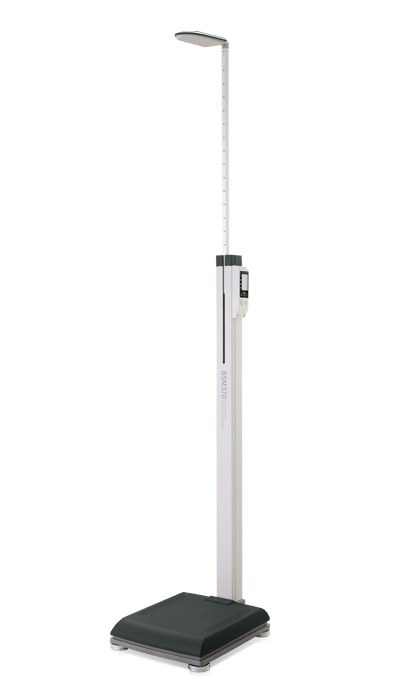
Student Fitness Screening in India: A Body Composition Guide for Schools and Colleges
Most Indian schools already measure their students. CBSE has made Health and Physical Education compulsory from Class I to XII. The Khelo India fitness assessment records height and weight for every age group. A Fit India Five-Star school is expected to run an annual fitness assessment of all children. What most student fitness screening programmes still rely on for “body composition”, though, is BMI.
This guide is for principals, PE heads and university health centres who want to go a step further with body composition analysis, and to do it responsibly. It covers what the national programmes ask for, where BMI-for-age falls short, the extra caution children need, consent and data privacy for minors, and a practical workflow for a screening day.
What Indian Schools Are Already Asked to Do
| Programme | What the official source says |
|---|---|
| CBSE Health and Physical Education | Compulsory for Classes I to XII, with one HPE period each day. Every student must take part in at least two sports, and this is part of eligibility for the Class X and XII board exams (CBSE circular Acad-82/2019) |
| Fit India School rating | Base level: a PE-trained teacher, a playground for two or more outdoor games, a daily PE period, and 60 minutes or more of daily physical activity for all students. The Five-Star level adds an annual fitness assessment of all children. Schools register at fitindia.gov.in (CBSE circular Acad-78/2019) |
| Khelo India fitness assessment | Ages 5 to 8: height and weight (BMI), flamingo balance and plate tapping. Ages 9 to 18: height and weight plus a 50 m sprint, 600 m run or walk, sit-and-reach, 30-second partial curl-up and push-ups (Sports Authority of India, December 2019) |
The rating parameters above come from CBSE’s 2019 circular. The Fit India portal now runs its own school certification process, so check the current criteria on fitindia.gov.in before you apply.
The common thread: the only body measure in the national battery is height and weight. That is cheap, quick and needs no special equipment. It is also limited.
Why BMI-for-Age Alone Can Mislead
For children aged 5 to 18, the Indian Academy of Pediatrics’ revised growth charts recommend BMI charts with “adult equivalent” cut-offs of 23 and 27 to define overweight and obesity. That is a sound, India-specific screening tool, and every school should use it correctly before adding anything else.
But BMI cannot tell fat from muscle. In a study of 1,096 adolescents aged 10 to 14 in Dibrugarh, Assam, researchers compared BMI with body fat percentage:
- Of the 625 students with a normal BMI, 9.0% were overweight and 1% obese by body fat.
- Of the 682 students with normal body fat, 15.2% were classed as obese by BMI.
The two measures correlated well overall, but they disagreed for a meaningful share of children in both directions. The authors concluded that BMI with body fat percentage gives a better picture than BMI alone. A sporty, muscular student can be flagged wrongly; a thin student carrying high body fat can be missed. Our posts on children’s weight and body composition in India and the thin-fat pattern explain why this matters for Indian children in particular.
Children Are Not Small Adults: The Caveats
Body composition analysis can add useful information, but it needs more care in children than in adults.
- Growth and puberty change everything. Body fat and fat-free mass shift with age, sex and pubertal stage. Readings must be compared with child references, not adult ranges. Researchers in Pune built reference curves from 3,850 children in five Indian cities for exactly this reason.
- BIA and DXA are not interchangeable in children. In a Pune validation study of 210 children aged 5 to 18, BIA underestimated body fat by 6.7 percentage points on average compared with DXA. The two methods still agreed well on which children were normal and which were overfat. The authors said BIA can be used in field settings, preferably with ethnicity-specific references.
- Agreement varies by device and equation. An earlier study in Pune and Mysore found wide limits of agreement between a BIA equation and reference methods, and called for equations built for Indian children.
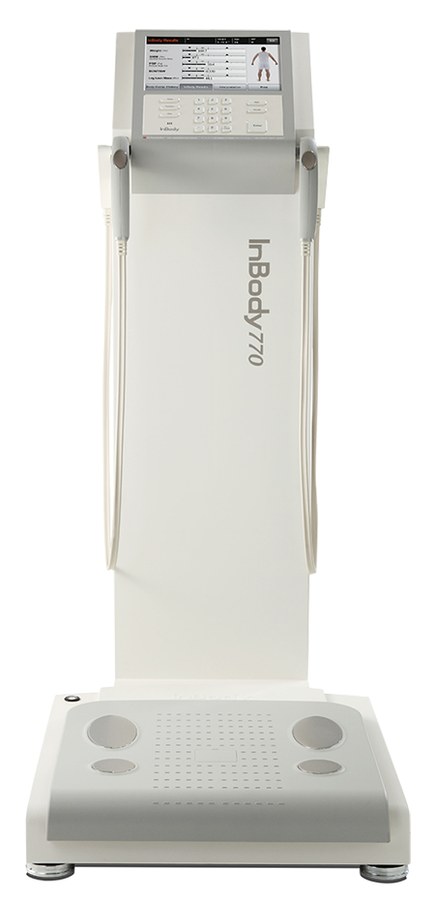
- Check the device’s age range. The InBody 270 manual lists a testing age range of 3 to 99 years and a minimum height of 95 cm, and says children should be supervised. It also offers a result sheet for children with a selectable child growth curve. Other models differ.
The practical conclusion: in schools, use body composition to screen and track the same child over time on the same device. Do not use a single reading to label a child, and do not compare numbers across different machines.
Consent and Data Privacy for Minors
Body composition data is personal health data, and most school students are minors. Under the Digital Personal Data Protection Act, 2023:
- A “child” is anyone who has not completed 18 years.
- Before processing a child’s personal data, the organisation must obtain verifiable consent of the parent or lawful guardian (Section 9(1)).
- Processing likely to harm a child’s well-being is not allowed, and neither is tracking, behavioural monitoring or targeted advertising directed at children (Sections 9(2) and 9(3)). Exemptions can be prescribed for certain classes of organisations and purposes.
The detailed consent mechanics sit in the Rules made under the Act. Take legal advice on your own process. As a minimum, good practice looks like this:
- A plain-language consent form for parents: what is measured, why, who sees the results, how long they are kept, and how to withdraw.
- Ask the student too. A child who does not want to be scanned should not be scanned.
- Results go privately to the student and parents. School-level reports use only anonymised, aggregated data.
- No sharing of student data with vendors, sponsors or anyone else for marketing.
In colleges and universities, most students are adults and consent for themselves. The same principles of purpose, privacy and retention still apply.
Protecting Students From Harm
A badly run screening day can do more damage than good. Weight and body shape are sensitive for adolescents. A few rules:
- Scan in a private corner, one student at a time. Never read numbers aloud.
- No class rankings, notice-board lists or “fittest student” tables built on body fat.
- Frame the report around strength, fitness and healthy growth. Pair the scan with the Khelo India fitness tests and a handgrip strength test, so the focus is on what the body can do.
- Agree a referral rule with the school doctor in advance. A flagged result should lead to a quiet conversation with parents and a paediatrician, not a diet sheet from the PE department.
A Screening-Day Workflow
Two to three weeks before
- Send consent forms and a short note to parents. Include the eligibility questions: pacemaker or other implanted electronic device, which rules out the test, plus any metal implants or medical conditions. Our post on who should not take an InBody test lists them.
- Schedule by class, in the morning where possible.
- Train two or three staff on the device and on the privacy rules.
On the day
- Students use the toilet first and remove socks.
- Station 1: height on a stadiometer.
- Station 2: the body composition scan. Run it before any running or fitness tests, because InBody’s manual notes that even light exercise temporarily changes body composition.
- Station 3: the fitness battery.
Afterwards
- Individual reports to parents in a sealed envelope or private message.
- Referrals through the school doctor, as agreed.
- A class- or school-level summary for the Fit India assessment, with no names.
- Repeat at the same time of year, on the same device, to track each child’s own trend.
Colleges, Universities and Sports Programmes
University health centres have an easier job. Students are adults, adult reference ranges apply, and a scan at admission gives a baseline for the whole degree. Sports quota students and campus teams benefit most from repeat tracking of muscle and fat across seasons. Our guide to fitness testing in sports academies covers that use in more detail.
Frequently Asked Questions
Is body composition testing part of the Khelo India fitness assessment?
Not as a separate test. The Khelo India battery records height and weight (BMI) for all age groups, along with fitness tests such as the 50 m sprint, 600 m run or walk, sit-and-reach, curl-ups and push-ups for ages 9 to 18. Body composition analysis is an optional addition a school can make.
Is BIA accurate in children?
It is useful for screening and tracking, but less exact than in adults. A Pune study found BIA underestimated body fat by 6.7 percentage points on average versus DXA, though both methods classified normal and overfat children similarly. Use child references and the same device every time.
Do we need parental consent to scan students?
For students under 18, the DPDP Act 2023 requires verifiable consent of a parent or lawful guardian before processing a child’s personal data. Take legal advice on your exact process, and also ask for the student’s own agreement.
From what age can a child be scanned?
It depends on the device. The InBody 270 manual lists a testing age range of 3 to 99 years with a minimum height of 95 cm. Children should be supervised, and their results read against child reference ranges.
Should students exercise before the scan?
No. InBody’s manual says even light exercise temporarily changes body composition, so schedule the scan before the running and fitness tests on a screening day.
Can the results be shared with the whole class?
No. Results should go privately to the student and parents. Use only anonymised, aggregated data for school-level reports, and never create rankings based on body fat.
Plan a Screening Programme for Your Institution
If you are planning student screening at a school, college or university health centre, talk to our team about a demo or a quote. You can compare models and age ranges on our body composition analyzers page.
This article is for general education and is not legal or medical advice. Take legal advice on consent and data handling, and involve a paediatrician in any referral process.
Related reading: body composition by age in India, how BMR is measured, and muscle mass testing in India.

Most trending articles
Creatine and Your Body Composition Scan: What Changes
Creatine raises body water and lean mass readings within a week on BIA and DXA. What the studies show and how to time your scans to read progress honestly.
Fitness Testing and Body Composition for Sports Academies
A practical fitness testing battery for Indian sports academies: body composition, grip, jumps, sprints, Yo-Yo, Khelo India context and youth maturation.
Body Me Pani Kitna Hona Chahiye? Normal Range Aur Report
Body me pani kitna hona chahiye? Purush lagbhag 60%, mahila 50%. Umar ke hisaab se range, dehydration ke sanket aur report par pani ka asar.