
Body Composition 15 min read
Body Composition Analysis in Dialysis Patient Care
In one 2025 study of 45 people on haemodialysis, 71% were overhydrated before a session.[1]Bioimpedance showed excess extracellular fluid in most of them. This fluid can silently raise…
Reading about body composition? Find an InBody test centre near you →
In one 2025 study of 45 people on haemodialysis, 71% were overhydrated before a session.[1]
Bioimpedance showed excess extracellular fluid in most of them. This fluid can silently raise blood pressure, strain the left ventricle and affect lung function. Fluid overload is considered a main determinant of hypertension and left ventricular hypertrophy in haemodialysis patients.[2]
However, the most alarming part is not the prevalence.
It is that many cases can go undetected. Dialysis teams often rely on clinical assessment and weight-based dry weight targets. The sensitivity and specificity of clinical signs for fluid overload are poor, and weight alone cannot separate fluid from body tissue.[3]
Hidden fluid overload in dialysis patients is a well-studied problem in nephrology. Yet, it can remain under-managed. Excess extracellular water (ECW) is associated with higher mortality risk in haemodialysis patients.[4][5]
In a 2021 multicentre study of 60 haemodialysis patients, 69.6% (16 of 23) of those with a post-dialysis ECW/TBW ratio above 0.5023 died during a median follow-up of 30.5 months, compared with 32.4% (12 of 37) of those below it.[4] The difference was no longer statistically significant after adjusting for age, comorbidity (Charlson index) and time on dialysis, so this cut-off is a signal rather than a proven threshold.
In this article, we highlight seven critical mistakes.
These mistakes allow hidden fluid to sabotage dialysis outcomes. We also explain how InBody BIA-guided fluid management helps prevent each one.
| 71% of 45 haemodialysis patients were overhydrated before a session in one 2025 study[1] | 69.6% died during follow-up (median 30.5 months) among HD patients with post-dialysis ECW/TBW above 0.5023, versus 32.4% below it (2021, n = 60)[4] | 43% of the deaths in that 60-patient study were cardiovascular[4] | 5 min Time for InBody S10 bedside body composition and fluid assessment in lying-down dialysis patients |
The Hidden Fluid Problem: Why Weight Alone Cannot Find It
Dry weight refers to the target body weight after dialysis, where the patient reaches fluid balance. It forms the cornerstone of dialysis adequacy. However, the challenge lies in how clinicians set it. Most dialysis centres still rely on clinical assessment. They check blood pressure, look for oedema, assess dyspnoea, and review the patient’s pre-dialysis weight. However, these methods have one major limitation. They cannot distinguish between fluid and body tissue.
A dialysis patient who gains 2 kg of adipose tissue over 6 months while losing 1.5 kg of skeletal muscle, common in dialysis-related sarcopenia, may appear at their dry weight by scale measurement while carrying significant hidden fluid overload. Their weight has changed and their body composition has deteriorated. Their dry weight target is wrong. And without direct body composition measurement, no one knows.
THE CLINICAL BLIND SPOT
Clinical signs of fluid overload (peripheral oedema, raised venous pressure, lung crackles, hypertension) have poor sensitivity and specificity.[3] A patient can carry significant excess extracellular fluid and present without oedema or respiratory symptoms. Bioelectrical impedance analysis (BIA) estimates ECW and can help quantify the overload, as an objective addition to clinical judgement.
Mistake 1: Relying Solely on Weight to Set Dry Weight Targets
Weight-based dry weight assessment cannot differentiate fluid from fat or lean tissue. When a dialysis patient’s body composition changes, fat accumulates, and muscle mass decreases. As a result, their true euvolaemic weight changes independently of their scale weight. If clinicians rely only on scale weight to set dry weight targets, they set inaccurate targets for patients experiencing body composition changes. In dialysis populations, many patients go through these changes over time.
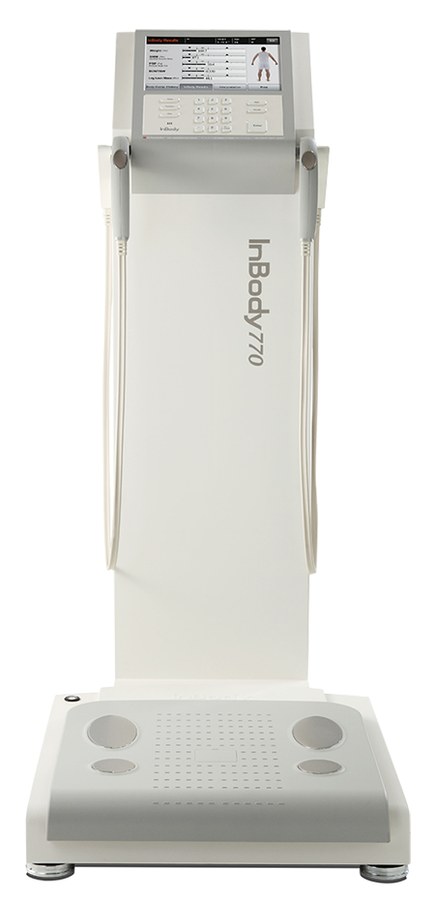
A 2022 BMC Nephrology study of 56 haemodialysis patients compared the InBody S10 (measuring lying down) with the InBody 770 (measuring standing). The ECW/TBW-based estimated target weights from the two devices were highly consistent (R² = 1.0000).[6]
CLINICAL IMPLICATION
Dry weight is worth reassessing, using BIA-derived ECW/TBW data alongside clinical judgement, at regular intervals set by the treating nephrologist and after any significant clinical change (hospitalisation, infection, dietary change, or a marked change in body weight). InBody S10 delivers this assessment in under 5 minutes in the lying-down dialysis position without requiring the patient to stand or transfer from the bed.
Mistake 2: Missing Fluid Overload That Presents Without Oedema or Symptoms
The clinical myth that fluid overload always shows up as visible oedema is one of the most dangerous assumptions in dialysis care. Extracellular fluid spreads across multiple compartments, including vascular, interstitial, and third-space areas. As a result, significant overhydration can build up in visceral and pulmonary compartments before clinicians notice any peripheral oedema.
A 2025 study of 45 patients with CKD on dialysis found that 71% were overhydrated before a session. After a 4-hour haemodialysis session, most participants (66%) were still overhydrated on bioimpedance vector analysis, despite a significant reduction in body water. Moreover, hydration status was associated with spirometry patterns, and lung function did not improve after the session.[1]
KEY INSIGHT
A 2017 multicentre PLOS ONE study of 72 haemodialysis patients found that ECW overload was independently associated with higher VCAM-1 (a marker of endothelial dysfunction) after adjustment for age, comorbidity and dialysis intensity.[7] Because this was an observational study, it shows an association, not proof that hidden fluid overload itself damages the endothelium.
Mistake 3: Not Measuring ECW/TBW Ratio as a Mortality Predictor
The ECW/TBW ratio is one of the most studied BIA-derived markers for predicting mortality in dialysis patients.[4][5] However, it is not a routine part of monitoring in many dialysis settings. Instead, clinicians routinely monitor blood pressure, haemoglobin, Kt/V adequacy, and serum albumin. ECW/TBW, a non-invasive measurement that takes about 5 minutes, is not.
The evidence for its predictive value is growing. A multicentre prospective study found that post-dialysis ECW/TBW was directly associated with NT-proBNP and cTnT, established cardiovascular biomarkers, and that patients with a post-dialysis ECW/TBW above 0.5023 had a crude mortality of 69.6% over a median 30.5 months, compared with 32.4% in those below this cut-off.[4] In a retrospective study of 193 haemodialysis patients, a higher ECW/TBW ratio (above 0.40) and protein-energy wasting were each independently associated with all-cause death.[5] The 2020 KDOQI Nutrition Guideline in CKD suggests using bioimpedance, preferably multi-frequency BIA, to assess body composition in adults with CKD 5D on maintenance haemodialysis, ideally at least 30 minutes after the session (a weak, grade 2C, recommendation).[8]
THE ECW/TBW MORTALITY CUT-OFFS (ONE STUDY)
Cut-offs reported in one 60-patient proof-of-concept study (study-specific, not validated clinical thresholds):[4]
Cardiovascular-mortality cut-off: post-dialysis ECW/TBW at or above 0.4713 (75% of the patients in that study exceeded it)
All-cause mortality cut-off: post-dialysis ECW/TBW above 0.5023 (69.6% of patients above it died during follow-up versus 32.4% below it; the association was not significant after adjustment for age, comorbidity and time on dialysis)
InBody S10 measures ECW/TBW at every session. Without this measurement, fluid management relies on weight and blood pressure alone, which cannot distinguish fluid from tissue.
Mistake 4: Confusing Body Weight Change With Fluid Change
In dialysis populations, body weight change has three possible sources: fluid change, fat mass change, and lean tissue change. Weight-based assessment assumes that interdialytic weight gain is entirely fluid, but this is only valid if body composition is static. It never is.
A 2020 prospective study in the Journal of Clinical Medicine followed 124 prevalent haemodialysis patients for a median of 20 months. The post-dialysis overhydration (OH) parameter increased over time, at the expense of a significant decline in intracellular water (ICW) rather than a rise in ECW; the authors linked low ICW to muscle wasting and inflammation. Patients with low baseline ICW (17 L or below) were at increased risk of death (Kaplan–Meier, p = 0.018), and baseline ICW was also associated with death in adjusted Cox models, suggesting that muscle loss, not just fluid overload, contributes to the clinical picture that weight monitoring cannot capture.[9]
CLINICAL IMPLICATION
Every significant body weight change in a dialysis patient should be investigated with a BIA measurement before adjusting the dry weight target. A patient who has lost 2 kg over 3 months may have lost lean tissue, not fluid, making their current dry weight target already too low. Conversely, a patient who has gained 2 kg in the same period may have gained adipose tissue, not fluid, making their target too high. Only BIA can tell you which it is.

Mistake 5: Ignoring Persistent Post-Dialysis Overhydration
Many dialysis units measure fluid status only pre-dialysis and use the difference between pre- and post-dialysis weight as the sole measure of fluid removal adequacy. This misses the most clinically important measurement: whether the patient is actually euvolaemic after the session.
The 2025 study of 45 patients found that most participants (66%) remained overhydrated even after a complete 4-hour haemodialysis session, as shown by bioimpedance vector analysis (BIVA). Hydration status on BIVA was significantly associated with spirometry patterns both before and after dialysis, and spirometry did not improve after the session; the authors concluded that the session did not normalise hydration status for most patients.[1]
Post-dialysis BIA measurement gives an objective way to check whether euvolaemia has been achieved. Without it, ultrafiltration targets are based on a weight goal, not a fluid goal. The distinction matters clinically, especially in patients with diabetes, cardiac disease, or significant sarcopenia where body composition is most likely to have shifted from the assumed norm.
Mistake 6: Failing to Monitor the Fluid–Nutrition Relationship in Dialysis Malnutrition
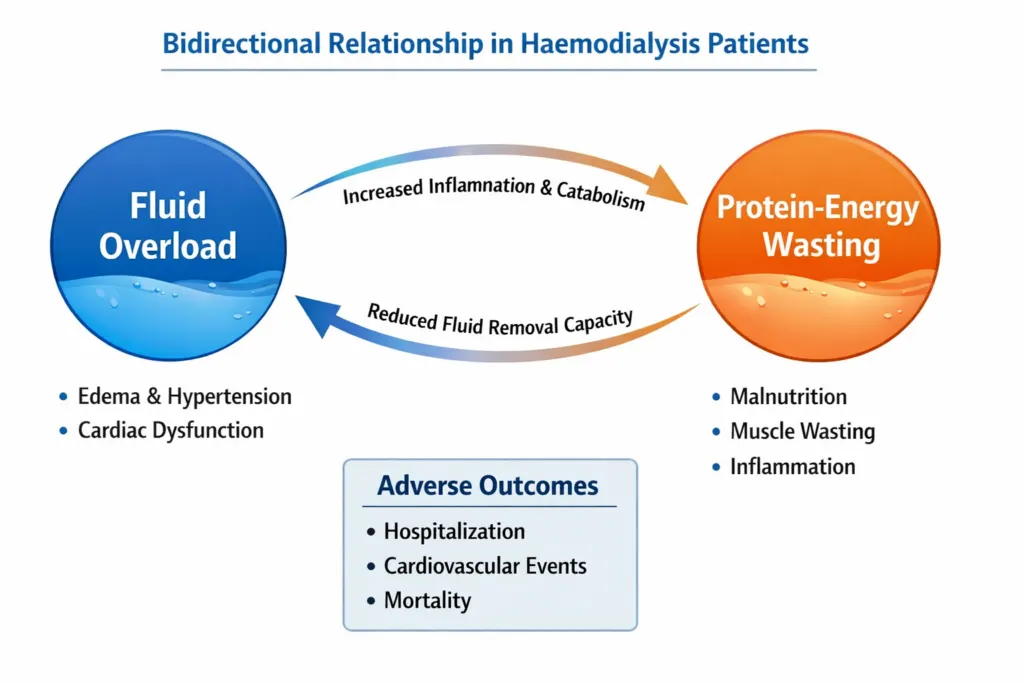
Fluid overload and malnutrition are not independent problems in dialysis patients; they are deeply intertwined. A 2023 Scientific Reports study of 193 haemodialysis patients (a retrospective analysis) found that a higher ECW/TBW ratio was associated with protein-energy wasting (PEW), lower serum albumin, lower normalised protein catabolic rate (nPCR), and lower serum creatinine. Patients with both PEW and a high ECW/TBW ratio had the highest risk of all-cause death (adjusted hazard ratio 5.19 compared with patients with neither).[5]
The mechanism may be bidirectional. Malnutrition and muscle loss can reduce ICW and raise the ECW/TBW ratio. Fluid overload has been linked to inflammation (higher VCAM-1 and IL-6 in overhydrated patients),[7] and inflammation may in turn promote protein catabolism and malnutrition.[5] Without measuring both ECW/TBW ratio and lean tissue index simultaneously, which InBody S10 does at every session, this interaction is easy to miss.
KEY INSIGHT
In the same 2023 study, adding the ECW/TBW ratio to a baseline risk model that included the simple PEW score significantly improved the C-statistic (0.788 to 0.835) and net reclassification for all-cause mortality. In other words, in that cohort the ECW/TBW ratio added predictive information beyond a conventional nutritional score.[5]
Mistake 7: Not Using BIA to Guide Fluid Management Protocols
The most dangerous mistake of all is also the most preventable: not implementing BIA-guided fluid management despite the availability of validated tools, published protocols, and compelling mortality data. A 2024 single-blind randomised controlled trial in 167 critically ill post-operative ICU patients (not a dialysis trial) compared fluid management guided by the BIA-measured ECW ratio (fluid boluses or diuretics to bring the ratio into a target range) with usual care. The 28-day mortality was 1.3% with BIA-guided management versus 14.4% with usual care (p = 0.002), although the primary outcome, in-hospital mortality, did not differ significantly (0% versus 4.4%, p = 0.125).[10]
For dialysis patients, the evidence is encouraging. As noted above, the KDOQI guideline suggests bioimpedance for body composition assessment in maintenance haemodialysis (a weak recommendation).[8] In a randomised trial of 156 haemodialysis patients, fluid management guided by bioimpedance spectroscopy was associated with greater regression of left ventricular mass index, and with lower blood pressure and improved arterial stiffness, than usual clinical practice.[2]
WHY THIS IS STILL NOT STANDARD IN INDIA
Despite the growing evidence, BIA-guided fluid management is still not routine in many dialysis settings. Practical barriers such as device availability and workflow integration matter alongside the clinical evidence. InBody S10 was designed to help with both barriers. It operates in the lying-down dialysis position, delivers results in under 5 minutes, and requires no additional patient transfer or preparation beyond what is standard in routine dialysis care.
What the InBody S10 Measures in Dialysis Patients
The InBody S10 is the InBody device designed for bedside body composition and fluid assessment in dialysis, critically ill, and non-ambulatory patients. Unlike standard InBody devices that require standing, the S10 is designed to be used in the lying position, allowing pre-dialysis, intra-dialytic, and post-dialysis measurement without disturbing the patient or the session.
| InBody S10 Metric | What It Measures | Clinical Application in Dialysis |
|---|---|---|
| ECW/TBW Ratio | Extracellular water as a proportion of total body water | Primary fluid status marker: tracks overhydration, guides dry weight setting, and is associated with mortality |
| Overhydration Index (OH) | Litres of excess ECW above the calculated normal | Quantifies the absolute fluid burden and guides ultrafiltration volume targets |
| Total Body Water (TBW) | Total fluid volume in the body | Tracks fluid balance trends across sessions and over time |
| Extracellular Water (ECW) | Fluid outside cells: plasma and interstitial fluid | The primary overhydration compartment; it directly reflects the fluid overload burden |
| Intracellular Water (ICW) | Fluid inside cells; reflects muscle mass and nutritional status | Low ICW (17 L or below) was associated with higher mortality in one 124-patient study[9] |
| Lean Tissue Index (LTI) | Lean mass normalised for height; tracks muscle | Detects dialysis-related sarcopenia concurrent with fluid assessment |
| Fat Tissue Index (FTI) | Fat mass normalised for height; tracks adiposity | Identifies sarcopenic obesity (high FTI combined with low LTI and elevated ECW/TBW) |
Real Case: The Dialysis Patient Whose Dry Weight Was Wrong for 18 Months
A 58-year-old male patient with ESRD secondary to diabetic nephropathy had been on maintenance haemodialysis for 3 years at a centre in Chennai. His dry weight was 68 kg, set clinically 18 months earlier and not reviewed since. His blood pressure was persistently elevated at 158/94 mmHg despite three antihypertensive agents. He had experienced two episodes of intra-dialytic hypotension in the preceding 6 months. His nephrologist suspected his dry weight target was too low.
So his first InBody S10 assessment performed in the lying position immediately after a dialysis session told a completely different story; the post-dialysis ECW/TBW ratio was 0.487 (above the 0.4713 post-dialysis cut-off linked to cardiovascular mortality in one study[4]), and his overhydration index was +1.8 L, confirming he was still significantly overloaded after what appeared to be an adequate session. His LTI was below population norm, and his FTI had increased since his last clinical review, confirming fat accumulation concurrent with muscle loss over the 18 months since his dry weight was set.
After 12 weeks of BIA-guided dry weight adjustment, incrementally reducing his target weight and titrating ultrafiltration volumes using serial InBody S10 data, his outcomes showed the following changes:
| ↓0.038 ECW/TBW ratio improvement (0.487 → 0.449) | ↓1.2 L Overhydration index reduction | ↓16 mmHg Systolic BP reduction at 12 weeks | Zero Intra-dialytic hypotension episodes in 12-week period |
His antihypertensive regimen was subsequently reduced from three agents to two. His nephrologist attributed the blood pressure improvement almost entirely to the correction of persistent hidden fluid overload, fluid that weight-based assessment had been missing for 18 months.
Frequently Asked Questions
Q. What is fluid overload in dialysis patients?
Fluid overload in haemodialysis patients occurs when excess extracellular water (ECW) accumulates between dialysis sessions, expanding the extracellular fluid compartment beyond normal limits. It is a common and serious problem in dialysis, associated with hypertension, left ventricular hypertrophy, abnormal lung function, endothelial dysfunction, and higher cardiovascular mortality.[2][4][7] In one 2025 study of 45 patients, 71% were overhydrated before a dialysis session.[1]
Q. How does hidden fluid affect dialysis outcomes?
Hidden fluid overload is associated with hypertension, left ventricular hypertrophy, endothelial dysfunction, abnormal lung function, protein-energy wasting, and higher all-cause mortality.[1][2][5][7] In one 60-patient study, 69.6% of patients with a post-dialysis ECW/TBW above 0.5023 died during follow-up (median 30.5 months) versus 32.4% of those below it, although the difference was not significant after adjustment for age, comorbidity and time on dialysis. In that study, 43% of all deaths were cardiovascular.[4]
Q. How does InBody S10 help manage fluid in dialysis patients?
The InBody S10 was specifically designed for bedside body composition assessment in dialysis and non-ambulatory patients. It measures ECW, TBW, ICW, ECW/TBW ratio, overhydration index (OH in litres), lean tissue index (LTI), and fat tissue index (FTI) in under 5 minutes in the lying position without requiring the patient to stand or transfer from the dialysis chair or bed. This data enables nephrologists to set accurate dry weight targets, detect persistent post-dialysis overhydration, identify fluid trends over serial sessions, and differentiate fluid gain from tissue changes, none of which scale-based assessment can achieve.
Key Takeaways
- In one 2025 study, 71% of 45 haemodialysis patients were overhydrated before a session,[1] and clinical assessment and weight-based dry weight monitoring can miss fluid overload.[3]
- The 7 dangerous mistakes (relying on weight for dry weight, missing asymptomatic overload, ignoring ECW/TBW mortality data, confusing weight change with fluid change, ignoring post-dialysis overhydration, missing the fluid–nutrition interaction, and not using BIA protocols) share a common thread: not measuring ECW directly.
- In one 60-patient study, 69.6% of patients with a post-dialysis ECW/TBW ratio above 0.5023 died during follow-up (median 30.5 months), versus 32.4% below it, although the difference was not significant after adjustment. Cut-offs like this come from a single proof-of-concept study and need confirmation.[4]
- InBody S10 measures ECW, TBW, overhydration index, ECW/TBW ratio, LTI, and FTI in under 5 minutes in the lying position, providing the complete fluid and body composition picture that weight-based assessment cannot deliver, without disrupting the dialysis session.
- The 2020 KDOQI nutrition guideline suggests bioimpedance for body composition assessment in CKD 5D patients on maintenance haemodialysis (a weak recommendation).[8] Evidence for bioimpedance-guided fluid management is growing.
- In a 2024 RCT of 167 critically ill post-operative ICU patients (not a dialysis trial), BIA-guided fluid management was associated with 28-day mortality of 1.3% versus 14.4% in controls (p = 0.002), although in-hospital mortality, the primary outcome, did not differ significantly.[10]
Stop Managing Fluid Blindly
InBody S10 delivers bedside ECW/TBW ratio, overhydration index, and complete body composition data for every dialysis patient in under 5 minutes, in the lying position, at every session. Available for Indian dialysis centres, nephrology units, and intensive care facilities.

Find an InBody Scanner Near You
References
- Tungu AM, Msaki E, Ruhighira JJ, Ebrahim A, Ngarashi D, Shoo JG, Mashili FL. Persistent overhydration despite significant fluid reduction limits lung function improvement after a single haemodialysis session in CKD patients: a before and after study using BIA. Clinics (Sao Paulo). 2025;80:100821. PubMed · DOI
- Hur E, Usta M, Toz H, Asci G, Wabel P, Kahvecioglu S, et al. Effect of fluid management guided by bioimpedance spectroscopy on cardiovascular parameters in hemodialysis patients: a randomized controlled trial. Am J Kidney Dis. 2013;61(6):957-965. PubMed · DOI
- Mohamed M, Matthie J, Fan SL. Bioimpedance spectroscopy: is a picture worth a thousand words? Semin Dial. 2025;38(1):71-81 (epub 2022). PubMed · DOI
- Pérez-Morales R, Donate-Correa J, Martín-Núñez E, Pérez-Delgado N, Ferri C, López-Montes A, et al. Extracellular water/total body water ratio as predictor of mortality in hemodialysis patients. Ren Fail. 2021;43(1):821-829. PubMed · DOI
- Yajima T, Yajima K. Association of extracellular water/total body water ratio with protein-energy wasting and mortality in patients on hemodialysis. Sci Rep. 2023;13(1):14257. PubMed · DOI
- Choi G, Yoon HJ, Song YJ, Jeong HM, Gu JE, Han M, et al. Consistency of the estimated target weights and ECW/TBW using BIA after hemodialysis in patients between standing and lying-down positions. BMC Nephrol. 2022;23(1):106. PubMed · DOI
- Mitsides N, Cornelis T, Broers NJH, Diederen NMP, Brenchley P, van der Sande FM, et al. Extracellular overhydration linked with endothelial dysfunction in the context of inflammation in haemodialysis dependent chronic kidney disease. PLoS One. 2017;12(8):e0183281. PubMed · DOI
- Ikizler TA, Burrowes JD, Byham-Gray LD, Campbell KL, Carrero JJ, Chan W, et al. KDOQI Clinical Practice Guideline for Nutrition in CKD: 2020 Update. Am J Kidney Dis. 2020;76(3 Suppl 1):S1-S107. Statement 1.1.1 text read on the Academy of Nutrition and Dietetics Evidence Analysis Library: Executive Summary of Recommendations (2020). PubMed · DOI
- Gracia-Iguacel C, González-Parra E, Mahillo I, Ortiz A. Low intracellular water, overhydration, and mortality in hemodialysis patients. J Clin Med. 2020;9(11):3616. PubMed · DOI
- Chung YJ, Lee GR, Kim HS, Kim EY. Effect of rigorous fluid management using monitoring of ECW ratio by bioelectrical impedance analysis in critically ill postoperative patients: a prospective, single-blind, randomized controlled study. Clin Nutr. 2024;43(9):2164-2176. PubMed · DOI

Most trending articles
Student Fitness Screening in India: A Guide for Schools
CBSE HPE, Fit India and Khelo India rely on BMI. How schools and colleges can add body composition screening safely, with child caveats and DPDP consent.
Creatine and Your Body Composition Scan: What Changes
Creatine raises body water and lean mass readings within a week on BIA and DXA. What the studies show and how to time your scans to read progress honestly.
Fitness Testing and Body Composition for Sports Academies
A practical fitness testing battery for Indian sports academies: body composition, grip, jumps, sprints, Yo-Yo, Khelo India context and youth maturation.