
Fitness 14 min read
Poor Sleep Is Making You Fat: How Sleep Deprivation Wrecks Body Composition (India Data)
India is among the world's most sleep-deprived nations. Less than 6 hours of sleep increases visceral fat accumulation by 22% and reduces muscle recovery. The body composition science of sleep — and how to fix it.
Reading about body composition? Find an InBody test centre near you →
India Is Running on Empty — And Paying for It in Body Fat
According to Sleep Cycle’s 2023 global sleep report, Indians average just 6 hours 30 minutes of sleep per night — placing India consistently among the five most sleep-deprived nations on the planet. That number sits well below the 7–9 hours recommended by the American Academy of Sleep Medicine, and it has consequences that go far beyond feeling groggy at your morning standup call.
The consequences show up on your body composition scan. Specifically, they show up as higher Visceral Fat Area (VFA), lower Skeletal Muscle Mass (SMM), an elevated ECW/TBW ratio, and a declining InBody Score — even in people who exercise regularly and watch what they eat. If you have been doing everything right and the numbers still aren’t moving, poor sleep is almost certainly a variable you haven’t fully accounted for.
This article explains exactly how sleep deprivation degrades body composition at the hormonal and cellular level — and what the research says about reversing it.
The Cortisol-Visceral Fat Loop That Nobody Talks About
When you cut sleep short, your hypothalamic-pituitary-adrenal (HPA) axis treats it as a physiological stressor. The result is a measurable spike in cortisol — your primary stress hormone. A 2010 study published in Sleep (Leproult & Van Cauter) demonstrated that just one week of sleeping 5 hours per night elevated cortisol levels in the afternoon and evening by a statistically significant margin compared to the 8-hour sleep group.
Cortisol is catabolic. In short bursts it is useful — it mobilises energy, sharpens focus, and helps you manage acute threats. But chronically elevated cortisol does something very specific and very damaging to body composition: it preferentially directs fat storage toward visceral depots — the fat that wraps around your liver, pancreas, kidneys, and intestines.
On an InBody scan, this appears as an elevated Visceral Fat Area (VFA). The healthy range is below 100 cm². Population data from InBody scans across Indian corporate wellness programs consistently shows a significant proportion of apparently lean individuals — people with a normal BMI — carrying VFA readings above 130–150 cm². Sleep deprivation is one of the primary drivers, alongside sedentary work patterns and late-night eating habits (more on that shortly).
The mechanism matters: cortisol upregulates the enzyme lipoprotein lipase in visceral fat cells while simultaneously inhibiting lipolysis (fat breakdown) in the same tissue. You are, in effect, locked in a fat-storing mode in precisely the fat depot that is most dangerous to metabolic health.
Ghrelin, Leptin, and Why You Can’t Stop Eating When You’re Tired

The hormonal disruption from poor sleep extends well beyond cortisol. Two appetite-regulating hormones are profoundly affected by sleep duration, and their imbalance creates what researchers now call the “sleep-hunger feedback loop.”
Ghrelin is released by the stomach to signal hunger. Leptin is released by fat cells to signal satiety. In a landmark study by Spiegel, Tasali, and colleagues published in PLOS Medicine (2004), subjects who slept only 5 hours showed a 14.9% increase in ghrelin and a 15.5% decrease in leptin compared to their 8-hour sleep counterparts. This hormonal environment doesn’t just make you feel slightly peckish — it creates a powerful biological drive toward calorie-dense, high-carbohydrate foods.
A 2013 study from UC Berkeley used fMRI to show that sleep-deprived individuals had significantly greater activity in the brain’s reward centres (amygdala and nucleus accumbens) in response to junk food images, while prefrontal cortex activity — the region responsible for rational decision-making — was simultaneously suppressed. You are, quite literally, less able to make good food decisions when you’re sleep-deprived, and your brain is screaming at you to eat the wrong things.
In the Indian context, this lands on already-difficult terrain. The typical urban Indian workday involves a late lunch, an evening chai around 5–6pm, and dinner rarely before 9pm — often after 10pm in metros like Mumbai and Bengaluru. The ghrelin surge from poor sleep hits precisely at the late-night window, amplifying caloric intake in the hours when insulin sensitivity is at its lowest and fat storage is maximally efficient.
What Happens to Your Muscles While You Sleep (Or Don’t)
The gym doesn’t build muscle. Sleep builds muscle. The gym is simply the stimulus — the actual repair, synthesis, and growth happens during deep sleep, specifically stages 3 and 4 (slow-wave sleep).
During slow-wave sleep, the pituitary gland releases a significant pulse of growth hormone (GH). This pulse drives protein synthesis, stimulates IGF-1 production, and initiates the repair of micro-tears created during training. Research from the University of Chicago (Van Cauter et al., 2000) demonstrated that up to 70% of the daily growth hormone release occurs during slow-wave sleep, and that this release is highly sensitive to sleep architecture — not just total duration.
When you consistently sleep fewer than 6.5 hours, two things happen:
- You spend less total time in slow-wave sleep, reducing the GH pulse.
- Elevated cortisol (from the sleep debt) directly antagonises GH signalling at the tissue level.
The net effect on body composition is a progressive decline in Skeletal Muscle Mass (SMM). This shows up clearly on InBody scans done 3–6 months apart in individuals who haven’t changed their training but have chronically poor sleep. It is one of the most underappreciated reasons why people plateau in their fitness progress — they are training consistently but their sleep is destroying the anabolic signal that training is supposed to create.
A 2011 study published in the Annals of Internal Medicine (Nedeltcheva et al.) quantified this precisely. Subjects followed the same calorie-restricted diet but were randomised to 5.5 hours or 8.5 hours of sleep per night. After 14 days, both groups lost roughly the same total weight. But in the 8.5-hour group, 55% of weight loss came from fat mass. In the 5.5-hour group, only 25% came from fat mass — the rest was lean tissue, including muscle. The sleep-deprived dieters were losing muscle at twice the rate of fat. This is exactly the body composition profile you don’t want.
The ECW/TBW Ratio: Sleep Deprivation as an Inflammation Marker
One of the more sophisticated outputs of an InBody scan is the ECW/TBW (Extracellular Water to Total Body Water) ratio. In a healthy, well-recovered body, this ratio sits between 0.360 and 0.390. When it rises above 0.390, it indicates that a disproportionate amount of body water is sitting outside the cells — a pattern associated with chronic inflammation, poor recovery, and physiological stress.
Chronic sleep deprivation is a pro-inflammatory state. C-reactive protein (CRP), interleukin-6 (IL-6), and tumour necrosis factor-alpha (TNF-α) are all significantly elevated in people sleeping fewer than 6 hours per night (Meier-Ewert et al., Journal of the American College of Cardiology, 2004). This systemic low-grade inflammation causes fluid to shift from intracellular to extracellular compartments — exactly what an elevated ECW/TBW ratio reflects.
In clinical practice, practitioners using InBody devices across India’s corporate wellness clinics frequently observe elevated ECW/TBW ratios in shift workers, young professionals working 12-hour days, and new parents — all groups characterised by chronic sleep debt. The ratio normalises measurably when sleep patterns improve, even before significant changes in fat mass or muscle mass appear. It is, in this sense, an early and sensitive marker of the body’s recovery status.
Sleep, Insulin Sensitivity, and Why Fat Keeps Accumulating
The connection between sleep and metabolic health runs directly through insulin sensitivity. A study by Spiegel, Leproult, and Van Cauter published in The Lancet (1999) showed that restricting sleep to 4 hours per night for just 6 nights reduced glucose tolerance and insulin sensitivity to levels comparable to the early stages of type 2 diabetes — in healthy young men.
When cells become resistant to insulin, glucose cannot efficiently enter muscle and liver cells for storage or energy use. Pancreatic beta cells compensate by secreting more insulin, and this chronically elevated insulin environment is a powerful fat-storage signal — particularly for visceral depots. The result is a slow but compounding drift toward metabolic syndrome: rising VFA on InBody scans, worsening fasting glucose, and increasing triglycerides, often with minimal change on a body weight scale.
India’s diabetes burden — 101 million people with diagnosed type 2 diabetes as of 2023 (ICMR-INDIAB study) — is conventionally attributed to diet, genetics, and physical inactivity. These factors are real. But population-level sleep deprivation is a massively underacknowledged contributor to this crisis, operating through exactly the insulin resistance mechanism described above.
The Indian Context: Why We Sleep So Badly
India’s sleep deficit is not a random statistical outcome. It is a product of specific, identifiable lifestyle and environmental factors that compound on each other.
Late Dinners and Post-Dinner Screen Time
The average urban Indian household eats dinner between 9pm and 10:30pm. This is a function of long commutes, working hours that extend well into the evening, and cooking logistics. A meal eaten this late keeps core body temperature elevated, delays melatonin onset, and keeps the digestive system active precisely when the body needs to transition to rest. The 2–3 hours of post-dinner screen time that typically follows — watching OTT content or scrolling through phones — delivers blue-light exposure that directly suppresses melatonin production by up to 85% (Harvard Medical School research). Bedtime shifts to midnight or later, but work alarms don’t move.
Mobile Phone Use and Blue Light
India added over 600 million smartphone users in the last decade. Night-time phone use — particularly social media, short-form video, and messaging — is now a near-universal behaviour in urban India. Blue light in the 460–480nm wavelength range is the primary input the suprachiasmatic nucleus uses to calibrate the circadian clock. Evening exposure signals “noon” to the brain’s timekeeping system, delaying sleep onset by 1–2 hours while compressing the sleep window that early morning commitments create.
Noise Pollution
The World Health Organisation classifies noise above 30 dB as disruptive to sleep. Mumbai averages 55–70 dB at night in residential areas. Delhi, Bengaluru, Chennai, and Hyderabad report similarly elevated nighttime ambient noise from traffic, construction, and neighbourhood activity. Noise disruption fragments sleep architecture — specifically reducing slow-wave and REM sleep — even when total time in bed appears adequate.
Joint Family Stress and Irregular Schedules
India’s joint and extended family structures, while socially valuable, create sleep environments that are difficult to control. Irregular meal times, family events that run late, and shared sleeping spaces with young children or elderly relatives all fragment sleep in ways that are hard to measure but consistently reported. Psychological stress within multi-generational households elevates cortisol independently of sleep duration, compounding the body composition effects described above.
Shift Workers: India’s Most Vulnerable Group
India’s IT sector employs over 5 million people, a substantial fraction of whom work night shifts or rotating shifts to service US and European time zones. Healthcare workers, manufacturing line staff, retail and e-commerce logistics workers add tens of millions more to this population. Shift work imposes circadian misalignment — the body’s internal clock and the external light-dark cycle are chronically out of sync.
The body composition profile of long-term shift workers is distinctive and consistently measurable on InBody:
- VFA is typically 20–35% higher than age- and BMI-matched daytime workers
- SMM is correspondingly lower, even in shift workers who train regularly
- ECW/TBW ratio is frequently elevated, reflecting the chronic inflammatory state of circadian disruption
- InBody Score is suppressed relative to what training load and diet quality would predict
A 2019 meta-analysis in Obesity Reviews (Antunes et al.) pooled data from 28 studies and found that shift workers had a significantly higher risk of obesity (OR 1.23), metabolic syndrome (OR 1.57), and visceral adiposity compared to standard-hours workers, with effects persisting even after controlling for diet and physical activity. The circadian disruption itself — independent of sleep duration — appears to drive metabolic dysfunction through impaired glucose metabolism, altered appetite hormone rhythms, and increased inflammatory tone.
What Happens When You Add One Hour of Sleep
The good news is that the body composition benefits of improved sleep are measurable and appear relatively quickly.
A 2022 randomised controlled trial from King’s College London published in JAMA Internal Medicine asked habitual short sleepers (averaging 6.2 hours) to extend sleep to 8.5 hours over 2 weeks. The sleep extension group showed a reduction in free sugar intake of approximately 10 grams per day — driven by the normalisation of ghrelin and leptin signalling — without any dietary intervention.
Over 3 months, research and clinical data consistently show the following directional changes when chronically sleep-deprived individuals increase average sleep duration by 60–75 minutes per night:
- VFA reduction of 8–15% in individuals with baseline VFA above 120 cm², attributable to lower cortisol and improved insulin sensitivity
- SMM increase or preservation as growth hormone pulsatility normalises during slow-wave sleep
- ECW/TBW ratio normalisation as systemic inflammation markers (CRP, IL-6) decline
- Improved InBody Score reflecting the composite improvement in body composition
These changes are not the result of exercise or dietary changes. They are the direct product of restoring the hormonal and inflammatory environment that healthy sleep creates. For individuals who are already training and eating well, improving sleep is often the single highest-leverage intervention available.
Sleep Hygiene for Indians: Practical, Context-Specific Guidance
Generic sleep hygiene advice — “avoid screens before bed,” “keep a consistent schedule” — is rarely actionable in the Indian context without translation. Here is guidance adapted to the realities of Indian households and working patterns.
Move Dinner Earlier, Even Incrementally
Eating your last meal by 7:30–8pm makes a meaningful difference in melatonin onset and sleep quality. If a 10pm dinner is your current baseline because of commute and cooking time, shifting to 8:30pm is more realistic as a first step. Cold meal preparation (salads, curd-based dishes, pre-cooked dals) consumed before cooking the main family meal can bridge the hunger gap and allow you to eat earlier even when the household dinner runs late.
Cut Chai After 4pm
Chai has a caffeine half-life of approximately 5–6 hours. A 6pm cup maintains half its caffeine load until midnight. For most Indians, the afternoon chai ritual is social and difficult to eliminate, but shifting the last cup to before 4pm substantially reduces nighttime sleep latency. Switch to decaf, herbal teas, or warm water with fennel seeds (a traditional Indian digestive with no caffeine) in the evening.
Cool the Room
Core body temperature must drop by approximately 1°C for sleep onset to occur. In Indian cities where nighttime temperatures stay above 28–32°C for 6+ months of the year, this is a genuine physiological challenge. Running an air conditioner at 24–26°C, using a lightweight cotton sheet, and showering before bed (the subsequent temperature drop signals sleep onset) are practical interventions. If AC is not available, a fan directed at the body combined with a damp cotton cloth on the neck can meaningfully lower skin surface temperature.
Manage the Family Noise Environment
Ear plugs (NRR 33 rating, widely available online for under ₹300) can reduce ambient noise by 30–35 dB — enough to bring a 65 dB urban bedroom into a sleep-compatible range. White noise apps (set to brown or pink noise, which masks the variable frequencies of urban sound more effectively than pure white noise) are a free alternative. For those sharing rooms with snoring partners or early-rising family members, these tools are genuinely transformative for sleep architecture.
Phone Out of the Bedroom
This is the highest-leverage single intervention and also the most psychologically resisted. The act of placing the phone outside the bedroom removes the default late-night scrolling behaviour and eliminates morning pre-alarm checking that fragments the final sleep cycle. An ₹800 alarm clock eliminates the only legitimate reason the phone needs to be bedside. Start with one week and measure the difference in morning alertness.
Measuring the Impact: Why Body Composition Testing Matters Here
The challenge with sleep-related body composition changes is that they are largely invisible to standard measurement tools. Body weight on a scale doesn’t distinguish between fat gain and muscle loss — both of which occur during chronic sleep deprivation. BMI is similarly blind to the shifts in body composition that matter most: rising VFA, declining SMM, and the inflammatory signature captured in ECW/TBW ratio.
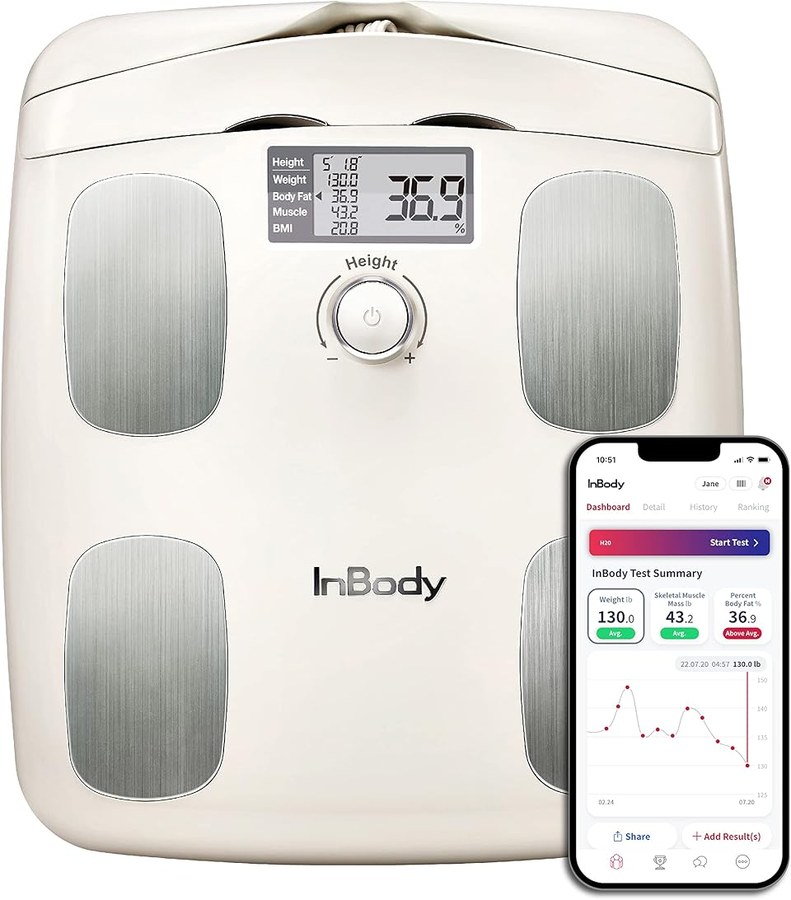
InBody analysis gives you the granular picture. It separates fat mass from lean mass, identifies where fat is accumulating (segmentally and viscerally), tracks changes in muscle distribution across the body, and flags inflammation through the ECW/TBW ratio. For anyone serious about improving body composition — whether the goal is fat loss, muscle building, or metabolic health — a baseline scan and periodic re-scans are the only way to know whether interventions (including sleep improvements) are actually working at the tissue level.
The difference between someone who sleeps 6 hours and someone who sleeps 8 hours, controlling for diet and exercise, is frequently invisible on a bathroom scale over a 3-month period. On an InBody scan, it is not. VFA, SMM, and ECW/TBW tell the story that body weight conceals.
Find an InBody Testing Centre Near You
If you are working on your body composition — or you suspect that poor sleep is holding back your progress despite consistent effort in the gym and kitchen — a professional InBody scan gives you the data to move with precision rather than guesswork.
InBody devices are available at gyms, hospitals, corporate wellness centres, and nutrition clinics across India. A single scan takes under 45 seconds and gives you a complete breakdown of your SMM, PBF, VFA, ECW/TBW ratio, and InBody Score — everything you need to assess where you currently stand and track your progress as you improve your sleep and recovery.
Find an InBody testing centre near you and book your scan. Bring your results back in 60–90 days after making genuine changes to your sleep — the numbers will tell you exactly how much it mattered.
Sleep is not a lifestyle luxury. For body composition, it is a primary input — as important as what you eat and how you train. The data makes this impossible to ignore.
Frequently Asked Questions
How does poor sleep affect body fat?
Sleeping less than 6 hours a night disrupts hunger hormones (ghrelin and leptin) and cortisol regulation, which research links to as much as a 22% increase in visceral fat accumulation over time.
Does poor sleep affect muscle as well as fat?
Yes — inadequate sleep impairs muscle protein synthesis and recovery, meaning the same training program yields less muscle gain (or more muscle loss during a cut) when sleep is consistently poor.
How much sleep is considered adequate for body composition goals?
Most research points to 7-9 hours as the range associated with optimal hormone regulation, recovery, and body composition outcomes, with consistent sleep timing mattering almost as much as total duration.
