
Fitness 11 min read
Keto Diet in India: What Happens to Your Body Composition (The Real Data, Not the Hype)
Keto is India's most-googled diet. But what does body composition testing show after 8 weeks on keto? Rapid fat loss or dangerous muscle loss? The India-specific guide to keto with body composition tracking.
Reading about body composition? Find an InBody test centre near you →
Keto in India: The Scale Drops Fast — But What Is Your Body Actually Losing?
Keto diets have captured the imagination of urban India’s health-conscious population over the past five years. WhatsApp groups share keto recipes, Instagram reels showcase 10-kg weight loss in 30 days, and keto flour alternatives have spawned entire product categories in Indian supermarkets. The appeal is obvious: rapid initial weight loss, a structured eating framework, and a counter-cultural identity around “eating fat to lose fat.”
But there is a critical question that the keto community rarely engages with honestly: what is the weight you are losing actually made of?
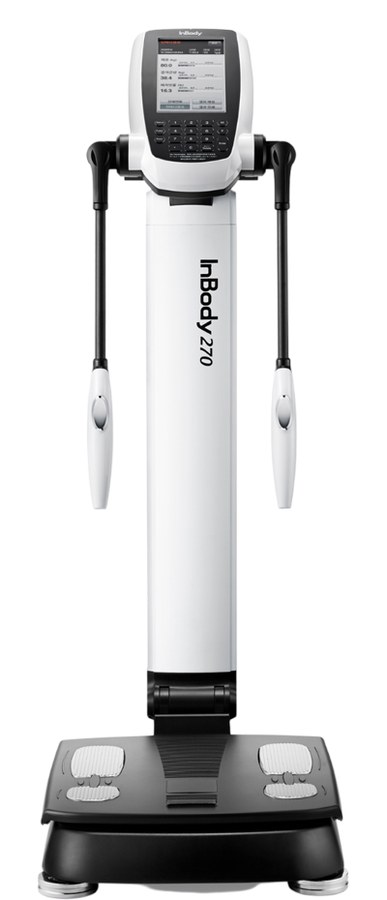
A weighing scale cannot answer that question. A body composition test can — and the data from InBody testing on keto dieters tells a far more nuanced story than the dramatic before-and-after photos suggest.
What Happens in the First Two Weeks: The Water Weight Reality
When you restrict carbohydrates below 20–50g daily (the standard keto threshold), your body depletes its glycogen stores — the glucose stored in your liver and muscles — within 24–72 hours. This glycogen depletion has a body composition consequence that most keto advocates downplay significantly: each gram of glycogen is stored with approximately 3–4 grams of water.
The average Indian adult carries 300–500g of glycogen. Depleting this releases 900g–2kg of associated water from the body. Add to this the general diuretic effect of restricting carbohydrates (lower insulin → lower kidney sodium retention → more water excreted) and the typical result is a 2–4 kg weight loss in the first 7–14 days of keto.
This is the number people excitedly share on social media. “I lost 3 kg in two weeks!” But body composition testing tells the actual story: that 3 kg is predominantly water and glycogen, not fat.
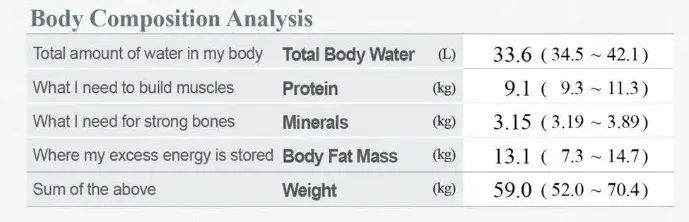
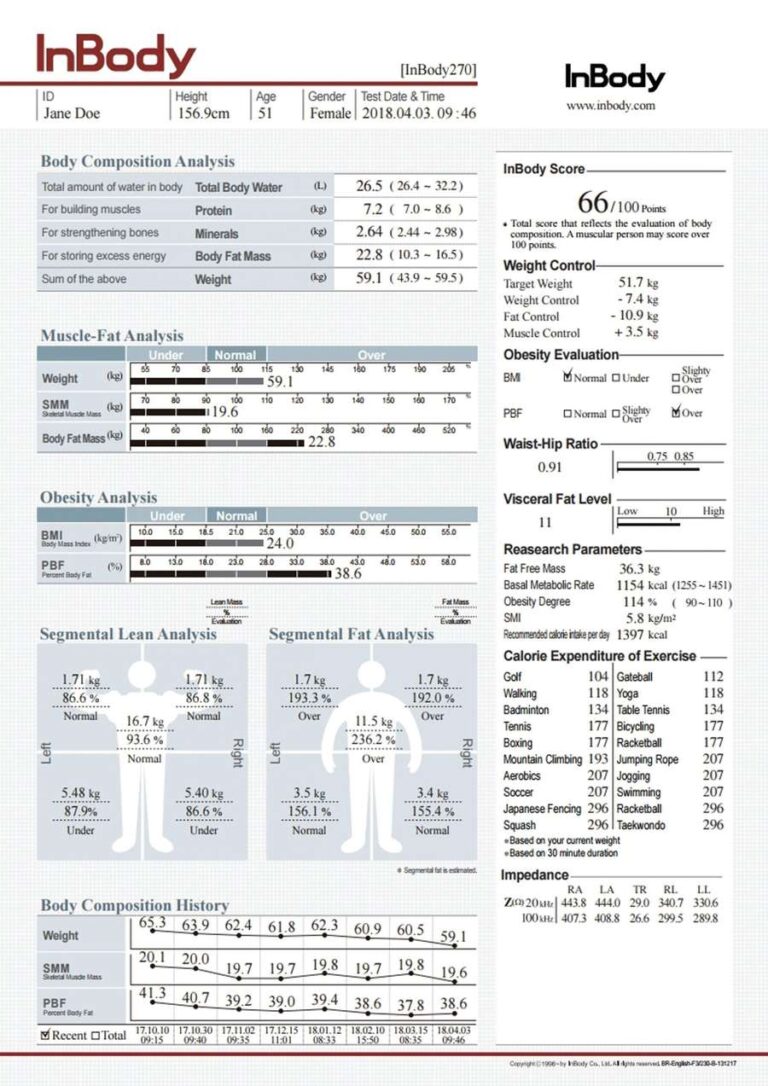
On an InBody test taken before and 2 weeks after starting keto, the typical finding is:
- Body weight: down 2.5–4 kg
- Fat Mass: down 0.3–0.8 kg (modest genuine fat loss)
- Skeletal Muscle Mass: negligible change or slight decrease
- Total Body Water: down 1.5–3 kg (the majority of the “loss”)
- ECW/TBW ratio: may shift slightly as water distribution changes
This is not keto failing — it is normal physiology. But it sets an important expectation: the dramatic early weight loss is largely water, and maintaining that loss requires maintaining the ketogenic state. The moment carbohydrates are reintroduced, glycogen and its associated water return, and 2–3 kg of the initial “loss” reappears on the scale within days. This rebound confuses and demoralises many Indian keto practitioners who interpret it as all their progress being lost, when in fact the genuine fat loss they achieved has not reversed at all.
Weeks 4–12: When Real Body Composition Changes Begin
From around the 4-week mark onward, assuming the individual is maintaining ketosis, a genuine caloric deficit, and adequate protein, fat loss begins in earnest. This is when keto shows its real body composition effects — and the data is genuinely positive when the protocol is executed correctly.
Research on keto and body composition over 8–12 week periods consistently shows:
- Meaningful fat mass reduction (1.5–3 kg in 8 weeks is typical at adherent caloric deficits)
- Good visceral fat reduction — keto’s suppression of insulin (a fat-storage hormone) is particularly effective at reducing Visceral Fat Area (VFA), which responds well to insulin normalisation
- SMM changes that depend critically on protein intake — this is where keto’s Indian implementation most commonly goes wrong
The India-Specific Keto Problem: Macros That Don’t Work
Standard keto macros are approximately 70–75% fat, 20–25% protein, and 5% carbohydrates. In Western keto implementations, the high protein proportion (20–25% of calories) typically results in adequate absolute protein intake when total calories are reasonable.
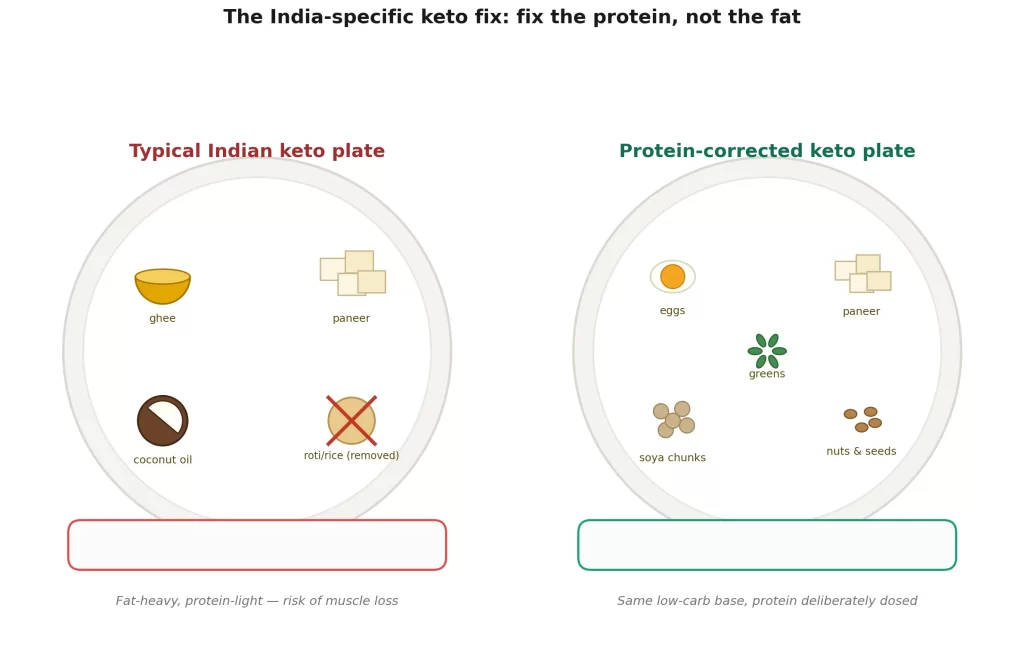
But in India’s cultural food context, something different tends to happen. Indian keto practitioners excel at removing carbohydrates from their diet — roti, rice, dal, fruits all go. They then increase fat consumption through ghee, butter, paneer, coconut oil, and full-fat dairy. But protein — the third macronutrient — often does not receive the same deliberate attention.
The result is a dietary pattern high in fat and low in both carbohydrates and protein. In body composition terms, this is dangerous: when the body is in a caloric deficit without adequate protein (below approximately 1.2–1.6g per kg of body weight), it has no choice but to break down muscle tissue to supply amino acids for essential processes. The scale continues to drop — but the InBody test reveals that the weight loss includes significant lean mass loss alongside the fat loss.
A typical InBody comparison for an Indian keto dieter who neglected protein over 12 weeks might show:
- Body weight: down 6 kg
- Fat Mass: down 3.5 kg (good)
- Skeletal Muscle Mass: down 1.8 kg (alarming)
- InBody Score: marginally improved despite significant muscle loss, because fat loss is visually dominant
This individual looks better and lighter — but their metabolic foundation has been weakened. Lower SMM means a lower Basal Metabolic Rate, making future weight management harder and increasing the risk of weight regain when keto ends.
Is Vegetarian Keto Achievable in India?
India’s large vegetarian population faces a particular challenge with keto. Traditional vegetarian protein sources — dal, rajma, chana, moong — are all legumes with significant carbohydrate content. A single cup of cooked dal contains 20–25g of carbohydrates, which alone nearly breaches the daily keto carbohydrate limit. Lentils, the protein backbone of Indian vegetarian diets, are essentially incompatible with genuine ketosis.
Vegetarian keto in India therefore requires relying almost entirely on:
- Paneer (low carb, high fat, moderate protein)
- Full-fat dairy (curd, cream, butter, ghee)
- Eggs (for ovo-vegetarians)
- Nuts and seeds (almonds, walnuts, chia, flaxseed)
- Tofu (low carb if firm, higher protein than paneer per calorie)
- Soya chunks (very high protein but some carbs — require careful portioning)
Achieving both ketosis and adequate protein on a vegetarian Indian diet requires significant dietary planning, meal preparation discipline, and usually a willingness to eat very similar foods repeatedly. It is achievable but demands more effort than non-vegetarian keto. Many vegetarian Indians who attempt keto find themselves unintentionally under-eating protein, which drives the muscle loss pattern described above.
Keto and VFA: Where the Diet Shows Its Best Results
Among all the body composition metrics, Visceral Fat Area (VFA) shows some of the most consistent improvements on a well-executed ketogenic diet. The mechanism is primarily through insulin reduction: when carbohydrate intake drops, insulin secretion drops dramatically. Since insulin is a primary promoter of visceral fat accumulation (visceral adipocytes are particularly insulin-sensitive), chronically lower insulin levels create a metabolic environment that preferentially releases and oxidises visceral fat.
Studies comparing equivalent caloric deficits between keto and conventional low-fat diets frequently show superior VFA reduction in the keto groups, particularly in the first 8–12 weeks. A 2023 study in adults with metabolic syndrome found the keto group reduced VFA by an average of 24 cm² in 12 weeks compared to 14 cm² in the calorie-restricted conventional diet group.
For Indian adults — who are known to develop metabolic disease at lower body fat levels than Western populations, largely due to propensity for visceral fat storage — this VFA advantage of keto is clinically meaningful. If your InBody test shows elevated VFA (above 100 cm²) alongside metabolic markers like elevated fasting glucose, a ketogenic approach may offer specific advantages over conventional caloric restriction.
However, this advantage is not a permanent keto-exclusive benefit. Research also shows that at equivalent caloric deficits maintained over 6+ months, the difference between dietary approaches largely disappears. The best diet for long-term VFA reduction is the one you can actually maintain — because consistency over time outperforms dietary approach over the long run.
Keto and Indian Social Life: The Sustainability Problem
Body composition science evaluates diets not just on their physiological mechanisms but on their real-world sustainability. And for most Indians, maintaining strict ketosis is genuinely difficult within normal social life.
Consider the contexts: festivals (Diwali sweets, Holi gujiya, Eid biryani), family gatherings (rice and roti are cultural staples), weddings (four-course meals built around carbohydrates), restaurants (where keto-compatible options are rare outside premium urban establishments), and the simple reality that most Indian home cooking is designed around whole grains and legumes.
Most Indian keto practitioners report following “cyclical keto” or “loose keto” — keto on weekdays with some carbohydrate flexibility on weekends or at social events. This is entirely pragmatic, and it may actually have advantages: research suggests that periodic carbohydrate refeeds can restore leptin levels, support thyroid function, and improve training performance — all of which can be suppressed by prolonged continuous ketosis.
The body composition implication of cyclical keto is that you will see glycogen and water fluctuations more frequently. Learning to interpret your InBody test through this lens — expecting water weight fluctuations week to week but tracking fat mass and SMM as the genuine progress indicators — prevents the discouragement that comes from scale variability.
How to Use InBody Testing to Monitor Keto Correctly
The cardinal rule for monitoring keto with body composition testing is this: track SMM and fat mass, not body weight.
Specific guidance for InBody testing while on keto:
Testing Timing
Test in a stable keto state, not immediately after a carbohydrate refeed. Testing within 48 hours of significant carbohydrate consumption will show elevated total body water (glycogen restoration) that inflates your apparent weight and may misrepresent your fat loss progress. Test after at least 3–4 days of consistent keto adherence for the most accurate representation of your keto body composition.
What Success Looks Like on the InBody Report
- Fat Mass: decreasing each test — the primary goal
- SMM: stable or increasing — if SMM is declining, protein is inadequate; increase it immediately
- VFA: decreasing — particularly expected on keto; a good indicator that the diet is working metabolically
- ECW/TBW ratio: stable in normal range — significant elevation may indicate inflammation or physiological stress; worth discussing with a healthcare provider
The Red Flag Pattern
If your InBody shows body weight falling alongside both fat mass and SMM declining together, your keto protocol is causing muscle catabolism. The intervention is immediate: increase protein to at minimum 1.6g/kg body weight, and ensure resistance training is part of your regimen. Keto without resistance training and adequate protein consistently produces more muscle loss than the same caloric deficit with adequate protein and training.
The Exit Strategy: What Happens When You Stop Keto
Many Indian keto practitioners eventually decide to return to a more conventional diet — because of social constraints, food cravings, gastrointestinal issues (keto-related constipation is common in India due to reduced fibre intake), or simply dietary fatigue.
The body composition consequences of ending keto are predictable and should be expected rather than feared:
- Within 48–72 hours of carbohydrate reintroduction, glycogen stores refill and body weight increases by 2–3 kg — predominantly water, not fat.
- If the transition back to a conventional diet results in a caloric surplus (easy to do when no longer constrained by the appetite-suppressive effects of ketosis), fat mass will begin increasing.
- If the conventional diet is protein-adequate and resistance training is maintained, SMM should remain stable or improve post-keto.
The practical exit strategy: reintroduce carbohydrates gradually (add 25–50g daily per week), prioritise whole food complex carbohydrates (oats, sweet potato, legumes, fruits) over refined carbohydrates, maintain protein at 1.6g/kg, and continue resistance training. Monitor with InBody testing at 6–8 week intervals to ensure fat mass is not trending upward. The rebound risk is real but entirely manageable with data and a planned approach.
The Bottom Line on Keto for Indian Adults
Keto is a legitimate dietary tool with real body composition benefits — particularly for VFA reduction and insulin-driven metabolic improvement. But it is not magic, it is not superior to all other approaches for all goals, and it carries specific risks in the Indian context that the enthusiastic community often glosses over.
The most dangerous version of keto for Indian adults is high-fat, low-carbohydrate, and low-protein — particularly common in vegetarian practitioners. This combination loses body weight on the scale but trades meaningful fat mass loss for muscle loss, leaving the body compositionally worse off despite looking lighter.
The most effective version of keto is protein-adequate (1.6–2.0g/kg), calorie-appropriate, combined with resistance training, and monitored with body composition testing rather than scale weight.
Know What Your Keto Is Actually Doing to Your Body
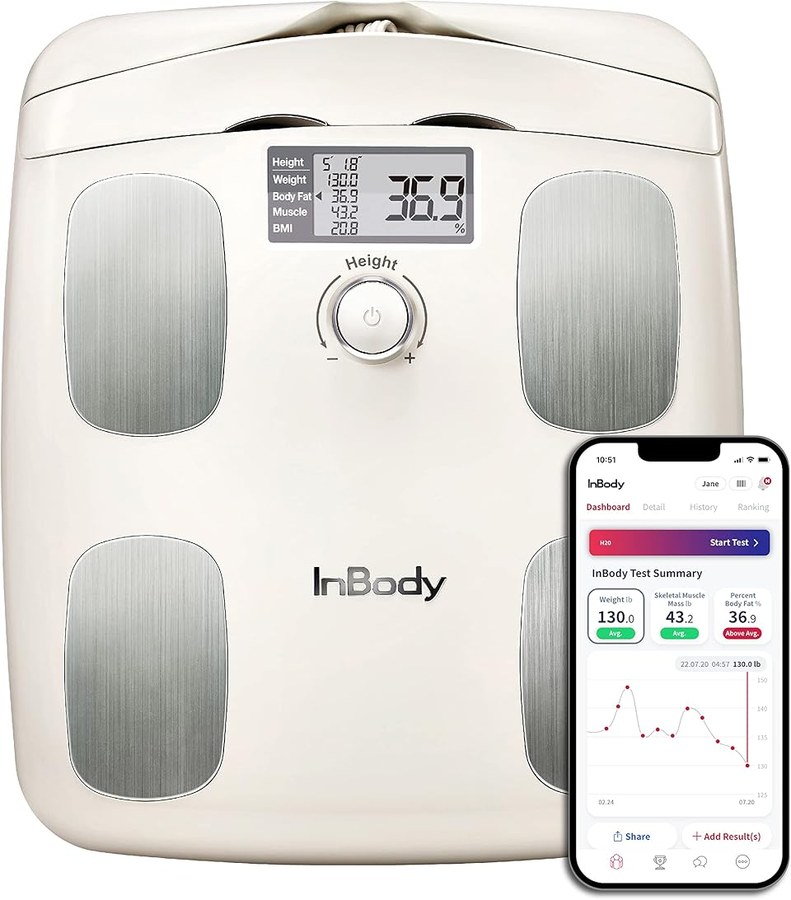
If you are on a ketogenic diet right now, or considering one, the single most valuable investment you can make is a body composition test. InBody testing gives you your exact Skeletal Muscle Mass (SMM), Percent Body Fat (PBF), Visceral Fat Area (VFA), ECW/TBW ratio, and InBody Score — the complete picture of what is actually changing in your body, beyond what the scale tells you.
Test before you start, at 8 weeks, and at 12 weeks. If your SMM is holding steady and your VFA is falling, your keto is working. If your SMM is dropping, you have critical information that lets you fix your protein intake before months of muscle loss compound into a real metabolic problem.
Find your nearest InBody test centre across India at inbody.in/locations. Stop guessing what your diet is doing to your body composition — measure it.
Frequently Asked Questions
Does keto cause fat loss or muscle loss?
Body composition tracking shows keto can cause rapid initial weight loss that's partly water weight, with fat loss continuing if a calorie deficit is maintained — but muscle loss risk rises if protein intake isn't kept high enough during the restrictive phase.
Is keto sustainable long-term in an Indian diet context?
It's challenging given how carbohydrate-centric Indian cuisine is (rice, roti, dal), and many people find strict keto difficult to sustain beyond a few months without significant lifestyle disruption.
How do I check if keto is working for my body composition specifically?
An 8-week body composition retest comparing fat mass and muscle mass changes gives a much clearer picture than the scale alone, which can't distinguish water weight from actual fat loss.

Most trending articles

वज़न बढ़ाने के लिए क्या खाएं? सही डाइट प्लान (सिर्फ ज़्यादा खाना नहीं)
सिर्फ ज़्यादा खाने से मांसपेशी नहीं बनती, चर्बी बढ़ सकती है। सही कैलोरी सरप्लस, प्रोटीन और डाइट प्लान जो वज़न को सही तरीके से बढ़ाए — पूरी जानकारी हिंदी में।
भारत में प्रोटीन कितना ज़रूरी है? असली आंकड़े और सही फॉर्मूला
IMRB के एक सर्वे में लगभग 73% भारतीय आहार प्रोटीन-कम पाए गए। सही प्रोटीन टारगेट कैसे निकालें और किन फूड्स से पूरा करें — पूरी जानकारी हिंदी में।
Weight Loss या Fat Loss: असली फर्क क्या है?
वज़न घटना और चर्बी घटना एक चीज़ नहीं है। तेज़ी से वज़न घटाने पर मांसपेशी क्यों चली जाती है, और असली फर्क कैसे पता करें — हिंदी में पूरी जानकारी।