
Body Composition 7 min read
Segmental Fat Analysis Over 100%: What It Really Means
Trunk or arm fat showing over 100% on your InBody sheet? What the bar is measured against and how to read left-right gaps without panic.
Reading about body composition? Find an InBody test centre near you →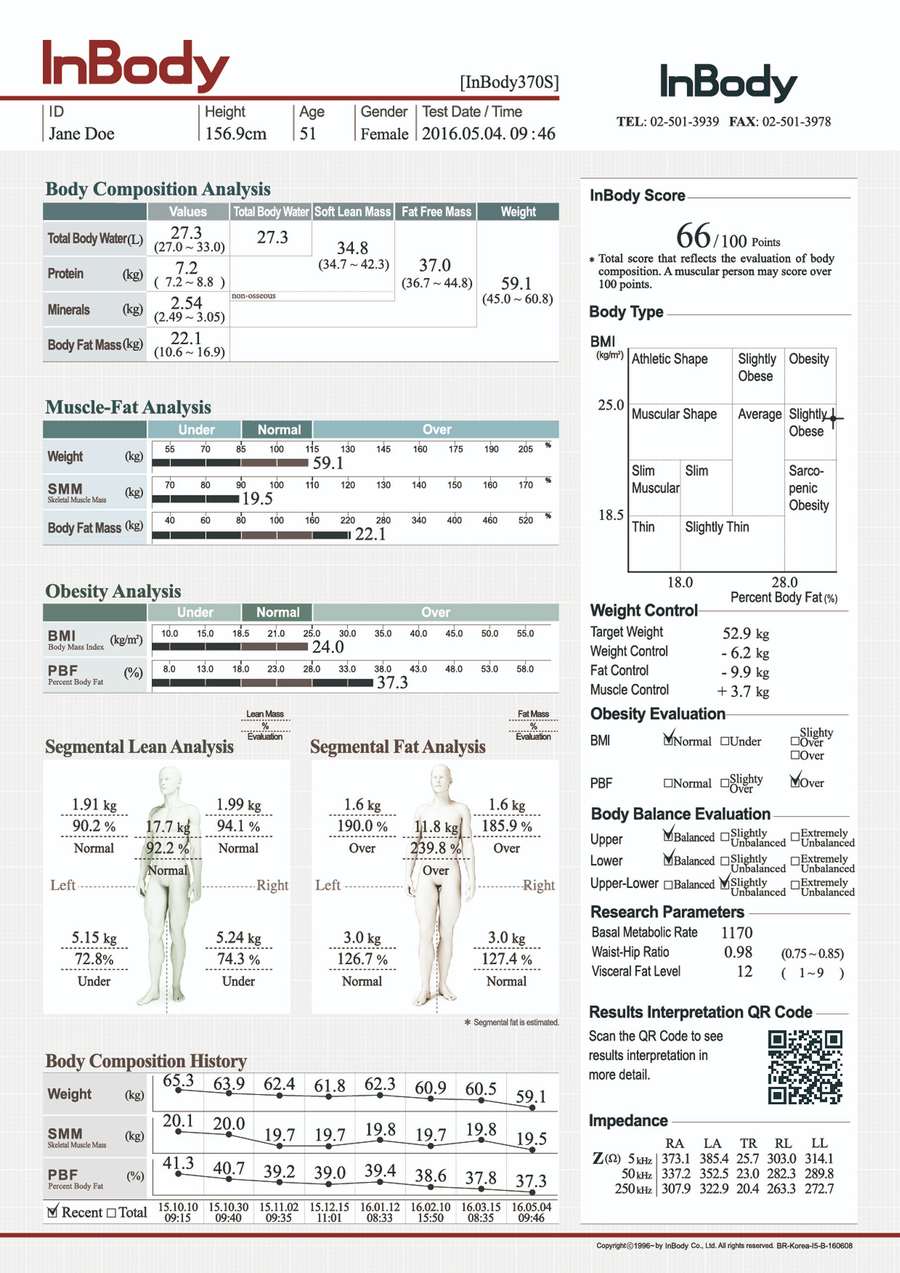
Segmental Fat Analysis Over 100%: What It Really Means
You look at your InBody printout and the trunk bar in the segmental fat analysis section reads 142%. Your arms say 118%. Your legs say 109%. Nobody at the centre explained whether that is bad, normal, or a mistake. Online, gym blogs say opposite things: one says “100% or lower is healthy”, another says “over 100% is normal for most people”.
Both are oversimplified. This guide explains what the percentage on the segmental fat bar is measured against, what a value over 100% tells you, why it is usually highest on the trunk, how the lean bars differ, and how much weight to put on left-right differences. The honest summary: over 100% on the fat bar means more fat than the reference, not “normal-ish”. It is common, but common is not the same as fine.
The Two Segmental Charts Side by Side
Most InBody sheets show two charts that look alike and answer different questions:
- Segmental lean analysis shows how much lean (non-fat) mass is in your right arm, left arm, trunk, right leg and left leg.
- Segmental fat analysis shows how much fat is in each of the same five segments.
Each is drawn as a bar with a percentage. People tend to read both the same way, and that is where confusion starts.
What “100%” Is Measured Against
According to InBody’s training materials for its clinical models, the percentages are compared against a reference based on your height, not on your current weight alone. For segmental lean, the upper bar compares each segment with the lean mass expected at an ideal weight for your height, and the lower bar compares it with your current weight. For segmental fat, InBody’s manual describes the chart as derived from the lean analysis and compared with the ideal for your height.
One honest caveat: the wording on different InBody pages varies between “ideal” and “average person of the same height”. If you need an exact definition for a clinical purpose, ask InBody’s technical team or check your specific model’s manual. What is consistent is the direction. 100% is the reference. Above 100% means more than the reference, below 100% means less.
Fat Bar Over 100%: What It Says
For fat, being above the reference is not neutral. If your total body fat is above the reference for your height, almost every segment will read over 100%, and the trunk usually reads highest because that is where adult fat commonly sits. Indians tend to carry more body fat at the same BMI, which is why an over-100% trunk is so common on Indian sheets. We cover that pattern in our post on thin-fat syndrome in India.
Use the segmental fat bar alongside your whole-body percentage and your visceral fat reading, not instead of them. We do not publish a “normal trunk fat range” because the manufacturer’s documents we reviewed do not provide one. Visceral fat is a separate measurement; see our visceral fat guide.
The Fat Bar Is an Estimate, Not a Separate Scan
InBody itself describes the segmental fat values as estimates based on other body composition results. They are derived from the lean measurements rather than measured independently. That is useful for seeing the pattern of where fat sits, and it is a good reason not to read tiny differences or single percentages as precise facts.
The Lean Bar: Lean Is Not Muscle
The lean bar can mislead in a different way. Lean mass includes muscle, but also organs, bone and water. InBody USA has said it would be wrong to call the segmental lean chart a muscle chart. Water can inflate it: a swollen ankle after a sprain, for example, can push the lean reading for that leg up. If your fat-free mass looks surprisingly high and your ECW ratio is also elevated, some of the “lean” may be fluid.
Left-Right Gaps: What Counts as Meaningful?
This is where InBody-branded sources disagree with each other, and no clinical consensus exists:
| Source | Rule of thumb for imbalance |
|---|---|
| InBody India results-sheet guide (blog) | Within about 5% is normal |
| InBody India result-sheet page | A difference of about 0.5 kg between limbs is worth noting |
| Trainer material reported from InBody USA | About 6% or more in arms or 3% or more in legs |
| InBody USA guidance | Uneven values may reflect over-training or injury; no numeric threshold |
There is also normal biology to account for. In healthy adults the dominant arm usually carries a few percent more lean mass than the other, and legs differ by less. Treat these figures as rules of thumb from different sources, not as diagnostic cut-offs, and rely on repeated scans rather than one reading. For an injury or pain, see a physiotherapist or doctor; our post on muscle imbalance covers common causes, and body composition in physical rehabilitation shows how clinics use segmental trends.
How Reliable Are the Segments?
Segmental bioimpedance tracks DXA reasonably well for limbs and least well for the trunk. In one large validation of segmental bioimpedance against DXA (around 480 adults), whole-body and limb lean mass correlated strongly, while the trunk had the weakest agreement. In practice that means trunk-based statements, like “my trunk fat is 142%”, deserve the most caution. Our post on DSM-BIA versus single-frequency BIA explains why segmental measurement helps and where it stops.
Using the Segmental Bars Sensibly
- Read the whole sheet first. Check total body fat percentage, visceral fat and muscle before drilling into segments. Our guide to reading the results sheet goes section by section.
- Watch the direction over time. Same machine, same conditions, same time of day.
- Do not spot-reduce. Exercising the trunk does not selectively burn trunk fat. Overall fat loss reduces fat in all segments.
- Use lean gaps for training emphasis. A consistently lower lean value on one side can guide where to add work, ideally with a coach or physiotherapist.
- Ignore tiny differences. A gap of a few hundred grams is within the measurement’s error.
Frequently Asked Questions
Is segmental fat over 100% bad?
It means that segment holds more fat than the reference for your height. That is common, especially on the trunk, and it is not a diagnosis. Look at your total body fat percentage and visceral fat for context, and talk to a professional if you are concerned.
What is a good trunk fat percentage on InBody?
The manufacturer documents we reviewed give no universal “good” range for the trunk bar. Use your whole-body body fat percentage and visceral fat reading to judge risk, and track the trunk bar as a trend rather than a target.
Why is my left arm bigger than my right?
Hand dominance, one-sided sports, training habits or temporary swelling can all do it. In healthy adults the dominant arm often carries a few percent more lean mass. A large or new gap alongside pain or injury should be checked by a physiotherapist or doctor.
How much left-right difference is okay?
Sources disagree: about 5% in one InBody India guide, about 0.5 kg in another, and 6% for arms or 3% for legs in trainer material. There is no clinical consensus, so use these as rules of thumb and rely on repeat scans.
Can I reduce trunk fat specifically?
No. Fat loss happens across the body, and where it comes off first varies from person to person. Overall fat loss through nutrition, activity and sleep is what lowers the trunk value.
Does segmental analysis diagnose sarcopenia?
No. Low lean values can raise a flag, but sarcopenia diagnosis needs low muscle mass and low strength. See our post on sarcopenia in India for how it is assessed.
Read Your Own Sheet With Confidence
The segmental bars make most sense when you can compare two scans over time. Find an InBody test centre near you, and see how each section looks on the result sheet page before you go. If you are choosing equipment, the InBody model comparison shows which models report which outputs.
This article is for general education and is not medical advice.
Related reading: how to read your InBody report.

Most trending articles
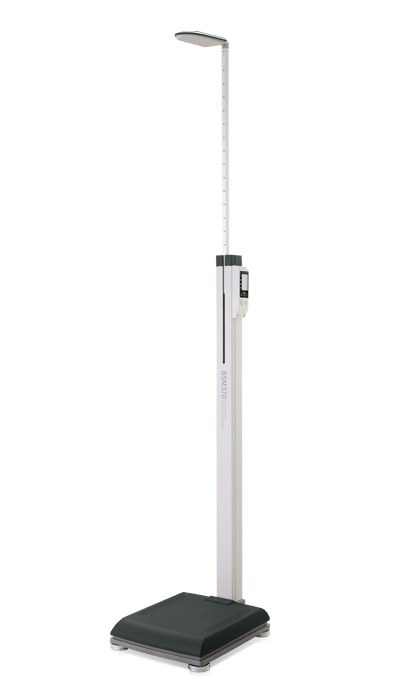
Student Fitness Screening in India: A Guide for Schools
CBSE HPE, Fit India and Khelo India rely on BMI. How schools and colleges can add body composition screening safely, with child caveats and DPDP consent.
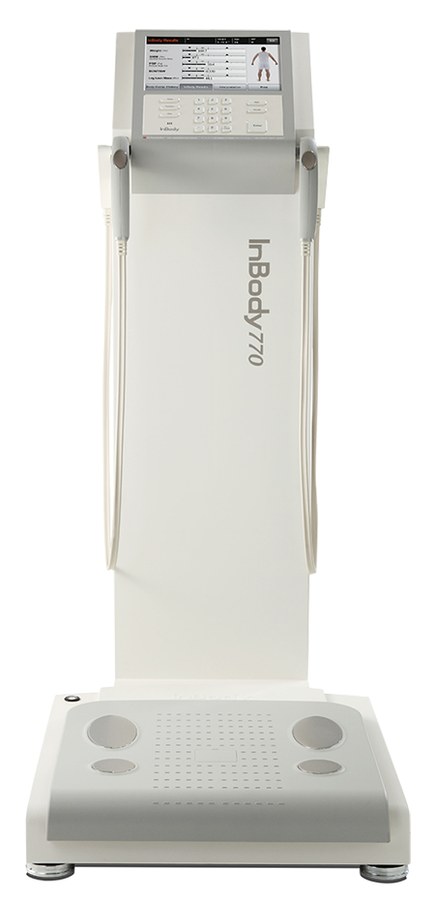
Creatine and Your Body Composition Scan: What Changes
Creatine raises body water and lean mass readings within a week on BIA and DXA. What the studies show and how to time your scans to read progress honestly.
Fitness Testing and Body Composition for Sports Academies
A practical fitness testing battery for Indian sports academies: body composition, grip, jumps, sprints, Yo-Yo, Khelo India context and youth maturation.