Pre-Purchase Consultation Customer Support Find InBody Test Center
How to Read Your InBody Result Sheet | Complete India Guide 2026

How to Read Your InBody Result Sheet

A section-by-section guide to every number on your InBody printout — what it means, what is normal, and what to do about it.

On this page

Section 1

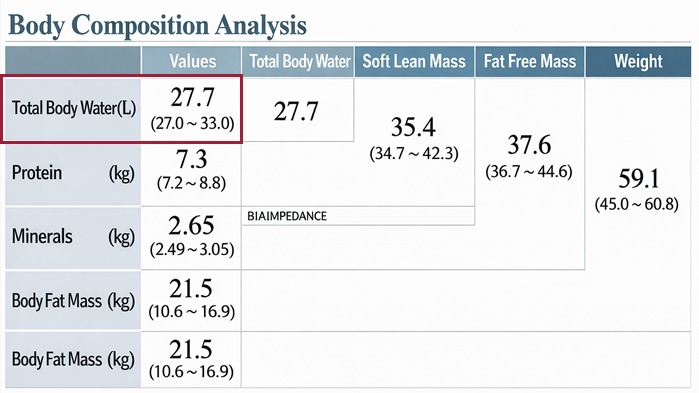
Body Composition Analysis

The top of your sheet shows the four building blocks of your body weight, in kilograms:

  • Total Body Water (TBW): ~50-65% of body weight. The largest single component.
  • Protein: ~16-20%. Mostly in muscle. Low protein = low muscle mass.
  • Minerals: ~5-6%. Bone mineral and soft-tissue minerals.
  • Body Fat Mass: the rest. Includes subcutaneous + visceral fat.

Each value has a normal range bar. Aim for the green/healthy zone for protein and minerals; lower-end of range for body fat mass.

Section 2

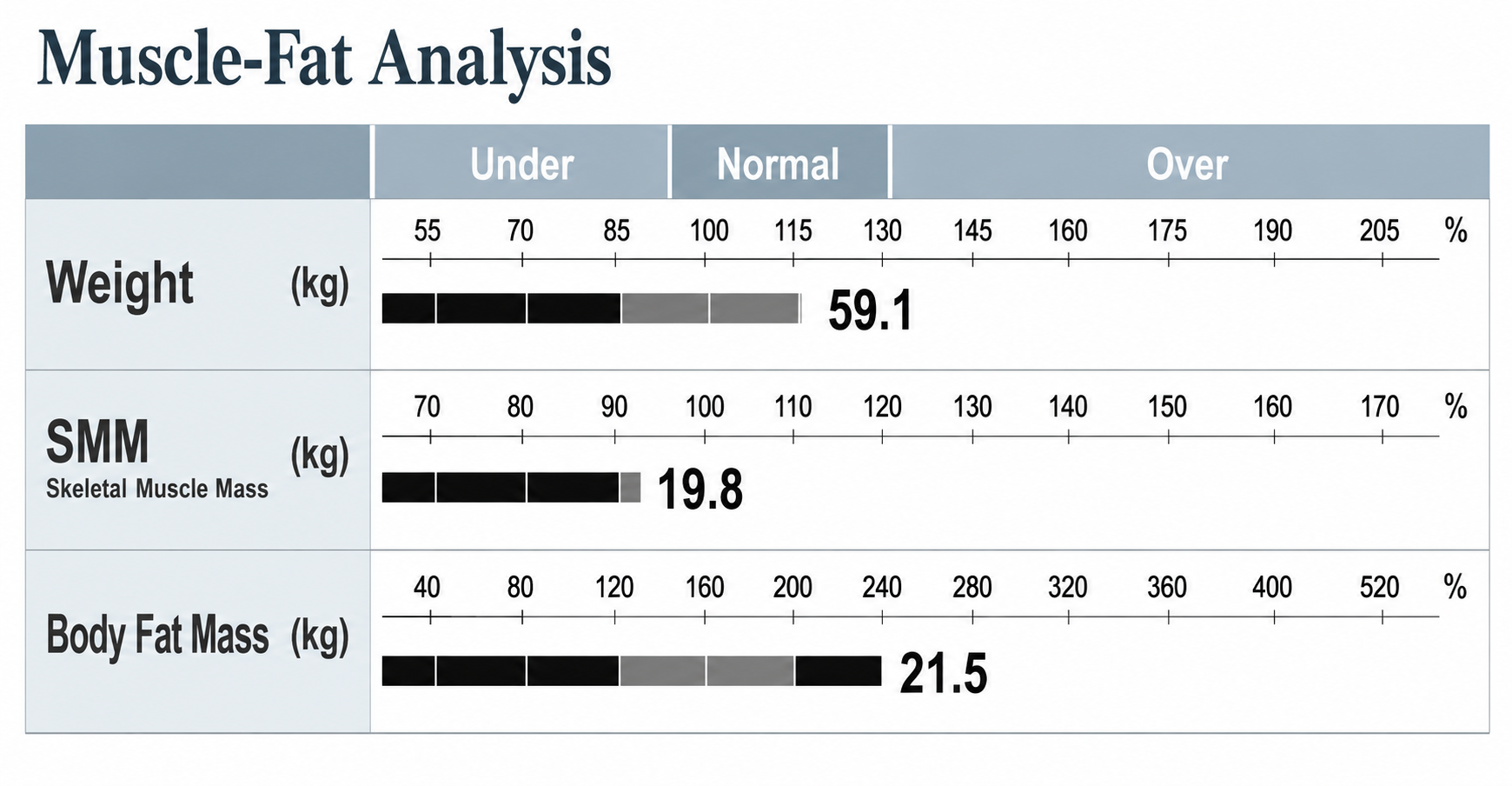
Muscle-Fat Analysis

Three bars: Weight, Skeletal Muscle Mass (SMM), Body Fat Mass (BFM). The shape of these three bars tells your body type at a glance:

C-shapeLow muscle, high fat. "Skinny fat" or obese pattern. Need: resistance training + caloric deficit.
I-shapeAverage muscle and fat. Most beginners. Need: progressive resistance training + protein.
D-shape (athletic)High muscle, low fat. Athletic build. Maintain.
Section 3

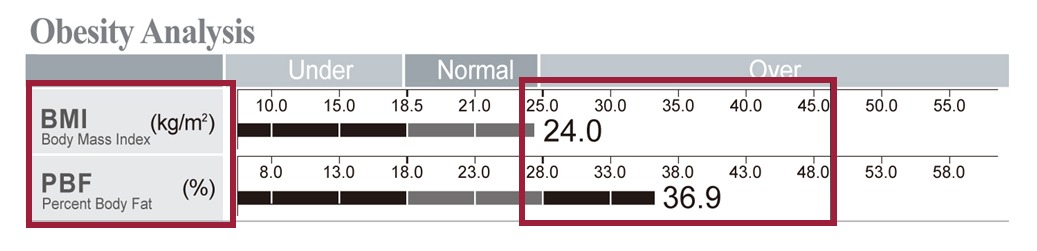
Obesity Analysis (BMI & PBF)

Two metrics here:

  • BMI (Body Mass Index): weight ÷ height². Indian healthy range: 18.5-22.9 (lower than international 18.5-24.9 due to higher visceral fat risk).
  • PBF (Percent Body Fat): the more important number. Indian men: 15-20% healthy. Indian women: 23-28% healthy.

If BMI says "overweight" but PBF is normal, you likely have high muscle mass (not actually overweight). If BMI is normal but PBF is high, you are "skinny fat" — common in Indians.

Section 4

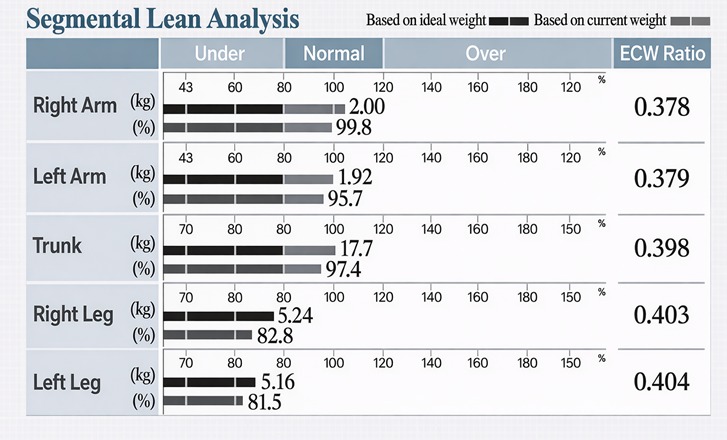
Segmental Lean Analysis

Five bars showing muscle mass in each arm, each leg, and the trunk. Each bar has two values: actual mass (kg) and percentage of normal (%).

What to look for: Symmetry. A difference of more than 0.5 kg between left and right limbs may indicate injury, postural issues, training imbalance, or — clinically — neurological or muscular conditions.

Trunk muscle below 90% of normal is a sarcopenia warning, especially in adults over 50.

Section 5

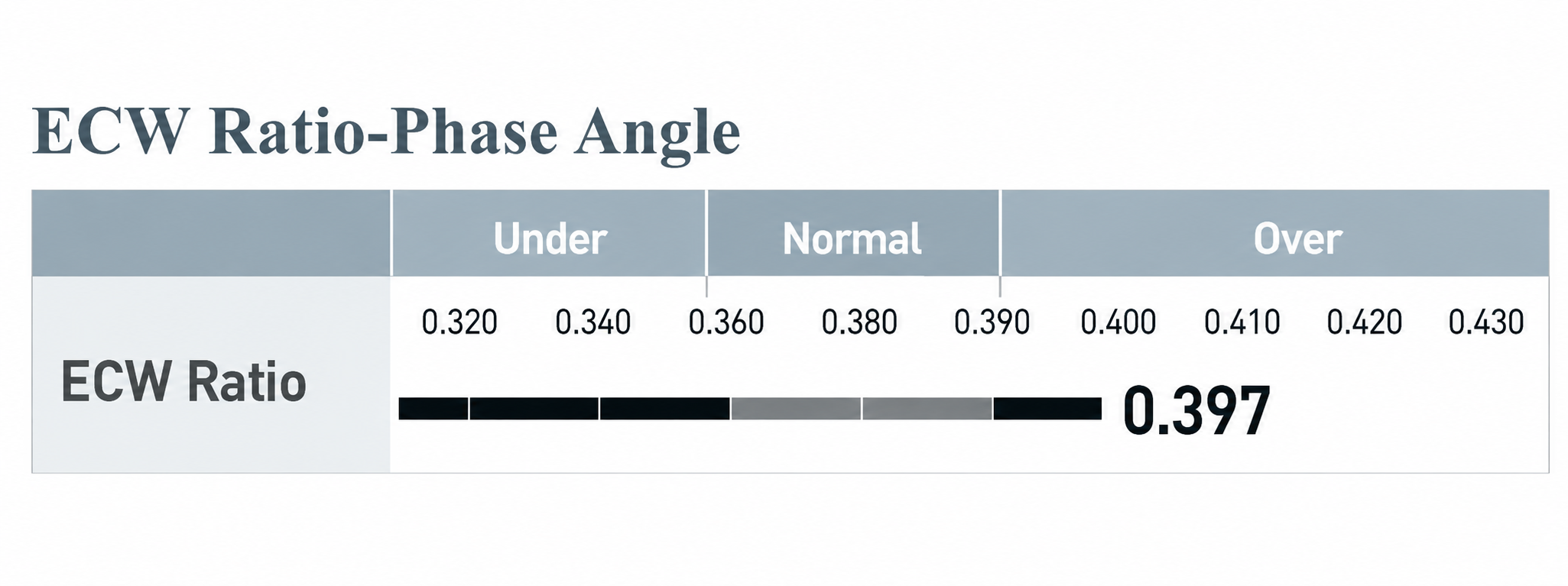
ECW/TBW Ratio

Extracellular Water ÷ Total Body Water. One of the most clinically important numbers on the sheet.

RangeMeaning
0.36-0.39Normal — healthy fluid balance
0.39-0.40Mild fluid imbalance — monitor
>0.40Edema/inflammation — could indicate kidney, heart, liver, or post-surgical issues

Used clinically in nephrology, oncology, cardiology, and post-surgical recovery. Available on professional InBody devices (270S, 380, 570, 770S, 970S, S10).

Section 6

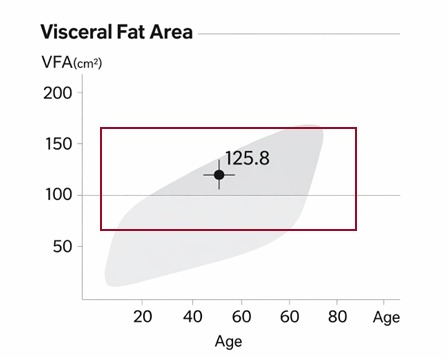
Visceral Fat Level

Visceral fat is the dangerous fat around organs — linked to diabetes, heart disease, and metabolic syndrome. InBody scores it 1-30:

Visceral Fat LevelStatus
1-9Healthy
10-14Elevated — action recommended
15+High risk — diabetes/heart disease risk significantly increased

Indian-specific note: Indians carry visceral fat at lower BMIs than Caucasians. A level of 8-9 in an Indian adult deserves the same attention as 12-13 in a Caucasian adult.

Section 7

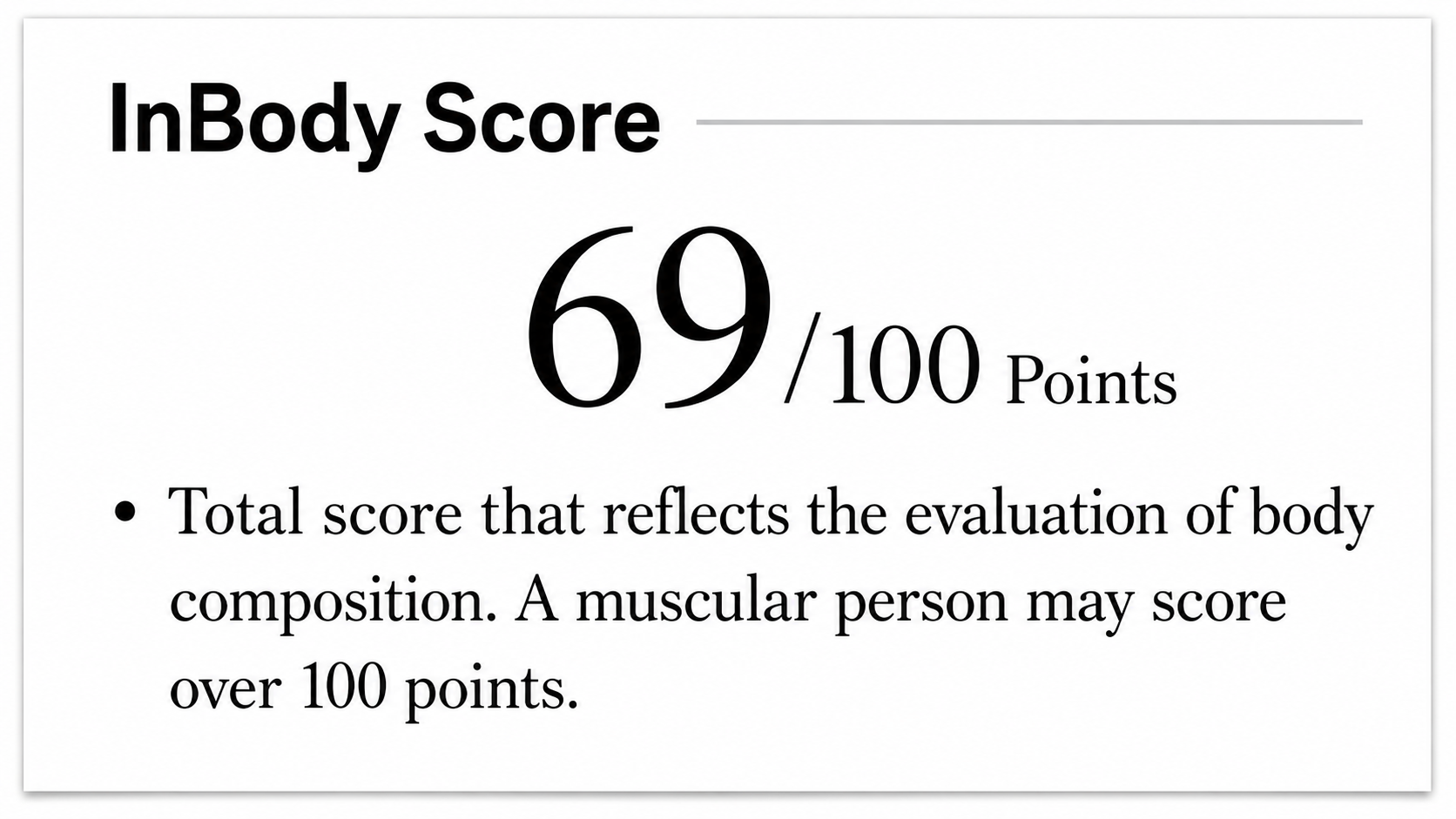
InBody Score

A single 0-100 number summarising your overall body composition health.

Below 70 — Poor. High fat, low muscle.
70-79 — Average. Normal but not optimised.
80-89 — Good. Athletic.
90+ — Excellent. Elite-athlete level.

Use the InBody Score as a single-number trend tracker over weeks and months — but always look at the underlying components too.

Section 8

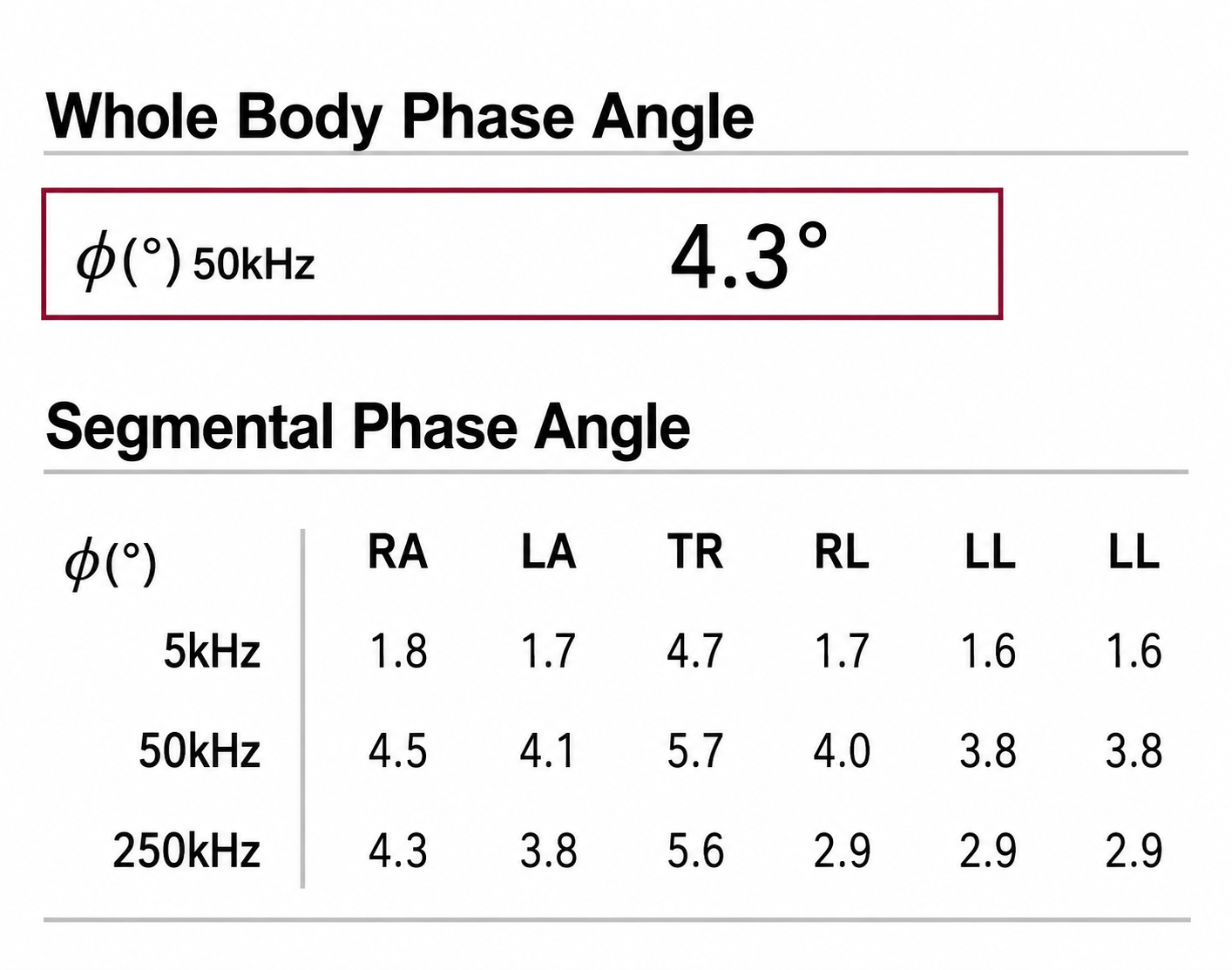
Phase Angle

A marker of cellular health and membrane integrity, measured in degrees (°). Available on InBody 770S and 970S.

GroupNormal Range
Indian Men, 20-50 yrs5.5-7.5°
Indian Women, 20-50 yrs5.0-6.5°
Athletes7.0-9.0°
Elderly / Clinical Concern<4.5°

Used clinically in oncology (prognosis), sarcopenia (muscle quality), dialysis (treatment monitoring), and post-surgical recovery.

Section 9

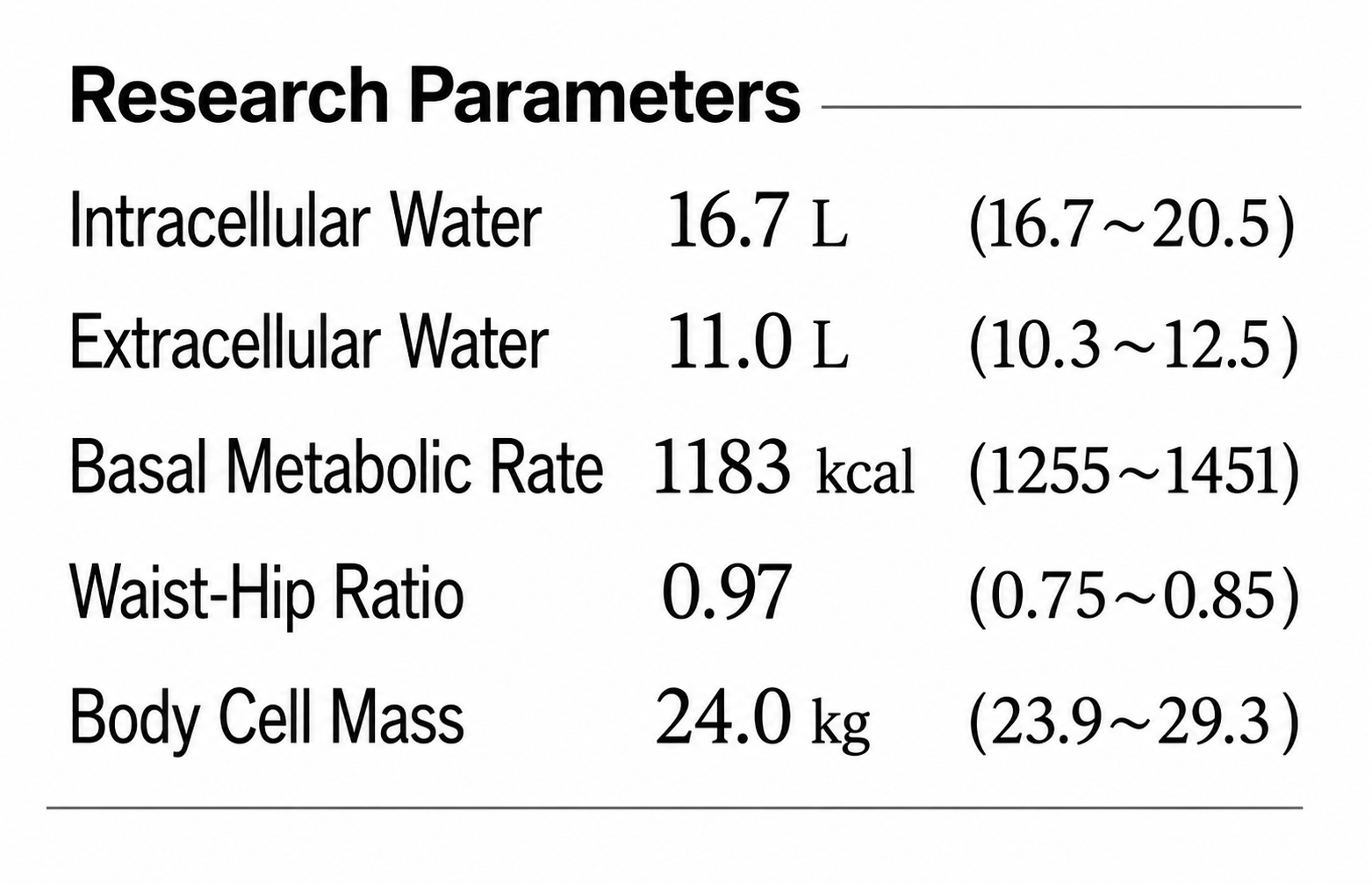
Basal Metabolic Rate (BMR)

Calories your body burns at rest, calculated from your actual lean body mass (not estimated from age and weight, which is far less accurate).

How to use it: Add 200-400 cal for sedentary activity, 400-600 for moderate activity, 600+ for active training. To lose fat, eat 300-500 cal below total daily expenditure. To build muscle, eat 200-300 cal above.

Why it changes: More muscle = higher BMR. This is why building muscle is the most powerful long-term fat loss strategy.

Section 10

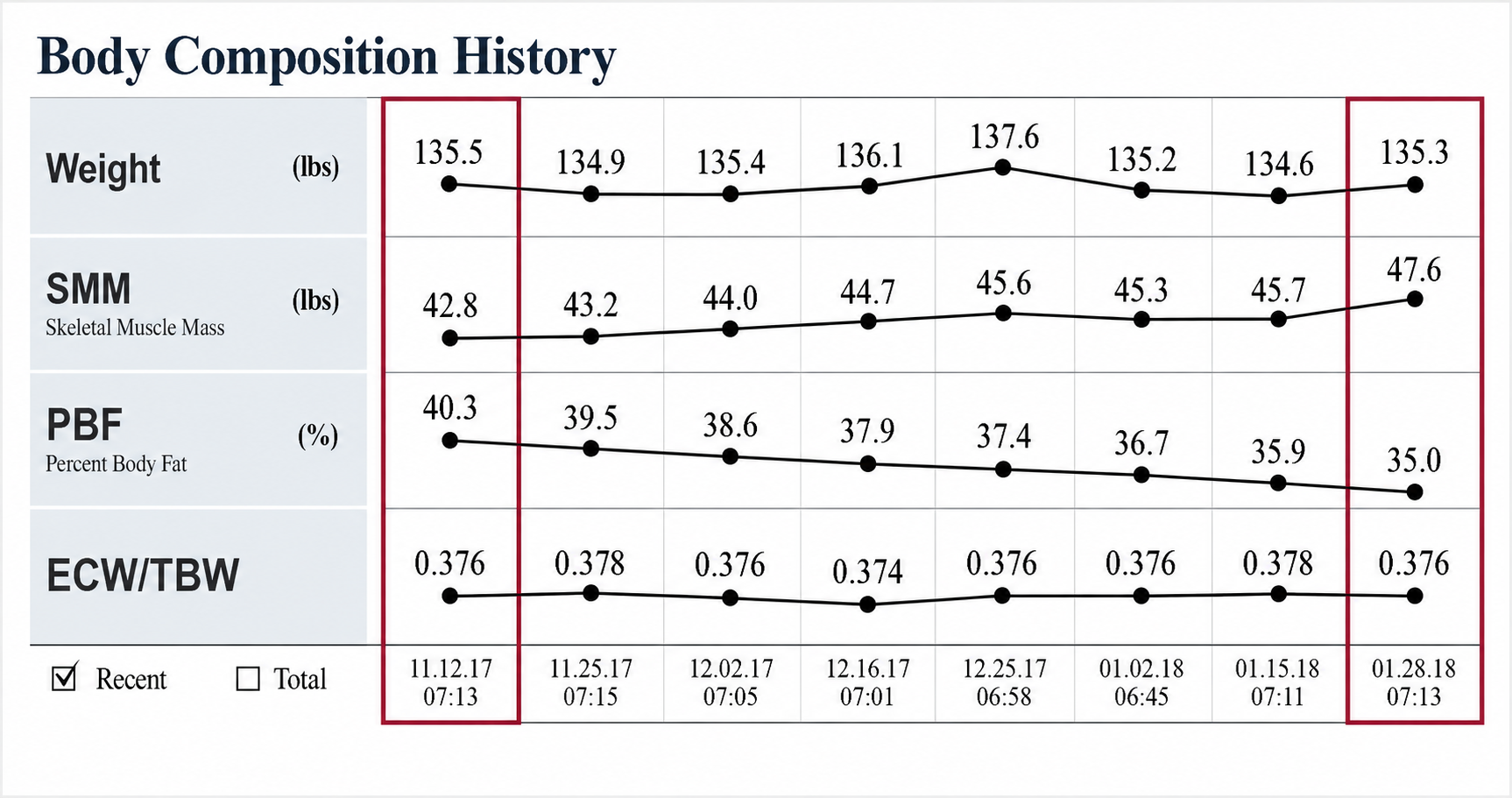
Body Composition History

A timeline showing how weight, skeletal muscle, and body fat % have changed over your previous tests.

The ideal pattern: Weight stable or slowly down, skeletal muscle up, body fat % down. This is true body recomposition. Scale weight alone hides this — InBody history reveals it.
InBody Result Sheet FAQ

What does an InBody result sheet show?

Body fat percentage, skeletal muscle mass, total body water (intracellular + extracellular), visceral fat level, segmental analysis, BMR, InBody Score, and on professional models — phase angle and ECW/TBW ratio.

What is a good InBody Score?

Below 70 poor; 70-79 average; 80-89 good (athletic); 90+ excellent (elite). Reflects your fat-muscle-water balance.

What is normal visceral fat level on InBody?

1-9 healthy, 10-14 elevated, 15+ high risk. Indians: even 8-9 deserves attention due to higher visceral fat susceptibility.

What is phase angle on the InBody result sheet?

A marker of cell-membrane health (4-8°). Higher = healthier cells. Used clinically for sarcopenia, oncology, dialysis. Available on 770S/970S.

What is the ECW/TBW ratio?

Extracellular ÷ Total water. Normal 0.36-0.39. Above 0.39 = inflammation/edema (kidney, heart, post-surgical).

How do I interpret segmental muscle analysis?

Look for symmetry between left/right limbs. Difference >0.5 kg may indicate injury, postural issues, or training imbalance. Trunk muscle <90% of normal: sarcopenia warning.

Get your own InBody result sheet.

Get tested at any of 1,500+ InBody centres in India — full result sheet in 60 seconds.