
Body Composition 11 min read
Body Composition Testing for Athletes in India: The Cricket Science Behind Power, Speed, and Injury Prevention
A fast bowler's front foot slams down at roughly 5.5x his body weight. The body composition science behind cricket, badminton, and kabaddi performance in India.
Reading about body composition? Find an InBody test centre near you →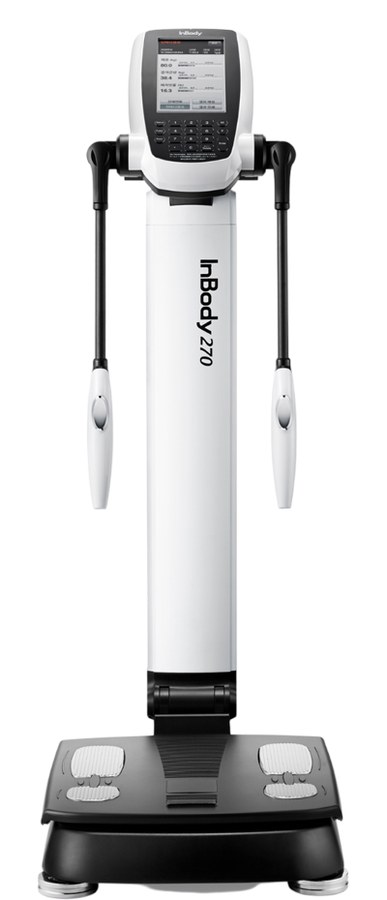
He Looks Like an Athlete. His Body Composition Says Something Different.
Walk into any turf ground or cricket nets session in Pune, Chennai, or Ludhiana on a weekend morning and you will spot him: the 17-year-old fast bowler with the lean frame, the flat stomach, the effortless run-up. Coaches call him “fit.” But body composition testing for athletes in India is increasingly surfacing an uncomfortable pattern hiding behind that lean look — a body under-muscled for the forces it is about to absorb, or one that has quietly built a strength imbalance between its bowling arm and its non-dominant side.
“Fit-looking” and “athlete-conditioned” are not the same thing. A scale cannot tell the difference; a mirror cannot either. A body composition scan can — and for a country whose sporting identity is built around cricket, and increasingly around badminton, kabaddi, and track and field, that difference is starting to matter well beyond the national team.
Why Weight and BMI Tell You Nothing About Athletic Readiness
For a working professional trying to lose fat, weight is a reasonable — if crude — proxy for progress. For an athlete, it is close to meaningless. Two cricketers can share the same height, weight, and BMI and be built for completely different jobs on the field, because BMI cannot see what actually determines performance: how much of that weight is skeletal muscle, where it sits, and how efficiently the nervous system can move it.
Power-to-weight ratio — the force a muscle can generate relative to the body mass it has to move — is the real currency of explosive sport. Sports-science research on elite fast bowlers has found weight and BMI on their own show little to no association with bowling speed; what separates fast bowlers from the rest is limb length, muscular strength, and body composition together. A heavier bowler is not a faster bowler; a bowler who has built lean mass without dragging along excess fat is.
Skeletal Muscle Mass (SMM) is the engine behind that ratio in every power and sprint-based sport — fast bowling, badminton smashes, kabaddi raids, the 100m sprint. Research comparing professional fast bowlers to non-athletic controls found bowlers carry significantly greater lean mass specifically in the trunk relative to overall body mass — the exact region that generates rotational power through the delivery stride. No scale or BMI chart can show you that.
Body composition testing also uniquely provides segmental, side-to-side lean mass analysis — comparing muscle mass in your left arm against your right, left leg against right. This matters in one-sided sports: fast bowling, badminton, and racket sports all load one side of the body far more than the other, year after year. Left unmonitored, that imbalance is exactly the kind of pattern sports medicine watches for — which is why segmental analysis has become standard in serious sports-science screening, not a novelty metric on a printout.
Cricket’s Different Bodies: Why Fast Bowlers, Batsmen, and Fielders Need Different Numbers
Cricket is unusual among team sports because a single XI contains three or four fundamentally different athletic profiles, each with a different optimal body composition.
Fast Bowlers: Built to Absorb Force, Not Just Generate It
Fast bowling is one of the most mechanically violent repeated actions in sport. In a laboratory study of trained male fast bowlers, researchers measured peak vertical ground-reaction force at front-foot contact — the moment the front leg plants and the body decelerates a full sprint into a delivery — at roughly 5.5 times the bowler’s own body weight, borne almost entirely through one leg, dozens of times a session. That reframes “fitness” for a bowler: not primarily looking lean, but having enough skeletal muscle mass and conditioning in the front leg, hips, and trunk to absorb that load safely, spell after spell.
It is also why bowlers are studied for side-to-side asymmetry. Research on the quadratus lumborum — a deep trunk muscle central to the bowling action — found around 65% of fast bowlers show measurably larger muscle development on their bowling side than their non-bowling side. Interestingly, the same research found asymmetry and injury are not simply linked — bowlers without injury sometimes showed larger asymmetries than injured bowlers, suggesting one-sided adaptation can be a normal, protective response. The takeaway is not “eliminate asymmetry” but “track your athlete’s baseline over time” — only possible with segmental data.
Batsmen and Fielders: Endurance, Agility, and a Leaner Target
A batsman’s demands are different in kind. A Test innings can require generating bat speed for five or six hours across two days — far lower peak forces than a bowler’s front-foot contact, but much greater training and match volume. Here, the priority skews toward core and lower-body strength endurance and body fat levels that do not compromise stamina in Indian heat, rather than the one-sided front-leg loading a bowler absorbs.
Fielding rewards yet another combination: high power-to-weight ratio for acceleration and change-of-direction speed, and typically lower body fat than a bowler needs, since excess mass slows sprint and reaction time without adding the value it might for a bowler’s force-generation.
The broader point is that “athletic body composition” is not one target number. It is a set of profiles, and a body composition test — not a coach’s eye or a teammate’s comparison — is what tells a young player which profile they are actually building toward.
Beyond the Boundary: Badminton, Kabaddi, and Athletics Are Catching Up
Cricket dominates the conversation, but it is not the only Indian sport where body composition science has taken hold.
Badminton research on Indian players documents the same pattern seen internationally: elite players consistently carry lower body fat than sub-elite players, and lean mass in the arms, legs, and trunk correlates directly with repeated-sprint ability and jump performance — the physical qualities that decide rallies. For a sport of split-second lunges and overhead smashes, unnecessary fat mass is a direct performance cost, not just an aesthetic one.
Kabaddi, India’s most-watched indigenous sport since the Pro Kabaddi League’s rise, has its own emerging research comparing raiders and defenders. Published studies on Pro Kabaddi-level players document distinct anthropometric and body composition profiles between the two roles, while other comparative studies — including one using InBody equipment to test raiders and defenders head-to-head — found the two positions can carry surprisingly similar muscle-to-fat ratios, reflecting how much both roles demand explosive strength and agility simultaneously.
Track and field is where India’s sports-science investment is most visible. High-performance centres such as the Inspire Institute of Sport in Karnataka and the Army Sports Institute in Pune run full sports-science teams around their athletes, and the Sports Authority of India has expanded formal partnerships — including with Safdarjung Hospital’s Sports Injury Centre — to strengthen injury prevention and athlete-care protocols nationally. Body composition assessment across a training cycle is a foundational part of exactly this kind of programme.
What a Sports-Focused Body Composition Report Shows That a Gym Scale Never Will
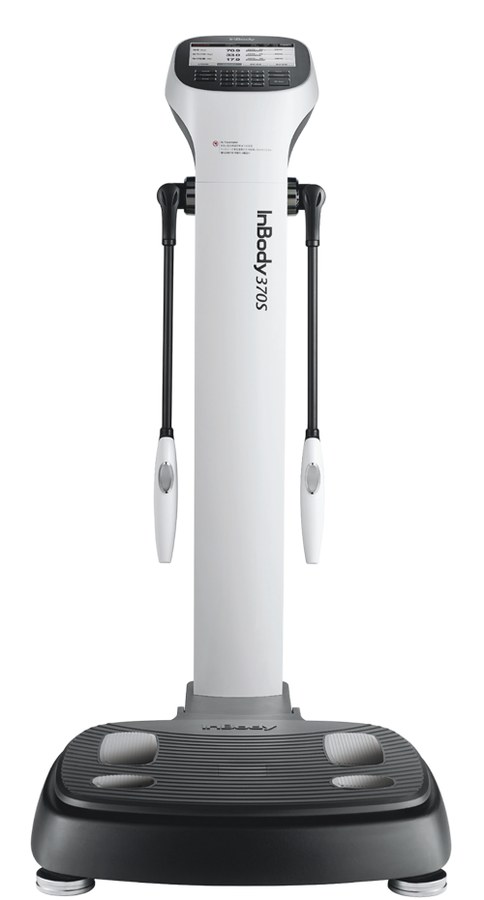
A standard weighing scale gives you one number. A sports-relevant InBody assessment gives an athlete, coach, or parent several numbers that a scale — and even most gym-floor body fat measurements — simply cannot produce.
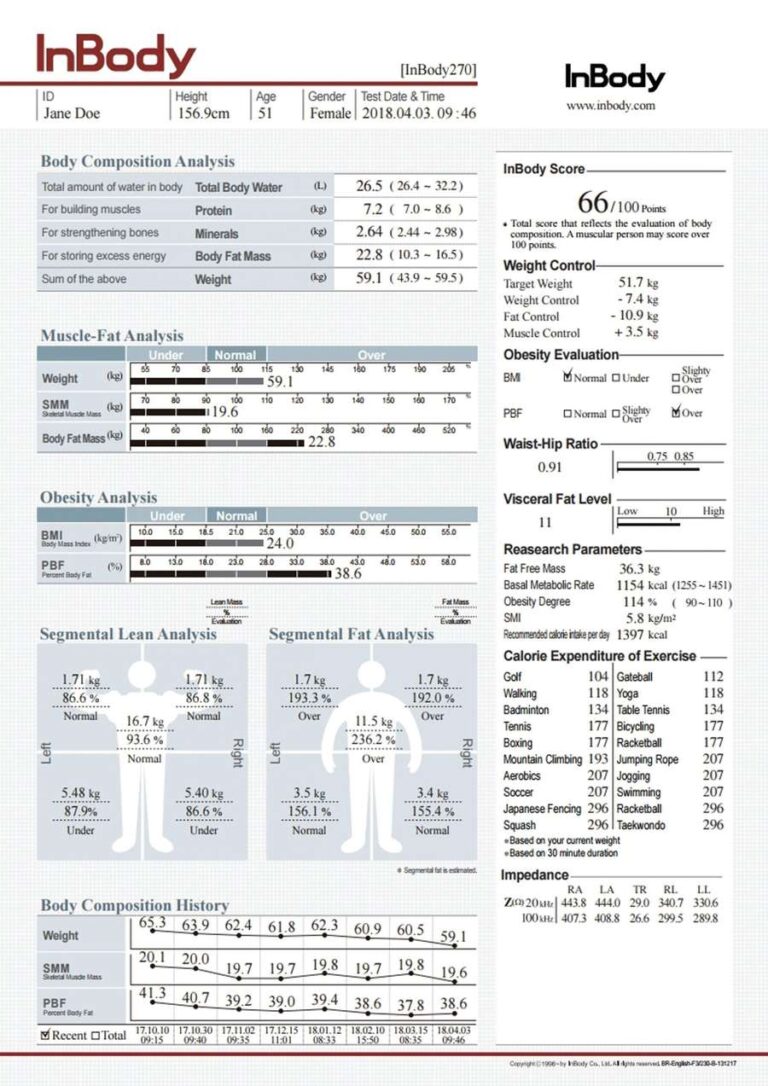
- Segmental Lean Analysis: Muscle mass broken down by right arm, left arm, right leg, left leg, and trunk — the only practical way to see and track a bowling-side or racket-arm imbalance over a season, rather than guess at it.
- Visceral Fat Area (VFA): Even genuinely lean, high-performing athletes can carry unhealthy internal visceral fat while looking fit outside. International research tracking professional rugby players across a full competitive season recorded rising body fat percentage and falling lean mass despite total body weight staying essentially unchanged — a shift invisible on a scale, and exactly what VFA and lean mass tracking exist to catch.
- Phase Angle: A less familiar metric, phase angle is a marker of cell membrane health generated directly from the impedance test. Research reviewing phase angle across sport has found trained athletes run meaningfully higher than sedentary individuals — roughly 10-18% higher depending on sport and training background — and that it can dip during heavy training blocks and recover during tapering, making it an early signal of fatigue or under-recovery.
- Skeletal Muscle Mass trend: Not a single reading, but the direction of travel — whether muscle mass is building, holding, or quietly eroding across a training block, which single-point checks and eyeball assessments both miss.

Practical Guidance: Using Body Composition Testing Through a Training Season
- Establish a pre-season baseline. Test before the training block begins, not after problems show up. Every later reading is only useful compared against this starting point.
- Re-test every 6-8 weeks during active training. Body composition changes measurably within a training block; a once-a-year test misses the trend and cannot flag overtraining or under-fuelling in time to act.
- Track trends, not single numbers. One VFA or SMM reading shows where an athlete stands today. Three or four readings across a season show whether training and nutrition are actually working.
- Watch segmental balance in one-sided sports. For bowlers, badminton players, and other racket- or throwing-dominant athletes, a widening gap between dominant and non-dominant side lean mass is worth flagging to a physiotherapist, even without an obvious injury.
- Share the report with the coach or S&C staff, not just the athlete. This is the core difference from a general gym-goer’s use case: the data should feed directly into a training plan, not just personal motivation.
- Account for growth in junior athletes. Teenage athletes are growing while they train — a dip during a growth spurt is not automatically a red flag. Context from repeated testing tells the real story.
Frequently Asked Questions
What is body composition testing for athletes, and how is it different from a normal weight check?
A normal weight check gives one number: total mass. Body composition testing breaks that down into skeletal muscle mass, body fat percentage, visceral fat, water balance, and segmental lean mass per limb. For athletes, this breakdown matters more than the total — two athletes can weigh the same and have entirely different power-to-weight ratios and injury risk profiles.
Why do fast bowlers need a different body composition profile than batsmen?
Fast bowlers absorb extreme, repeated, one-sided force through the front leg and trunk during the delivery stride — research has recorded roughly 5.5 times body weight at front-foot contact — so they need high trunk and lower-body lean mass to absorb that load safely. Batsmen face lower peak forces but need sustained core strength and stamina across long innings. The two roles train for different physical outcomes.
Can body composition testing help prevent cricket injuries like stress fractures?
It contributes to injury-prevention screening rather than predicting injury outright. Segmental lean mass tracking lets coaches and physiotherapists monitor how a bowler’s bowling-side muscle development is diverging from the non-dominant side over a season — one input, alongside biomechanics and workload monitoring, into managing injury risk. Research on this exact relationship is still developing, so treat it as one data point, not a standalone predictor.
How often should young athletes get body composition tested during a season?
A pre-season baseline followed by re-testing every 6-8 weeks through active training is a practical rhythm for academy-level athletes. This is far more frequent than the annual health check most people default to, because body composition shifts meaningfully within a single training block — muscle can be gained or quietly lost within weeks under heavy load or poor recovery.
What is phase angle and why does it matter for athletes?
Phase angle is a cellular health marker generated during a bioelectrical impedance test, reflecting cell membrane integrity. Trained athletes typically run 10-18% higher on phase angle than sedentary people, and it can dip during heavy training blocks before recovering with proper tapering. Tracked over a season, it offers an early, objective signal of fatigue or under-recovery.
Is InBody accurate enough for tracking athletes, or is a DEXA scan necessary?
The two are complementary. DEXA has become part of elite Indian cricket’s own fitness protocols in recent years, used as a periodic, high-accuracy checkpoint. InBody-style BIA testing suits frequent, low-cost tracking between those checkpoints — every few weeks rather than a couple of times a year — since it involves no radiation and takes minutes. For most academy and club athletes without routine DEXA access, InBody testing alone, done consistently, is the practical choice.
Train to Your Data, Not Just Your Reflection
Whether you are a serious junior cricketer, a badminton player chasing a state ranking, a kabaddi raider, or a coach responsible for a squad’s conditioning, the research is consistent: how an athlete looks is not a reliable proxy for how their body is holding up under training load. Skeletal muscle mass, segmental balance, visceral fat, and phase angle are the numbers that matter — visible only through a real body composition assessment tracked over time, not a glance in the mirror.
If you run a gym, academy, or sports facility looking to build body composition tracking into your athletes’ training programme, explore InBody for gyms and sports facilities. Individual athletes and parents can learn more about an InBody test and find a nearby centre for a baseline reading before the next season begins.
Related reading: Running vs Weight Training for Fat Loss in India, InBody vs DEXA vs Skinfold Calipers, and Corporate Wellness in India for how body composition testing is being adopted beyond the gym floor.

Most trending articles
वज़न बढ़ाने के लिए क्या खाएं? सही डाइट प्लान (सिर्फ ज़्यादा खाना नहीं)
सिर्फ ज़्यादा खाने से मांसपेशी नहीं बनती, चर्बी बढ़ सकती है। सही कैलोरी सरप्लस, प्रोटीन और डाइट प्लान जो वज़न को सही तरीके से बढ़ाए — पूरी जानकारी हिंदी में।
भारत में प्रोटीन कितना ज़रूरी है? असली आंकड़े और सही फॉर्मूला
IMRB के एक सर्वे में लगभग 73% भारतीय आहार प्रोटीन-कम पाए गए। सही प्रोटीन टारगेट कैसे निकालें और किन फूड्स से पूरा करें — पूरी जानकारी हिंदी में।
Metabolic Age क्या होती है? आपकी उम्र से ज़्यादा है या कम?
आपकी असली उम्र 34 है पर शरीर 50 साल जैसा व्यवहार कर सकता है। Metabolic age क्या है, मांसपेशी घटने के जोखिम क्या हैं और इसे कैसे घटाएं — पूरी जानकारी।