
Body Composition 7 min read
Beyond the Scale: How Body Composition Fights Fat-Related Disease
Body composition for fat loss is a smarter way to understand your fitness journey. For a long time, the basic bathroom scale has been the main tool people…
Reading about body composition? Find an InBody test centre near you →
Body composition for fat loss is a smarter way to understand your fitness journey. For a long time, the basic bathroom scale has been the main tool people use to track their progress. You step on it, look at the number, and hope it’s lower than last time. However, this simple approach has a major limitation. It does not show the difference between fat and muscle. As a result, you may think you are losing only fat when some of what you lose is muscle.[1]
For a long time, the basic bathroom scale has been the main tool people use to track weight loss. You step on it, check the number, and hope for progress. However, this method has a major flaw. It cannot tell the difference between fat and muscle. In contrast, body composition for fat loss gives a deeper understanding of your body. These advanced devices estimate how much fat, muscle, and water your body contains. Because of this, you can make smarter decisions to reduce stubborn fat and improve overall health.
The Problem with the Bathroom Scale
While the bathroom scale serves its purpose by measuring your overall weight, it doesn’t give you the full picture. Losing weight isn’t just about shedding pounds; it’s about losing unhealthy fat while keeping or even building lean muscle mass. Relying only on the scale can be misleading because you could be losing muscle instead of fat, or even worse, gaining fat while your weight stays the same.
Why Body Composition Matters
Body composition refers to the ratio of fat mass to lean mass (muscles, bones, and organs) in your body. Understanding this ratio is important for your health and for reducing the risk of diseases linked to excess body fat, such as heart disease, stroke, and type 2 diabetes.[2][3]
Too much body fat, especially around the belly area, is a known risk factor for these conditions.[4] On the other hand, a higher proportion of lean muscle mass is associated with better insulin sensitivity[5] and also supports strength and mobility.
Introducing Body Composition Analyzers
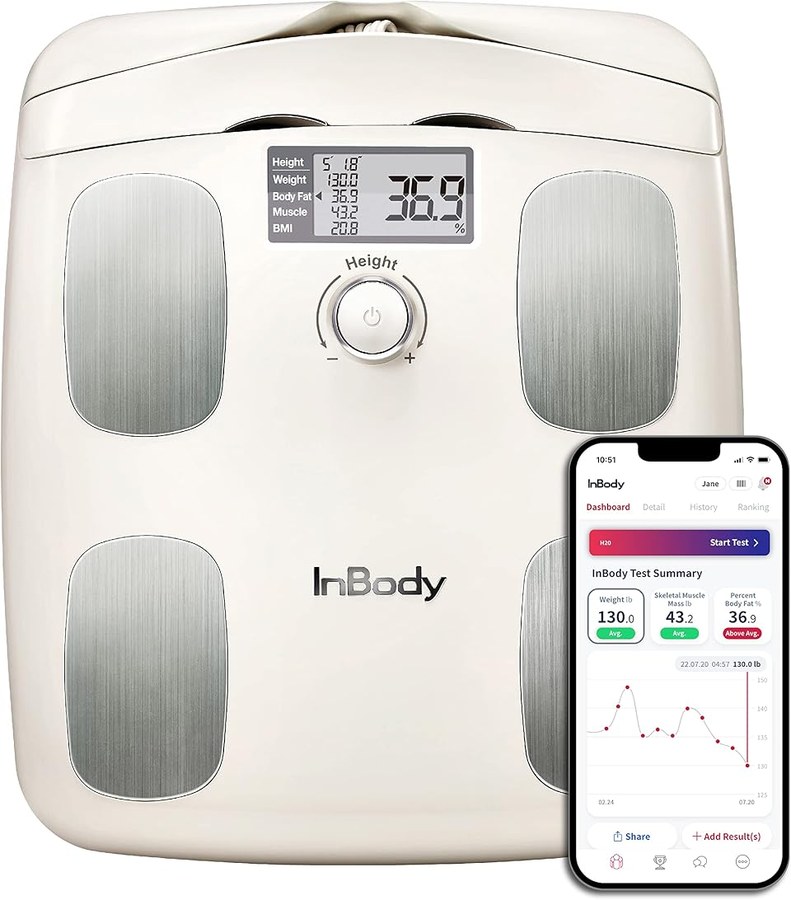
Body composition analyzers are devices that use technology such as bioelectrical impedance analysis (BIA) or dual-energy X-ray absorptiometry (DEXA) to measure or estimate the amount of fat, muscle, and bone mass in your body. DEXA is usually treated as the reference method, while BIA estimates these values from electrical impedance. In one study of 67 healthy adults, InBody analyzers gave highly repeatable results and small individual errors compared with DEXA, but tended to read body fat lower than DEXA did.[6]
Unlike the bathroom scale, these analyzers provide a detailed breakdown of your body composition, including:
- Body Fat Percentage: This number shows how much of your total body weight is made up of fat, giving you a clearer picture of your health risk than weight alone.
- Muscle Mass: Knowing your muscle mass is essential for tracking your progress in building lean tissue that burns calories, which can aid in fat loss and overall fitness.
- Visceral Fat Level: Visceral fat, the dangerous fat surrounding your organs, is a major risk factor for chronic diseases.[4] Body composition analyzers can estimate this hidden fat (in one study of 53 patients, visceral fat area from an InBody 720 correlated with CT at r = 0.76),[7] allowing you to track it over time.
- Metabolic Rate: Understanding your estimated metabolic rate, or the number of calories your body burns at rest, can help you make informed decisions about your diet and exercise to support your weight management goals.
How Body Composition Analyzers Can Help You
With this comprehensive data, you can work closely with your healthcare provider or fitness professional to develop a personalized plan tailored to your specific needs and goals.
Here’s how body composition analyzers can empower your journey:
- Setting Realistic Goals: Instead of aiming for an arbitrary number on the scale, you can set precise goals for reducing body fat percentage or increasing muscle mass, ensuring that your efforts are truly improving your overall health and body composition.
- Tracking Progress: Regular body composition analysis allows you to monitor changes in your fat and muscle mass over time, providing valuable feedback on how well your diet and exercise regimen are working.
- Adjusting Strategies: If your body composition isn’t changing as desired, you can work with your provider to adjust your nutrition plan, exercise routine, or other lifestyle factors to better target fat loss or muscle growth.
- Identifying Health Risks: High levels of visceral fat or an unhealthy body fat percentage can alert you and your healthcare team to potential health risks, allowing for proactive interventions before serious conditions develop.
- Celebrating Non-Scale Victories: Even if the scale doesn’t budge, gains in muscle mass or reductions in body fat percentage are reasons to celebrate your progress and stay motivated on your journey.
A Holistic Approach to Health
Ultimately, body composition analyzers provide a holistic view of your health that goes far beyond the limitations of the bathroom scale. By understanding the intricate balance of fat, muscle, and bone mass within your body, you can make informed decisions that help reduce your risk of fat-related diseases.
Embracing this comprehensive approach not only supports your weight management goals but may also support overall wellness and functional fitness. So, step off the scale and into a world of empowered, data-driven health management – your body will thank you for it.
The Importance of a Healthy Lifestyle
While body composition analyzers are powerful tools, it’s important to remember that they are just one part of a larger approach to achieving and maintaining a healthy body weight and composition. A balanced diet rich in nutrient-dense foods, regular physical activity, adequate sleep, and stress management are all essential components of a comprehensive plan to fight fat-related diseases.
By combining the insights provided by body composition analyzers with a commitment to a healthy lifestyle, you can take control of your health and help lower your risk of chronic conditions associated with excess body fat.
In Conclusion
The bathroom scale has its place, but it fails to provide the complete picture when it comes to understanding your body composition and overall health. Body composition analyzers offer a more comprehensive and empowering approach, allowing you to make data-driven decisions that help you manage fat-related health risks.
By embracing this technology and working closely with healthcare professionals, you can set realistic goals, track your progress, adjust your strategies, identify health risks, and celebrate non-scale victories – all while promoting a holistic approach to wellness and longevity.
So, take the first step towards a healthier and more informed journey by exploring the world of body composition analyzers. Your body, and your overall well-being, will thank you for it.

Find an InBody Scanner Near You
Related reading: Energy expenditure and metabolism: how the InBody 770 measures BMR · Visceral fat: the hidden health risk and how to reduce it
References
- Cava E, Yeat NC, Mittendorfer B. Preserving Healthy Muscle during Weight Loss. Adv Nutr. 2017;8(3):511-519. PubMed · DOI
- Powell-Wiley TM, Poirier P, Burke LE, Després JP, Gordon-Larsen P, Lavie CJ, et al. Obesity and Cardiovascular Disease: A Scientific Statement From the American Heart Association. Circulation. 2021;143(21):e984-e1010. PubMed · DOI
- Guh DP, Zhang W, Bansback N, Amarsi Z, Birmingham CL, Anis AH. The incidence of co-morbidities related to obesity and overweight: a systematic review and meta-analysis. BMC Public Health. 2009;9:88. PubMed · DOI
- Neeland IJ, Ross R, Després JP, Matsuzawa Y, Yamashita S, Shai I, et al. Visceral and ectopic fat, atherosclerosis, and cardiometabolic disease: a position statement. Lancet Diabetes Endocrinol. 2019;7(9):715-725. PubMed · DOI
- Srikanthan P, Karlamangla AS. Relative muscle mass is inversely associated with insulin resistance and prediabetes. Findings from the third National Health and Nutrition Examination Survey. J Clin Endocrinol Metab. 2011;96(9):2898-2903. PubMed · DOI
- McLester CN, Nickerson BS, Kliszczewicz BM, McLester JR. Reliability and Agreement of Various InBody Body Composition Analyzers as Compared to Dual-Energy X-Ray Absorptiometry in Healthy Men and Women. J Clin Densitom. 2020;23(3):443-450. PubMed · DOI
- Ogawa H, Fujitani K, Tsujinaka T, Imanishi K, Shirakata H, Kantani A, et al. InBody 720 as a new method of evaluating visceral obesity. Hepatogastroenterology. 2011;58(105):42-44. PubMed

Most trending articles
Student Fitness Screening in India: A Guide for Schools
CBSE HPE, Fit India and Khelo India rely on BMI. How schools and colleges can add body composition screening safely, with child caveats and DPDP consent.
Creatine and Your Body Composition Scan: What Changes
Creatine raises body water and lean mass readings within a week on BIA and DXA. What the studies show and how to time your scans to read progress honestly.
Fitness Testing and Body Composition for Sports Academies
A practical fitness testing battery for Indian sports academies: body composition, grip, jumps, sprints, Yo-Yo, Khelo India context and youth maturation.