
Body Composition 5 min read
How to Choose a Body Composition Testing Centre in India
Two centres can advertise the same test and deliver very different value. Five checks: device, report, interpretation, repeat testing, inclusions.
Reading about body composition? Find an InBody test centre near you →
Not Every Body Composition Test Is the Same Test
Two centres in the same city can both advertise body composition testing and deliver very different things. One hands you a fourteen-line report covering segmental muscle, visceral fat and body water, and spends ten minutes explaining it. The other prints a body fat percentage and a BMI and wishes you a good day.
Same service name. Different value entirely. This guide covers how to tell them apart before you book, what a proper report should contain, and the questions that sort a real testing centre from a scale with a printer.
Step 1: Check What Device They Use
The device determines the ceiling on everything else. Three questions establish whether it is worth your time.
“Does it use hand electrodes, or only foot plates?”
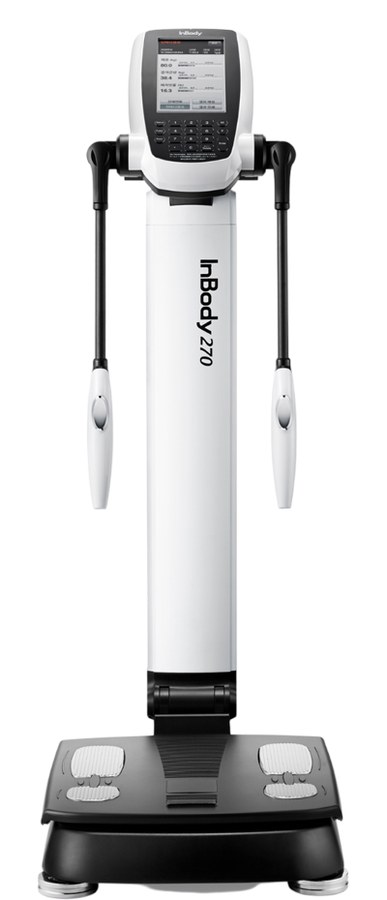
Foot-to-foot devices send current up one leg and down the other. It never reaches your upper body. Everything such a device reports about your arms and trunk is inferred from population data rather than measured. A device with tetrapolar 8-point tactile electrodes contacts both hands and both feet, so each segment is measured directly.
“Does it measure each body segment separately?”
Segmental analysis — right arm, left arm, trunk, right leg, left leg — is where most of the actionable insight lives. A whole-body muscle figure can look entirely normal while concealing a significantly weaker leg after an old injury, or a trunk deficit worth correcting.
“Does it apply corrections based on age, sex or ethnicity?”
Some devices fill in values from demographic averages and present the blend as a measurement. The tell is that two people of similar age, sex and build receive near-identical reports regardless of training history. InBody devices calculate directly from measured impedance per segment without those corrections.
Step 2: Check What the Report Contains
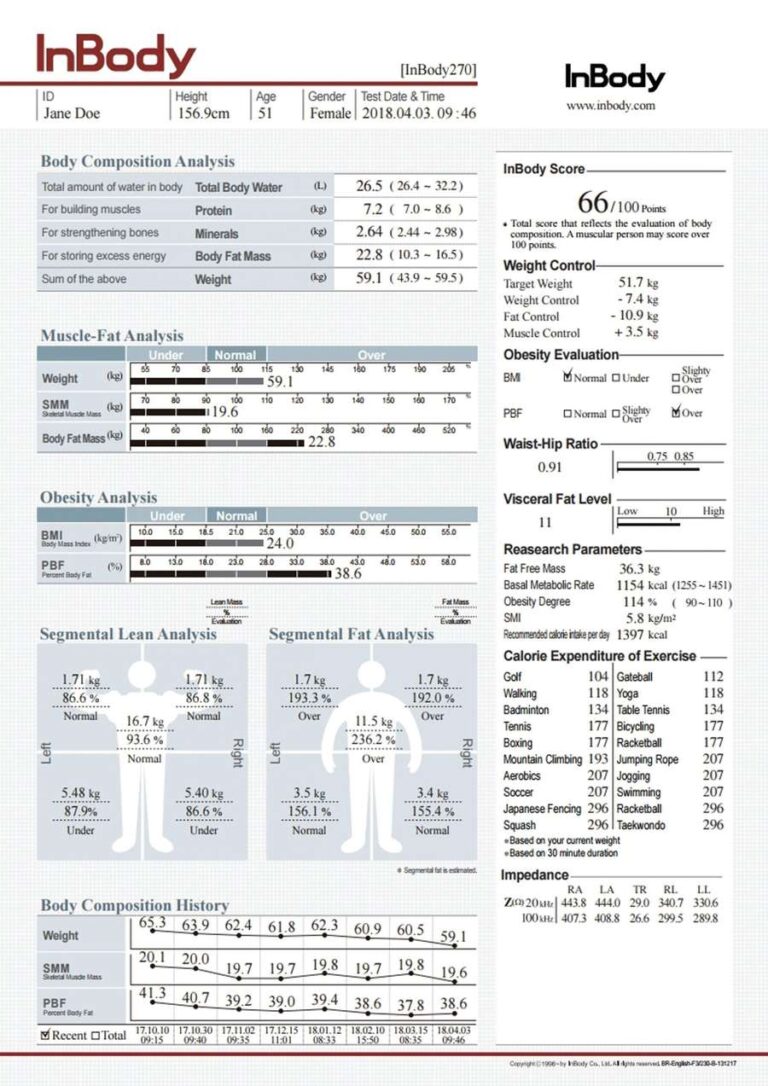
A body composition report worth having includes all of these. If several are missing, you are getting a partial service.
| Output | Why it matters |
|---|---|
| Skeletal Muscle Mass (kg) | The trainable muscle figure — the single most useful number, and the one a scale cannot see |
| Body Fat Mass and Percent Body Fat | More informative than weight, far more informative than BMI |
| Visceral fat (level or cm²) | The metabolic risk marker; can be elevated at a normal body weight |
| Segmental lean analysis | Reveals left-right and trunk imbalances |
| Total body water (ICW/ECW) | Context for the other readings; flags fluid imbalance |
| Basal Metabolic Rate | Useful anchor for nutrition planning |
| A report you keep | Without it, your next test has nothing to compare against |
That last row is the one people skip and later regret. A body composition test’s value is mostly in the comparison between tests. A result read aloud and not recorded is a result you cannot use in eight weeks.
Step 3: Ask Whether Anyone Will Explain It
This is the difference between a test that changes something and a test that produces a printout.
A first body composition report contains a lot of numbers, several of which are unfamiliar. Handed over without interpretation, it typically gets folded into a bag and forgotten. Walked through properly, it produces two or three specific things to act on.
Ask directly: “Will someone go through the report with me?” A centre that says yes is offering a different service from one that says the report is self-explanatory. If interpretation is not available, our guide to reading an InBody results sheet covers the essentials, and the InBody Score explained covers the summary figure most people ask about first.
Step 4: Check They Can Support Repeat Testing
One scan is a snapshot. The value compounds across repeat tests six to eight weeks apart. For that to work, the centre needs to support a few practical things:
- Stored results under your ID, so trends can be produced rather than reconstructed from paper.
- Consistent test conditions — ideally the same protocol and similar time of day each visit.
- The same device. Comparing a reading from one device against a different model introduces variation that looks like change. Where possible, re-test on the same machine.
- Reasonable access. A centre you will realistically return to beats a better centre across the city that you will not.
Step 5: Understand What You Are Paying For
Body composition testing in India is priced by the facility that owns the analyser, not by InBody, so it varies widely. It is often included with gym membership, bundled into a diagnostic health package, or charged as a standalone service at clinics and hospital OPDs.
Because of that variation, compare on inclusions rather than price alone:
- Is interpretation included, or scan only?
- Is a printed or digital report included?
- Is there a discounted or included re-test?
- Does the price cover a consultation with a dietitian or clinician?
A slightly higher price that includes a proper walkthrough and a re-test is usually better value than a cheap scan with no interpretation. More on the pricing structure in what determines InBody test cost in India.
Settings Compared
| Setting | Strength | Watch for |
|---|---|---|
| Gym or studio | Convenient, often included, trainer can act on the result | Interpretation quality varies with staff training |
| Diagnostic centre or lab | Can be combined with blood work | Often scan-only with no interpretation |
| Clinic or nutritionist | Result read in the context of your health history | Usually requires a consultation booking |
| Hospital OPD | Clinical-grade outputs, clinician review | Appointment and OPD charges apply |
| Corporate wellness camp | Free to the employee, good baseline | Screening depth; may not support repeat testing |
Before You Go
Preparation costs nothing and materially improves the result:
- Test before training rather than after.
- Avoid a heavy meal or a large volume of water in the preceding hour or two.
- Aim for a similar time of day on repeat visits.
- Expect to remove socks and shoes.
- Bring your previous report if you have one.
- Tell the centre in advance if you have an implanted electronic medical device such as a pacemaker.
Fuller detail in how to prepare for a body composition test.
Find a Centre Worth Returning To
The best testing centre is the one with a properly specified device, a report you keep, someone who explains it, and a location you will actually revisit in eight weeks.
Find verified InBody testing centres near you at inbody.in/locations, or book a test at inbody.in/inbody-test.php. Related reading: how to read your results sheet, is a body composition test worth it, and what to ask for instead of a BMI test.

Most trending articles
वज़न बढ़ाने के लिए क्या खाएं? सही डाइट प्लान (सिर्फ ज़्यादा खाना नहीं)
सिर्फ ज़्यादा खाने से मांसपेशी नहीं बनती, चर्बी बढ़ सकती है। सही कैलोरी सरप्लस, प्रोटीन और डाइट प्लान जो वज़न को सही तरीके से बढ़ाए — पूरी जानकारी हिंदी में।
भारत में प्रोटीन कितना ज़रूरी है? असली आंकड़े और सही फॉर्मूला
IMRB के एक सर्वे में लगभग 73% भारतीय आहार प्रोटीन-कम पाए गए। सही प्रोटीन टारगेट कैसे निकालें और किन फूड्स से पूरा करें — पूरी जानकारी हिंदी में।
Metabolic Age क्या होती है? आपकी उम्र से ज़्यादा है या कम?
आपकी असली उम्र 34 है पर शरीर 50 साल जैसा व्यवहार कर सकता है। Metabolic age क्या है, मांसपेशी घटने के जोखिम क्या हैं और इसे कैसे घटाएं — पूरी जानकारी।