
Body Composition 5 min read
BMI Test Near Me? Ask for This Instead — India Guide
BMI is arithmetic, not a test — you can do it on your phone. What to ask for at a centre instead, and the 5 questions that reveal whether it is worth booking.
Reading about body composition? Find an InBody test centre near you →
Searching for a “BMI Test Near Me”? Ask for Something Better.
If you have searched for a BMI test near me, a BMI machine near you, or where to get a BMI report, there is something worth knowing before you book anything: BMI is not a test. It is arithmetic.
Body Mass Index is your weight in kilograms divided by your height in metres squared. That is the whole calculation. It requires no machine, no appointment and no fee. Any centre charging for a “BMI test” is charging you to be weighed and measured.
What people actually want when they search this — some objective read on whether their body is in reasonable shape — is a real measurement, and it exists. This guide explains what to ask for instead, and why the distinction matters especially in India.
Why BMI Falls Short, Particularly for Indians
BMI has one genuine use: comparing populations at scale. For assessing an individual, it has a structural flaw — it cannot distinguish muscle from fat. Weight is weight.
The consequences run in both directions. A muscular person can be classified overweight while carrying low body fat. Far more commonly in India, a person of entirely normal weight carries elevated body fat and low muscle mass, and BMI reports them as fine.
This is well enough documented to have changed the thresholds. Indians tend to carry more body fat and less skeletal muscle at any given BMI than Caucasian populations — the pattern often called the thin-fat phenotype. ICMR and WHO Asia-Pacific guidance therefore sets lower cut-offs for Indians: overweight from BMI 23 and obesity from BMI 25, rather than the Western 25 and 30.
Even with the corrected cut-offs, the underlying limitation remains. BMI still cannot tell you whether your 70 kg is 25 kg of muscle or 15 kg. The full comparison is in BCA vs BMI: which test tells the truth.
What to Ask For Instead
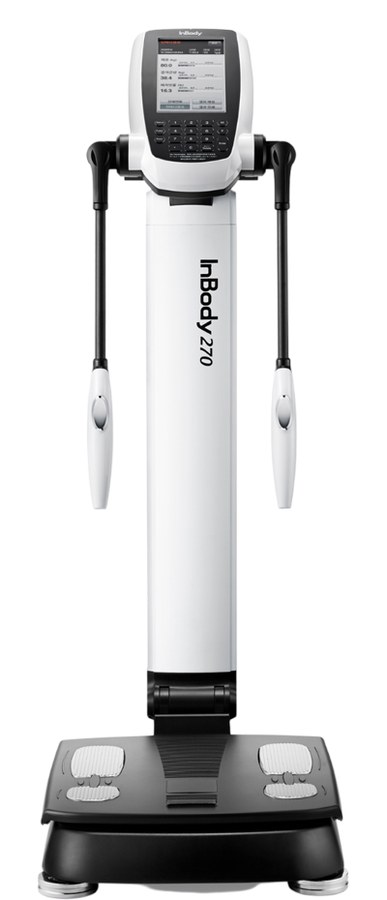
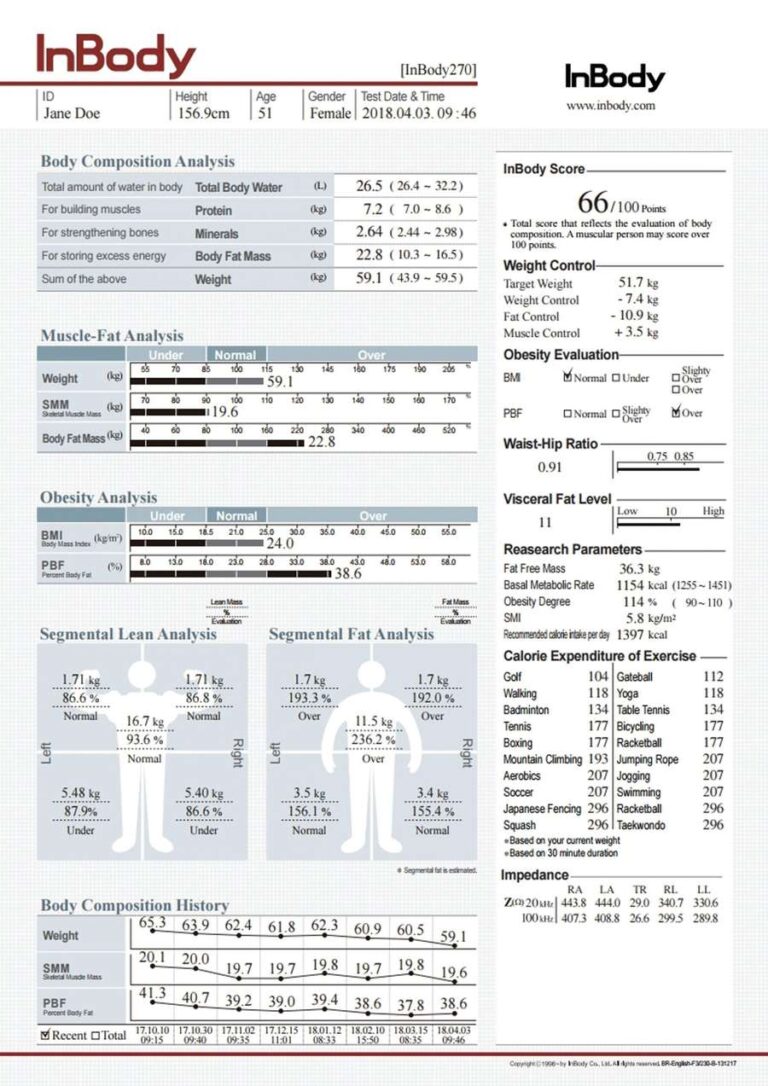
Ask for a body composition analysis — sometimes called a BCA test, a body fat test or an InBody test. It takes about 60 seconds, involves no radiation, no needles and no undressing, and reports:
- Skeletal Muscle Mass in kilograms — the muscle you can train, and the number BMI is blindest to.
- Body Fat Mass and Percent Body Fat.
- Visceral fat — the metabolically active fat around your organs, which can be elevated at a completely normal weight.
- Segmental analysis — muscle measured separately in each arm, each leg and the trunk.
- Total body water and basal metabolic rate.
You will still get your BMI on the report. It just arrives alongside the numbers that give it meaning.
Where to Get a Body Composition Test in India
| Where | Typical arrangement | Good for |
|---|---|---|
| Gyms and fitness studios | Often included with membership | Tracking training progress |
| Diagnostic centres and labs | Standalone or inside a health package | Combining with blood work |
| Clinics and nutritionists | Usually part of consultation | Getting the result interpreted properly |
| Hospital OPD | Charged as an investigation | Clinical-grade outputs and clinician review |
| Corporate wellness camps | Employer-funded | Convenient baseline screening |
You can find InBody testing centres across India at inbody.in/locations, which lists verified locations by city.
Questions Worth Asking Before You Book
Not every centre advertising body composition testing is offering the same thing. Five questions sort it out quickly:
- “Does the device measure each body segment separately?” Segmental analysis is where the actionable detail lives. Whole-body devices average away exactly the imbalances worth finding.
- “Does it report visceral fat?” For Indian metabolic risk this is arguably the most important single output.
- “Do I get a printed or digital report to keep?” Without a report you cannot compare against your next test, which is where the value is.
- “Will someone explain the results?” An uninterpreted sheet of numbers gets folded into a bag and forgotten.
- “Is it foot-to-foot or does it use hand electrodes too?” Foot-to-foot devices cannot measure your upper body at all — everything they report about arms and trunk is inferred.
If the answer to the first question is that the device gives only a body fat percentage and a BMI, you are being offered a scale reading with extra steps.
How to Prepare
Bioelectrical impedance responds to hydration, so a few simple conditions make your result more meaningful:
- Test before training, not after — exercise shifts fluid distribution substantially.
- Avoid a heavy meal or a large volume of water in the hour or two beforehand.
- Book a similar time of day for any repeat test.
- Expect to remove socks and shoes; wear light clothing.
- Avoid testing immediately after alcohol or during an illness involving fluid loss.
- If you have an implanted electronic medical device such as a pacemaker, tell the centre beforehand.
Fuller guidance is in how to prepare for a body composition test.
What Your Report Will Tell You That BMI Never Could
The most common useful finding is not dramatic. It is a person with a perfectly acceptable BMI whose skeletal muscle mass sits below the healthy range for their height, and whose visceral fat is elevated. Every scale and BMI calculator they have used has told them they are fine. The body composition report shows a metabolic trajectory worth interrupting — early, while it is easy.
The second most common finding is the reverse of a discouraging one. Someone training hard for two months, frustrated that the scale has not moved, discovers they gained 2 kg of muscle and lost 2 kg of fat. Same weight. Completely different body. Without measurement, that person often quits, convinced the effort failed.
Neither of those is visible to BMI. Both are visible in 60 seconds.
Book the Measurement, Not the Arithmetic
BMI you can calculate on your phone in ten seconds. What is worth leaving the house for is the measurement that tells you what your weight is made of.
Find a body composition testing centre near you at inbody.in/locations, or book a test at inbody.in/inbody-test.php. Related reading: BCA vs BMI, how to choose a testing centre, and body fat percentage chart for India.

Most trending articles
वज़न बढ़ाने के लिए क्या खाएं? सही डाइट प्लान (सिर्फ ज़्यादा खाना नहीं)
सिर्फ ज़्यादा खाने से मांसपेशी नहीं बनती, चर्बी बढ़ सकती है। सही कैलोरी सरप्लस, प्रोटीन और डाइट प्लान जो वज़न को सही तरीके से बढ़ाए — पूरी जानकारी हिंदी में।
भारत में प्रोटीन कितना ज़रूरी है? असली आंकड़े और सही फॉर्मूला
IMRB के एक सर्वे में लगभग 73% भारतीय आहार प्रोटीन-कम पाए गए। सही प्रोटीन टारगेट कैसे निकालें और किन फूड्स से पूरा करें — पूरी जानकारी हिंदी में।
Metabolic Age क्या होती है? आपकी उम्र से ज़्यादा है या कम?
आपकी असली उम्र 34 है पर शरीर 50 साल जैसा व्यवहार कर सकता है। Metabolic age क्या है, मांसपेशी घटने के जोखिम क्या हैं और इसे कैसे घटाएं — पूरी जानकारी।