
Body Composition 7 min read
BCA Test Full Form and Meaning: What It Actually Measures
BCA stands for Body Composition Analysis. What the test measures, how it differs from BMI and DEXA, and why it matters more for Indian bodies.
In this article
- BCA Test: Full Form, Meaning, and What It Actually Tells You
- BCA Full Form and the Names It Goes By
- What the Test Measures
- How It Works
- BCA Test vs the Tests It Gets Confused With
- Why a BCA Test Matters Particularly in India
- Who Should Get One
- What It Cannot Do
- Getting Tested
- Frequently Asked Questions
- What is the full form of BCA test?
- Is a BCA test the same as a BMI test?
- How long does a BCA test take?
- Does a BCA test involve radiation?
- Who should get a BCA test?
- Find Out What Your Weight Is Made Of
- Sources
BCA Test: Full Form, Meaning, and What It Actually Tells You
If you have been handed a form with BCA test written on it, or seen it listed in a health package, the abbreviation is doing a lot of work and explaining very little.
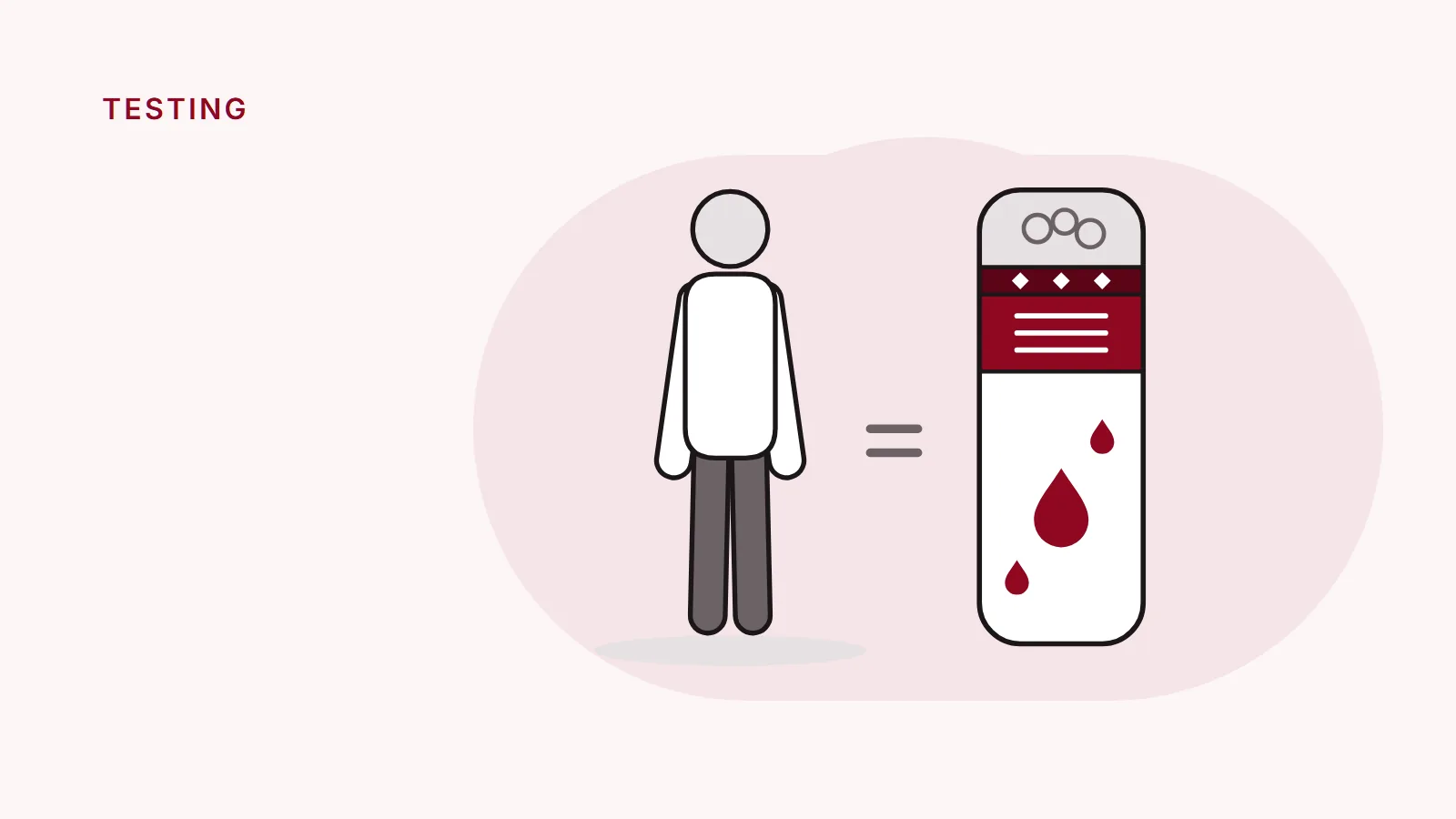
BCA stands for Body Composition Analysis. It is a test that measures what your body weight is made of — how much is muscle, how much is fat, how much is water — rather than simply how much you weigh.
BCA meaning: in health and fitness, BCA means Body Composition Analysis, a test that splits your weight into muscle, fat and water. (The BCA degree, Bachelor of Computer Applications, is unrelated.)
That distinction sounds academic until you see what it changes. This guide covers the full form, what the test measures, how it differs from the tests it gets confused with, and who should have one.
BCA Full Form and the Names It Goes By
The same test appears under several names in India, which is a large part of the confusion:
- BCA test — Body Composition Analysis
- Body composition test — the same thing, spelled out
- InBody test — named after the device brand, the way people say “Xerox” for photocopy
- Body fat test — describes one output of it
- BIA test — named after the technology, Bioelectrical Impedance Analysis
- “BMI machine” — a genuine misnomer, and the one worth correcting
The last one matters. BMI is not a test and needs no machine. It is your weight in kilograms divided by your height in metres squared, and any calculator produces it (our free BMI calculator uses the Asian cut-offs for Indians). A BCA test measures something BMI cannot see.
What the Test Measures
| Output | What it tells you |
|---|---|
| Skeletal Muscle Mass | The trainable muscle attached to your bones, in kilograms — the most important number on the report |
| Body Fat Mass | Total fat in kilograms |
| Percent Body Fat | Fat as a proportion of your body weight |
| Visceral Fat | Fat around the abdominal organs — above 100 cm² is the clinical risk threshold |
| Segmental Lean Analysis | Muscle measured separately in each arm, each leg and the trunk |
| Total Body Water | Body water, split into intracellular and extracellular |
| BMR | Energy your body burns at rest |
How It Works
A BCA test uses Bioelectrical Impedance Analysis. A very small alternating current — far too small to feel — passes through your body via electrodes at your hands and feet.
Muscle tissue is roughly three-quarters water and conducts that current easily. Fat holds little water and resists it. By measuring the resistance the current meets in each body segment, the device calculates how much of you is lean tissue and how much is fat.
You stand on the device fully clothed, barefoot, holding the hand electrodes with your arms held away from your sides. The measurement takes about 60 seconds. There is no radiation, no needle and nothing to feel.
BCA Test vs the Tests It Gets Confused With
| BCA / BIA | BMI | DEXA | |
|---|---|---|---|
| Is it a test? | Yes | No — a calculation | Yes |
| Muscle mass | Yes, in kg | No | Lean mass |
| Visceral fat | Yes | No | Estimated |
| Bone density | No | No | Yes |
| Body water | Yes | No | No |
| Radiation | None | None | Low-dose X-ray |
| Time | ~60 seconds | Instant | 10–20 minutes |
| Repeatable often | Yes | Yes | Limited by radiation |
DEXA is the reference standard for fat and lean mass and the only option for bone density. But it involves radiation, needs an appointment and a fixed installation, and does not report body water or Phase Angle. In peer-reviewed testing, professional InBody analysers showed small individual differences from DXA, though they read body fat slightly lower (McLester et al., 2020, Journal of Clinical Densitometry). Fuller comparison: InBody vs DEXA vs calipers.
Why a BCA Test Matters Particularly in India
Research consistently finds that Indians carry more body fat and less skeletal muscle at any given BMI than Western populations — a pattern often described as the thin-fat phenotype.
This is why ICMR and WHO Asia-Pacific guidance sets lower BMI cut-offs for Indians: overweight from 23 and obesity from 25, rather than the Western 25 and 30.
- Normal 18.5–23 kg/m²
- Overweight 23–25 kg/m²
- Obesity 25–32 kg/m²
The practical consequence is a large number of Indian adults whose weight and BMI look entirely normal while their body fat and visceral fat are genuinely elevated. Every scale they step on reassures them. A BCA test is the instrument that sees past that. More detail in BCA vs BMI: which test tells the truth.
Who Should Get One
- Anyone training with no change on the scale. Gaining 2 kg of muscle while losing 2 kg of fat shows as zero progress on a weighing machine. Many people quit at exactly this point.
- Anyone losing weight. The important question is whether the loss is fat or partly muscle. Aggressive dieting with low protein commonly costs both.
- Adults over 35. Skeletal muscle declines gradually with age unless actively defended, with fat accumulating in its place at unchanged body weight.
- Anyone with normal weight but a family history of diabetes or heart disease. Visceral fat can be elevated at a completely normal BMI.
- People recovering from injury or illness. Segmental analysis shows which limb is lagging.
What It Cannot Do
Worth stating plainly, because it is what makes the rest credible:
- It does not measure bone mineral density — osteoporosis assessment needs DEXA.
- It does not diagnose disease. It provides markers a clinician interprets alongside history and blood work.
- A single test cannot separate genuine change from a hydration shift. Only repeat testing under consistent conditions can.
Getting Tested
BCA testing is widely available in India through gyms, diagnostic centres, clinics, nutritionists and hospital OPDs. Pricing is set by whichever facility owns the analyser rather than nationally — it is often included with gym membership, bundled into health packages, or charged as part of a consultation. Asking a specific centre directly is the reliable route.
Before testing: avoid a heavy meal or large volume of water for two hours, test before training rather than after, avoid alcohol for 24 hours, and use the toilet beforehand. Book any repeat test at a similar time of day. Full guidance in how to prepare for a body composition test.
Frequently Asked Questions
What is the full form of BCA test?
BCA stands for Body Composition Analysis. It is a test that measures what your body weight is made of — skeletal muscle mass, body fat mass, visceral fat and body water — along with segmental measurement of each arm, each leg and the trunk, rather than simply recording how much you weigh.
Is a BCA test the same as a BMI test?
No. BMI is a calculation — weight in kilograms divided by height in metres squared — requiring no machine and unable to distinguish muscle from fat. A BCA test uses bioelectrical impedance to actually measure muscle, fat and water, including visceral fat and segment-by-segment muscle distribution.
How long does a BCA test take?
The measurement itself takes about 60 seconds. You stand on the device fully clothed and barefoot, holding hand electrodes with your arms away from your sides. Including registration and a walkthrough of the report, most centres complete the appointment in under 10 minutes.
Does a BCA test involve radiation?
No. A BCA test uses bioelectrical impedance analysis, passing a very small alternating current through the body that is far too small to feel. There is no radiation, no needle and no need to undress. DEXA scans do involve low-dose X-ray, which is a different technology.
Who should get a BCA test?
Anyone training without visible change on the scale, anyone losing weight who wants to know whether it is fat or muscle, adults over 35 whose muscle declines gradually with age, people with normal weight but a family history of diabetes or heart disease, and those recovering from injury where segmental muscle asymmetry matters.
Find Out What Your Weight Is Made Of
Your weight is one number hiding several. A BCA test separates them in about a minute.
Book a BCA / InBody test at inbody.in/inbody-test.php, or find a testing centre near you at inbody.in/locations. Related reading: how to read a BCA report, the complete BCA machine guide, and is a body composition test worth it.
Sources
- Misra A, Khurana L. Obesity-related non-communicable diseases: South Asians vs White Caucasians. Int J Obes (Lond). 2011;35(2):167-87.
- Examination Committee of Criteria for ‘Obesity Disease’ in Japan; Japan Society for the Study of Obesity. New criteria for ‘obesity disease’ in Japan. Circ J. 2002;66(11):987-92.
- Janssen I, Heymsfield SB, Wang ZM, et al. Skeletal muscle mass and distribution in 468 men and women aged 18-88 yr. J Appl Physiol (1985). 2000;89(1):81-8.
- Messina C, Albano D, Gitto S, et al. Body composition with dual energy X-ray absorptiometry: from basics to new tools. Quant Imaging Med Surg. 2020;10(8):1687-1698.
Related articles
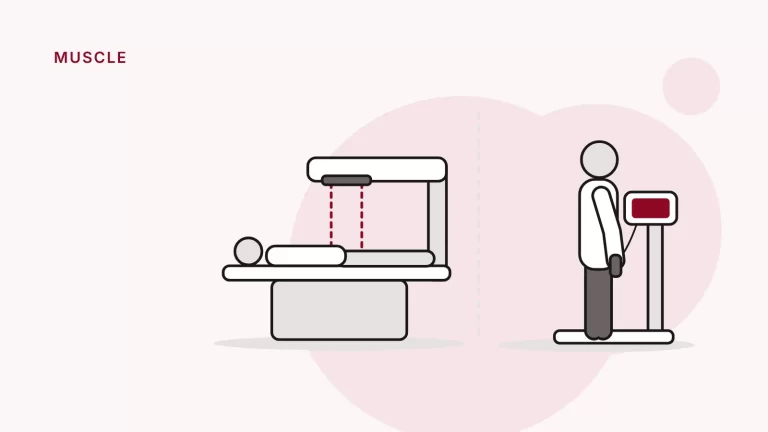
Muscle Mass Test: Names, Methods and Where to Get One
What the muscle mass test is called, how BIA, DXA, CT/MRI, tape and grip tests compare, how to prepare, and where to get a…
BCA Test क्या होता है? पूरी जानकारी हिंदी में
BCA यानी Body Composition Analysis. यह BMI से कैसे अलग है, मशीन काम कैसे करती है, रिपोर्ट में क्या आता है और किसे यह…
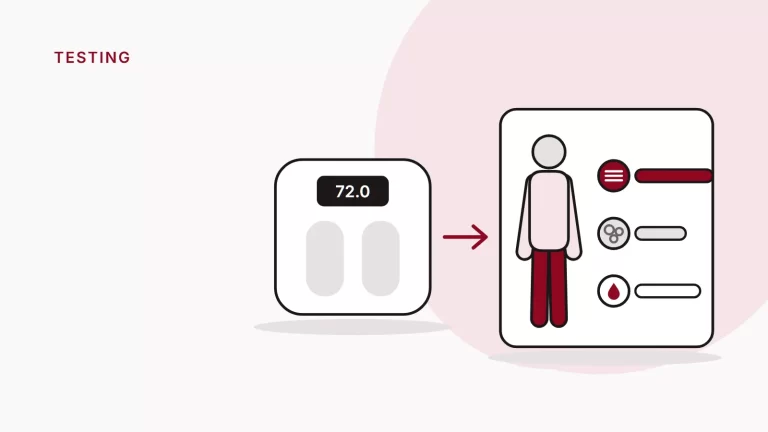
Is a Body Composition Test Worth It? An Honest Answer
Worth it if you test twice and act on it. Close to useless if you test once. The honest case for and against, and…