
Fitness 14 min read
Why Stressed Indians Gain Belly Fat: The Cortisol-Visceral Fat Connection Explained
Chronic stress is India's invisible belly fat driver. Cortisol triggers visceral fat storage even in people who eat well and exercise. How to measure stress-driven fat, identify it on your InBody report, and break the cycle.
Reading about body composition? Find an InBody test centre near you →
India’s Stress Epidemic Is Showing Up on Body Composition Scans
You eat reasonably well. You exercise when you can. You don’t drink heavily or smoke. Yet your InBody scan keeps showing a Visceral Fat Area that your clinician calls “borderline high” — and your belly hasn’t changed in two years of effort. If this describes you, the missing variable is probably cortisol.
India ranked among the most negatively emotional countries in the world in the Gallup 2024 Global Emotions Report, with Indians reporting high levels of worry, stress, and sadness that place us in the bottom quartile globally for emotional wellbeing. A separate 2023 survey by Cigna found that 89% of Indians report being stressed — compared to 86% globally — with work stress cited by 52% of respondents and financial stress by 37%. These aren’t abstract numbers. Chronic psychological stress produces a specific, measurable hormonal environment inside your body, and that environment preferentially deposits fat around your abdominal organs. Not under your skin, but deep inside — the kind of fat your bathroom scale cannot find, but an InBody scan can quantify to the square centimetre.
This article explains the cortisol-visceral fat connection in full, why it hits Indians particularly hard, and what the science actually says about reversing it.
What Cortisol Does — and Why It Stores Fat Near Your Organs

Cortisol is a glucocorticoid hormone produced by the adrenal glands in response to stress signals from the brain’s hypothalamus-pituitary-adrenal (HPA) axis. Its evolutionary job was to prepare you for a physical threat — a predator, a fight, a sprint to safety. When cortisol surges, blood sugar rises (your muscles need fuel), heart rate increases, digestion slows, and your body shifts into an energy-mobilisation state.
Critically, cortisol also tells fat cells to store energy rapidly and specifically signals visceral adipose tissue — the fat that wraps around your liver, pancreas, kidneys, and intestines — to take in more triglycerides. From an evolutionary perspective, this makes sense: visceral fat is metabolically active and rapidly accessible. Your body, preparing for a physical crisis, wanted energy stored close to the organs that would need it most.
The problem is that your HPA axis cannot distinguish between a lion and a deadline. A 2 AM work email from a demanding manager triggers the same cortisol cascade as a physical threat. But unlike the ancestral scenario, you don’t burn off that mobilised energy by running. You sit at a desk, the cortisol signal keeps running, and the instruction to store visceral fat keeps executing — chronically, day after day, year after year.
Research published in Obesity Reviews confirmed that chronic HPA axis activation is independently associated with visceral adiposity, even after controlling for dietary intake and physical activity. A 2020 meta-analysis in Psychoneuroendocrinology found that hair cortisol concentration — a marker of long-term cortisol exposure — was positively correlated with waist circumference and visceral fat in adults across multiple populations.
The Indian Stress Landscape: Why the Load Is Unusually Heavy
To understand why this matters specifically for Indians, consider the stressors that stack uniquely on the Indian professional or urban dweller.
Professional Pressure
India’s IT sector — which employs over 5 million people directly and millions more in adjacent roles — is characterised by perpetual project cycles, offshore time-zone conflicts, and a culture where long hours are both expected and visibly rewarded. A 2023 ASSOCHAM report found that 42.5% of Indian corporate employees show signs of burnout. Startup culture compounds this: the glorification of “hustle” has created environments where resting is framed as falling behind. The result is chronic sympathetic nervous system activation with insufficient recovery.
Financial Stress
Despite India’s GDP growth, household debt levels have risen sharply. EMI obligations on home loans, vehicle loans, and consumer credit mean that financial anxiety is a constant background stressor for urban middle-class households. The RBI’s 2023 household finance survey noted that Indian households allocate a rising share of income to debt servicing — a significant and persistent source of cortisol-level financial anxiety.
Academic Pressure on Families
The pressure placed on children in India’s competitive exam culture is well documented — but it creates cortisol not just in students but in their parents. The stress of coaching fees, entrance exam outcomes, and the social comparison embedded in India’s education system generates chronic parental anxiety that is rarely discussed in health contexts.
Urban Infrastructure Stress
The average Mumbai commuter spends over 90 minutes daily in transit, often in overcrowded trains or unpredictable traffic. Bengaluru regularly ranks among the worst-congested cities in the world by TomTom’s Traffic Index. Delhi’s air quality regularly crosses AQI levels that trigger health warnings. These ambient stressors — commute unpredictability, noise, air quality anxiety — maintain low-level cortisol elevation throughout the day without any discrete “stress event” to point to.
Relationship and Family Stress
Joint family dynamics, while offering protective social connection in some contexts, can also generate interpersonal stress — intergenerational expectations, financial interdependence, and caregiving responsibilities that fall disproportionately on certain family members. These relationship stressors are chronic, not acute, and chronic stress is exactly what drives visceral fat accumulation.
The Paradox: Eating Well and Exercising, But Still Showing High VFA
One of the most consistent observations among clinicians using InBody devices in India is the patient who “does everything right” but carries unexplained visceral fat. Their diet is reasonable. They exercise three to four times a week. Their BMI is normal — perhaps even lean by Indian standards. But their Visceral Fat Area (VFA) reads 120–160 cm² when anything above 100 cm² is considered a health risk in Asian populations.
Chronic stress is the variable these patients are not accounting for because it doesn’t feel like a health intervention — it feels like a personal failing or a fact of life. But cortisol’s fat-storing effects operate independently of caloric balance. You can be in a slight caloric deficit and still accumulate visceral fat if your cortisol environment is chronically dysregulated, because cortisol suppresses lipolysis in visceral depots while promoting lipogenesis — the creation of new fat — in those same locations.
This is not a fringe hypothesis. Research from the Journal of Clinical Endocrinology and Metabolism (2014) demonstrated that even when controlling for BMI and lifestyle factors, individuals with higher chronic cortisol exposure showed significantly higher VFA measured by imaging. The InBody scan — which estimates VFA using bioelectrical impedance — gives clinicians a non-invasive window into exactly this variable.
The Cortisol-Insulin Resistance Loop That Makes It Self-Reinforcing
Cortisol’s relationship with visceral fat isn’t linear — it’s a reinforcing cycle that becomes progressively harder to interrupt.
Here is the mechanism step by step. Cortisol raises blood glucose by triggering gluconeogenesis in the liver and suppressing glucose uptake in peripheral tissues. The pancreas responds by releasing more insulin to manage the elevated blood sugar. Insulin is a powerful fat-storage hormone, and visceral fat tissue — which is richly supplied with cortisol and insulin receptors — responds by pulling in circulating triglycerides and storing them. As visceral fat accumulates, it becomes metabolically active in a harmful way: it releases inflammatory cytokines (particularly IL-6 and TNF-alpha) and free fatty acids directly into the portal circulation, which flows straight to the liver. This drives hepatic insulin resistance. As insulin resistance develops, the body needs even more insulin to manage blood sugar, further amplifying fat storage signalling.
Meanwhile, the inflammatory cytokines released by visceral fat stimulate the HPA axis — meaning that visceral fat itself generates more cortisol secretion. The cycle is now self-reinforcing: stress creates visceral fat, which generates inflammation, which drives more cortisol, which drives more visceral fat.
This loop explains the South Asian metabolic paradox — the well-documented observation that Indians develop metabolic syndrome, type 2 diabetes, and cardiovascular disease at significantly lower BMI thresholds than Western populations. A 2009 consensus statement by the Indian Council of Medical Research proposed BMI cutoffs of 23 kg/m² (overweight) and 25 kg/m² (obese) for Indians versus the Western standard of 25 and 30. The reason is that Indians carry a higher proportion of visceral fat relative to total body fat at any given BMI — and cortisol-driven stress is a meaningful contributor to why that ratio is elevated.
Sleep Deprivation: The Cortisol Amplifier

Sleep and stress share a bidirectional relationship that makes both worse. Chronic stress disrupts sleep architecture — it keeps the HPA axis activated at night when it should be suppressed, preventing the deep sleep stages where cortisol is meant to drop to its diurnal nadir. And sleep deprivation itself raises cortisol: a 2019 study in Sleep Medicine Reviews found that even one week of sleeping five hours per night elevated cortisol levels by approximately 15–20% in healthy adults.
Indian data from the 2022 Fitbit Sleep Study found that Indians average just 7 hours 1 minute of sleep per night — but this headline understates the problem because sleep quality, not just duration, determines cortisol impact. Work-related phone use after 10 PM — extremely common in India’s IT culture — suppresses melatonin and prevents the cortisol drop that should precede sleep. The result is chronically elevated overnight cortisol, which amplifies visceral fat accumulation during hours when the body should be recovering.
What InBody Shows in Chronically Stressed Individuals
An InBody scan on a chronically stressed individual typically reveals a specific pattern that an experienced clinician can recognise.
Elevated VFA (Visceral Fat Area)
The most direct marker. VFA above 100 cm² in Asian populations is associated with increased cardiometabolic risk. In chronically stressed individuals who otherwise appear lean, VFA is often disproportionately elevated relative to their Percent Body Fat (PBF) — reflecting the preferential visceral deposition driven by cortisol.
Elevated ECW/TBW Ratio
The ratio of Extracellular Water to Total Body Water is one of InBody’s most clinically valuable but under-discussed outputs. A normal ECW/TBW ratio falls between 0.360 and 0.390. Values above 0.390 indicate cellular stress, inflammation, or poor cellular health. Chronic cortisol elevation drives systemic low-grade inflammation — the same cytokine environment generated by visceral fat. This inflammation disrupts normal fluid distribution between intracellular and extracellular compartments, elevating the ECW/TBW ratio. Seeing an ECW/TBW ratio of 0.395–0.410 in a patient with no obvious medical condition but a high-stress lifestyle is a recognised clinical finding that warrants a conversation about stress physiology.
Suppressed SMM Relative to Body Weight
Chronic cortisol is catabolic — it breaks down muscle tissue (Skeletal Muscle Mass, or SMM) to generate amino acids for gluconeogenesis. Over months and years, chronically stressed individuals may show lower SMM than expected for their body weight and activity level, even if they train regularly. This manifests as a lower InBody Score than their fitness habits would predict, because InBody Score rewards lean mass relative to body weight.
Taken together, the pattern of high VFA + elevated ECW/TBW + relatively suppressed SMM is a biochemical fingerprint of chronic stress physiology — visible on a body composition scan even when the patient presents no other obvious clinical findings.
What the Evidence Actually Says About Reducing Cortisol
Stress management is often dismissed as soft advice. It shouldn’t be — the evidence for specific cortisol-reducing interventions is substantial.
Yoga
India’s own traditional practice has been validated extensively by Western research. A 2017 systematic review in the Journal of Alternative and Complementary Medicine found that regular yoga practice reduced salivary cortisol by 14–20% across multiple randomised controlled trials. A study published in Psychoneuroendocrinology specifically found that 12 weeks of Hatha yoga three times per week significantly reduced both morning cortisol and perceived stress in office workers — a population directly relevant to India’s working population. Three sessions per week of 45–60 minutes appears to be the minimum effective dose.
Pranayama and Controlled Breathing
Slow, controlled breathing directly activates the parasympathetic nervous system and suppresses HPA axis activity. A 2013 study in BMC Complementary Medicine found that a single 15-minute pranayama session reduced salivary cortisol by approximately 25% in healthy volunteers. The 4-7-8 breathing technique (inhale for 4 counts, hold for 7, exhale for 8) and box breathing (4-4-4-4 pattern) both work by extending the exhale phase, which is the primary parasympathetic activator. Even five minutes of deliberate slow breathing before sleep has measurable HPA-suppressing effects in controlled studies.
Social Connection and the Joint Family as a Protective Factor
Research consistently shows that strong social bonds buffer cortisol response to stress. A landmark 2010 meta-analysis by Holt-Lunstad found that social isolation increases mortality risk by 29%. Conversely, the Indian joint family structure — where multiple generations live together and emotional burdens are distributed — may offer genuine physiological protection against chronic HPA activation. This is worth naming explicitly: the joint family model, when functional, provides the kind of cortisol-buffering social support that Western populations spend money trying to recreate in therapy and wellness programmes.
Nature Exposure
A 2019 study in Frontiers in Psychology found that as little as 20 minutes spent in a natural outdoor environment (park, garden, waterfront) reduced cortisol levels measurably, independent of physical activity. Urban Indians with access to parks, waterfronts, or green spaces have a genuine physiological tool available that most do not use deliberately. Incorporating 20–30 minutes of outdoor time in a green environment three to four times per week has documented cortisol-reducing effects.
Exercise at the Right Intensity
Exercise’s relationship with cortisol is dose-dependent and often misunderstood. Moderate-intensity exercise — 30–45 minutes at 60–70% of maximum heart rate — reduces baseline cortisol over time and improves HPA axis regulation. However, high-volume or high-intensity training without adequate recovery raises chronic cortisol. Overtraining syndrome is characterised by elevated resting cortisol and suppressed SMM — exactly the pattern visible on InBody in individuals who train hard but recover poorly. For chronically stressed individuals, more exercise is not automatically better. Replacing one intense session per week with yoga, walking, or swimming may be the correct intervention.
Sleep Optimisation as a Primary Intervention
Given the bidirectional relationship between sleep and cortisol, improving sleep quality is often the highest-leverage single intervention for VFA reduction. Consistent sleep and wake times (maintaining circadian cortisol rhythms), phone-free evenings from 9 PM onwards, and a room temperature below 22°C are the three evidence-supported sleep hygiene measures with the strongest cortisol-normalization effects.
The Timeline: What Changes on Your InBody Scan
Patients who implement consistent cortisol-reduction practices — yoga three times per week, controlled breathing daily, improved sleep hygiene, moderate exercise — typically begin showing measurable InBody changes within 8–12 weeks. The earliest observable change is often the ECW/TBW ratio, which can normalise toward 0.360–0.390 within 6–8 weeks as systemic inflammation reduces. VFA reduction is slower: expect 10–20 cm² of reduction per three months with consistent intervention, accelerating as insulin sensitivity improves and the cortisol-insulin loop is broken. SMM trends upward as the catabolic cortisol environment diminishes and training produces its intended anabolic effect.
These are not dramatic changes in short timeframes — visceral fat accumulated over years of chronic stress does not dissolve in weeks. But the trend direction on sequential InBody scans is a powerful motivational tool. Seeing VFA move from 145 to 128 to 112 cm² over nine months, correlated with lifestyle changes, transforms stress management from a vague wellness concept into a measurable metabolic intervention.
Stress Management Is Body Composition Intervention
This is the reframe that matters most. In Indian health culture, exercise and diet are treated as the two levers of body composition, while stress management is treated as a lifestyle preference — something you do if you have time. The cortisol-visceral fat evidence inverts this hierarchy.
For a chronically stressed Indian professional with normal BMI but elevated VFA, adding a fourth gym session will do less for their VFA than replacing one gym session with yoga, going to bed 45 minutes earlier, and spending 20 minutes in a park on weekends. This is not a statement about motivation or discipline — it is a statement about cortisol physiology. An elevated cortisol environment actively counteracts the body composition benefits of exercise by suppressing muscle protein synthesis and promoting visceral fat storage simultaneously.
The most sophisticated approach to Indian body composition — particularly for the growing population of urban professionals with metabolic syndrome at low BMI — integrates stress physiology as a first-class intervention rather than an afterthought.
Know Your Numbers: Get an InBody Assessment
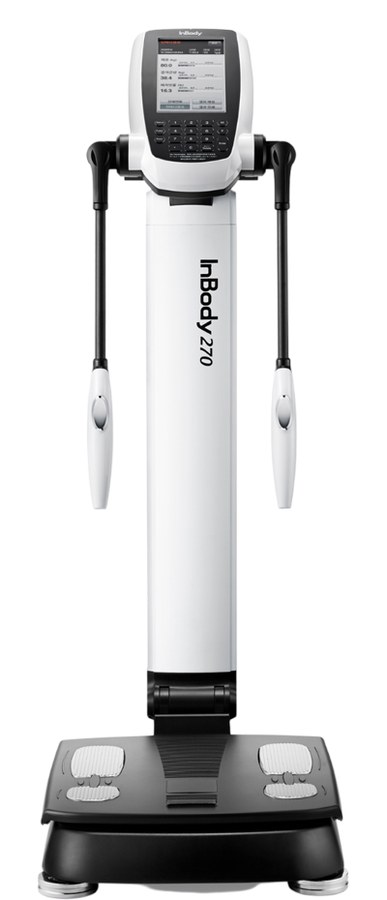
If you have recognised yourself in this article — particularly if you carry unexplained belly fat despite reasonable habits — the most useful first step is to understand your actual numbers. A clinical InBody assessment will tell you your Visceral Fat Area, your ECW/TBW ratio, your Skeletal Muscle Mass relative to your body weight, and your overall InBody Score. These numbers give you a baseline from which to measure the impact of stress management interventions — and they often reveal that the problem is not what you thought it was.
Without measurement, stress management feels intangible. With a VFA reading and an ECW/TBW ratio in hand, you have specific, trackable targets. When VFA comes down and ECW/TBW normalises, you are not guessing — you are observing a documented metabolic improvement that correlates directly with reduced cardiovascular and diabetes risk.
InBody assessments are available at clinics, gyms, and wellness centres across India. Find an InBody assessment centre near you and schedule a baseline scan. Bring your results back in three months after implementing the cortisol-reduction strategies in this article, and compare. The data will speak for itself.
Your belly fat may not be a diet problem. It may be a cortisol problem — and that is a problem with evidence-based solutions.
Frequently Asked Questions
How does stress cause belly fat specifically?
Chronic stress keeps cortisol elevated, which signals the body to store fat preferentially in the abdominal/visceral region rather than elsewhere, independent of total calorie intake.
Can you gain visceral fat from stress even while eating well and exercising?
Yes — this is a common and frustrating pattern; cortisol-driven fat storage can partially override the expected results of a good diet and exercise routine until the underlying stress is addressed.
How would I know if my belly fat is stress-driven?
A disproportionately high visceral fat level relative to your overall body fat percentage and muscle mass on a body composition report, combined with poor sleep and high perceived stress, points toward a cortisol-driven pattern.
