
Health 10 min read
Thyroid and Body Composition: Why India’s 42 Million Thyroid Patients Struggle to Lose Weight
Thyroid disorders affect 42 million Indians — the largest thyroid disease burden in the world. How hypothyroidism changes your body composition, raises visceral fat, and why TSH alone doesn't tell the whole story.
Reading about body composition? Find an InBody test centre near you →
Thyroid and Body Composition: Why India’s 42 Million Thyroid Patients Struggle to Lose Weight
India carries the world’s single largest burden of thyroid disease. With an estimated 42 million Indians living with some form of thyroid disorder — the majority of them hypothyroid — this is not a niche health concern. It is a national epidemic, and one that intersects with body composition in ways that most patients and even many clinicians do not fully understand.
The question patients ask most often after being diagnosed with hypothyroidism is: “Why can’t I lose weight even when I’m eating less and exercising?” The answer lies not in willpower or discipline, but in the precise way thyroid hormones govern your body’s fundamental architecture — the ratio of muscle to fat, where fat is stored, and how efficiently your body uses the calories you give it.
A TSH test can tell you that your thyroid is underactive. It cannot tell you what has happened to your muscle mass, your visceral fat, or your body’s inflammatory state while it was. For that, you need body composition testing.
India’s Thyroid Epidemic: The Numbers Behind the Crisis
The scale of thyroid disease in India is difficult to overstate. A landmark study published in the Indian Journal of Endocrinology and Metabolism estimated that thyroid disorders affect approximately 42 million Indians, with hypothyroidism (underactive thyroid) accounting for the largest share. Regional data shows particularly high prevalence:
- Prevalence of hypothyroidism in urban India: approximately 10.95%, significantly higher than rural areas
- Women are 5–8 times more likely to develop hypothyroidism than men
- Subclinical hypothyroidism (elevated TSH with normal T4) affects an additional 8–10% of the Indian population
- Autoimmune thyroid disease (Hashimoto’s thyroiditis) is the leading cause of hypothyroidism in Indian urban populations
- Iodine deficiency, despite supplementation programs, remains a contributing factor in rural areas
What makes this epidemic particularly consequential for body composition is that hypothyroidism is not simply a metabolic slowdown. It is a multi-system disruption that systematically dismantles the body’s lean tissue while simultaneously promoting fat storage — and that damage accumulates silently, often for years before diagnosis.
How Thyroid Hormones Control Your Body Composition
Thyroid hormones — primarily T3 (triiodothyronine) and T4 (thyroxine) — are the master regulators of metabolic rate. Every cell in your body has thyroid hormone receptors, and the actions of T3 in particular directly govern the balance between muscle and fat.
T3 and Muscle Protein Synthesis
T3 is a potent anabolic signal for skeletal muscle. At optimal levels, it promotes muscle protein synthesis by upregulating the genes responsible for myosin heavy chain production — the contractile proteins that make muscles strong and functional. When T3 is low (as in hypothyroidism), muscle protein synthesis decreases, and protein breakdown begins to outpace protein building.
The result is a slow, insidious loss of Skeletal Muscle Mass (SMM). This is not the kind of muscle loss you can see in the mirror immediately — it happens over months and years, quietly reducing your resting metabolic rate, your strength, and your body’s primary glucose disposal organ. A clinical study published in Thyroid journal found that hypothyroid patients had significantly lower fat-free mass compared to euthyroid controls at the same body weight.
T3, Fat Oxidation, and the Storage Switch
T3 is critical for lipolysis — the breakdown of stored fat for energy. In a hypothyroid state, fat oxidation slows dramatically. The body’s preferred fuel source shifts away from stored fat, and adipose tissue accumulates. Worse, the pattern of fat accumulation changes: hypothyroidism specifically promotes visceral fat deposition over subcutaneous fat, meaning the fat accumulates where it causes the most metabolic harm.
Studies using imaging and body composition analysis have consistently shown that hypothyroid patients have disproportionately elevated Visceral Fat Area (VFA) relative to their total body weight, and that this visceral fat elevation correlates more strongly with their metabolic risk than their total body weight does.
The Metabolic Rate Collapse
The thyroid gland governs Basal Metabolic Rate (BMR) — the number of calories your body burns at rest. In clinical hypothyroidism, BMR can fall by 30–40%. This means a person who previously maintained their weight eating 1,800 calories per day may, after hypothyroidism sets in, begin gaining weight on as little as 1,200 calories. Since muscle mass is also falling (further reducing BMR), the situation compounds over time.
This is why “eating less” alone doesn’t work for hypothyroid patients. The metabolic baseline has shifted, and without treatment and body composition-targeted intervention, the caloric deficit required to maintain weight becomes unsustainably severe.
Hashimoto’s Thyroiditis: India’s Growing Autoimmune Crisis
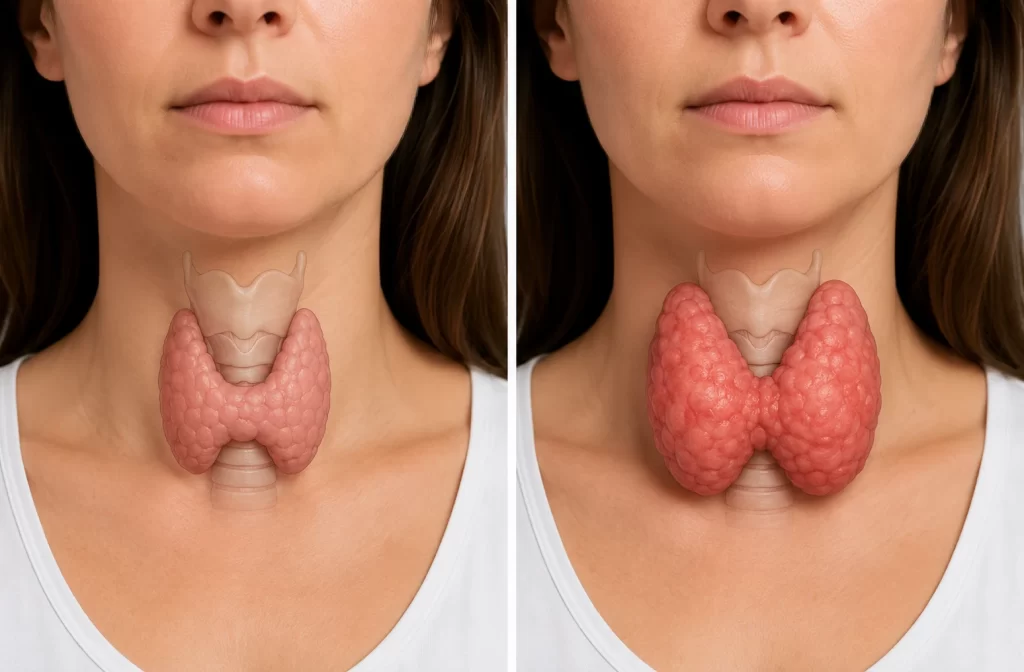
Hashimoto’s thyroiditis — an autoimmune condition in which the immune system attacks the thyroid gland — is now the leading cause of hypothyroidism in Indian urban populations. Its prevalence has risen sharply over the past two decades, likely driven by a combination of factors:
- Increased ultra-processed food consumption and gut microbiome disruption
- Rising rates of other autoimmune conditions (which often cluster together)
- Vitamin D deficiency (endemic in India despite sun exposure, due to indoor lifestyles and melanin-related absorption differences)
- Chronic stress and dysregulation of the HPA axis
- Genetic predisposition in certain Indian ethnic groups
Hashimoto’s has body composition implications that go beyond the hypothyroidism it causes. The chronic systemic inflammation associated with Hashimoto’s independently promotes visceral fat accumulation and muscle degradation through elevated inflammatory cytokines (TNF-alpha, IL-6). This means that even when TSH is controlled with medication, the underlying inflammatory state may continue to harm body composition.
The ECW/TBW ratio measured by InBody — which reflects the ratio of extracellular to total body water — is a sensitive marker of this type of chronic inflammation. Elevated ECW/TBW in a Hashimoto’s patient, even one on stable levothyroxine, suggests ongoing inflammatory activity that warrants dietary and lifestyle attention beyond medication alone.
Why TSH Tests Alone Are Inadequate
The standard of care for thyroid monitoring in India — as in most of the world — is the TSH test. A TSH in the reference range is typically interpreted as “thyroid function is normal.” But this interpretation misses several important realities:
The T4-to-T3 Conversion Problem
Most patients are prescribed levothyroxine (T4). However, T4 must be converted to the active T3 in peripheral tissues. A significant subset of patients — particularly those with chronic stress, nutritional deficiencies (selenium, zinc, iron), or gut dysfunction — have impaired T4-to-T3 conversion, resulting in a “normal” TSH but functionally low T3 at the tissue level. Their muscle protein synthesis and fat oxidation remain impaired even though their TSH looks fine.
TSH Reference Ranges May Be Too Broad
The standard TSH reference range (0.4–4.0 mIU/L) is based on population statistics and includes subclinically hypothyroid individuals. Many functional medicine practitioners and an increasing number of endocrinologists argue that optimal TSH for symptom resolution and body composition recovery is narrower — typically 0.5–2.5 mIU/L. A patient with TSH of 3.8 is technically “in range” but may still have significant metabolic impairment.
TSH Doesn’t Show the Body Composition Damage
Most critically: even a normalized TSH tells you nothing about the cumulative damage to body composition during the period of untreated or undertreated hypothyroidism. A patient who spent two years with untreated hypothyroidism may have lost 3–4 kg of muscle and gained 5–6 kg of fat during that time. Their TSH is now normal on medication, but their body composition reflects years of metabolic impairment. Without measuring SMM, PBF, and VFA directly, neither the patient nor the doctor knows the extent of the damage — or whether it is being corrected.
What Changes After Treatment — And What Doesn’t
When hypothyroid patients begin levothyroxine treatment and TSH normalizes, several things change: energy improves, brain fog lifts, hair loss slows, and many symptoms recede. But body composition often lags significantly behind — and this is where patients become frustrated.
Studies tracking body composition before and after thyroid treatment show:
- Total body water decreases (hypothyroidism causes fluid retention that resolves with treatment)
- Fat mass may initially decrease modestly as metabolism recovers
- However, muscle mass does not automatically recover — it requires active resistance training and adequate protein intake
- Visceral fat responds slowly and incompletely to medication alone — lifestyle intervention is required
This is the most important insight: thyroid medication is necessary but not sufficient for body composition recovery. The scale may show a modest drop in weight as retained fluid is released, but InBody data will often reveal that the underlying muscle deficit and visceral fat excess persist until actively addressed through resistance training and nutrition.
Patients who track their InBody Score, SMM, and VFA every 3–4 months during thyroid treatment have a clear, objective picture of whether their intervention is actually reversing the body composition damage — not just normalizing a lab value.
The InBody Tracking Protocol for Thyroid Patients
For hypothyroid patients committed to recovering their metabolic health, body composition testing serves as the essential feedback mechanism. Here’s how to use it effectively:
Baseline Assessment
Get an InBody test at diagnosis or at the start of treatment. This establishes your current SMM, PBF, VFA, ECW/TBW ratio, and InBody Score — creating a reference point against which all progress can be measured.
Quarterly Monitoring
Test every 3–4 months, ideally at the same time of day and hydration state. Track the trend in SMM (should be increasing with resistance training) and VFA (should be decreasing with aerobic and dietary intervention). A stagnant or worsening VFA despite treatment suggests the need to address T3 conversion, inflammation, or lifestyle factors more aggressively.
Intervention Targets
- SMM: target the lower end of the normal range for your height and sex as an initial goal, then progress
- VFA: target below 100 cm² (the metabolically safe zone)
- PBF: target the healthy range for your age and sex
- ECW/TBW: target below 0.380 (reduced inflammation marker)
Nutrition and Exercise for Thyroid-Driven Body Composition Recovery

Protein First
Hypothyroid patients often have elevated protein turnover and impaired protein synthesis. Protein intake of 1.6–2.0 g/kg/day is essential to rebuild muscle. For a 60 kg Indian woman, that’s 96–120 grams of protein daily — significantly more than most Indian vegetarian diets provide by default. Prioritize complete protein sources: paneer, curd, legumes with rice (complementary proteins), eggs, and if non-vegetarian, fish and chicken.
Selenium and Zinc
Both minerals are critical for T4-to-T3 conversion. Indian soils are frequently selenium-deficient, making dietary adequacy challenging. Brazil nuts, sunflower seeds, and seafood are good sources. Zinc is found in pumpkin seeds, chickpeas, and cashews. Consider supplementation under medical supervision.
Resistance Training is Non-Negotiable
No supplement, medication adjustment, or dietary change will rebuild lost muscle mass without progressive resistance training. For hypothyroid patients, 3–4 sessions per week of compound resistance exercise is the evidence-based standard. Begin with bodyweight or light resistance and progress gradually — hypothyroid-related fatigue can be real, and overly aggressive training may worsen cortisol dysregulation.
Reduce Inflammatory Foods
For Hashimoto’s patients specifically, an anti-inflammatory dietary approach may reduce the autoimmune attack on the thyroid. This means minimizing ultra-processed foods, refined sugars, seed oils high in omega-6 fatty acids, and potentially gluten (though the evidence specifically for gluten in non-celiac Hashimoto’s is mixed). Prioritize whole foods, colorful vegetables, omega-3-rich foods (flaxseed, walnuts, fatty fish), and fermented foods for gut health.
Take Control of Your Thyroid Health With Real Data
If you’re one of India’s 42 million thyroid patients — or if you suspect you might be — a TSH test is just the beginning. Understanding what thyroid dysfunction has done to your body composition, and tracking whether treatment is actually reversing that damage, requires measuring the things that matter: Skeletal Muscle Mass, Percent Body Fat, Visceral Fat Area, and your body’s inflammatory state.
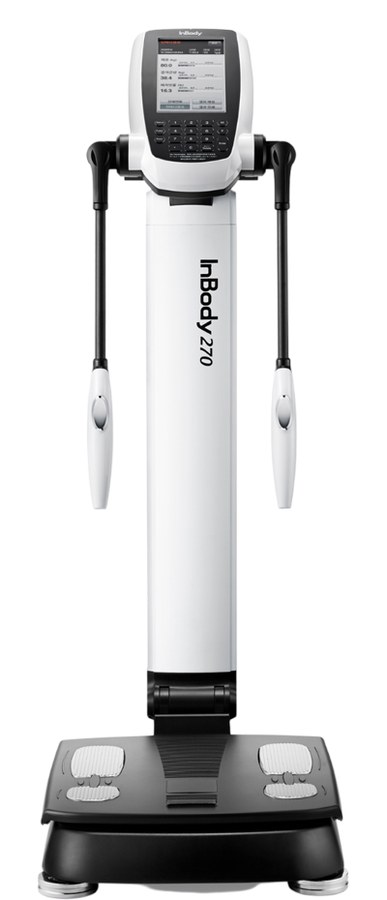
An InBody body composition analysis delivers all of this in under five minutes. It’s the tool leading endocrinologists, sports medicine physicians, and metabolic health clinics across India use to give thyroid patients a real picture of their health — not just a lab value.
Find an InBody-equipped test center near you at inbody.in/locations. Whether you’re newly diagnosed, years into treatment, or simply frustrated that the scale isn’t moving despite doing everything right — your body composition data will show you exactly what’s happening and where to focus your effort.
Frequently Asked Questions
How does an underactive thyroid affect body composition?
Hypothyroidism slows metabolic rate, which promotes fat gain (especially visceral fat) and can reduce muscle mass if left untreated, even when calorie intake and activity levels stay the same.
If my TSH is normal, could I still have a thyroid-related weight issue?
Yes — TSH is one marker among several, and some people with "normal" TSH still show sluggish metabolic and body composition patterns; a body composition test can reveal metabolic effects that a TSH-only blood panel misses.
Can body composition improve once thyroid levels are treated?
Yes, though it typically takes several months of stable thyroid medication combined with resistance training and adequate protein for visceral fat and muscle mass to normalize.

Most trending articles

BCA Test Full Form and Meaning: What It Actually Measures
BCA stands for Body Composition Analysis. What the test measures, how it differs from BMI and DEXA, and why it matters more for Indian bodies.
Corporate Wellness Body Composition Screening in India
BMI-based screening misses the risk in Indian workforces entirely. How to run body composition screening at scale, handle privacy, and use the aggregate data.
Body Composition Testing ROI for Indian Gyms: The Real Case
Members quit because the scale stops moving. Where the return actually comes from, the 5 operational failures that kill it, and how to measure it honestly.