
Body Composition 7 min read
BCA Machine in India: Full Form, How It Works, How to Choose
BCA means Body Composition Analysis, not BMI. How these machines work, the 4 specs that decide accuracy, and what to ask before any supplier quotes a price.
Reading about body composition? Find an InBody test centre near you →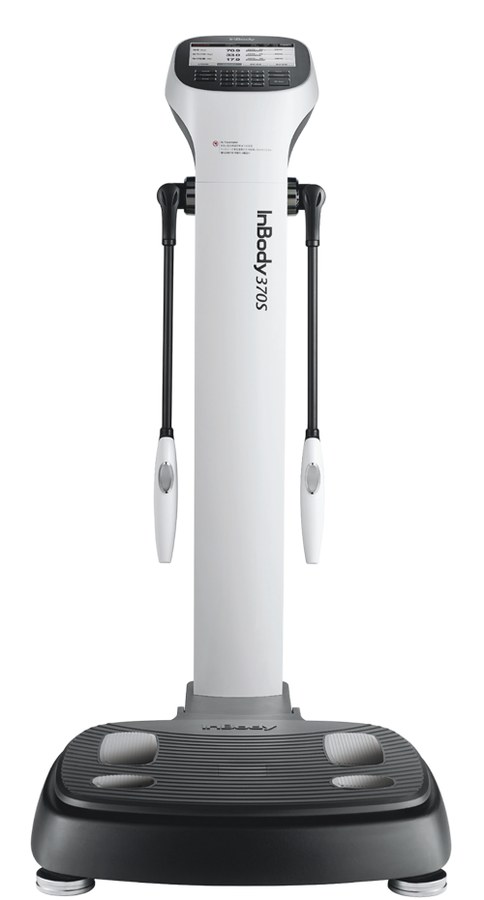
What a BCA Machine Actually Is (And Why the Name Confuses Everyone)
You have seen one standing in the corner of a gym, or been asked to step onto it at a diagnostic centre. Someone called it a BCA machine. Someone else called it a body composition analyser, or a BMI machine, or just “the InBody”. They were mostly talking about the same device — and one of those names is wrong.
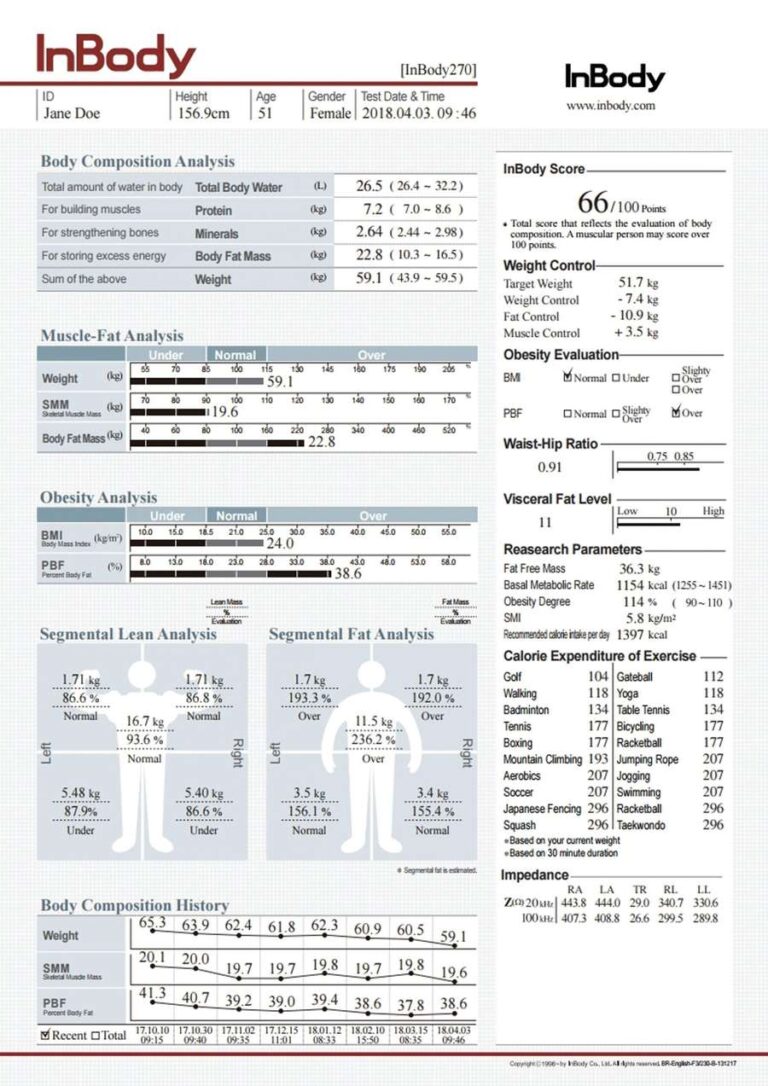
BCA stands for Body Composition Analysis. A BCA machine is a device that measures what your body weight is actually made of: skeletal muscle mass, body fat mass, body water, and how those are distributed across your arms, legs and trunk. It is not a weighing scale with extra features, and it is definitely not a BMI machine — BMI is a single number calculated from height and weight, and any calculator can produce it.
If you are choosing a BCA machine for a gym, clinic or hospital, or simply want to know what the one you stood on was measuring, this guide covers the technology, the specifications that matter, and the questions worth asking before anyone quotes you a price.
BCA Machine Full Form and What It Measures
The full form of BCA is Body Composition Analysis. A professional BCA machine reports, at minimum:
- Skeletal Muscle Mass (SMM) — the muscle attached to bone that you can actually train and lose. This is the number that matters most and the one a weighing scale cannot see.
- Body Fat Mass and Percent Body Fat — total fat in kilograms and as a proportion of body weight.
- Visceral Fat — the metabolically active fat around the abdominal organs, reported as a level or as an area in cm² depending on the model.
- Total Body Water, usually split into intracellular and extracellular water.
- Segmental Lean Analysis — muscle measured separately in the right arm, left arm, trunk, right leg and left leg. This is what reveals imbalances that a whole-body number hides.
- Basal Metabolic Rate (BMR) — estimated energy expenditure at rest.
A cheap consumer scale claiming “body fat %” typically reports one or two of these, derived from a whole-body estimate. A professional BCA machine measures each segment independently. The difference matters more than the marketing suggests, and it is covered in detail in our guide to DSM-BIA versus single-frequency BIA accuracy.
How a BCA Machine Works
Professional BCA machines use bioelectrical impedance analysis (BIA). A very small, painless alternating current is passed through the body via electrodes. Muscle holds a lot of water and conducts that current easily. Fat holds very little and resists it. By measuring the resistance the current meets, the device works out how much of your body is lean tissue and how much is fat.
Three design choices separate a clinical-grade device from a novelty one.
1. Direct segmental measurement
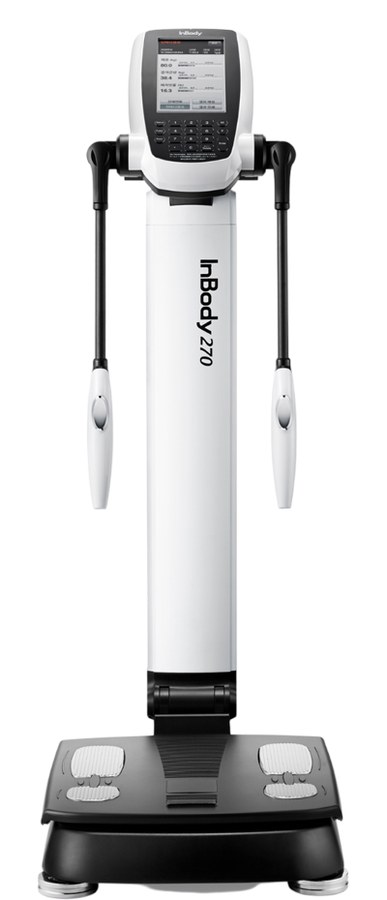
The body is not one uniform cylinder. An arm and a trunk have very different resistance. Devices using Direct Segmental Multi-frequency BIA (DSM-BIA) measure the five body segments separately rather than treating the body as a single unit. InBody devices take 15 impedance measurements across 3 frequencies and 5 segments on the professional 270S, for example.
2. Multiple frequencies
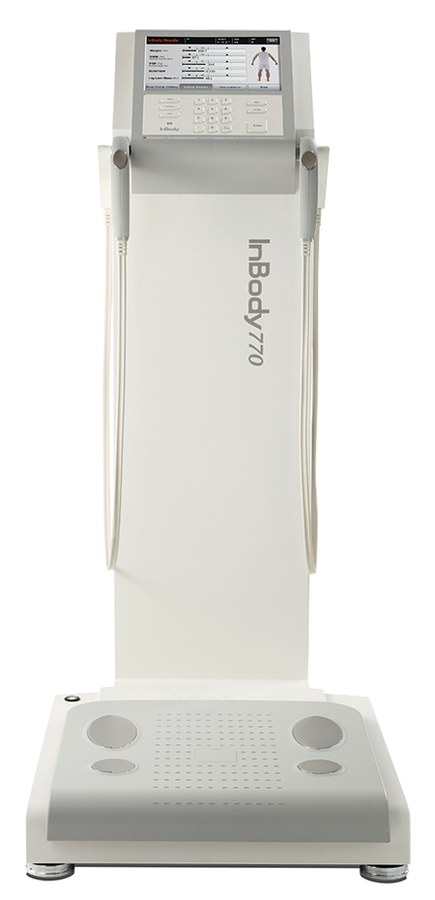
Low-frequency current travels mainly around cells, through extracellular water. Higher-frequency current penetrates cell membranes and reaches intracellular water. Using several frequencies lets the device separate those two water compartments — which is what makes fluid-balance assessment possible. The InBody 270S uses three frequencies (20, 50 and 100 kHz). The clinical InBody 770S uses six, from 1 kHz to 1,000 kHz, which is what allows it to report Phase Angle and segmental water balance.
3. No empirical estimation
This one is worth understanding before you buy anything. Many BIA devices apply statistical corrections based on your age, sex or ethnicity — effectively guessing part of the answer from population averages, then presenting it as a measurement. InBody devices calculate results directly from measured impedance per segment, without those corrections. It is the reason two people of identical age, height and weight can get genuinely different readings rather than near-identical ones.
How to Choose a BCA Machine: The Specifications That Matter
Ignore the cabinet design and the touchscreen size. These are the specifications that determine whether the data is usable.
| Specification | What to look for | Why it matters |
|---|---|---|
| Electrode system | Tetrapolar 8-point tactile electrodes | Separates the current-injecting and voltage-sensing electrodes, and fixes the measurement start point at the wrist and ankle so results repeat consistently |
| Segments measured | 5 (both arms, both legs, trunk) | Reveals left-right imbalance and trunk muscle deficits invisible to whole-body devices |
| Frequencies | 3 minimum; 6 for clinical work | More frequencies mean better separation of intracellular and extracellular water |
| Empirical estimation | None | Results should be measured, not inferred from your demographic profile |
| Validation | Published DEXA correlation | InBody professional devices report 98% correlation with DEXA; the 770S reports 99% |
| Test duration | Around 60 seconds | Determines throughput in a busy gym or OPD |
| Data storage | Stored measurements per ID | Trend tracking is the entire point; the 970S stores up to 100,000 measurements when an ID is entered |
Which BCA Machine Suits Which Setting
The right machine depends almost entirely on who is being tested and what decision the result informs.
- Gyms and fitness studios — throughput and a member-friendly result sheet matter more than research-grade water analysis. A professional portable model in the InBody 270S or 370S class is the usual fit. See our buyer’s guide for gyms.
- Clinics and outpatient departments — need reliable segmental muscle data and visceral fat, plus results that print cleanly into a patient file.
- Hospitals, nephrology, oncology and research — need six-frequency measurement, Phase Angle, and extracellular-to-total body water ratios. This is InBody 770S and 970S territory, and the reasoning is set out in our guide for hospitals and clinical departments.
- Home use — a professional machine is overkill. The trade-offs are covered in professional versus home analysers.
BCA Machine vs BMI Machine: Not the Same Thing
“BMI machine” is the most common misnomer in the Indian market, and it costs buyers real money. BMI is body weight divided by height squared. It requires no analysis, no electrodes and no device beyond a scale and a measuring tape.
The distinction matters especially in India. Indians carry a well-documented tendency toward higher body fat and lower muscle mass at any given BMI — the pattern sometimes described as the thin-fat phenotype. Which is why ICMR and WHO Asia-Pacific guidance uses lower BMI cut-offs for Indians (overweight from 23, obesity from 25) than the Western 25 and 30. Even with the corrected cut-offs, BMI still cannot tell you whether a 70 kg person is carrying 25 kg of muscle or 15 kg. A BCA machine can. We covered this comparison in full in BCA vs BMI: which test tells the truth.
What a BCA Machine Costs in India
Professional BCA machine pricing is not a single figure, and any supplier quoting one without asking about your setting is guessing. Cost depends on the model tier, the number of frequencies, whether Phase Angle and segmental water analysis are required, the service and calibration plan, quantity, and the facility type — institutional pricing for a hospital differs from a single-unit gym purchase.
InBody professional analysers in India are sold directly through InBody India rather than through Amazon or third-party retailers, which is also what keeps warranty and calibration support intact. Exact quotes are provided within 24 hours. The factors that move the number are broken down in our body composition analyser price guide, and you can request a quote at inbody.in/inbody-price.php.
See What Your Own Numbers Look Like
A BCA machine is only as useful as the decision it informs. Whether you are evaluating one for a facility or simply want your own baseline, the fastest way to understand the output is to see your own report.
Book an InBody body composition test at inbody.in/inbody-test.php, or find a testing centre near you at inbody.in/locations. Buying for a gym, clinic or hospital? Request a tailored quote at inbody.in/inbody-price.php. Related reading: how to read an InBody results sheet, InBody vs DEXA vs calipers compared, and how bioelectrical impedance analysis actually works.

Most trending articles
वज़न बढ़ाने के लिए क्या खाएं? सही डाइट प्लान (सिर्फ ज़्यादा खाना नहीं)
सिर्फ ज़्यादा खाने से मांसपेशी नहीं बनती, चर्बी बढ़ सकती है। सही कैलोरी सरप्लस, प्रोटीन और डाइट प्लान जो वज़न को सही तरीके से बढ़ाए — पूरी जानकारी हिंदी में।
भारत में प्रोटीन कितना ज़रूरी है? असली आंकड़े और सही फॉर्मूला
IMRB के एक सर्वे में लगभग 73% भारतीय आहार प्रोटीन-कम पाए गए। सही प्रोटीन टारगेट कैसे निकालें और किन फूड्स से पूरा करें — पूरी जानकारी हिंदी में।
Metabolic Age क्या होती है? आपकी उम्र से ज़्यादा है या कम?
आपकी असली उम्र 34 है पर शरीर 50 साल जैसा व्यवहार कर सकता है। Metabolic age क्या है, मांसपेशी घटने के जोखिम क्या हैं और इसे कैसे घटाएं — पूरी जानकारी।