
Body Composition 6 min read
Body Composition Testing ROI for Indian Gyms: The Real Case
Members quit because the scale stops moving. Where the return actually comes from, the 5 operational failures that kill it, and how to measure it honestly.
Reading about body composition? Find an InBody test centre near you →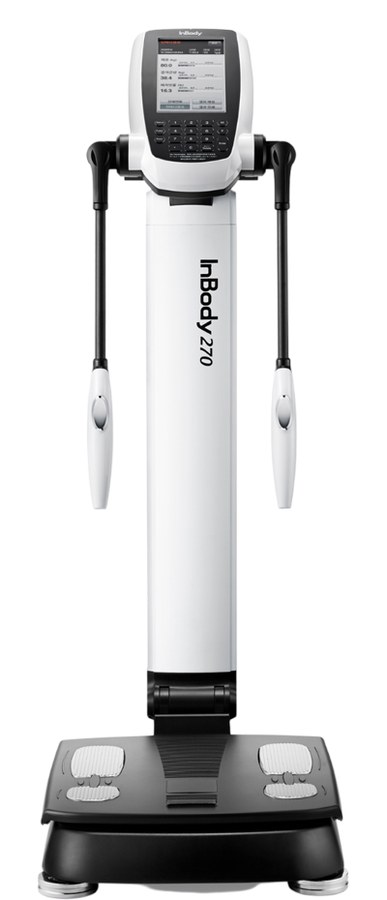
The Business Case for Body Composition Testing in an Indian Gym
Most gym owners evaluate a body composition analyser as equipment. That is the wrong category. Treadmills are equipment — members use them and leave. A body composition analyser is a retention instrument, and it should be judged on whether members stay longer.
Indian gyms lose a large share of members within the first few months, and the reason members give is remarkably consistent: they could not see it working. This guide sets out where the return actually comes from, and what has to happen operationally for it to appear.
The Problem the Machine Solves
A member joins in January. They train reasonably consistently for eight weeks. They step on the scale in March and it reads what it read in January.
They conclude the gym is not working and stop coming.
What frequently happened is that they gained two kilograms of muscle and lost two kilograms of fat. Body weight identical. Body composition transformed. Metabolic rate up. Clothes fitting differently. All of it invisible to the only measuring instrument they had.
That is the failure a body composition analyser addresses. Not “premium service” — evidence, produced at the exact moment a member is deciding whether to continue.
Where the Return Actually Comes From
1. Retention at the decision point
The highest-risk window is weeks six to twelve, when initial motivation fades and visible results have not yet arrived. A re-test in that window that shows measurable muscle gain and fat loss is the single most persuasive thing you can put in front of a wavering member. It converts an ambiguous experience into a documented one.
2. Personal training conversion
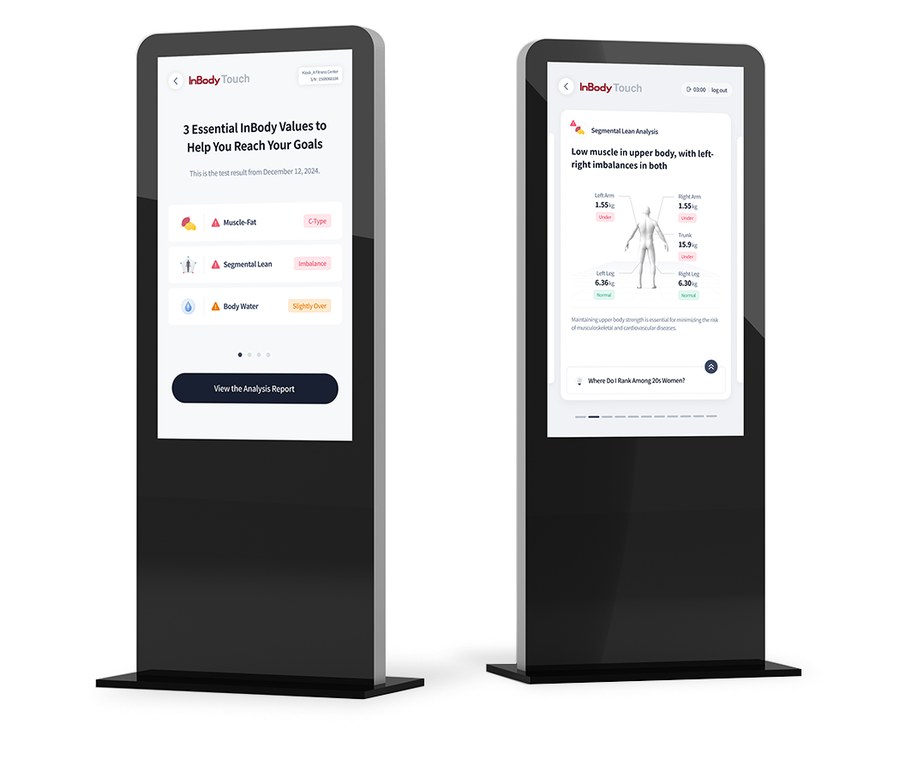
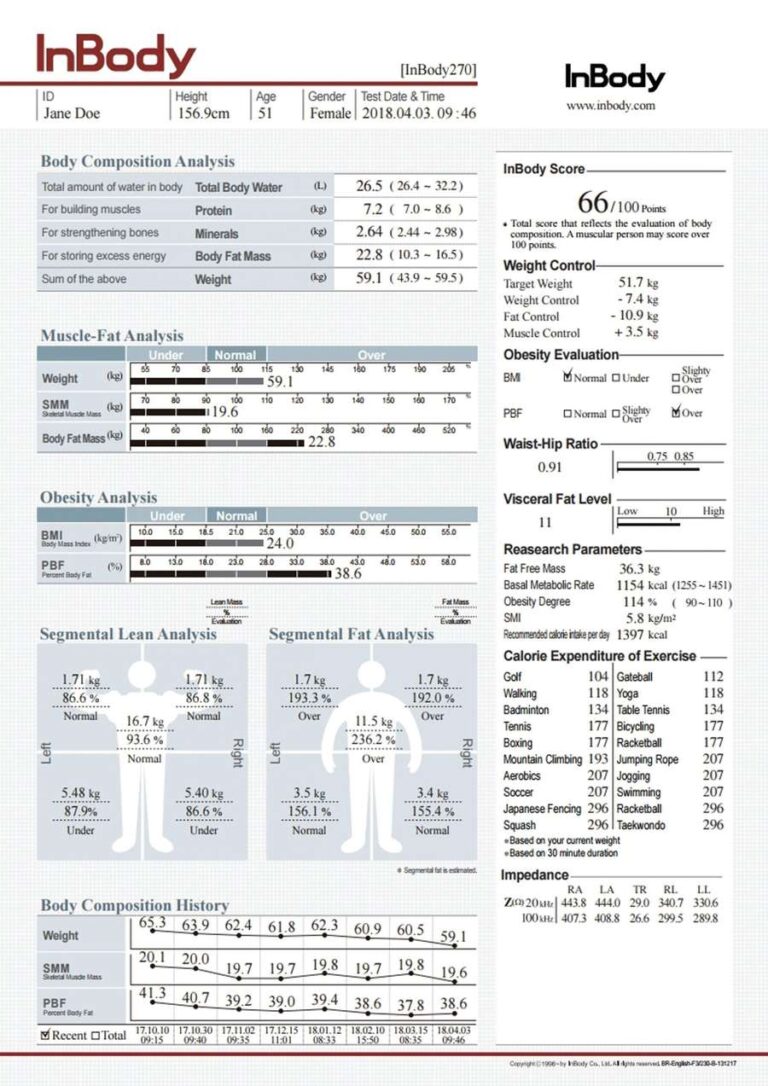
A segmental report gives a trainer something specific to say: your left leg is measurably behind your right, your trunk muscle is below range for your height, your visceral fat is elevated despite a normal weight. That is a far stronger basis for a PT conversation than a generic offer, because the member can see the finding on paper.
3. A structured reason to return
Booking the re-test at the first appointment creates a scheduled touchpoint six to eight weeks out. Members who have a booked appointment come back at higher rates than members who have an open invitation.
4. Differentiation in a price-competitive market
Most Indian gyms compete on monthly fee and equipment brand. Objective progress measurement is a genuinely different offer, and one that is difficult for a nearby competitor to match quickly.
5. Corporate and group revenue
Local employers frequently want wellness screening. A gym with a professional analyser and a workable protocol can serve that, which is discussed further in corporate wellness screening.
The Honest Version: Where It Fails
Plenty of Indian gyms own a body composition analyser that is switched off. The failures are predictable and all operational rather than technical.
| Failure | What happens | Fix |
|---|---|---|
| No baseline at onboarding | No comparison exists later, so the machine can never prove anything | Test every new member in week one, without exception |
| Staff cannot read the report | Printout handed over unexplained, member discards it | Train floor staff on the four key numbers |
| Inconsistent test conditions | Hydration noise looks like muscle loss; members lose trust | Written protocol: same time of day, before training, no heavy meal |
| No re-test scheduled | One-off novelty rather than a tracking habit | Book the re-test before the member leaves the first one |
| Device that estimates rather than measures | Similar members get near-identical reports; credibility collapses | Specify no empirical estimation at purchase |
That last row is worth dwelling on, because it is the one decided at purchase and impossible to fix afterwards. Devices applying corrections based on age, sex or ethnicity produce reports that look suspiciously similar across different members. Trainers notice within a few months, stop believing the output, and stop offering tests. The asset then produces nothing at all.
What to Specify for a Gym
Gyms need different things from hospitals. Specify for throughput and credibility, not research-grade outputs:
- Test duration around 60 seconds — peak-hour throughput matters.
- Tetrapolar 8-point tactile electrodes — fixes the measurement start point so re-tests are comparable.
- All five segments measured independently — segmental data is what trainers act on.
- No empirical estimation — non-negotiable.
- Three measurement frequencies — sufficient for a gym; six-frequency clinical outputs like Phase Angle are rarely used in this setting.
- Member-readable printed result sheet — members photograph and share these.
- Storage by member ID — trend tracking is the whole mechanism.
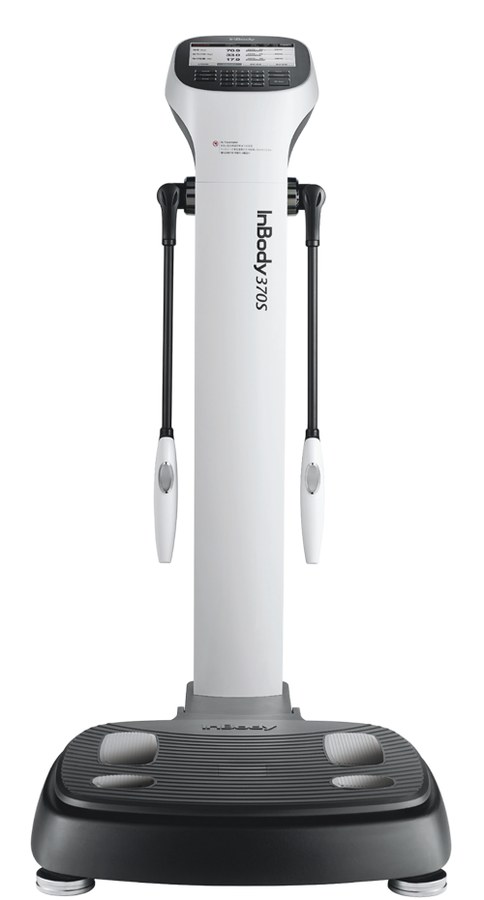
In the InBody range, the 270S and 370S class typically fits gyms and studios. Full detail in the gym buyer’s guide and how to choose a body composition analyser.
The Operating Protocol That Makes It Work
Four rules. Gyms that follow them get value; gyms that do not, own an expensive coat rack.
- Baseline every new member in week one. No exceptions. A member without a baseline can never be shown progress.
- Re-test every six to eight weeks, booked in advance. Long enough for real change, short enough to sustain engagement.
- Standardise conditions. Similar time of day, before training rather than after, no heavy meal or large volume of water beforehand. Write it down and enforce it.
- Two-minute walkthrough, every time. Skeletal muscle mass, body fat mass, visceral fat, segmental balance. Staff should be able to do this without hesitating.
For staff training, how to read a BCA report and the InBody Score explained work well as internal reference documents.
How to Evaluate the Return Honestly
Rather than accepting a supplier’s projection, measure it yourself. Track four numbers from the month you install:
- Retention rate at month three, split between members who were tested and members who were not.
- Personal training conversion rate, same split.
- Re-test completion rate — what proportion of baselines return for a second test. This is your leading indicator; if it is low, the protocol is broken, not the machine.
- Referrals, since members frequently share their report.
The re-test completion rate is the one to watch first. It tells you within two months whether the programme is working, long before retention data matures.
What It Costs
Pricing depends on model tier, number of frequencies, service and calibration terms, quantity, and whether you are a single studio or a multi-branch chain — institutional and multi-unit terms differ materially. InBody India provides tailored quotes within 24 hours, and flexible payment arrangements including EMI and leasing are available for institutions.
Two points worth building into the evaluation. Compare total cost over five years, including calibration, service and consumables, rather than sticker price. And note that professional InBody analysers are sold directly through InBody India rather than third-party retailers, which is what keeps warranty and calibration support intact. Cost factors are broken down in the price guide.
Get a Quote Built Around Your Facility
The right specification for a single studio differs from a multi-branch chain. Settle the specification first, then compare on those terms.
Request a tailored quote for your gym at inbody.in/inbody-price.php, or discuss options through our enquiry form. Related reading: gym buyer’s guide, what drives analyser pricing, and how to read a BCA report.

Most trending articles
वज़न बढ़ाने के लिए क्या खाएं? सही डाइट प्लान (सिर्फ ज़्यादा खाना नहीं)
सिर्फ ज़्यादा खाने से मांसपेशी नहीं बनती, चर्बी बढ़ सकती है। सही कैलोरी सरप्लस, प्रोटीन और डाइट प्लान जो वज़न को सही तरीके से बढ़ाए — पूरी जानकारी हिंदी में।
भारत में प्रोटीन कितना ज़रूरी है? असली आंकड़े और सही फॉर्मूला
IMRB के एक सर्वे में लगभग 73% भारतीय आहार प्रोटीन-कम पाए गए। सही प्रोटीन टारगेट कैसे निकालें और किन फूड्स से पूरा करें — पूरी जानकारी हिंदी में।
Metabolic Age क्या होती है? आपकी उम्र से ज़्यादा है या कम?
आपकी असली उम्र 34 है पर शरीर 50 साल जैसा व्यवहार कर सकता है। Metabolic age क्या है, मांसपेशी घटने के जोखिम क्या हैं और इसे कैसे घटाएं — पूरी जानकारी।