
Health 10 min read
Antidepressants and Weight Gain: Why It Happens to Up to 65% of Patients — And Why India Doesn’t Talk About It
Weight gain affects up to 65% of antidepressant users — a documented side effect, not a failing. The real science, and how to safely track it with your doctor.
Reading about body composition? Find an InBody test centre near you →
The Question You’re Afraid to Ask Your Psychiatrist
Your antidepressant is working. The panic attacks have eased, or the fog has finally lifted, or you’re sleeping through the night without your mind racing for the first time in months. Then, a few months in, you notice something else: your clothes fit differently, the scale has moved, and you feel a quiet dread sitting right next to the relief. Should I even bring this up? Will my doctor think I’m not taking my treatment seriously?
You are not imagining it, and you are not alone. Weight and body composition change is one of the most well-documented, commonly experienced side effects of psychiatric medication — by some clinical estimates, affecting more than half of people on long-term antidepressant treatment. It is real, it has a specific physiological explanation, and — this needs saying plainly, before anything else — it is not a reason to feel ashamed, and never, on its own, a reason to stop medication that is helping you. This article explains what’s actually happening in your body, and how to bring it to your doctor as useful information, not a confession.

Why Some Psychiatric Medications Change Appetite and Metabolism: The Actual Science
This is not a willpower problem. It isn’t “in your head” in the dismissive sense that phrase implies — though, literally, it partly is, because the same brain chemistry regulating your mood also regulates your appetite.
A comprehensive 2025 clinical review found that weight gain affects an estimated 55–65% of people on long-term antidepressant therapy — one of the single most common side effects in psychiatry, not a rare reaction. The mechanisms are specific and increasingly well mapped:
- Serotonin receptor desensitisation. SSRIs raise available serotonin, which often suppresses appetite short-term — many people lose a little weight in the first weeks. With continued use, the specific receptors (5-HT2A, 5-HT2C) that signal fullness can become less responsive, so hunger cues get louder even as mood improves.
- Ghrelin and leptin shifts. Several antidepressants alter ghrelin (hunger) and leptin (fullness) levels, tilting the body’s balance toward eating more.
- Cortisol and insulin resistance. Some classes raise cortisol, independently linked to insulin resistance — a shift that promotes fat storage around the abdomen regardless of intake.
- Carbohydrate cravings. Changes in serotonin and dopamine reward-pathway signalling can increase specific carbohydrate cravings — a receptor-level effect, not a lapse in discipline.
This effect isn’t uniform across medications: tricyclic antidepressants and mirtazapine showed more substantial six-month gain (mirtazapine users gained close to 1.7 kg within 12 weeks in some studies), while SSRIs like escitalopram and paroxetine showed smaller short-term gains that compound beyond a year, and bupropion has been associated with modest weight loss. None of this is a reason to request a specific drug yourself — that decision belongs to you and your psychiatrist, weighed against symptom control.
Weight change also follows a pattern: little change, or mild loss from early nausea, in months one to three; gradual gain, when it happens, more often after three to six months, as receptor changes accumulate. Stability early on doesn’t rule out a later shift, and a shift doesn’t mean it climbs indefinitely.
A Brief, Honest Note on Antipsychotic Medications
Everything above concerns antidepressants. Antipsychotic medications — prescribed for schizophrenia, bipolar disorder, and sometimes added for treatment-resistant depression — carry their own, generally more pronounced, metabolic profile, worth a brief separate mention.
Some atypical (second-generation) antipsychotics act on histamine H1 and serotonin 5-HT2C receptors in ways that increase appetite substantially, and can independently lower resting energy expenditure — the calories your body burns at rest. In major trials tracking patients over roughly a year, average weight gain varied widely by medication: some options showed gains under 5 kg, others well over 10 kg, with corresponding differences in blood sugar and insulin sensitivity. This is why psychiatrists increasingly build metabolic risk into choosing and monitoring antipsychotic treatment, alongside periodic weight, blood sugar, and lipid checks. If you’re on one and haven’t had this conversation with your doctor, it’s reasonable and welcome to start — not a sign anything has gone wrong.
Why This Is Even Harder to Talk About in India
Every difficulty above sits inside a larger, India-specific silence. The National Mental Health Survey (NMHS) of India, 2015–16 — still the country’s most comprehensive study of its kind — found 10.56% of Indian adults living with a current mental health condition and 13.67% affected in their lifetime, projecting to nearly 150 million Indians in need of care. Depression’s lifetime prevalence was 5.2%. Yet India’s overall treatment gap sits at roughly 84–85% — of 150 million in need, fewer than 30 million are in active treatment.
Part of this is structural: India has an estimated 0.75 psychiatrists per 100,000 people against a global average of roughly 4.7, with close to 80% concentrated in cities. But part of it is cultural — stigma is consistently cited as the single biggest barrier to seeking mental health treatment in India, illness still widely perceived as a personal weakness or spiritual failing rather than a medical condition, the way diabetes or high blood pressure would be.
This is why a body composition change, layered on a psychiatric diagnosis, becomes doubly hard to raise. Someone who has already fought for a family’s acceptance of their diagnosis is often reluctant to add “and now I’m gaining weight” to a conversation that felt hard-won. For many Indian women, where family commentary about weight can be unusually direct, this compounds an already heavy burden — exactly why it deserves to be said out loud, in a clinical setting, as medicine rather than moral failure.
Worth noting: SSRIs are the backbone of psychiatric prescribing in India. One multi-centre study across five tertiary psychiatric centres found 62.2% of antidepressant prescriptions were SSRIs, with escitalopram alone over a third of all use nationally — meaning the questions here concern a very large, largely silent population.
Why Body Composition — Not the Bathroom Scale — Tells You What’s Actually Happening
Here is where the anxiety of “the scale moved” can actually be defused with information, not willpower.
A bathroom scale reports one number: total body weight. It cannot distinguish water, muscle, and fat — three tissues that respond to psychiatric medication in different ways and timelines. Fluid shifts are a separate, documented phenomenon: certain SSRIs have been associated with mild fluid retention via effects on antidiuretic hormone regulation, described in case reports, most often early in treatment or after a dose change. A few kilograms of movement soon after starting a medication may reflect this temporary water shift far more than new fat tissue — a scale alone can’t tell you which.
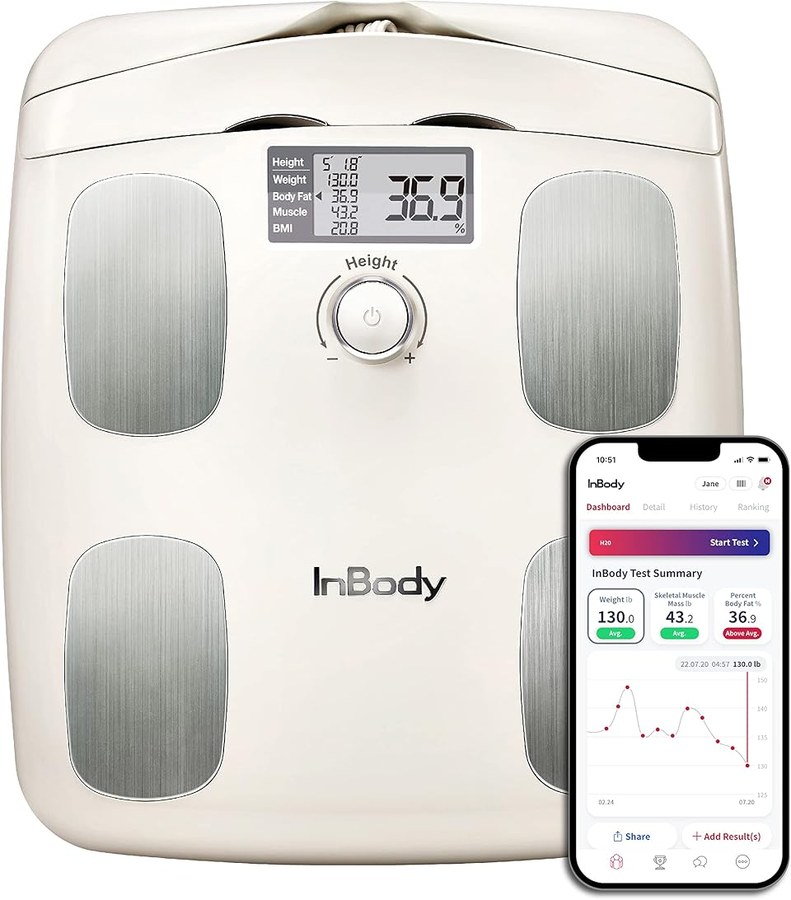
A body composition analysis splits that single number into its real components: Skeletal Muscle Mass, Percent Body Fat, Visceral Fat Area, and total body water (intracellular and extracellular). That’s genuinely more useful than a frightening figure climbing on a scale — a trend line in the tissue that’s actually changing, tracked over months alongside your treatment rather than in competition with it.
This matters clinically, not only emotionally. Fat mass staying flat while water shifts is a very different conversation than fat mass climbing steadily across tests — only one of those patterns is a metabolic-side-effect conversation worth raising proactively. Either way, the goal is the same: replace an anxious guess with a measurement, so the conversation with your psychiatrist is about data, not fear.
What to Actually Do — With Your Prescribing Doctor, Never Instead of Them
Every recommendation below starts from one non-negotiable premise: do not stop, reduce, or skip your psychiatric medication because of weight or body composition concerns without talking to the doctor who prescribed it, first. Untreated depression, anxiety, or a psychotic disorder carries serious health risks of its own — often risks that outweigh the metabolic side effects discussed here. Each strategy below is meant to work alongside your treatment, as information you bring into the room, never a decision you make alone.
- Get a baseline body composition test early in treatment, if you can. Ideally around when you start a new medication, so any later change has a real starting point. An InBody scan takes under five minutes and gives Skeletal Muscle Mass, Percent Body Fat, Visceral Fat Area, and water balance as hard numbers, not impressions.
- Bring the report to your psychiatry appointment. Most psychiatrists in India track weight, but far fewer see a body composition breakdown. “Weight is up 2 kg but fat mass is flat and water is elevated” is a genuinely useful clinical data point that helps distinguish a fluid effect from a metabolic one.
- Ask specifically about metabolic monitoring, especially on an antipsychotic. It’s entirely reasonable to ask: “Should we be tracking my weight, blood sugar, or lipids on this medication?” This is standard, guideline-supported practice — asking for it is advocating for your own care.
- Prioritise regular, adequate eating over restriction. Skipping meals or aggressive calorie-cutting can worsen mood symptoms and disrupt sleep. Regular meals with adequate protein support both mood stability and appetite regulation — working with your treatment, not against it.
- Add movement as support, not punishment. Moderate physical activity independently benefits mood in depression and anxiety, used alongside — never instead of — medication. A daily 20–30 minute walk supports both mental health and body composition without becoming another source of guilt.
- If weight change is affecting your quality of life or willingness to stay on treatment, say so explicitly. Tell your doctor: “This is making me want to stop, and I need us to problem-solve it together.” That opens real clinical options — a dose adjustment, an add-on, or a different medication in the same class — decided by your doctor. Far safer than quietly discontinuing alone.
Frequently Asked Questions
Why am I gaining weight on my antidepressant even though I haven’t changed how I eat?
Because it isn’t primarily about eating more — it’s receptor-level change. Long-term SSRI use can desensitise the serotonin receptors that normally signal fullness, while shifting ghrelin, leptin, and cortisol toward fat storage. It’s a documented, chemical effect reported in more than half of people on long-term antidepressant therapy — not reduced willpower or a personal failing.
Do all antidepressants cause weight gain?
No. Research comparing classes over six months found real differences: tricyclic antidepressants, MAOIs, and mirtazapine were linked to the largest gains; common SSRIs like escitalopram and paroxetine showed smaller, more gradual effects; bupropion was associated with modest weight loss in some studies. Never switch medications based on this alone — discuss trade-offs with your prescribing doctor, since symptom control matters most.
Is antipsychotic-related weight gain different from antidepressant weight gain?
Generally, yes — more pronounced. Some atypical antipsychotics act on appetite and metabolic-rate pathways more strongly than most antidepressants, and trials have recorded average gains from under 5 kg to over 10 kg across a year, depending on the medication. This is why metabolic monitoring — weight, blood sugar, lipids — is standard care for many people on antipsychotic treatment.
How do I know if it’s water weight or actual fat gain?
A bathroom scale can’t tell the difference — it reports one combined number. A body composition test splits weight into water, muscle, and fat, showing whether an increase reflects fluid retention (a known, usually temporary effect of some SSRIs) or a genuine rise in fat mass — far less alarming, and far more useful to discuss with your doctor, than a single climbing number.
Should I stop my medication because of the weight gain?
No — not on your own, and not because of weight alone. Stopping psychiatric medication without supervision risks relapse of the underlying condition, usually a far more serious risk than the metabolic side effect. If the weight gain is genuinely distressing, tell your prescribing doctor directly so you can address it together — through monitoring, lifestyle support, or an adjustment they oversee.
Will the weight gain reverse if I keep taking the medication, or if I stop?
It varies by person and medication — research here is still developing. Some weight-related effects stabilise on continued treatment; others partially improve if a dose or medication is changed under medical supervision. This uncertainty is itself a reason to track body composition over time with your doctor, rather than guessing — never a reason to stop medication independently to “test” what happens.
Your Weight Isn’t the Whole Story — And Neither Is the Scale
If you’re on a new psychiatric medication and watching your body change in ways you don’t fully understand, the most useful next step isn’t to guess or worry alone — it’s to get real information and bring it to the person who prescribed your treatment.
Book an InBody body composition test at inbody.in/inbody-test.php for an accurate baseline of your Skeletal Muscle Mass, Percent Body Fat, and water balance — a five-minute scan turning an anxious guess into a trackable number for your next psychiatry appointment. If stress or hormonal shifts are also part of your picture, see the cortisol–visceral fat connection and how thyroid disorders affect body composition, and for every number explained plainly, start with how to read your InBody report.
Above all: your mental health treatment matters more than any number on a scale. If body composition or weight changes are worrying you, that is a conversation to have with your doctor — never a reason to change your medication on your own.

Most trending articles

Hypothyroidism Symptoms in India: Signs Most People Miss
1 in 10 Indian adults has hypothyroidism, and it hides behind ordinary tiredness. The early signs most people blame on stress, age, or a new baby.

वज़न बढ़ाने के लिए क्या खाएं? सही डाइट प्लान (सिर्फ ज़्यादा खाना नहीं)
सिर्फ ज़्यादा खाने से मांसपेशी नहीं बनती, चर्बी बढ़ सकती है। सही कैलोरी सरप्लस, प्रोटीन और डाइट प्लान जो वज़न को सही तरीके से बढ़ाए — पूरी जानकारी हिंदी में।
भारत में प्रोटीन कितना ज़रूरी है? असली आंकड़े और सही फॉर्मूला
IMRB के एक सर्वे में लगभग 73% भारतीय आहार प्रोटीन-कम पाए गए। सही प्रोटीन टारगेट कैसे निकालें और किन फूड्स से पूरा करें — पूरी जानकारी हिंदी में।