
Body Composition 9 min read
Body Composition Analyser for Weight-Loss Clinics in India
How slimming and weight-management clinics in India use body composition scans: consult workflow, fat vs muscle vs water, honest limits and model choice.
Reading about body composition? Find an InBody test centre near you →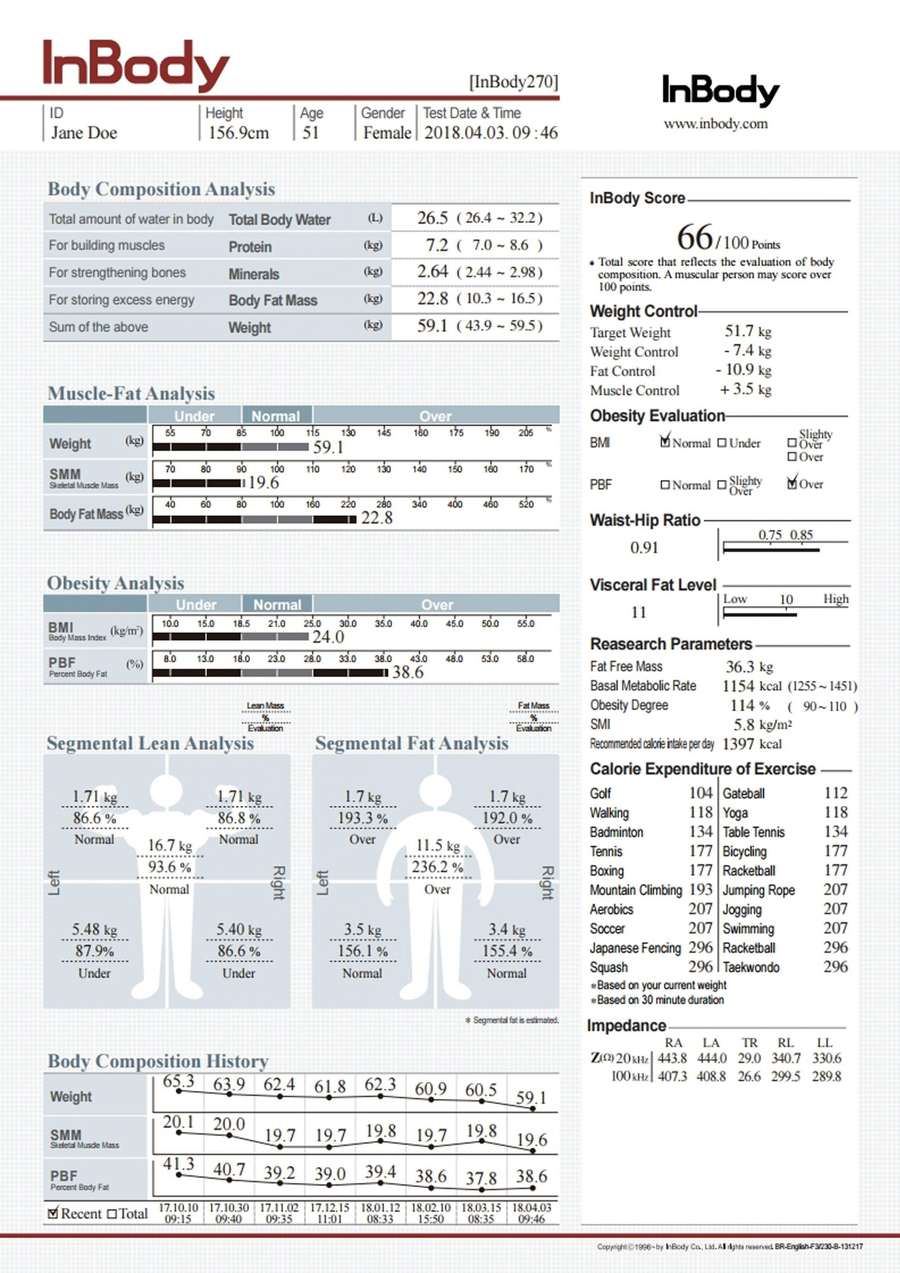
Body Composition Analyser for Weight-Loss Clinics in India
A client loses four kilos in the first fortnight and is delighted. You are less sure, because some of that is water and some may be muscle. A body composition analyser for a weight-loss clinic lets you show fat, muscle and water as separate numbers at every visit, so the conversation moves from “how much did I lose?” to “what did I lose?”. For a slimming or weight-management clinic, that is the main reason the machine earns floor space.
This guide is for clinic owners, centre managers and head nutritionists deciding whether to add one. It covers a consult workflow, how to read fat, muscle and water change, protecting muscle during fast loss, where bioimpedance is weak (hydration swings and higher BMI), claims to keep out of your marketing, choosing a model and training staff. We have tried hard not to promise more than the evidence supports: no study we found shows that scanning clients improves retention or revenue, so we do not say it does.
Why Weight Alone Misleads in a Slimming Programme
India’s need for weight-management services is not in doubt. The national ICMR-INDIAB study, published in The Lancet Diabetes & Endocrinology in 2023, reported a weighted prevalence of 28.6% for generalised obesity and 39.5% for abdominal obesity among adults. Many of those adults walk into slimming centres.
The scale tells you that weight went down. It does not tell you what went. A review in Advances in Nutrition notes that in people with obesity, fat-free mass contributes about 20 to 30% of total weight loss, and in people of normal weight it often exceeds 35%. So a client who drops 10 kg may have lost a meaningful amount of lean tissue along with fat. A programme that only celebrates kilos can reward exactly the wrong kind of loss. Our post on weight loss versus fat loss covers this from the client’s side.
A Consult Workflow That Uses the Scan Well
The scan is quick. The value comes from what you do with it. A simple structure most clinics can adopt:
| Visit | What to record | What to tell the client |
|---|---|---|
| First consult | Weight, body fat percentage, fat mass, skeletal muscle mass, visceral fat (level or area, depending on model), date, time, device | Where they are starting, in two or three numbers, and the goal: lose fat, keep muscle |
| Follow-ups | Same outputs, same device, same time of day, any notes on illness, travel, cycle phase or a heavy meal | What moved and what did not, and one action for the next interval |
| Plateau review | Compare fat mass and muscle trend, not just weight | Whether this is recomposition, a true plateau or muscle loss |
| Programme end | Full comparison sheet against baseline | A plain summary and a maintenance plan |
Before the first scan, screen out people who should not be tested. Clients with a pacemaker or other implanted electronic device, and pregnant clients, are commonly excluded by testing sites; our guide on who should not take an InBody test lists the usual exclusions. Share our test preparation guide with every new client so repeat scans are comparable.
Reading Fat, Muscle and Water Change
When you compare two scans, the pattern matters more than any single number. Four patterns come up again and again in a weight-management practice:
| Pattern between scans | Likely meaning | Sensible response |
|---|---|---|
| Weight down, fat mass down, muscle steady | The programme is working as intended | Keep going; reinforce protein and training habits |
| Weight down, a large share of it lean mass | Deficit may be too aggressive, or protein and training too low | Review intake and strength work with the client’s doctor or dietitian before pushing harder |
| Weight flat, fat mass down, muscle up | Recomposition: the scale is hiding progress | Show the client the fat and muscle lines, not the weight line |
| Weight jumps or falls sharply in days | Mostly water: salt, a big meal, travel, cycle phase, recent exercise | Do not celebrate or panic; repeat under standard conditions |
That last row matters most in the first weeks of a diet. Early weight loss includes water released along with stored glycogen; an older controlled study estimated that each gram of glycogen holds roughly 3 g of water. A dramatic first-week drop is therefore partly water, and so is a quick regain after a festive weekend. If your model reports the ECW/TBW ratio, our ECW ratio guide explains how to read it as a fluid flag.
Protecting Muscle During Faster Loss
The same Advances in Nutrition review concludes that resistance-type exercise is an effective way to reduce or even prevent the loss of muscle that comes with weight loss, and that a higher protein intake helps preserve lean mass, although it does not by itself improve strength. In practice, that gives a weight-loss clinic three levers:
- A floor on protein, set by a qualified dietitian for each client, with care for anyone with kidney disease.
- Some resistance training, even two short sessions a week, rather than diet alone.
- A pace that the muscle trend tolerates. If muscle is falling scan after scan, slow down.
Clients on prescribed weight-loss medicines or recovering from bariatric surgery need the same attention, coordinated with their doctor. Never advise a client to change a prescribed medicine based on a scan. For a fuller workflow on targets and plateaus, our guide to body composition in a dietitian’s practice goes deeper.
Honest Limits: Hydration, Higher BMI and Day-to-Day Swings
Bioimpedance estimates body composition from how a small current passes through body water. Anything that shifts water shifts the reading. Weight-loss clinics see this more than most, for three reasons.
Higher BMI. The ESPEN guideline on bioimpedance (Kyle et al., 2004) says BIA works well in healthy people with stable hydration, that routine use at extremes of BMI cannot yet be recommended, and that longitudinal follow-up is possible for BMI 16 to 34 kg/m² without abnormal hydration, with cautious interpretation. A 2019 systematic review of multi-frequency devices in people with obesity found they tended to underestimate fat mass and overestimate fat-free mass, with good agreement at group level but weaker agreement for individuals. Many slimming clients start above BMI 34. For them, treat the trend on the same device as the useful signal and the absolute numbers as approximate.
Water swings. Meals, salt, alcohol, travel, illness and recent exercise all move the result. A review of body composition testing in athletes (Campa et al., 2021) recommends testing at the same time of day for repeat measurements and, for women, in the same phase of the menstrual cycle. The same logic applies in a slimming centre.
Small changes. A shift of a few hundred grams of muscle between two visits is usually inside the measurement noise. Report it as “no meaningful change”, not as a win or a loss. If a client needs a reference-standard measurement, a DEXA scan is the usual referral.
Claims to Keep Out of Your Marketing
A scan gives you real numbers, which makes it tempting to advertise them. Indian advertising regulators have repeatedly ruled against slimming-centre ads. In one batch of decisions, the ASCI Consumer Complaints Council found claims such as guaranteed kilograms lost per month, inches lost “in one sitting” and money-back weight-loss guarantees to be unsubstantiated and misleading by exaggeration, and also faulted exaggerated “after” images.
Practical rules for your clinic:
- Do not promise a number of kilos or inches in a fixed time.
- Do not present one client’s scan result as typical, and get written consent before sharing anyone’s report.
- Describe the scan as a progress-tracking tool, not a diagnosis and not proof that a treatment works.
- Do not call the device “medical-grade accurate” or quote an accuracy percentage unless you cite an independent published study.
Choosing a Model and Handling the Data
Start from the questions you want answered, then match the model:
- Fat, muscle and visceral fat for most clients: a compact professional model is usually enough. InBody’s India range page positions its 270S for community health settings, with “obesity diagnosis support” in its description.
- Fluid tracking for clients with oedema, older clients or post-surgical cases: look at models that report ECW/TBW and segmental water. Check each product page; outputs vary by model.
- Several branches: ask how results are stored and compared across centres. InBody’s LookinBody software stores results and shows trends; confirm which version is supported for your model in India.
Our analyser buying guide compares tiers in detail. We do not print prices; request a quote after a demo.
Body composition reports are personal data. India’s Digital Personal Data Protection Act, 2023 requires notice and consent for processing personal data, and the DPDP Rules notified in November 2025 bring most obligations into force by May 2027. Take legal advice on consent forms, retention and who in your team can see client reports.
Training Staff So the Numbers Stay Comparable
Most poor data in a slimming centre comes from inconsistent testing, not from the machine. Train every counsellor on the same short routine:
- Check exclusions (implanted devices, pregnancy) before every first scan.
- Same time of day for each client; ideally before a meal and before exercise.
- Light clothing, pockets empty, jewellery off, feet and palms clean and dry.
- Correct posture on the electrodes, arms away from the body, client still during the test.
- Write down anything unusual: fever, travel, period, a wedding feast the night before.
- Explain no more than three numbers per visit.
Frequently Asked Questions
Does a body composition scan help a slimming clinic keep clients?
We found no study showing that scans improve client retention in weight-loss programmes. What a scan reliably does is show fat and muscle change that the scale hides, which gives your counsellors a better conversation. Treat it as a communication and tracking tool, not a retention guarantee.
Why did a client lose two kilos in a week but the fat mass barely moved?
Early weight loss on a calorie deficit includes water released with stored glycogen, plus normal day-to-day fluid swings. Fat loss is slower. Compare scans taken under the same conditions over several weeks before drawing conclusions.
Is bioimpedance accurate for clients with a high BMI?
Less so than for people of average weight. The ESPEN guideline supports follow-up for BMI 16 to 34 kg/m² with cautious interpretation, and a systematic review found multi-frequency devices tend to underestimate fat mass in obesity. Use the trend on one device rather than the absolute value.
How often should clients be scanned?
There is no guideline interval for weight-management programmes. Many clinics scan at baseline and then every few weeks. Choose a rhythm, keep the device and conditions identical, and avoid reading meaning into very short-interval changes.
Can we use scan results in our advertising?
Only with care. Advertising regulators in India have ruled against guaranteed-kilo and instant inch-loss claims. Never present one result as typical, never share a client’s report without written consent, and do not imply guaranteed outcomes.
Who should not be scanned?
People with a pacemaker or other implanted electronic device, and pregnant women, are commonly excluded by testing sites. Check the device manual and refer anyone unsure to their doctor before testing.
See It Working in a Consult
If you run a slimming or weight-management clinic and want to see how a result sheet fits your consult, book a demo and quote or explore the InBody analyser range.
This article is for clinic owners and health professionals. It is general education, not medical advice. Clients on medication should talk to their doctor and never self-adjust treatment.

Most trending articles
Student Fitness Screening in India: A Guide for Schools
CBSE HPE, Fit India and Khelo India rely on BMI. How schools and colleges can add body composition screening safely, with child caveats and DPDP consent.
Creatine and Your Body Composition Scan: What Changes
Creatine raises body water and lean mass readings within a week on BIA and DXA. What the studies show and how to time your scans to read progress honestly.
Fitness Testing and Body Composition for Sports Academies
A practical fitness testing battery for Indian sports academies: body composition, grip, jumps, sprints, Yo-Yo, Khelo India context and youth maturation.