
Body Composition 5 min read
Body Fat Analyzer Machine India: Accuracy and Buying Guide
Why two body fat analysers give different answers, what body fat percentage means for Indian bodies, and why visceral fat matters more.
Reading about body composition? Find an InBody test centre near you →
Body Fat Analyzer Machines: What Separates a Real One From a Guess
A body fat analyzer machine promises a single number: what percentage of you is fat. It sounds like a simple measurement. It is not, and the gap between devices that measure it and devices that estimate it is wide enough to make one category useful and the other actively misleading.
If you are buying one for a gym, clinic or wellness programme — or wondering whether the reading you got last week meant anything — this guide covers how these machines work, which specifications determine reliability, and what body fat percentage actually means for Indian bodies.
How Body Fat Analyzers Work
Nearly every body fat analyzer sold in India uses bioelectrical impedance analysis. A small, painless alternating current passes through the body. Muscle tissue is roughly three-quarters water and conducts the current readily. Fat tissue holds very little water and resists it. Measuring that resistance lets the device separate lean tissue from fat.
That is the principle. The execution is where devices diverge, in three ways that matter.
Where the current enters and exits
A foot-to-foot device — most bathroom scales claiming body fat — sends current up one leg and down the other. It never reaches your upper body. Everything it reports about your arms and trunk is inferred, not measured. A device using tetrapolar 8-point tactile electrodes contacts both hands and both feet, so current travels through the whole body and each segment is measured directly.
How many frequencies it uses
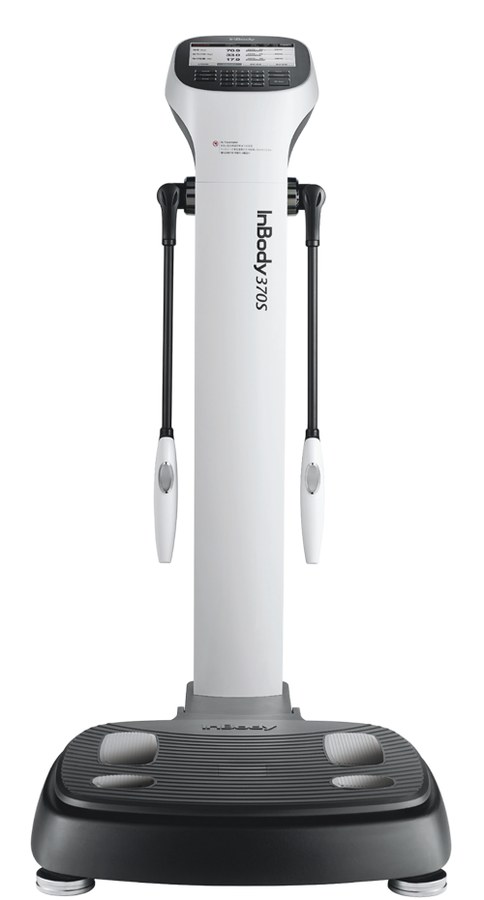
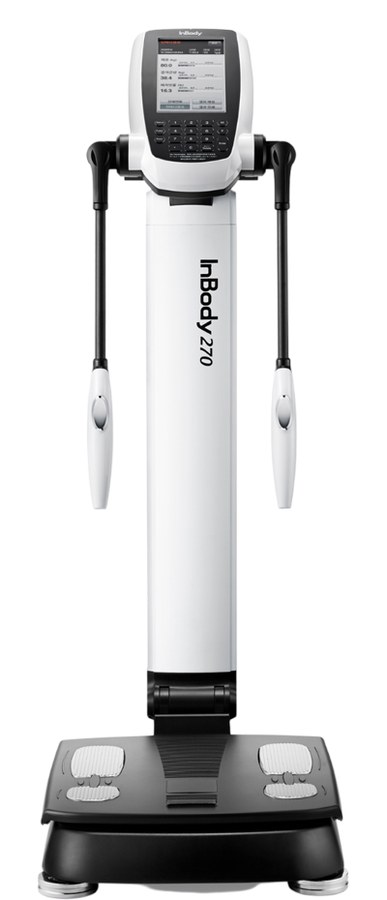
Single-frequency current cannot distinguish water inside cells from water outside them. Multi-frequency devices can — the InBody 270S uses three frequencies at 20, 50 and 100 kHz, while the clinical 770S uses six from 1 kHz to 1,000 kHz. This matters because fluid shifts are a common source of misleading body fat readings.
Whether it estimates
This is the decisive one. Many analysers apply corrections based on your age, sex or ethnicity, filling in values from population averages and presenting the blend as a measurement. InBody devices calculate directly from measured impedance per segment, without those corrections.
The test for this is simple. If two people of the same age, sex, height and weight get near-identical body fat readings despite one being a trained athlete, the device is describing a demographic rather than a person.
Body Fat Percentage: What the Number Means for Indians
Body fat percentage is more informative than weight and far more informative than BMI. But the reference ranges most commonly quoted online are drawn from Western populations, and applying them directly to Indian bodies understates risk.
Indians tend to carry more body fat and less skeletal muscle at any given BMI than Caucasian populations — a pattern widely documented as the thin-fat phenotype. This is why ICMR and WHO Asia-Pacific guidance uses lower BMI cut-offs for Indians: overweight from 23 rather than 25, obesity from 25 rather than 30.
The practical implication is significant. A large number of Indian adults sit at a perfectly normal body weight and BMI while carrying an elevated body fat percentage and a meaningful visceral fat load. Their scale reassures them. Their body composition does not. Detailed ranges by age and sex are covered in our body fat percentage chart for Indian men and women.
Why Visceral Fat Matters More Than Total Body Fat
Total body fat percentage is a useful summary. Visceral fat is the number with the sharper clinical edge.
Subcutaneous fat sits under the skin. Visceral fat sits deeper, packed around the abdominal organs, and it is metabolically active in ways subcutaneous fat is not — associated with insulin resistance, metabolic syndrome and cardiovascular risk. A clinical-grade analyser reports it as a level or as visceral fat area in cm², where above 100 cm² is the recognised threshold for elevated metabolic risk.
Two people can share an identical total body fat percentage with very different visceral fat loads and very different risk profiles. A device reporting only a single whole-body fat figure cannot make that distinction. More detail in visceral fat normal range and risks.
What to Look For When Buying
| Specification | What to require | Why |
|---|---|---|
| Electrode contact | 8-point tactile, hands and feet | Foot-to-foot devices cannot measure the upper body at all |
| Electrode configuration | Tetrapolar | Separates current-injecting from voltage-sensing electrodes, removing skin resistance from the result |
| Frequencies | 3 minimum | Separates intracellular from extracellular water |
| Empirical estimation | None | Results should reflect the person, not their demographic |
| Segmental output | All 5 segments | Whole-body averages conceal asymmetry |
| Visceral fat | Reported explicitly | The clinically meaningful fat measure |
| Validation | Published DEXA correlation | InBody professional devices report 98%; the 770S reports 99% |
Getting a Reading You Can Trust
Even an excellent device produces poor data under inconsistent conditions. Bioelectrical impedance responds to hydration, and hydration moves throughout the day.
- Test at a similar time of day for every repeat measurement.
- Test before training, not after — exercise shifts fluid distribution substantially.
- Avoid a heavy meal or a large volume of water in the hour or two beforehand.
- Avoid testing immediately after alcohol, or during illness involving fluid loss.
- Women may see readings shift across the menstrual cycle due to fluid retention; comparing the same phase across months is more informative.
None of this makes the device unreliable. It means the protocol is part of the measurement. A body fat reading taken under consistent conditions every eight weeks tells you something real. Readings taken randomly tell you mostly about water.
Calipers, Scales and Analysers Compared
Skinfold calipers remain in use and are inexpensive, but they measure subcutaneous fat at a handful of sites and infer the total. Results depend heavily on the skill of the person taking them, and they cannot assess visceral fat at all — which is the measure that matters most for Indian metabolic risk.
Consumer bathroom scales are convenient for tracking a rough trend at home, provided you accept that upper-body values are inferred. For anything where a real decision follows the number — a clinical assessment, a training programme, a corporate screening — a professional segmental analyser is the appropriate instrument. The full comparison is in InBody vs DEXA vs calipers and professional vs home analysers.
Get a Reading That Means Something
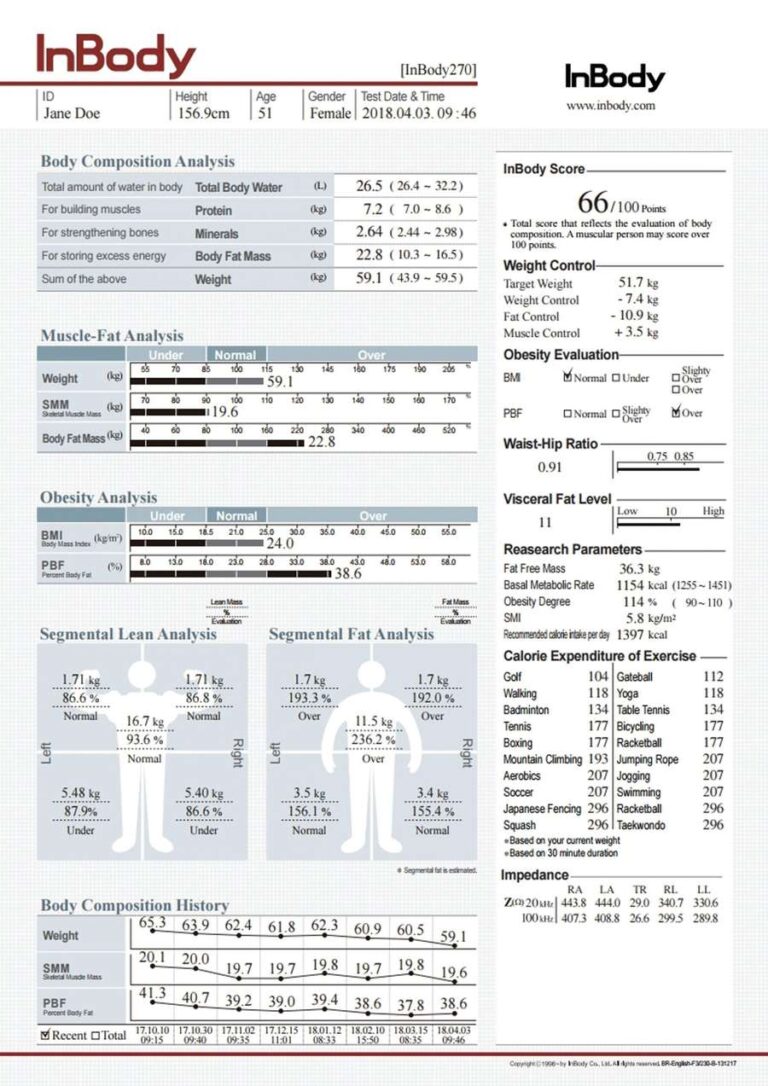
One body fat number without context is trivia. The same number alongside skeletal muscle mass, visceral fat and segmental balance is a picture you can act on.
Book an InBody body composition test at inbody.in/inbody-test.php, or find a centre near you at inbody.in/locations. Evaluating analysers for a facility? Request a quote at inbody.in/inbody-price.php. Related reading: body fat percentage chart for India, visceral fat ranges and risks, and how to choose a body composition analyser.

Most trending articles
वज़न बढ़ाने के लिए क्या खाएं? सही डाइट प्लान (सिर्फ ज़्यादा खाना नहीं)
सिर्फ ज़्यादा खाने से मांसपेशी नहीं बनती, चर्बी बढ़ सकती है। सही कैलोरी सरप्लस, प्रोटीन और डाइट प्लान जो वज़न को सही तरीके से बढ़ाए — पूरी जानकारी हिंदी में।
भारत में प्रोटीन कितना ज़रूरी है? असली आंकड़े और सही फॉर्मूला
IMRB के एक सर्वे में लगभग 73% भारतीय आहार प्रोटीन-कम पाए गए। सही प्रोटीन टारगेट कैसे निकालें और किन फूड्स से पूरा करें — पूरी जानकारी हिंदी में।
Metabolic Age क्या होती है? आपकी उम्र से ज़्यादा है या कम?
आपकी असली उम्र 34 है पर शरीर 50 साल जैसा व्यवहार कर सकता है। Metabolic age क्या है, मांसपेशी घटने के जोखिम क्या हैं और इसे कैसे घटाएं — पूरी जानकारी।