
Body Composition 6 min read
Body Composition Analyzer for Hospitals: Clinical Spec Guide
Phase Angle, ECW/TBW and visceral fat area separate clinical from fitness devices. Department-wise outputs plus a 12-point tender specification.
Reading about body composition? Find an InBody test centre near you →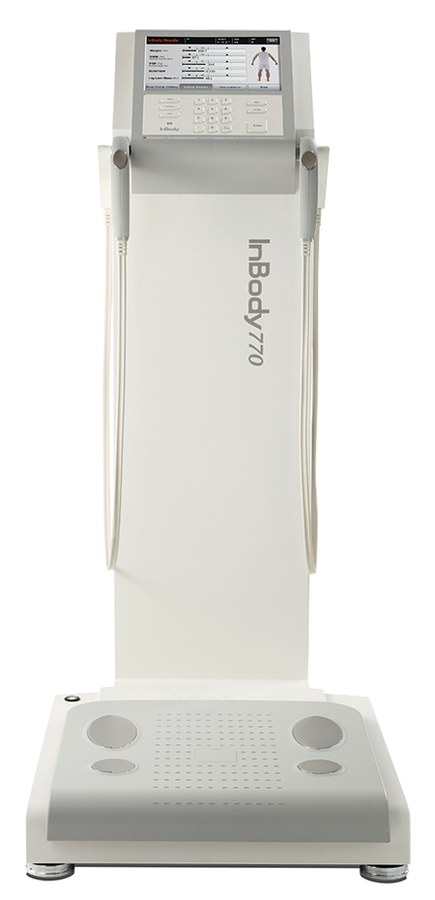
Specifying a Body Composition Analyzer for a Hospital Is a Different Problem
A gym needs a fast test and a member-friendly printout. A hospital needs something else entirely: outputs that hold up in a clinical decision, fluid-status data that changes management, and a device that produces the same value on the same patient on Tuesday as it did on Monday.
Buying a body composition analyzer for a hospital or clinic on gym specifications is the most common and most expensive procurement error in this category. This guide sets out what clinical settings actually require, which departments use which outputs, and what to put in the tender.
The Clinical Outputs That Justify the Specification
Three outputs separate a clinical-grade analyser from a professional fitness one. Each maps to a specific clinical use.
Phase Angle
Phase Angle is derived from the ratio of reactance to resistance in the impedance measurement. It reflects cell membrane integrity and cellular health. Low values indicate cellular stress — seen in malnutrition, cancer cachexia and chronic disease — while higher values indicate robust cellular health.
It is used clinically in oncology, nephrology and critical care to assess nutritional status and as a prognostic indicator. Only higher-end models measure it; the InBody 770S reports both whole-body and segmental Phase Angle. Our detailed explainer is at phase angle explained.
Extracellular to total body water ratio (ECW/TBW)
The ratio of extracellular water to total body water is a direct fluid-balance indicator. It shifts with oedema, inflammation and fluid overload — which makes it directly relevant to dialysis management, cardiac failure, and post-surgical monitoring. Assessing it properly requires multiple frequencies, because separating intracellular from extracellular water is exactly what low and high frequency current does differently.
Visceral fat area in cm²
A visceral fat level is adequate for wellness contexts. A visceral fat area in cm² is a quantified value against a recognised clinical threshold — above 100 cm² indicates elevated metabolic risk. For diabetology, endocrinology and metabolic clinics, the quantified area is the usable output.
Which Departments Use What
| Department | Primary outputs used | Typical application |
|---|---|---|
| Nephrology / dialysis | ECW/TBW, segmental water, Phase Angle | Dry weight assessment, fluid overload monitoring |
| Oncology | Phase Angle, skeletal muscle mass | Cachexia detection, nutritional status, treatment tolerance |
| Diabetology / endocrinology | Visceral fat area, SMM, body fat % | Metabolic risk stratification, therapy response |
| Critical care | ECW/TBW, Phase Angle | Fluid status, nutritional assessment |
| Geriatrics | Segmental lean mass, SMM index | Sarcopenia screening against AWGS criteria |
| Bariatric / obesity clinic | Body fat mass, visceral fat area, SMM | Pre- and post-operative composition tracking |
| Sports medicine / rehab | Segmental lean analysis | Post-injury asymmetry, rehabilitation progress |
| Paediatrics | Growth-referenced composition | Nutritional assessment in children from age 3 |
Geriatrics deserves a specific note. Sarcopenia screening under the Asian Working Group for Sarcopenia criteria depends on appendicular skeletal muscle mass index, which requires reliable segmental limb measurement — not a whole-body figure. Our summary of the current criteria is at AWGS 2025 sarcopenia criteria for clinicians.
Why Frequency Count Is the Deciding Specification
For clinical work, the number of measurement frequencies is not a marketing tier. It determines which outputs are physically obtainable.
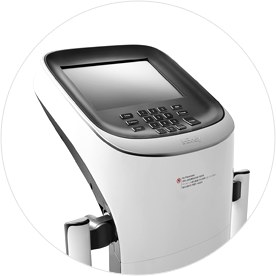
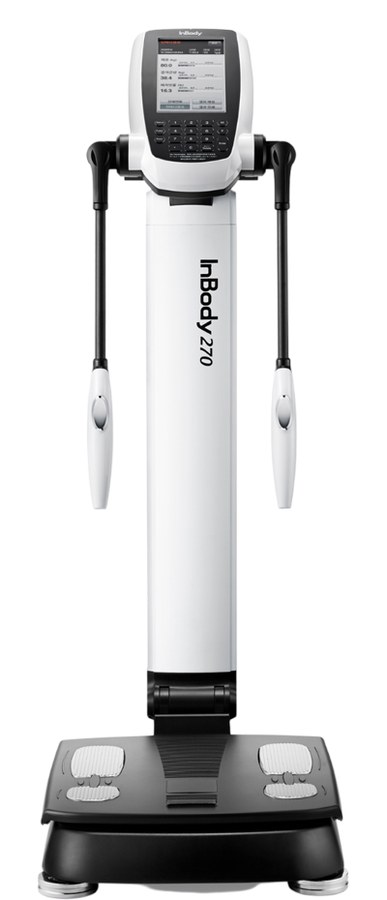
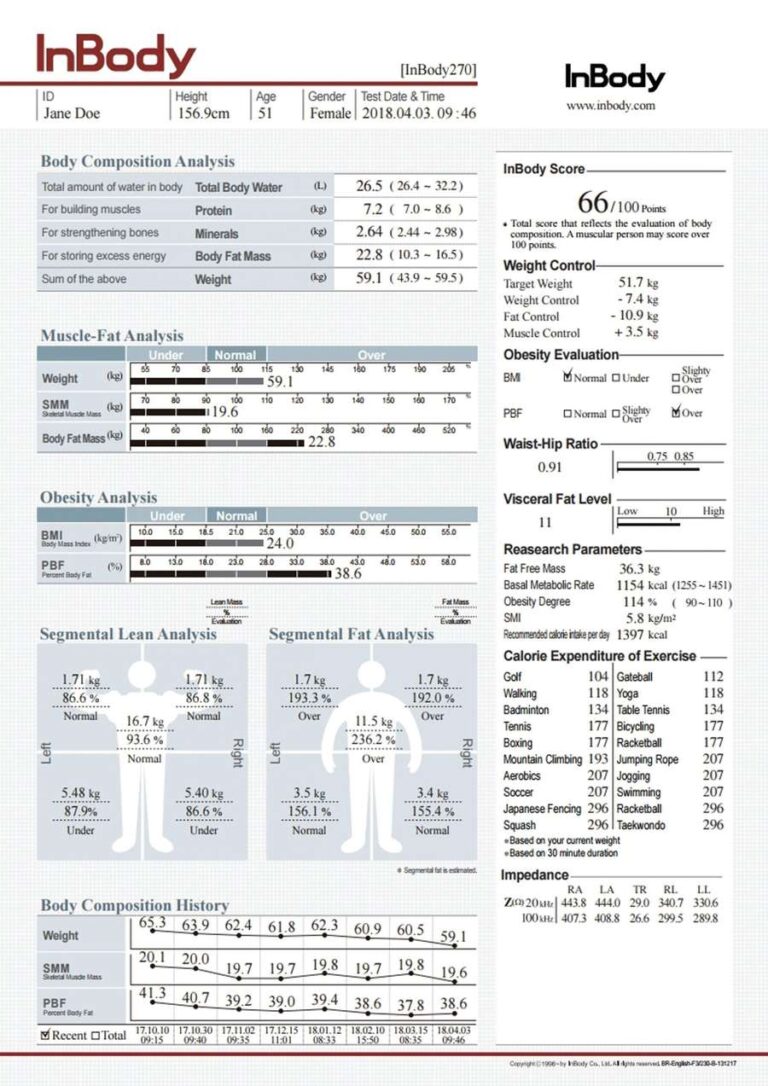
- Three frequencies (20, 50, 100 kHz — InBody 270S class) gives segmental muscle and fat, visceral fat level, and basic water compartments. Suitable for outpatient screening, wellness and general clinical use.
- Six frequencies (1 kHz to 1,000 kHz — InBody 770S) gives Phase Angle, segmental Phase Angle, segmental ECW/TBW and visceral fat area in cm². Required for nephrology, oncology, critical care and research.
Low-frequency current travels primarily through extracellular fluid; higher frequencies penetrate cell membranes into intracellular fluid. Without a wide frequency range, the intracellular and extracellular compartments cannot be cleanly separated — and every fluid-status output depends on that separation.
The InBody 970S extends this further with multi-frequency measurement up to 3 MHz and stores up to 100,000 measurements when patient IDs are entered, which matters for longitudinal departmental use.
Reproducibility: The Requirement Nobody Writes Into the Tender
In a clinical setting, the question is rarely “what is this patient’s body fat percentage today”. It is “has this changed since last week, and does that change reflect the intervention”.
That makes reproducibility the governing requirement, and it depends on two things.
Fixed measurement start points. Tetrapolar 8-point tactile electrodes fix the measurement origin at the wrist and ankle every time. Without a fixed anatomical start point, small differences in hand or foot placement introduce variation that looks like clinical change.
No empirical estimation. If a device applies corrections based on age, sex or ethnicity, part of every result reflects population data rather than the patient. In a clinical context this is not a minor caveat — it means the device is partially reporting a demographic average back to you. InBody devices calculate directly from measured impedance per segment without these corrections.
What to Put in the Specification Document
- Direct Segmental Multi-frequency BIA with independent measurement of all five body segments.
- Tetrapolar 8-point tactile electrode system with fixed anatomical measurement start points.
- Minimum six measurement frequencies where Phase Angle or fluid analysis is required; minimum three otherwise.
- No empirical estimation based on age, sex or ethnicity — state this as a mandatory requirement, not a preference.
- Phase Angle output, whole-body and segmental, where clinically indicated.
- Segmental and whole-body ECW/TBW ratio where fluid status is relevant.
- Visceral fat area reported in cm², not level alone.
- Published validation against DEXA with study citation.
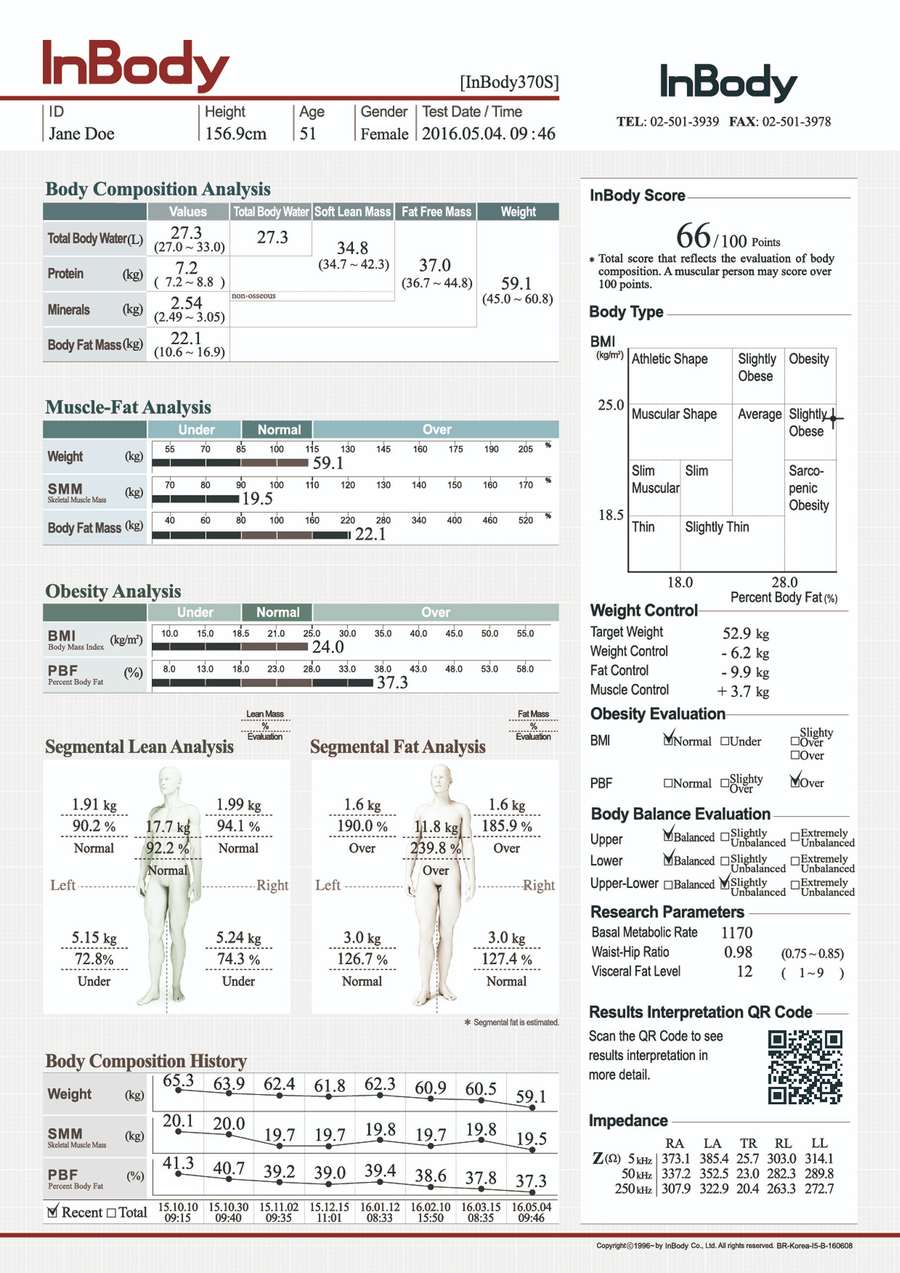
- Patient-ID-based data storage with export capability and result-sheet printing suited to medical records.
- Defined calibration schedule, service response time and authorised warranty support in India.
- Test duration compatible with OPD throughput — around 60 seconds for the measurement itself.
- Paediatric result sheet where the department tests children.
Installation and Practical Considerations
A few points that surface after purchase rather than before:
- Siting. The device needs a level, stable floor and should not sit adjacent to sources of significant electrical interference.
- Protocol standardisation. Departments that get clean longitudinal data write a fixed testing protocol — time of day, position relative to dialysis or meals, hydration guidance — and enforce it. Departments that do not, generate noise.
- Staff training. The outputs are only as useful as the clinician’s familiarity with them. Phase Angle in particular is underused simply because staff have not been briefed on interpretation.
- Contraindications. As with any device passing a current through the body, follow the manufacturer’s guidance regarding patients with implanted electronic medical devices such as pacemakers.
InBody devices are in use across more than 1,500 Indian hospitals including AIIMS Delhi, PGI Chandigarh and Tata Memorial Mumbai, which makes peer reference checks straightforward during procurement.
Specify It Around Your Departments
The right analyser for a dialysis unit is not the right analyser for a wellness OPD. The specification should follow the clinical question each department needs answered.
Request a specification-matched quote for your hospital or clinic at inbody.in/inbody-price.php, or contact the clinical team through our enquiry form to discuss departmental requirements. Related reading: phase angle explained, AWGS sarcopenia criteria, and how to choose a body composition analyser.

Most trending articles
वज़न बढ़ाने के लिए क्या खाएं? सही डाइट प्लान (सिर्फ ज़्यादा खाना नहीं)
सिर्फ ज़्यादा खाने से मांसपेशी नहीं बनती, चर्बी बढ़ सकती है। सही कैलोरी सरप्लस, प्रोटीन और डाइट प्लान जो वज़न को सही तरीके से बढ़ाए — पूरी जानकारी हिंदी में।
भारत में प्रोटीन कितना ज़रूरी है? असली आंकड़े और सही फॉर्मूला
IMRB के एक सर्वे में लगभग 73% भारतीय आहार प्रोटीन-कम पाए गए। सही प्रोटीन टारगेट कैसे निकालें और किन फूड्स से पूरा करें — पूरी जानकारी हिंदी में।
Metabolic Age क्या होती है? आपकी उम्र से ज़्यादा है या कम?
आपकी असली उम्र 34 है पर शरीर 50 साल जैसा व्यवहार कर सकता है। Metabolic age क्या है, मांसपेशी घटने के जोखिम क्या हैं और इसे कैसे घटाएं — पूरी जानकारी।