
Body Composition 10 min read
BCA Machine in India: Full Form, How It Works, How to Choose
BCA means Body Composition Analysis, not BMI. How these machines work, the 4 specs that decide accuracy, and what to ask before any supplier quotes a price.

In this article
- What a BCA Machine Actually Is (And Why the Name Confuses Everyone)
- BCA Machine Full Form and What It Measures
- How a BCA Machine Works
- 1. Direct segmental measurement
- 2. Multiple frequencies
- 3. No empirical estimation
- How to Choose a BCA Machine: The Specifications That Matter
- Questions to Ask Any Supplier Before You Buy
- Which BCA Machine Suits Which Setting
- BCA Machine vs BMI Machine: Not the Same Thing
- What a BCA Machine Costs in India
- Frequently Asked Questions
- What is the full form of BCA machine?
- Is a BCA machine the same as a BMI machine?
- How accurate is a BCA machine compared to a DEXA scan?
- How long does a BCA test take?
- What should I check before buying a BCA machine for my gym or clinic?
- Can a BCA machine measure visceral fat?
- See What Your Own Numbers Look Like
- Sources
What a BCA Machine Actually Is (And Why the Name Confuses Everyone)
You have seen one standing in the corner of a gym, or been asked to step onto it at a diagnostic centre. Someone called it a BCA machine. Someone else called it a body composition analyser, or a BMI machine, or just “the InBody”. They were mostly talking about the same device — and one of those names is wrong.
BCA stands for Body Composition Analysis. A BCA machine is a device that measures what your body weight is actually made of: skeletal muscle mass, body fat mass, body water, and how those are distributed across your arms, legs and trunk. It is not a weighing scale with extra features, and it is definitely not a BMI machine — BMI is a single number calculated from height and weight, and any calculator can produce it.
If you are choosing a BCA machine for a gym, clinic or hospital, or simply want to know what the one you stood on was measuring, this guide covers the technology, the specifications that matter, and the questions worth asking before anyone quotes you a price.
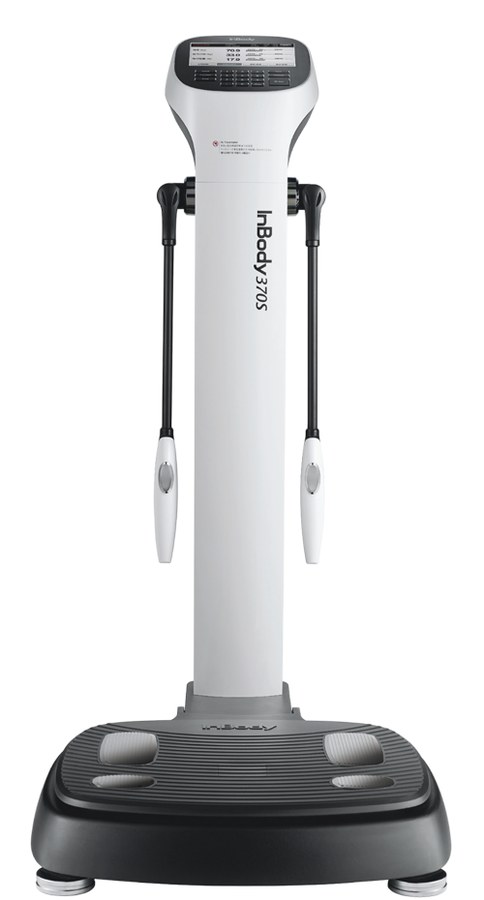
BCA Machine Full Form and What It Measures
The full form of BCA is Body Composition Analysis. A professional BCA machine reports, at minimum:
- Skeletal Muscle Mass (SMM) — the muscle attached to bone that you can actually train and lose. This is the number that matters most and the one a weighing scale cannot see.
- Body Fat Mass and Percent Body Fat — total fat in kilograms and as a proportion of body weight.
- Visceral Fat — the metabolically active fat around the abdominal organs, reported as a level or as an area in cm² depending on the model.
- Total Body Water, usually split into intracellular and extracellular water.
- Segmental Lean Analysis — muscle measured separately in the right arm, left arm, trunk, right leg and left leg. This is what reveals imbalances that a whole-body number hides.
- Basal Metabolic Rate (BMR) — estimated energy expenditure at rest.
A cheap consumer scale claiming “body fat %” typically reports one or two of these, derived from a whole-body estimate. A professional BCA machine measures each segment independently. The difference matters more than the marketing suggests, and it is covered in detail in our guide to DSM-BIA versus single-frequency BIA accuracy.
How a BCA Machine Works
Professional BCA machines use bioelectrical impedance analysis (BIA). A very small, painless alternating current is passed through the body via electrodes. Muscle holds a lot of water and conducts that current easily. Fat holds very little and resists it. By measuring the resistance the current meets, the device works out how much of your body is lean tissue and how much is fat.
Three design choices separate a clinical-grade device from a novelty one.
1. Direct segmental measurement
The body is not one uniform cylinder. An arm and a trunk have very different resistance. Devices using Direct Segmental Multi-frequency BIA (DSM-BIA) measure the five body segments separately rather than treating the body as a single unit. InBody devices take 15 impedance measurements across 3 frequencies and 5 segments on the professional 270S, for example.
2. Multiple frequencies
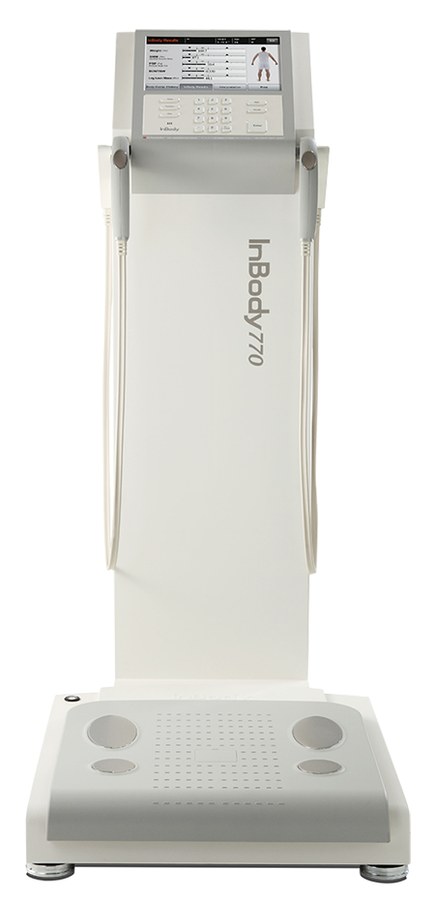
Low-frequency current travels mainly around cells, through extracellular water. Higher-frequency current penetrates cell membranes and reaches intracellular water. Using several frequencies lets the device separate those two water compartments — which is what makes fluid-balance assessment possible. The InBody 270S uses three frequencies (20, 50 and 100 kHz). The clinical InBody 770S uses six, from 1 kHz to 1,000 kHz, which is what allows it to report Phase Angle and segmental water balance.
3. No empirical estimation
This one is worth understanding before you buy anything. Many BIA devices apply statistical corrections based on your age, sex or ethnicity — effectively guessing part of the answer from population averages, then presenting it as a measurement. InBody devices calculate results directly from measured impedance per segment, without those corrections. It is the reason two people of identical age, height and weight can get genuinely different readings rather than near-identical ones.
How to Choose a BCA Machine: The Specifications That Matter
Ignore the cabinet design and the touchscreen size. These are the specifications that determine whether the data is usable.
| Specification | What to look for | Why it matters |
|---|---|---|
| Electrode system | Tetrapolar 8-point tactile electrodes | Separates the current-injecting and voltage-sensing electrodes, and fixes the measurement start point at the wrist and ankle so results repeat consistently |
| Segments measured | 5 (both arms, both legs, trunk) | Reveals left-right imbalance and trunk muscle deficits invisible to whole-body devices |
| Frequencies | 3 minimum; 6 for clinical work | More frequencies mean better separation of intracellular and extracellular water |
| Empirical estimation | None | Results should be measured, not inferred from your demographic profile |
| Validation | Published DEXA correlation | InBody analysers agree closely with DEXA in peer-reviewed testing (McLester et al., 2020) |
| Test duration | Around 60 seconds | Determines throughput in a busy gym or OPD |
| Data storage | Stored measurements per ID | Trend tracking is the entire point; the 970S stores up to 100,000 measurements when an ID is entered |
Questions to Ask Any Supplier Before You Buy
A specification sheet only goes so far. Put these questions to every supplier, in writing if you can:
- Does the device apply empirical estimation based on age, sex or ethnicity? Ask for a direct yes or no.
- Does it measure all five body segments independently, and at how many frequencies?
- Which published study validates it against DEXA?
- What do the service and calibration plan cover, and for how long?
- Is authorised warranty support available in India?
- How many measurements does it store, and can results be exported per patient or member ID?
- Which consumables does it need each year?
An accuracy claim means little without a reference study behind it. For most real uses, consistency matters as much as the headline figure: to see whether someone gained muscle over eight weeks, you need a device that gives the same reading under the same conditions every time.
Which BCA Machine Suits Which Setting
The right machine depends almost entirely on who is being tested and what decision the result informs.
- Gyms and fitness studios — throughput and a member-friendly result sheet matter more than research-grade water analysis. A professional portable model in the InBody 270S or 370S class is the usual fit. See our buyer’s guide for gyms.
- Clinics and outpatient departments — need reliable segmental muscle data and visceral fat, plus results that print cleanly into a patient file.
- Hospitals, nephrology, oncology and research — need six-frequency measurement, Phase Angle, and extracellular-to-total body water ratios. This is InBody 770S and 970S territory, and the reasoning is set out in our guide for hospitals and clinical departments.
- Home use — a professional machine is overkill. The trade-offs are covered in professional versus home analysers.
BCA Machine vs BMI Machine: Not the Same Thing
“BMI machine” is the most common misnomer in the Indian market, and it costs buyers real money. BMI is body weight divided by height squared. It requires no analysis, no electrodes and no device beyond a scale and a measuring tape.
The distinction matters especially in India. Indians carry a well-documented tendency toward higher body fat and lower muscle mass at any given BMI — the pattern sometimes described as the thin-fat phenotype. Which is why ICMR and WHO Asia-Pacific guidance uses lower BMI cut-offs for Indians (overweight from 23, obesity from 25) than the Western 25 and 30. Even with the corrected cut-offs, BMI still cannot tell you whether a 70 kg person is carrying 25 kg of muscle or 15 kg. A BCA machine can. We covered this comparison in full in BCA vs BMI: which test tells the truth.
- Normal 18.5–23 kg/m²
- Overweight 23–25 kg/m²
- Obesity 25–32 kg/m²
What a BCA Machine Costs in India
Professional BCA machine pricing is not a single figure, and any supplier quoting one without asking about your setting is guessing. Cost depends on the model tier, the number of frequencies, whether Phase Angle and segmental water analysis are required, the service and calibration plan, quantity, and the facility type — institutional pricing for a hospital differs from a single-unit gym purchase.
InBody professional analysers in India are sold directly through InBody India rather than through Amazon or third-party retailers, which is also what keeps warranty and calibration support intact. Exact quotes are provided within 24 hours. The factors that move the number are broken down in our body composition analyser price guide, and you can request a quote at inbody.in/contact-us.php.
Frequently Asked Questions
What is the full form of BCA machine?
BCA stands for Body Composition Analysis. A BCA machine measures what your body weight is made of — skeletal muscle mass, body fat mass, body water and their distribution across the arms, legs and trunk — rather than just total weight. It is a different category of device from a BMI machine, which only calculates a number from height and weight.
Is a BCA machine the same as a BMI machine?
No. BMI is body weight divided by height squared and needs no analysis at all. A BCA machine passes a small current through the body to measure muscle, fat and water separately, including segment by segment. Many Indian suppliers use the two terms interchangeably in advertising, but they describe very different capabilities.
How accurate is a BCA machine compared to a DEXA scan?
In a peer-reviewed study (McLester et al., 2020, Journal of Clinical Densitometry), InBody professional analysers showed small individual differences from DXA, though they read body fat slightly lower. A BCA machine involves no radiation, takes about 60 seconds, and additionally reports Phase Angle and water balance, which DEXA does not. DEXA remains necessary specifically for bone mineral density, which BIA devices do not measure.
How long does a BCA test take?
A professional BCA test takes roughly 60 seconds of standing on the device holding the hand electrodes. You stay clothed, nothing is injected, and there is no sensation beyond standing still. Including registration and a walkthrough of the result sheet, most centres complete the whole appointment in under 10 minutes.
What should I check before buying a BCA machine for my gym or clinic?
Check for tetrapolar 8-point tactile electrodes, direct segmental measurement of all five body segments, at least three measurement frequencies, and confirmation that the device uses no empirical age, sex or ethnicity corrections. Then ask about published DEXA validation, calibration and service terms, and whether results can be stored per member ID for trend tracking.
Can a BCA machine measure visceral fat?
Yes. Professional BCA machines report visceral fat, either as a level or as visceral fat area in cm² on higher-end clinical models. A visceral fat area above 100 cm² is the clinical threshold for elevated metabolic risk. This is one of the most useful outputs for Indian populations, where visceral fat frequently accumulates at normal body weights.
See What Your Own Numbers Look Like
A BCA machine is only as useful as the decision it informs. Whether you are evaluating one for a facility or simply want your own baseline, the fastest way to understand the output is to see your own report.
Book an InBody body composition test at inbody.in/inbody-test.php, or find a testing centre near you at inbody.in/locations. Buying for a gym, clinic or hospital? Request a tailored quote at inbody.in/contact-us.php. Related reading: how to read an InBody results sheet, InBody vs DEXA vs calipers compared, and how bioelectrical impedance analysis actually works.
Sources
- Misra A, Khurana L. Obesity-related non-communicable diseases: South Asians vs White Caucasians. Int J Obes (Lond). 2011;35(2):167-87.
- Ling CH, de Craen AJ, Slagboom PE, et al. Accuracy of direct segmental multi-frequency bioimpedance analysis in the assessment of total body and segmental body composition in middle-aged adult population. Clin Nutr. 2011;30(5):610-5.
- Examination Committee of Criteria for ‘Obesity Disease’ in Japan; Japan Society for the Study of Obesity. New criteria for ‘obesity disease’ in Japan. Circ J. 2002;66(11):987-92.
Related articles
BCA Test Full Form and Meaning: What It Actually Measures
BCA stands for Body Composition Analysis. What the test measures, how it differs from BMI and DEXA, and why it matters more for Indian…

BMI Machine for Gym in India: What to Buy and What to Skip
BMI needs no machine at all. What Indian gym owners actually need is a body composition analyser — the spec that matters, and the…
Are Artificial Sweeteners Safe for Diabetics? An Honest Look
If you have diabetes, you’ve likely experienced that frustrating moment when you really want adrink, but you’re browsing an aisle full of “sugar-free” options, and…