
Health 7 min read
Clinical Obesity and India’s 2025 Obesity Definition
Clinical vs preclinical obesity (Lancet Commission 2025) and India's Stage 1/Stage 2 obesity definition, compared side by side, with body fat cut-offs.
Reading about body composition? Find an InBody test centre near you →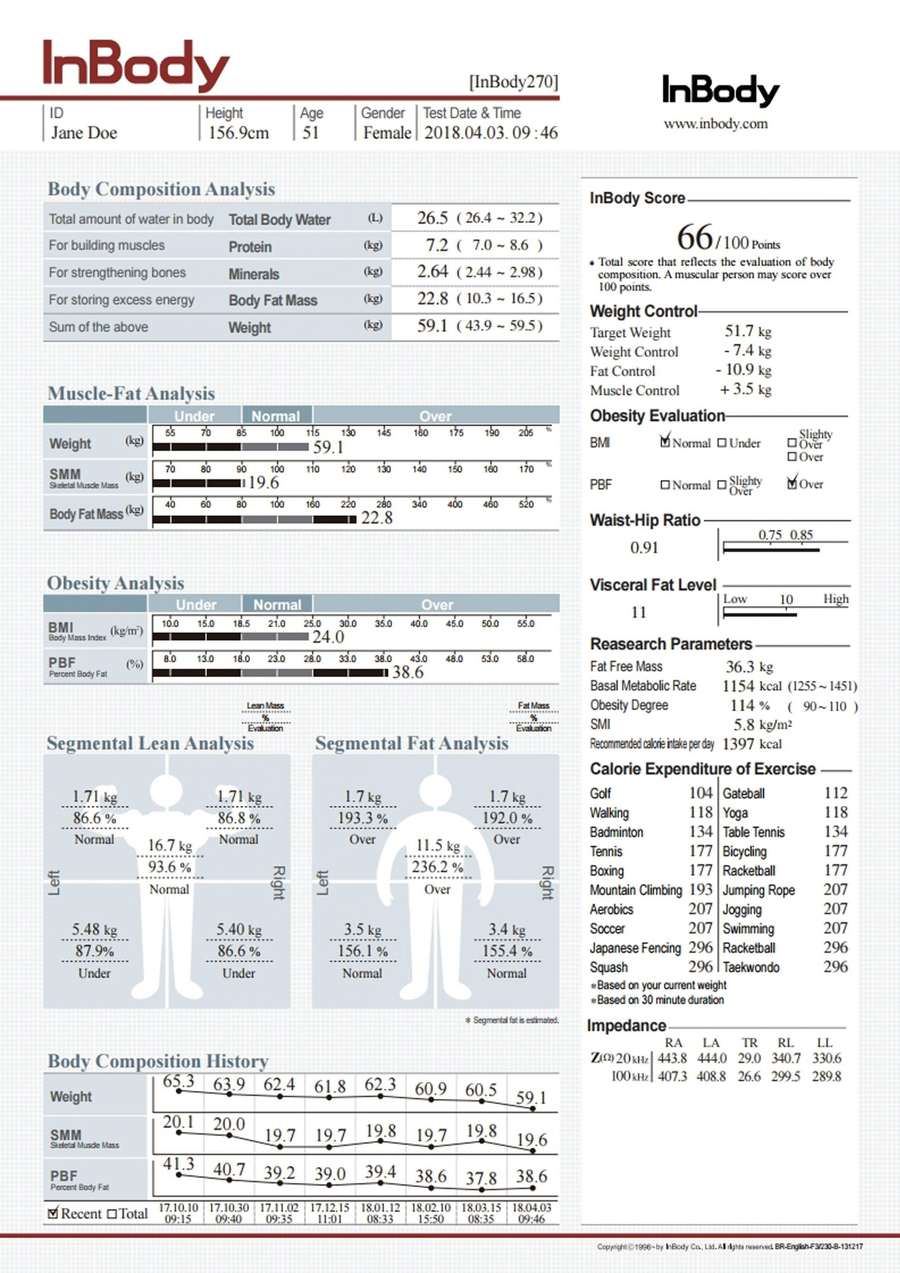
Clinical Obesity and India’s 2025 Obesity Definition: What Clinicians Need to Know
In January 2025 two frameworks changed how obesity is diagnosed. The Lancet Diabetes & Endocrinology Commission split obesity into clinical obesity, an illness with organ dysfunction or limits on daily life, and preclinical obesity, excess fat with preserved function. Days later an Indian expert group published a revised obesity definition for Asian Indians with Stage 1 and Stage 2. Both say the same thing about BMI: use it to screen, then confirm excess fat with a waist measure or a direct body fat measurement.
This guide explains both frameworks for physicians, endocrinologists and dietitians, compares them side by side, and shows where body composition testing fits. For the older BMI-based classes (WHO 2004 Asian cut-offs and the 2009 Indian BMI thresholds), see our post on stages of obesity in India.
Why BMI Alone Stopped Being Enough
BMI cannot tell fat from muscle, and it says nothing about where fat sits. The Lancet Commission notes that BMI-based measures can both underestimate and overestimate adiposity, and that BMI can underestimate fat mass in older adults, in people who have lost muscle, and in some ethnic groups including Asian populations. For India this is a familiar problem: patients with an unremarkable BMI and high body fat, described in our post on thin-fat syndrome.
The Lancet Commission: Clinical vs Preclinical Obesity
The Commission (Rubino et al., Lancet Diabetes & Endocrinology, published online 14 January 2025) brought together 58 experts from multiple specialties and countries, including people with lived experience of obesity. Its full text reports that its recommendations were endorsed by 76 organisations worldwide.
- Obesity: excess adiposity, with or without abnormal distribution or function of adipose tissue.
- Clinical obesity: a chronic, systemic illness in which excess adiposity alters the function of tissues, organs or the whole person.
- Preclinical obesity: excess adiposity with preserved organ function, but a generally increased risk of developing clinical obesity and other diseases.
Step one: confirm excess adiposity
The Commission recommends that BMI be used only as a surrogate of risk at population level, for epidemiology or for screening, not as an individual measure of health. Excess adiposity should be confirmed by one of:
- Direct body fat measurement, for example DXA or bioimpedance.
- At least one anthropometric criterion (waist circumference, waist-to-hip ratio or waist-to-height ratio) in addition to BMI.
- At least two anthropometric criteria, regardless of BMI.
Cut-offs must be appropriate to age, gender and ethnicity. Above a BMI of 40, excess adiposity can be assumed. The Commission adds that for people whose BMI is near but below the obesity cut-off, direct fat measurement, where available, helps avoid underdiagnosis.
Step two: assess for clinical obesity
Clinical obesity requires evidence of reduced organ or tissue function due to obesity, substantial age-adjusted limitation of daily activities, or both. The Commission lists 18 diagnostic criteria for adults (and 13 for children and adolescents). The adult criteria include:
- Sleep apnoea and hypoventilation or breathlessness
- Heart failure (reduced or preserved ejection fraction), atrial fibrillation, pulmonary hypertension, recurrent venous thrombosis and raised blood pressure
- The cluster of hyperglycaemia, high triglycerides and low HDL cholesterol
- Fatty liver disease with fibrosis, and microalbuminuria with reduced eGFR
- Anovulation or PCOS, and male hypogonadism
- Chronic knee or hip pain with stiffness, lower-limb lymphoedema, chronic urinary incontinence
- Significant limitation of mobility or basic activities of daily living
Each criterion assumes that other obvious causes have been excluded.
India’s 2025 Revised Definition: Stage 1 and Stage 2
The revised definition of obesity in Asian Indians living in India (Misra et al., Diabetes & Metabolic Syndrome, January 2025) replaced the 2009 guidance, which relied on BMI alone. It came from a five-round Delphi process; 118 Indian experts, including physicians, surgeons, physiotherapists and nutritionists, were invited. The lead author was also a Lancet commissioner, and the paper describes the two efforts as aligned.
- Stage 1 obesity: increased adiposity (BMI above 23) without effects on organ function or daily activities. The person should have normal glucose, blood pressure and lipids and no cardiovascular disease.
- Stage 2 obesity: BMI above 23 is mandatory, plus raised waist circumference or waist-to-height ratio, plus one or more symptoms limiting daily activity or one or more obesity-related diseases.
The cut-offs in the Indian paper
The full paper lists:
| Measure | Cut-off |
|---|---|
| BMI (generalised obesity) | Above 23 kg/m² |
| Waist circumference | 90 cm or more (men), 80 cm or more (women) |
| Waist-to-height ratio | Above 0.5 |
| Body fat percentage | Above 25.5% (men), above 38% (women) |
The body fat cut-offs come from a 2011 DXA study of 168 urban Asian Indians that derived thresholds linked to clustering of cardiovascular risk factors. They are DXA values. Applying them to a bioimpedance reading is reasonable as a guide, but the device and method differ, so say which you used.
The paper calls body fat “the gold standard for defining obesity” and says it should be estimated whenever possible, while making it optional because of cost and access. It also says that if a person’s BMI is below 23 but body fat exceeds the limits, body fat should determine the classification. It prefers waist-to-height ratio over waist-to-hip ratio for abdominal obesity.
The Two Frameworks Side by Side
| Lancet Commission 2025 | India 2025 (Misra et al.) | |
|---|---|---|
| Labels | Preclinical / clinical obesity | Stage 1 / Stage 2 |
| Role of BMI | Screening only; confirm adiposity | BMI above 23 mandatory for both stages |
| Confirming adiposity | Body fat measure, or BMI + 1 anthropometric, or 2 anthropometrics | Waist or waist-to-height for Stage 2; body fat ideal but optional |
| Illness criteria | 18 organ and function criteria | Daily-activity symptoms or obesity-related comorbidity |
| Body fat cut-offs | Not fixed; use validated, population-appropriate values | Above 25.5% men, above 38% women |
The main practical difference: the Indian definition keeps BMI as a mandatory gate and counts common comorbidities such as type 2 diabetes, hypertension, dyslipidaemia and fatty liver towards Stage 2. The Lancet criteria are organ-specific and can need investigations such as sleep studies or echocardiography. The Indian authors raise the same practical concern about test-heavy staging systems, which are costly and not available everywhere. A 2026 Nature Reviews Endocrinology perspective on clinical obesity in Asian people argues for combining anthropometry, body composition and metabolic markers to separate preclinical from clinical obesity in Asian populations.
Where Body Composition Testing Fits
- Confirming adiposity near the BMI line. A patient with BMI 22.5 and high body fat is missed by BMI. Both frameworks allow a direct fat measure to settle it.
- Separating fat from muscle. A muscular patient with a high BMI may not have excess fat; a fat measure prevents overdiagnosis.
- Distribution. Waist and waist-to-height ratio remain the named abdominal measures. Visceral fat estimates on some analysers add context; our visceral fat guide covers how they are reported.
- Muscle during treatment. Weight loss includes lean mass. Tracking muscle alongside fat helps spot patients drifting toward sarcopenic obesity.
For the anthropometric side, see our post on healthy waist size in India.
Limits and Open Questions
- No universal body fat cut-off. The Lancet Commission does not set one; the Indian values are DXA-derived from one urban sample.
- BIA has known limits at extremes of BMI and hydration. Use the same device and conditions for repeat tests; our explainer on DSM-BIA versus single-frequency BIA covers device design.
- Staging is not a treatment algorithm. Treatment choices belong to the clinician, guided by full assessment.
- Systems have to catch up. The 2026 Nature Reviews Endocrinology perspective calls for clinical guidelines, reimbursement and education to be aligned with a function-based definition.
Frequently Asked Questions
What is clinical obesity?
The Lancet Commission defines it as a chronic, systemic illness in which excess adiposity alters the function of organs, tissues or the whole person, shown by organ dysfunction or substantial limits on daily activities.
What is the difference between preclinical and clinical obesity?
Both involve confirmed excess adiposity. Preclinical obesity has preserved organ function but raised future risk. Clinical obesity has current organ dysfunction or functional limitation caused by obesity.
What is Stage 1 and Stage 2 obesity in India?
Under the 2025 Indian definition, Stage 1 is BMI above 23 without organ effects or comorbidities. Stage 2 needs BMI above 23, raised waist or waist-to-height ratio, and either symptoms limiting daily activity or an obesity-related disease.
Does the new definition still use BMI?
Yes, but not alone. The Lancet Commission uses BMI as a screen and requires confirmation; the Indian definition keeps BMI above 23 as a mandatory criterion and adds waist measures, symptoms and comorbidities.
What body fat percentage counts as obesity for Indians?
The 2025 Indian paper uses above 25.5% for men and above 38% for women, taken from a DXA study in urban Asian Indians. State the method you used when you compare a patient to these values.
Can a bioimpedance analyser confirm obesity under the new rules?
The Lancet Commission names bioimpedance as a direct fat measurement option. It confirms excess adiposity; it does not diagnose clinical obesity, which needs evidence of organ or functional impairment.
Measure Fat, Not Just Weight
Both 2025 frameworks move obesity assessment beyond BMI. To add body fat and muscle measurement to your clinic, explore InBody for hospitals and clinics or request a demo and quote.
This article is for healthcare professionals and general education. It is not a substitute for clinical judgement or individual medical advice. Patients should not start, stop or change any medication without their doctor.
Related reading: lean body mass explained and India’s obesity ranking.

Most trending articles
Student Fitness Screening in India: A Guide for Schools
CBSE HPE, Fit India and Khelo India rely on BMI. How schools and colleges can add body composition screening safely, with child caveats and DPDP consent.
Creatine and Your Body Composition Scan: What Changes
Creatine raises body water and lean mass readings within a week on BIA and DXA. What the studies show and how to time your scans to read progress honestly.
Adding a Body Composition Test to a Pharmacy Health Corner
How Indian pharmacies and diagnostic centres can add a body composition test to a health corner: space, staff role, what not to say, referrals, DPDP.