
Body Composition 9 min read
Lean Body Meaning: Lean Body Mass vs Muscle Explained
What lean body mass means, how it differs from fat-free mass and skeletal muscle, how it is estimated, and how to read it on your InBody report.
Reading about body composition? Find an InBody test centre near you →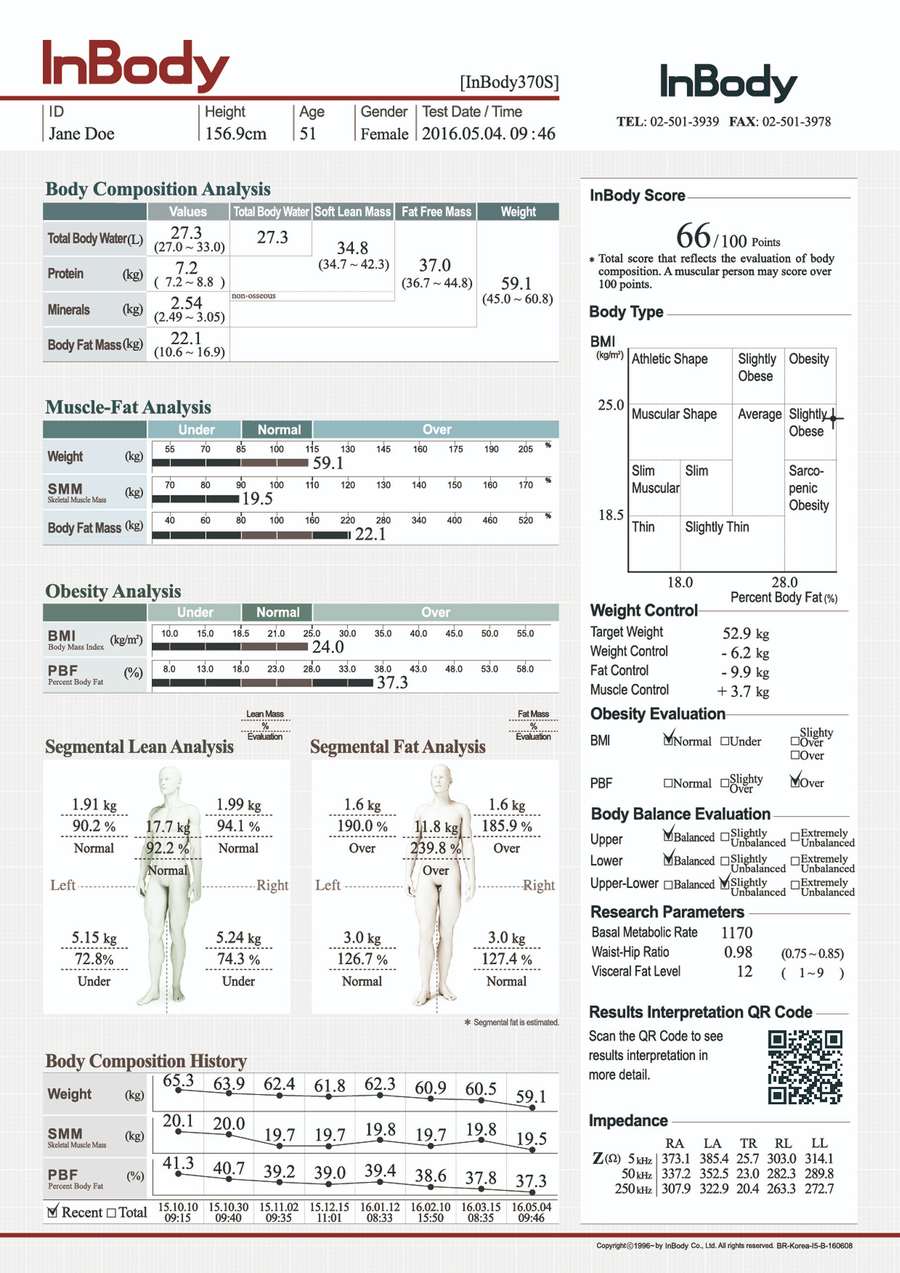
Lean Body Meaning: Lean Body Mass vs Muscle Explained
People search “lean body meaning” for two different reasons. Some want the everyday sense: a lean body is one that carries little fat, so muscle and shape show through. Others have seen lean body mass on a report or an app and want to know what the number is. This guide is about the second, but it answers the first along the way.
Here is the short answer. Lean body mass is everything in your body that is not fat: water, muscle, organs, skin and bone. It is not the same as muscle, and it is not a “fitness score”. On most current InBody result sheets you will find it under the name Fat Free Mass. Below we cover what it contains, how it is estimated, how it differs from skeletal muscle mass, and how to read it without being fooled by water.
What “Lean Body Mass” Actually Means
The simplest formula is the one InBody USA uses: lean body mass equals total weight minus fat mass. If you weigh 70 kg and 20 kg of that is fat, your lean body mass is 50 kg.
That 50 kg is a mixed bag. InBody lists what it includes:
- Body water, inside and outside your cells. This is the largest part by far.
- Muscle: skeletal muscle (the kind you train), plus heart muscle and the smooth muscle in your organs.
- Organs such as the liver, kidneys and brain.
- Skin.
- Bone and the minerals in it.
So when someone says “I want a lean body”, they usually mean less fat and more visible muscle. When a report says “lean body mass 50 kg”, it means 50 kg of non-fat tissue, most of which is water.
Lean Body Mass vs Fat-Free Mass: Is There a Difference?
You will see both terms, sometimes on the same page. Historically there was a small distinction. The term lean body mass was introduced by Albert Behnke in 1942, and he included a little “essential” fat, the structural fat in cell membranes and nerves. Fat-free mass was meant to be the chemical remainder with all fat removed.
A 2024 review in Advances in Nutrition by Heymsfield and colleagues re-examined this. Their conclusion: the fat-free mass that labs actually measure still contains those structural lipids, so lean body mass and fat-free mass are chemically the same thing. They recommend using “fat-free mass” and retiring “lean body mass”.
For reading your own report, treat them as the same number. InBody’s older training material calls it Lean Body Mass; the sample InBody 370S sheet shown below calls it Fat Free Mass. Same idea, different label.
Lean Body Mass vs Skeletal Muscle Mass
This is where most confusion starts. InBody USA puts it bluntly: an increase in skeletal muscle is an increase in lean body mass, but an increase in lean body mass is not always an increase in muscle, because water makes up so much of it.
| Lean body mass / fat-free mass | Skeletal muscle mass (SMM) | |
|---|---|---|
| What it is | Body weight minus fat | The muscle attached to your bones |
| Includes water? | Yes, all body water | Only the water inside that muscle |
| Includes organs and bone? | Yes | No |
| Size relative to body weight | The larger number | Always smaller than lean body mass |
| Changes quickly with | Hydration, salt, food, exercise, swelling | Training and nutrition over weeks |
| What to use it for | Context, energy needs, tracking the non-fat side of weight change | Tracking the muscle you can build |
InBody’s own example makes the point: a man weighing 174.1 lb (about 79 kg) had 133.6 lb of lean body mass, of which 98.1 lb was water. The rest, which InBody calls dry lean mass, is mostly protein and minerals.
If muscle is what you care about, read the skeletal muscle line instead. Our guide to skeletal muscle mass and its normal range covers that number in detail.
How Lean Body Mass Is Estimated
Nobody weighs your organs. Every method estimates lean body mass indirectly, and they differ in what they assume.
- Online calculators. Formulas such as Boer or James use only height, weight and sex. They assume an average body, so they cannot tell a muscular person from someone of the same size carrying more fat. Treat the result as a rough starting point.
- Bioelectrical impedance (BIA). A small current passes through the body. Water-rich lean tissue conducts it well and fat does not, so the device estimates body water and builds lean mass from there. This is what InBody devices do. Because it starts from water, hydration affects it.
- DXA. A low-dose X-ray scan that separates fat, lean soft tissue and bone. Hydration can affect DXA readings too, according to the European sarcopenia consensus (EWGSOP2).
- Two-component methods such as underwater weighing or air displacement, mostly used in research.
Is There a “Normal Range” for Lean Body Mass?
There is no single number that is right for everyone, because lean body mass scales with your height and frame. A tall man will carry far more than a short woman, and both can be healthy.
What InBody does is print a personal reference range next to the value. On the 370S sample sheet above, Fat Free Mass reads 37.0 kg with a range of 36.7 to 44.8 kg for that person. The range is worked out from the person’s height and sex, not from a national table, so yours will differ. Two practical points:
- Below the range usually means the non-fat side of your weight is light for your height. Check the skeletal muscle line next to see whether muscle is the reason.
- Above the range is common in muscular people. It can also happen when the body is holding extra water, so look at the water lines before celebrating.
We have not printed a chart of “ideal lean mass by age” because we could not find one built for Indian adults from a source we trust. For the fat side of the same report, use our body fat percentage chart.
Why Lean Body Mass Matters
It drives your resting energy estimate. The InBody 770 training manual says the device calculates basal metabolic rate with the Cunningham equation, which is based on lean body mass. More lean mass, higher estimated BMR. Our post on how BMR is measured explains the limits of that estimate.
It shows what kind of weight you lost. When weight drops, some of the loss is fat and some is lean tissue. Tracking lean body mass alongside fat mass tells you which. This matters most during aggressive dieting or on weight-loss medication, where your doctor should guide the plan.
It explains “normal weight, poor composition”. Two people at the same weight can have very different lean mass. That pattern is common in India and is covered in our skinny-fat post, so we will not repeat it here.
How to Read It on Your InBody Report
- Find the label. Look for Fat Free Mass (or Lean Body Mass on older sheets) in the Body Composition Analysis table at the top.
- Read it with the water lines. Total body water sits in the same table. If lean mass jumped and water jumped with it, that is mostly fluid.
- Then read skeletal muscle mass in the Muscle-Fat Analysis bars. That is the muscle you can train.
- Check the ECW ratio on models that report it. A high ratio means some of that lean mass may be swelling, not tissue. See our ECW ratio guide.
- Compare trends, not single scans. Same device, same time of day, same conditions.
If any line on the sheet confuses you, the InBody result sheet guide explains each section.
Common Mistakes With Lean Body Mass
- Calling it muscle. A 2 kg rise in lean mass in a week is almost certainly water, glycogen or food, not 2 kg of new muscle.
- Panicking over a drop after a fast or a hot day. Dehydration lowers measured lean mass. Re-test under normal conditions.
- Comparing different machines. A gym scale, a clinic analyser and a DXA scan use different methods. Track on one.
- Using a calculator result as a diagnosis. Formula estimates are averages, not measurements.
Frequently Asked Questions
What is the meaning of lean body?
In everyday use, a lean body means a physique with little fat, where muscle definition shows. In body composition, lean body mass means everything that is not fat: water, muscle, organs, skin and bone. Your report uses the second meaning.
Lean body ka matlab kya hai?
Lean body mass ka matlab hai aapka total weight minus fat. Isme paani, muscle, organs, skin aur haddi sab aate hain. Yeh sirf muscle nahi hai. Muscle dekhna hai to report mein Skeletal Muscle Mass (SMM) wali line dekhein.
Is lean body mass the same as muscle mass?
No. Muscle is one part of lean body mass. Body water is the largest part, and organs, skin and bone are included too. That is why lean body mass is always larger than skeletal muscle mass, and why it can jump with hydration while muscle stays the same.
Is lean body mass the same as fat-free mass?
For practical purposes, yes. The term lean body mass was coined to include a small amount of essential fat, but a 2024 review concluded that measured fat-free mass already contains those structural lipids, so the two are chemically the same. InBody sheets now mostly say Fat Free Mass.
Should lean body mass be high or low?
Within or above your personal reference range is generally better than below it, as long as the extra is muscle rather than retained water. Read it together with skeletal muscle mass and the water lines on the same report.
How do I increase lean body mass?
The part you can build on purpose is skeletal muscle, through regular resistance training and enough protein and total food. Water-driven increases are not progress, so judge results by the skeletal muscle line over several weeks.
How is lean body mass measured?
It is estimated, not weighed. Common methods are bioelectrical impedance analysers such as InBody, DXA scans, and height-weight formulas. Measured methods beat formulas, and the same device under the same conditions gives the most useful trend.
See Your Own Fat-Free Mass, Not an Average
A calculator can only guess. Find an InBody test centre near you to see your fat-free mass, skeletal muscle and body water on one sheet, with ranges set for your height.
This article is for general education and is not a substitute for medical advice. Talk to your doctor before making changes based on any single body composition reading.
Related reading: how to read your InBody report and muscle mass tests in India.

Most trending articles
Student Fitness Screening in India: A Guide for Schools
CBSE HPE, Fit India and Khelo India rely on BMI. How schools and colleges can add body composition screening safely, with child caveats and DPDP consent.
Creatine and Your Body Composition Scan: What Changes
Creatine raises body water and lean mass readings within a week on BIA and DXA. What the studies show and how to time your scans to read progress honestly.
Fitness Testing and Body Composition for Sports Academies
A practical fitness testing battery for Indian sports academies: body composition, grip, jumps, sprints, Yo-Yo, Khelo India context and youth maturation.