
Body Composition 8 min read
BMI Weight Machine vs Body Composition Scale: What to Buy
What a BMI weight machine really measures, how a body composition scale differs, where a professional analyser fits, and a buying checklist for India.
Reading about body composition? Find an InBody test centre near you →
BMI Weight Machine vs Body Composition Scale: What to Buy
Type “weight machine” into any Indian shopping app and the listings blur together: “BMI weight machine”, “smart scale”, “body fat weighing machine”, “weight machine with fat analysis”. They look alike, but they do very different things. A BMI weight machine weighs you and divides that weight by the height you typed in. That is all BMI is. A body composition scale also passes a tiny electrical current through your body to estimate how much of that weight is fat, muscle and water.
This guide explains what each type actually measures, where a professional analyser fits in, who needs which, and a short buying checklist. If you want the accuracy evidence for home scales, that is in our separate guide on whether smart body-fat scales are accurate.
What a BMI Weight Machine Actually Measures
BMI, or body mass index, is weight in kilograms divided by height in metres squared. A person who weighs 70 kg and is 1.70 m tall has a BMI of 70 ÷ (1.70 × 1.70), which is about 24.2.
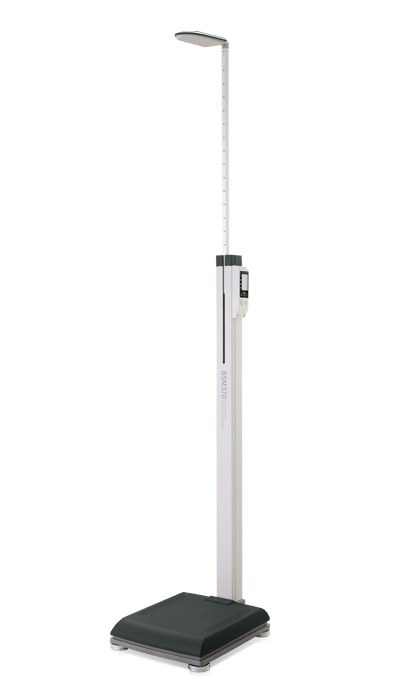
So the only thing a “BMI machine” measures is your weight. Height comes from you, typed into the scale or its app. The BMI number is arithmetic you could do on a phone calculator. That is not a criticism. Weight is genuinely useful, and a good scale measures it well. But a BMI scale cannot tell you what the weight is made of.
For Indians the BMI cut-offs are also lower than the international ones. A WHO expert consultation in 2004 found that many Asian populations have a high risk of type 2 diabetes and heart disease below a BMI of 25, and proposed public-health action points at 23 and 27.5. Indian criteria, restated in the 2025 revised definition of obesity for Asian Indians, treat 23 to 24.9 as overweight and 25 or more as obesity. Scale apps do not always say which bands they use, so read your BMI against 23 and 25 yourself.
Where BMI Falls Short
BMI cannot separate muscle from fat. UK guidance from NICE (NG246) tells clinicians to interpret BMI with caution in people with high muscle mass, and in people aged 65 and over. It also notes that a person in the healthy BMI range may still carry excess fat around the middle.
Two everyday Indian examples show why that matters:
- The regular gym-goer who has gained muscle may be told by a BMI scale that they are “overweight”.
- The slim office worker with low muscle and high belly fat may get a reassuring “normal” BMI. This is the thin-fat pattern we cover in BCA vs BMI.
If you only want to track weight, a basic scale is fine. If you want to know whether you are losing fat or muscle, BMI cannot tell you.
What a Body Composition Scale Adds
A body composition scale, often sold as a smart scale or a “weight machine with fat analysis”, uses bioelectrical impedance analysis (BIA). Lean tissue holds a lot of water and conducts current well; fat holds little water and resists it. The scale measures that resistance and uses an equation to estimate fat, muscle and water.
What makes one body composition scale different from another:
- Where the electrodes are. Most budget models are foot-to-foot: four metal pads under your feet, so the current travels up one leg and down the other. The upper body is estimated, not measured. Some designs add a handle or hand electrodes so the current also passes through the arms and trunk.
- How many frequencies. More frequencies can help a device separate water inside and outside cells.
- The equation. It is proprietary, and it is where most of the difference between brands comes from.
- The app. A scale that stores every reading and shows trends is worth far more than one that shows a number and forgets it.
Hydration matters for every BIA device. The ESPEN clinical guideline on BIA notes that it works well in healthy people with stable fluid balance, and that results in people with abnormal hydration need caution. In practice, weigh at the same time and under the same conditions every day.
Three Tiers Side by Side
| BMI weight machine | Home body composition scale | Professional analyser | |
|---|---|---|---|
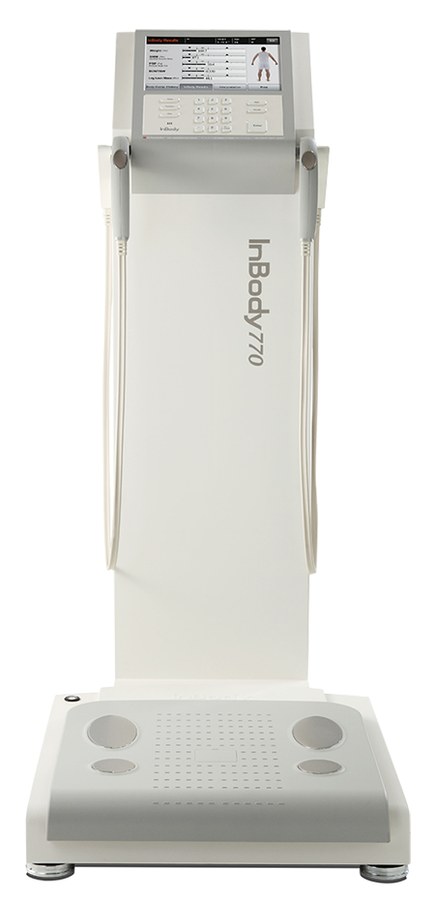
| Measures | Weight only; BMI is calculated from the height you enter | Weight plus BIA estimates of fat, muscle and water | Weight plus multi-frequency BIA, usually through hands and feet, with segmental results on many models |
| Typical outputs | Weight, BMI | Weight, BMI, body fat %, muscle, sometimes water and more, depending on model | Detailed result sheet: fat, muscle, body water, segmental analysis and more, depending on model |
| Best for | Tracking weight | Tracking your own trend at home | A baseline, clinical or coaching decisions, gyms and clinics |
| Where you find it | Every home and pharmacy | Online and retail | Clinics, hospitals, gyms and test centres |
For a deeper comparison of the last two columns, read our guide to professional vs home body composition analysers. If you are buying for a gym rather than a home, see the BMI machine for gyms buyer’s guide.
Who Needs Which
- You only want to watch your weight. A plain digital scale is enough. Use the Indian BMI bands, and measure your waist once a month.
- You are losing weight and want to know it is fat, not muscle. A body composition scale earns its place here, because the trend in fat and muscle matters more than the weight.
- You train regularly. BMI will mislabel you. A body composition scale, cross-checked occasionally against a professional scan, is more useful.
- You are managing a condition, are on a weight-loss medicine, or are over 65. Start with a professional scan and your doctor’s advice. A home scale can then track the trend between visits.
- A family sharing one scale. Pick one with separate user profiles, so each person’s height, age and sex are set correctly.
A Buying Checklist for India
- Is it BMI-only or BIA? If the listing says “BMI” but there are no metal electrodes on the surface, it is a weighing scale with a calculator.
- Where are the electrodes? Feet only, or feet and hands? Hand contact means the arms and trunk are part of the measurement, not just estimated.
- Which BMI bands does the app use? Look for the option of Asian or Indian cut-offs, or read the BMI number yourself against 23 and 25.
- Does the app keep history and show trends? Weekly averages and export matter more than a long list of metrics.
- Multiple users? Useful for families, as long as each profile is set up properly.
- Indian warranty and service. Check who services it here and whether the app works in India.
- What evidence backs the claims? “Clinical grade” means little without a named study you can look up.
InBody’s home range, the InBody Dial, is a body composition scale built on the same BIA approach as InBody’s professional devices. The Dial H20N, for example, is listed on its product page with an 8-point measurement and thumb electrodes, so the hands are part of the circuit. Our Dial H20 vs H30 comparison explains how the models differ.
Getting Useful Numbers From Any Scale
- Same time, same conditions. First thing in the morning, after the toilet, before food or drink.
- Bare, dry feet, and dry hands on any hand electrodes.
- Read trends, not days. Look at weekly or four-weekly averages.
- Do not switch scales mid-way. Different devices give different numbers; a new scale means a new baseline.
- Check once against a professional scan. It tells you whether your home scale reads higher or lower for you.
Frequently Asked Questions
What is a BMI weight machine?
It is a digital weighing scale that calculates BMI from your weight and the height you enter. BMI is weight in kilograms divided by height in metres squared. The machine measures only weight; it does not measure fat or muscle unless it also has BIA electrodes.
What is a smart scale?
A smart scale connects to a phone app and stores your readings. Most smart scales sold in India also use bioelectrical impedance to estimate body fat, muscle and water. The trend over weeks is the useful part; any single day’s body fat number is an estimate.
Is a body composition scale better than a BMI scale?
It tells you more. A BMI scale cannot separate fat from muscle, so it can mislabel muscular people and miss high fat in slim people. A body composition scale estimates both, which helps when you want to know whether weight loss is coming from fat or muscle.
What BMI is normal for Indians?
Indian criteria treat a BMI of 23 to 24.9 as overweight and 25 or above as obesity, lower than the international 25 and 30. A WHO expert consultation in 2004 found that many Asian populations face higher risk at lower BMIs. Pair BMI with a waist measurement for a better picture.
Can a weight machine with fat analysis replace a professional test?
No. A home scale is designed for tracking your own trend. For a baseline, a medical decision or segmental results for each arm and leg, a professional body composition analyser at a clinic or test centre gives a more detailed reading.
Why does my BMI scale say overweight when I go to the gym?
BMI counts all weight the same, so extra muscle raises it just like fat does. NICE guidance says BMI should be interpreted with caution in people with high muscle mass. A body composition test shows whether the extra weight is muscle or fat.
Measure Once Properly, Then Track at Home
Start with one professional baseline, then follow the trend at home. Find an InBody test centre near you for a full body composition scan, or see the InBody Dial range for tracking fat and muscle at home.
Related reading: body composition analysis vs the scale.

Most trending articles
Student Fitness Screening in India: A Guide for Schools
CBSE HPE, Fit India and Khelo India rely on BMI. How schools and colleges can add body composition screening safely, with child caveats and DPDP consent.
Creatine and Your Body Composition Scan: What Changes
Creatine raises body water and lean mass readings within a week on BIA and DXA. What the studies show and how to time your scans to read progress honestly.
Fitness Testing and Body Composition for Sports Academies
A practical fitness testing battery for Indian sports academies: body composition, grip, jumps, sprints, Yo-Yo, Khelo India context and youth maturation.