
Fitness 10 min read
The Road Warrior Body: How Frequent Business Travel Quietly Erodes Body Composition (And How to Stop It From a Hotel Room)
India's business travel spend grew 15% in 2025, the fastest in the world. Research shows frequent travelers carry significantly higher BMI and obesity risk. The real mechanism — and a hotel-room fix.
Reading about body composition? Find an InBody test centre near you →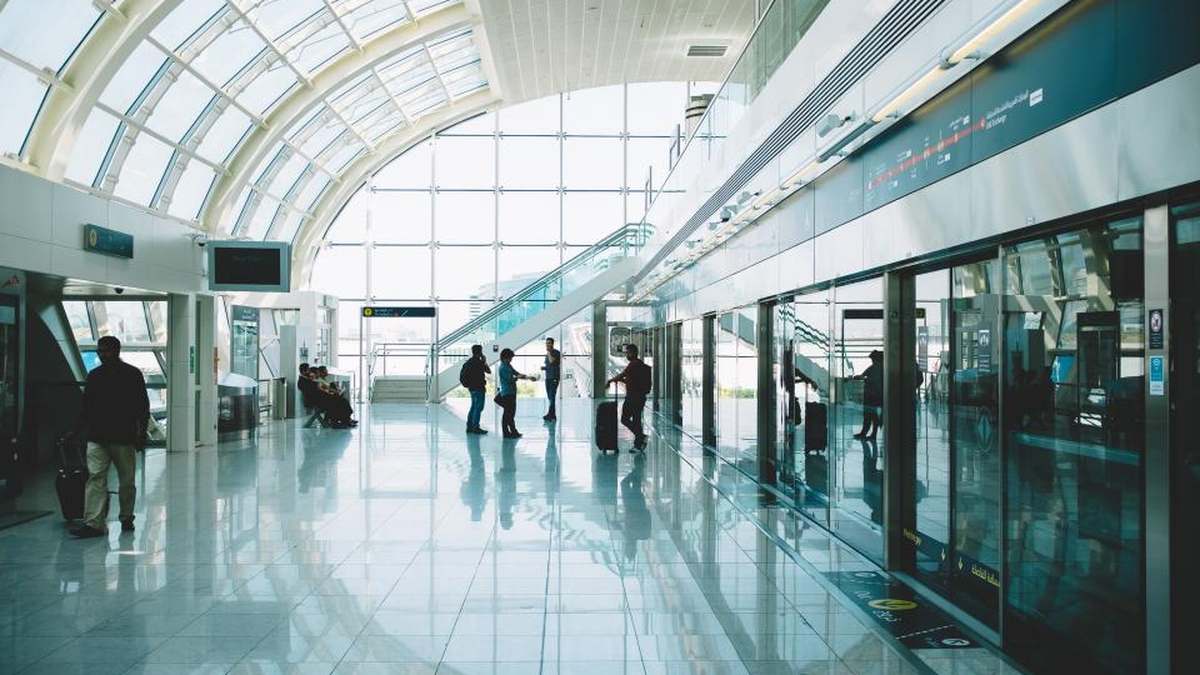
The Road Warrior Paradox: Same Effort, Different Body
A national sales manager trains four mornings a week and eats roughly the same way whether he’s in Mumbai or on the road. Yet every time his company’s travel-heavy quarter hits — eleven flights, six cities, back-to-back client dinners — his weight creeps up and it takes weeks to “reset” once he’s home. His effort doesn’t change quarter to quarter. His business travel load does. And that’s exactly what correlates with the drift in his body composition — not motivation, not what he eats when he’s actually paying attention.
This is familiar territory for India’s fast-growing population of traveling professionals — sales leaders on multi-city circuits, consultants embedded at client sites for weeks, executives shuttling between Bengaluru, Singapore, and Frankfurt. Unlike a desk job, where the problem is daily sedentary sameness, or night-shift work, where the problem is a fixed clock out of sync with daylight, the traveling professional’s problem is irregularity itself: a routine that resets every few weeks, never stabilises long enough for the body to adapt, and quietly compounds across a travel-heavy year.
Why Travel Weeks Are Different From Just “Eating Badly for a While”
It’s tempting to file travel-related changes under the same category as any short stretch of poor eating and inactivity. The research suggests something more specific: it’s the irregularity, not simply the indulgence, that does the damage.
Irregular Meal Timing Rewires How Your Body Handles Food
A randomized controlled trial in the American Journal of Clinical Nutrition (Alhussain, Macdonald & Taylor, 2016) put eleven healthy women through two 14-day periods — one with a structured six-meals-a-day pattern, one unstructured (three to nine meals a day), matched for total calories. The regular pattern produced a significantly greater thermic effect of food (the energy spent digesting what you eat) and a lower blood glucose spike after a test meal, with higher fullness and lower hunger throughout. Identical calories, processed less efficiently and leaving people hungrier, purely because the timing was inconsistent.
A separate prospective study in EXCLI Journal (2022) found people with inconsistent eating times — a swing of more than two hours in their largest meal day to day — had a significantly higher average BMI (33.8) than consistent eaters (27.5, p=0.001); those eating inconsistently and late scored highest of all (35.8). Business travel is close to a real-world stress test of this pattern: breakfast skipped for an early flight, lunch at 4pm between meetings, dinner at a client event at 10pm. The times aren’t just less healthy — they’re erratic, and erratic carries its own metabolic penalty.
Jet Lag Adds a Second Layer on International Routes
For professionals crossing time zones, there’s a mechanism on top of meal irregularity: circadian misalignment. A 2024 systematic review in Cureus found eastward travel (the harder direction to adjust to) needs roughly a day of recovery per time zone crossed, westward about half a day — so a Mumbai-to-New York trip can carry the better part of a week of disruption. During that window, circadian control over appetite hormones (leptin and ghrelin) and fat metabolism is measurably off — the same disruption seen in shift-work research, compressed into a travel window.
This isn’t theoretical: a widely cited 2011 Columbia University Mailman School of Public Health study, drawn from records of over 13,000 corporate employees, found “road warriors” travelling 20+ days a month had a mean BMI of 27.5 versus 26.1 for light travellers, with obesity odds nearly double (OR 1.92). Among men, international travel frequency predicted weight gain more strongly than domestic travel — pointing at time-zone disruption on top of the usual travel chaos.
Hotel and Airport Defaults Do the Rest
A 2021 Emory University study of 795 executives found frequent travellers had higher BMI, body fat percentage, and abdominal fat than infrequent ones, with effects pronounced above roughly 20 travel days a month — and that missed sleep and exercise hurt female travellers’ body composition more than male travellers’. Even at the study’s median (6 travel days a month, 83% domestic), the pattern was measurable. Airport terminals default to fried, carb-heavy food; hotel gyms are inconsistent; client dinners run late and heavy. None of this is catastrophic alone — the damage comes from it recurring, unbroken, for a trip’s length, then resetting on the next one.
India’s Travel Boom Is Outrunning the Body’s Ability to Adapt
This isn’t a marginal lifestyle issue — it’s happening at scale. India recorded the fastest growth in business travel spending of any major market in 2025, with corporate travel spend rising 15% year-on-year to an estimated $43 billion, according to industry reporting on global business travel data. Looking ahead, 74% of Indian organisations expect business travel to increase further over the next 12 months, and 75% of corporate travel buyers expect budgets to grow again in 2026.
Behind those numbers sit three travel patterns common to Indian professional life: the domestic sales circuit (multi-city trips, several nights a week, heavy on hotel and client food); client-site consulting (weeks away from home, but on a stable, if unfamiliar, schedule); and international business travel (fewer trips, but each carrying the circadian burden above). None of these fit neatly into “sedentary desk job” or “fixed night shift” — they’re defined by how often the routine changes, which is why irregularity itself is the mechanism worth naming.
What a Body Composition Scan Shows That the Mirror Doesn’t
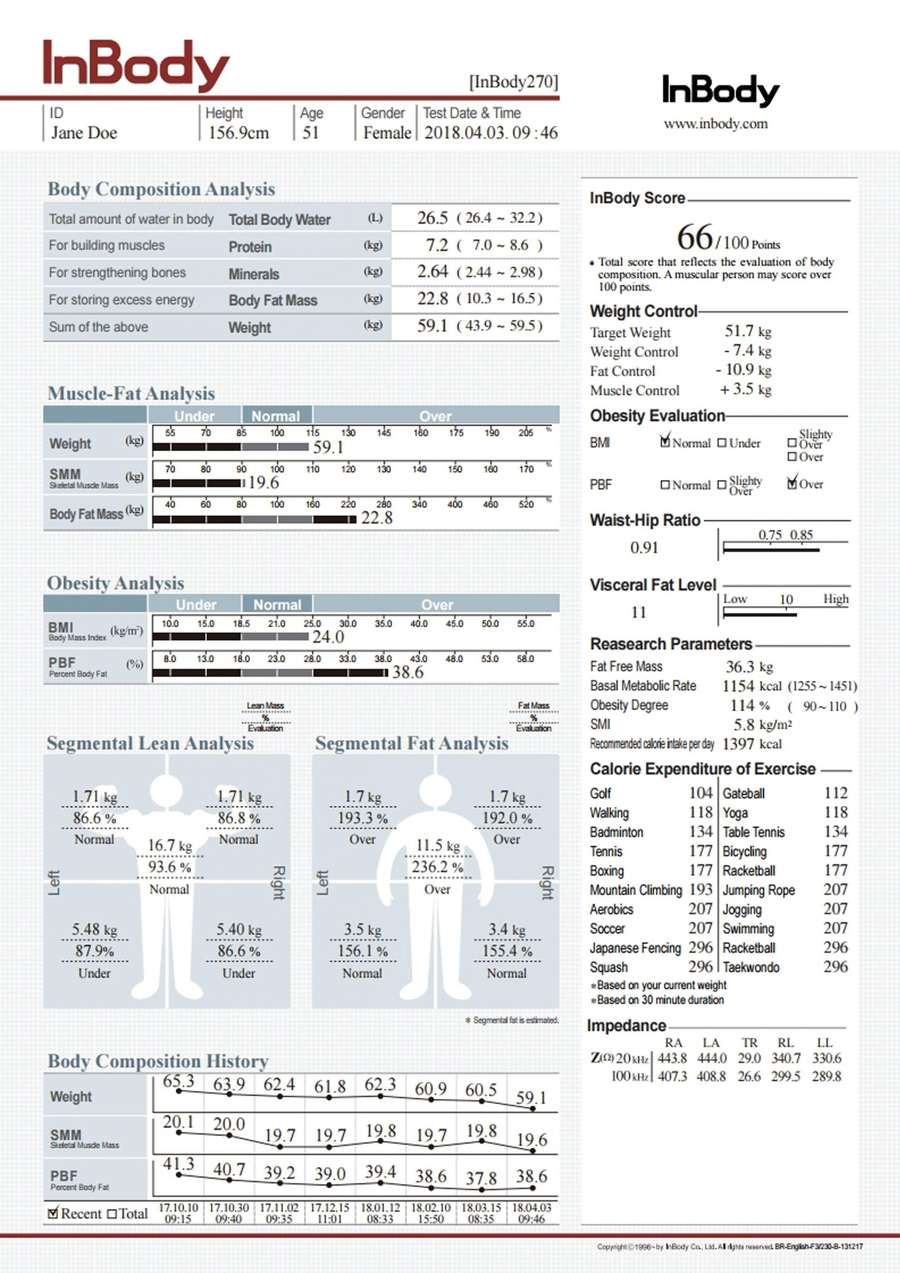
The frustrating part of travel-related body composition drift is how invisible it is week to week. A traveling professional rarely notices a single trip doing damage — the change only becomes obvious after a full travel-heavy quarter, and by then it’s hard to separate “I gained a bit of weight” from what actually happened underneath: fat, muscle, water retention from long-haul flights and salty food, or some combination.
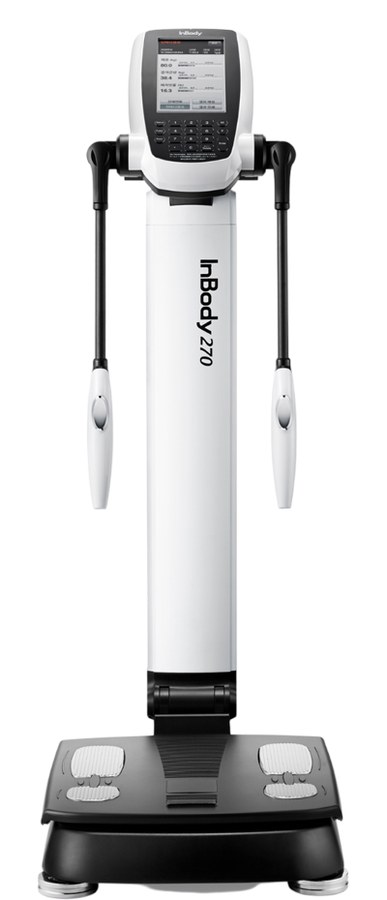
This is exactly the distinction a bathroom scale can’t make and an InBody scan can. A scan before a heavy-travel quarter and again after gives you the three numbers that matter: Skeletal Muscle Mass (SMM) — did missed training and disrupted sleep actually cost you muscle, or did you hold onto it; Visceral Fat Area (VFA) — the depot most sensitive to the cortisol and insulin-resistance effects of circadian disruption and irregular eating, most likely to trend upward even when scale weight barely moves; and the ECW/TBW ratio, which flags the inflammation and fluid-shift pattern tied to jet lag and disrupted sleep, sometimes before fat or muscle changes are visible. Two professionals can lose the identical 2kg during a hard travel quarter — one loses fat, the other loses muscle — and only a scan tells you which one you are.
The Fix: Six Rules for Traveling Without Losing Your Body Composition
1. Default to protein at every airport and hotel meal. You can’t control the menu, but you can usually find a protein anchor — grilled options, eggs, paneer, dal, curd, or a bar carried from home for the gap between flights. Protein at each meal blunts the hunger swings irregular timing creates and protects muscle when training gets missed.
2. Keep a 20-minute hotel-room routine you can do anywhere. Bodyweight squats, push-ups, lunges, planks, plus a resistance band (packs flat, weighs nothing) for rows and presses — enough to maintain, not build, muscle for a trip’s duration. The goal on the road isn’t progress, it’s not losing ground.
3. Protect sleep deliberately on time-zone-crossing trips. Based on the recovery pattern in circadian research, budget roughly a day of adjustment per time zone eastward, half that westward. Seek morning daylight on arrival for eastward trips (resets the clock forward) and evening light for westward trips. Avoid scheduling your highest-stakes meeting on day one of a major eastward crossing.
4. Anchor your eating window even when the clock changes. The irregular-meal-timing research points to one takeaway: consistency in when you eat matters almost as much as what. Pick rough meal times relative to your wake time — even if wake time shifts with the trip — rather than eating whenever food appears.
5. Plan training around known travel weeks instead of abandoning it. If a heavy-travel quarter is coming, front-load strength training beforehand and treat the trip itself as a maintenance phase (see #2), rather than stopping and “restarting” every few weeks — restarting is where most of the muscle loss actually happens.
6. Bookend heavy-travel quarters with a body composition test. A scan before and after your busiest stretch turns a vague feeling of “travel is taking a toll” into an actual number, and shows whether your countermeasures are working before the drift becomes a full year’s accumulated change.
Frequently Asked Questions
Does business travel actually change body composition, or does it just feel that way?
It’s measurable. A 2011 Columbia University study of over 13,000 employees found frequent travellers (20+ days a month) had significantly higher BMI and nearly double the odds of obesity versus light travellers. A 2021 Emory University study of 795 executives found similar patterns in body fat percentage and abdominal fat, with effects appearing even at moderate travel frequency.
Why does international travel affect body composition more than domestic travel?
International travel adds circadian disruption — jet lag — on top of the meal and activity irregularity every trip brings. The circadian clock governs appetite hormones (leptin and ghrelin) and fat metabolism, and crossing time zones misaligns it for days. The Columbia study found international travel frequency predicted weight gain more strongly than domestic travel among male business travellers.
What should I eat at airports and in hotels to protect my muscle mass?
Prioritise protein at every meal — eggs, grilled chicken or paneer, dal, curd, or a carried protein bar. Protein blunts the hunger swings that irregular timing creates and helps preserve muscle when training is missed. Avoid arriving hungry at your next meal after skipping one — that’s what drives the overeating irregular-meal-timing research consistently flags.
Can I actually maintain muscle with just a hotel room and no gym?
Yes, for the duration of a trip. A 15–20 minute bodyweight circuit — squats, push-ups, lunges, planks — plus a packable resistance band for rows and presses is enough to maintain skeletal muscle mass while travelling. The goal on the road is maintenance, not progress; real gains resume once you’re back on a stable schedule.
How long does jet lag actually last, and does it affect metabolism the whole time?
A 2024 systematic review in Cureus estimates recovery at roughly a day per time zone crossed eastward, and about half a day per time zone westward. During that window, circadian regulation of appetite hormones and fat metabolism is disrupted — a long eastward trip can carry the better part of a week of altered metabolic signalling.
Should I get a body composition test before and after a heavy travel quarter?
It’s the most reliable way to know what happened. Scale weight can’t distinguish fat gain, muscle loss, or water retention from long-haul flights — an InBody scan separates all three, and flags inflammation-related fluid shifts through the ECW/TBW ratio. Testing before and after your busiest travel stretch turns guesswork into a trackable number.
Is it the flying itself, or the disrupted routine, that causes the damage?
Mostly the disrupted routine — irregular meal timing, missed training, hotel and airport defaults — compounded by circadian disruption on international routes. Research on meal-pattern irregularity shows identical calories processed less efficiently, and with more hunger, from inconsistent timing alone. That’s why the fix targets routine, not the flight itself.
Know What Your Travel Schedule Is Actually Doing to You
You don’t have to choose between a travel-heavy role and your body composition — but you do need to stop guessing about the trade-off. A scan before your next heavy-travel quarter and another after it tells you, in numbers, whether your countermeasures are working: whether Skeletal Muscle Mass held steady, whether Visceral Fat Area trended up, and whether your ECW/TBW ratio shows the inflammation pattern heavy travel can leave behind.
If your organisation runs a wellness programme, ask whether body composition testing is included — many Indian companies now add it for travel-heavy teams. Explore InBody for corporate wellness, or if you travel on your own schedule, book an individual InBody test before your next heavy-travel stretch and again once it’s over. The difference between “I think travel is wearing me down” and knowing exactly what changed is one 45-second scan.
Related Reads

Most trending articles

वज़न बढ़ाने के लिए क्या खाएं? सही डाइट प्लान (सिर्फ ज़्यादा खाना नहीं)
सिर्फ ज़्यादा खाने से मांसपेशी नहीं बनती, चर्बी बढ़ सकती है। सही कैलोरी सरप्लस, प्रोटीन और डाइट प्लान जो वज़न को सही तरीके से बढ़ाए — पूरी जानकारी हिंदी में।
भारत में प्रोटीन कितना ज़रूरी है? असली आंकड़े और सही फॉर्मूला
IMRB के एक सर्वे में लगभग 73% भारतीय आहार प्रोटीन-कम पाए गए। सही प्रोटीन टारगेट कैसे निकालें और किन फूड्स से पूरा करें — पूरी जानकारी हिंदी में।
Weight Loss या Fat Loss: असली फर्क क्या है?
वज़न घटना और चर्बी घटना एक चीज़ नहीं है। तेज़ी से वज़न घटाने पर मांसपेशी क्यों चली जाती है, और असली फर्क कैसे पता करें — हिंदी में पूरी जानकारी।